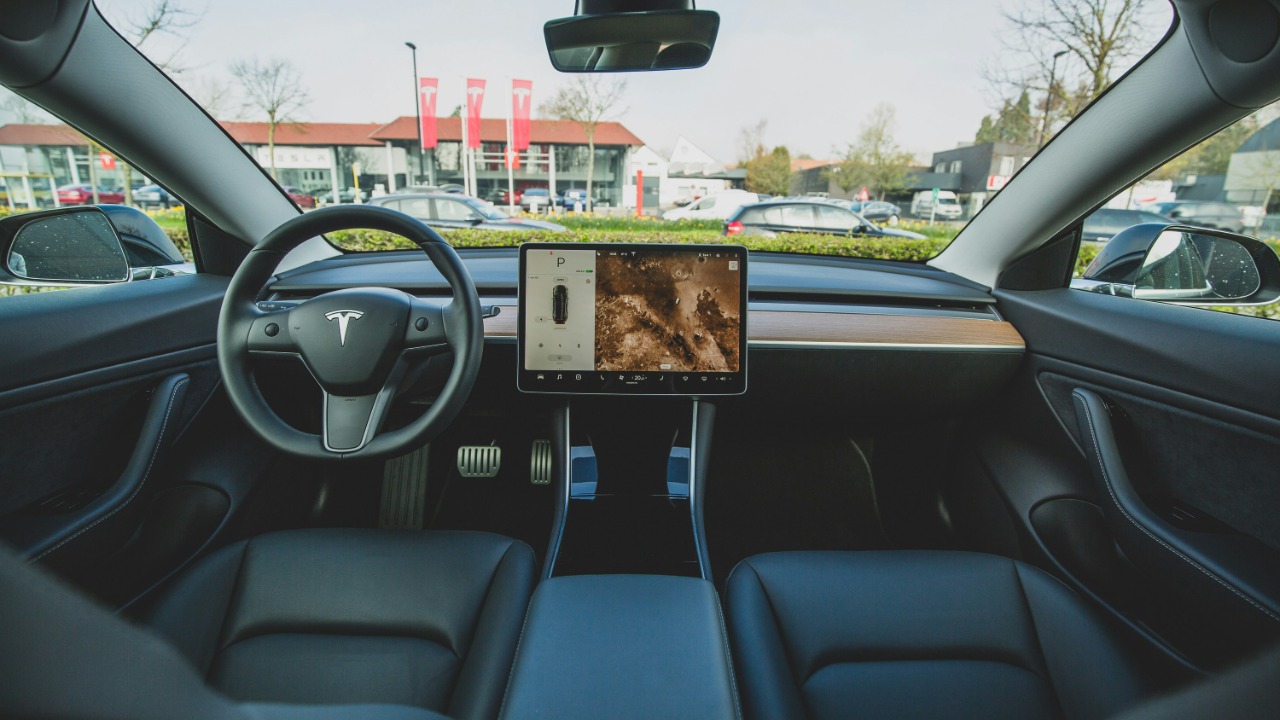

Tesla’s Full Self Driving program has entered a strange new phase, where the software is improving quickly, the business stakes are enormous, and the regulatory and competitive pressures are finally catching up. The latest FSD v14 releases promise smoother driving and more humanlike decisions, yet the system still sits in a gray zone between driver assist and true autonomy. To understand what on Earth is happening with Tesla’s FSD beta, I need to trace how the technology, the strategy, and the scrutiny are colliding right now.
From “mind blowing” demos to everyday dependence
The current FSD story starts with how deeply it has embedded itself into daily driving for early adopters. One experienced user reported that with v12, FSD was involved in roughly 80% of their time behind the wheel, mainly on highways, and described the jump to v14 as “mind blowing.” That kind of reliance shows how far the software has come from its early Autopilot roots, even if the driver is still legally and practically responsible for every maneuver.
Behind the scenes, Tesla is trying to turn that dependence into a statistical case that its system is safer than humans. The company has set a target of 10 billion miles for unsupervised driving, a figure laid out in a plan described as Tesla Sets a 10 Billion Mile Goal for Unsupervised FSD, with the rationale explained in a section labeled Billion Mile Goal for Unsupervised FSD and Ashok Confirms Reasoning is Here By Karan Singh. The idea is simple but ambitious: only at that scale, far beyond the current 7.1 billion target, can the company credibly argue that its neural networks have seen enough edge cases to justify taking the human out of the loop.
Why “Sloth” suddenly matters
At the same time, Tesla is quietly reshaping how FSD behaves on the road, especially around speed. The company has introduced new speed profiles and, in a notable shift, has changed the default to a conservative mode explicitly called Tesla Defines FSD to Sloth, a change detailed By Karan Singh and described as Not a Tesla App. That naming choice is not subtle, and it signals that the company is willing to trade some of the aggressive, humanlike pace that early fans enjoyed for a profile that looks better to regulators and insurers.
The same shift shows up in the broader v14 rollout, where Tesla’s FSD v14 Update Includes a New Sloth Speed Option After the software moved from early access to all users. That New setting is meant to keep more distance, respect limits more strictly, and reduce abrupt moves, which directly addresses long standing complaints that Tesla’s Full Self Driving could ignore speed limits and drive faster than the flow of traffic. Those criticisms are captured bluntly in a community thread arguing that Tesla’s Full Self Driving is a model for what FSD cannot be allowed to do, and that tension between user comfort and public safety is now baked into the product settings.
FSD v14 as a business test, not just a software update
Underneath the software tweaks, Tesla is treating autonomy as the core of its financial future. Analysts have noted that Tesla’s equity story rests on autonomy lifting margins and monetization beyond cars, with the promised FSD v14 release framed as the next test of that premise for Tesla and FSD. If the new version can convince more owners to pay for the software or subscribe monthly, it could turn each vehicle into a recurring revenue stream rather than a one time sale.
The rollout strategy reflects that pressure. FSD Beta is moving into a phase described as FSD Beta Wider Releases FSD 14, with Tesla Full Self Driving framed as one of the company’s most significant transition phases since the original Autopilot. The software is rolling out to early access drivers with v14, then broadening, which lets Tesla gather data while still marketing the feature as cutting edge. However, it is clear there is now much more competition in the self driving space that However Tesla has staked future growth on, which raises the stakes for every incremental update.
Nvidia, Alpamayo and the new autonomy race
The most visible new rival is Nvidia, which is pitching its own end to end driving stack as a kind of “ChatGPT moment” for cars. Its platform, called Currently Alpamayo, is described as Level 2 advanced, meaning it can operate autonomously but requires human supervision, just like Tesla’s system. Nvidia is already talking about Level 3 and Level 4 capability with Alpamayo soon, and experts such as Katie Driggs Campbell, a professor cited in that report, argue that the hardware is capable of handling more autonomy with further software updates.
That pitch is not theoretical. The Mercedes CLA is the first car to use Nvidia’s stack, with Mercedes CLA and Nvidia executives, including Huang, positioning the upcoming Mercedes Benz CLA as a showcase for who dominates the next wave of assisted driving. For Tesla, which once looked like the only serious player in vision based autonomy, that means its FSD beta is no longer just a tech experiment, it is a competitive moat that others are actively trying to breach.
Musk’s public stance and the distribution problem
Elon Musk has responded to this new competition with a mix of bravado and realism. In one exchange around Nvidia’s push, Jan coverage highlighted More Automotive commentary that Tesla investors may miss a game changing move and noted that a Key auto parts and services company files Chapter 11 bankruptcy, underscoring how quickly fortunes can shift in this sector. Musk’s comments suggested he is watching Nvidia closely, even as he insists Tesla’s data advantage will be hard to match.
He has also acknowledged that scaling self driving is not just a software problem. In remarks tied to the Consumer Electronics Show, Elon Musk Says Super Hard To Solve Distribution As Nvidia Announces Competitor To Tesla FSD, But Adds that he Honestly Hope They succeed. That admission, tied to Tesla Inc. and the broader CES 2026 context, hints at a more pragmatic view: even if Tesla wins the technical race, getting hardware, software, and regulatory approvals aligned across markets is a separate, grueling challenge.
Global expansion, hardware gaps and regulatory bets
Despite those hurdles, Tesla is pushing ahead with a global rollout strategy that treats FSD as a flagship export. The company has outlined a plan to Launch FSD in Europe Starting February, with Tesla Outlines Plan describing how Europe Starting February 2026 will see a larger FSD deployment. For European Tesla owners, the timeline for the deployment has been a moving target for years, so this new schedule is both a milestone and a test of whether regulators are finally comfortable with the technology’s safeguards.
In China, Musk expects Tesla’s Full Self Driving software to win full approval in early 2026, according to a post that notes this implies a significant hardware gap is emerging between Tesla’s latest and older models. That same report, shared via Reuters, asks whether Tesla One has to wonder if some former buyers will be left behind by the capacity to run their ambitious self driving software. That hardware divide could create a two tier owner base, where newer vehicles get the full autonomy pitch while older ones remain stuck on partial features.
Patents, promises and a long memory
Legally, Tesla has spent years building a wall of intellectual property around its driver assistance stack. Analysts note that Beyond the technical and economic impacts of Tesla’s FSD patents, they also play a role in shaping public perception of autonomous driving. The company’s patent strategy, as described in one overview of Beyond the Tesla FSD portfolio, is meant to signal seriousness about safety, reliability, and practicality, even as critics argue the marketing has run ahead of the actual capabilities.
Those critics have a long memory. Back in 2016, when Tesla parted ways with a key Autopilot supplier, Musk, identified as Elon Musk in that report, used a new master plan to insist that self driving capability remained a central goal for Tesla Motors. A decade later, many of those promises remain partially fulfilled, and some owners on forums now argue that Tesla’s simplistic Full Self Driving is exactly what FSD cannot be allowed to do in mixed traffic. That gap between early rhetoric and current reality is a big part of why regulators and courts are scrutinizing every new feature name and marketing claim.
From cars to robots, and what that means for FSD
More recently, Tesla has started talking less about cars and more about robots, but autonomy is still the connective tissue. The company has publicly shifted focus from cars to robots, with one analysis noting that the announcement follows the release of Tesla’s latest master plan, which is shorter and less detailed than previous versions. Earlier references in that report describe how Tesla Ear lier plans for autonomous platforms remain unfulfilled, underscoring how much of the FSD narrative is still aspirational.
If Tesla can finally deliver supervised autonomy that is measurably safer than humans, the same stack could power factory robots, delivery bots, and other machines that move through the physical world. But that future depends on solving today’s messy realities: speed profiles like Sloth that keep passengers safe without infuriating them, distribution challenges that Musk himself calls Super Hard, and a competitive field where Nvidia, Mercedes Benz CLA and others are no longer content to let Tesla define the terms. For now, FSD beta sits at the center of that storm, a product that is both a real driver assist system and a high stakes bet on what mobility will look like next decade.
More from Morning Overview