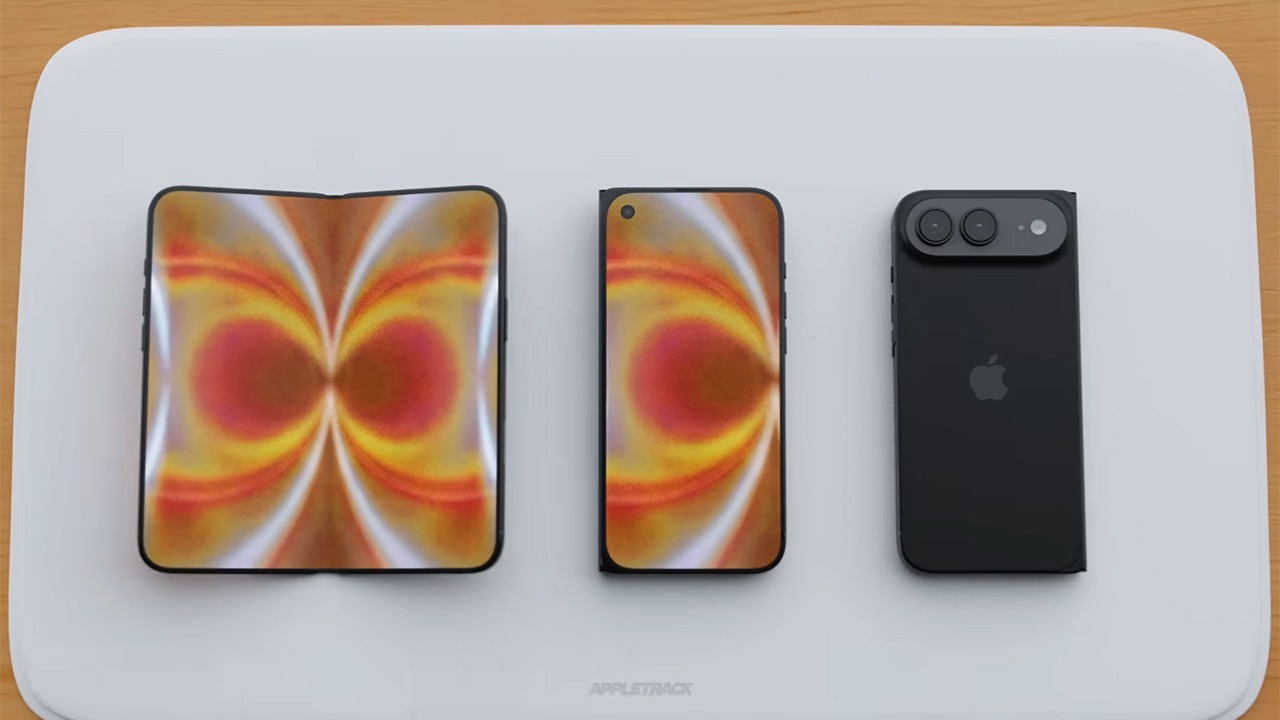

Apple’s 2026 iPhones are already starting to take shape in leaks and supply chain chatter, sketching out a year that could redefine what an iPhone looks like and how it behaves. The picture that emerges is of a lineup split between a familiar slab-style iPhone 18 family and a radically different iPhone Fold, with upgraded silicon, a new wave of on-device artificial intelligence, and some surprisingly bold design flourishes. Taken together, these moves suggest Apple is preparing its biggest iPhone reset since it dropped the home button.
Based on current reporting, the company is expected to lean on a Split launch strategy that staggers models across the year, introduce its first Fold device alongside the iPhone 18 Pro, and roll out a more conversational Siri that is tightly integrated with a new LLM. If those pieces land as described, the 2026 iPhone generation will not just be a spec bump, it will be a test of how far Apple can push design and AI while keeping the core iPhone experience familiar.
The 2026 iPhone roadmap comes into focus
The clearest throughline in the 2026 rumors is that Apple is planning a broad refresh of its phone portfolio rather than a single hero device. Reporting indicates that Apple will unveil its iPhone 18 lineup in September 2026, with a Split launch strategy that pairs the traditional slab phones with the company’s first foldable model and a new emphasis on efficiency and connectivity in the underlying chips. The same reporting notes that at least one of the iPhone 18 models is expected to use an A20-class processor that is more efficient than the A19 generation, signaling that battery life and sustained performance are central to the roadmap rather than optional extras, a shift that will matter for both gamers and heavy camera users who push their phones hard over long sessions.
Alongside the flagship iPhone 18 family, Apple is also expected to keep feeding the lower end of the lineup with devices like an iPhone 17e earlier in the year, which would help bridge the price gap while still bringing features such as MagSafe to a broader audience. That approach, outlined in a guide to Everything Apple Is Releasing in 2026, suggests Apple is trying to keep the entry point into the ecosystem relatively accessible even as it pushes the high end into new form factors and AI-heavy features. For buyers, that likely means a more stratified lineup, where the most experimental hardware and software ideas debut at the top while the rest of the range quietly inherits proven tech a cycle or two later.
iPhone 18 and iPhone 18 Pro: familiar slabs, bigger ambitions
On the surface, the iPhone 18 and iPhone 18 Pro are expected to look like iterative updates, but the underlying changes point to a more ambitious agenda. Reporting on the iPhone 18 lineup notes that Apple is planning major changes With the iPhone 18 generation, including that Split La rollout and a stronger focus on custom silicon and modems. The phones are expected to adopt Apple’s next-generation C2 modem, which should improve 5G efficiency and reliability, and pair it with A20 or A20 Pro chips that are more efficient than A19 chips, a combination that could translate into cooler devices and longer battery life even when users are streaming video, tethering laptops, or playing graphics-heavy titles like Genshin Impact for extended periods.
Design-wise, the iPhone 18 Pro models are rumored to keep the broad silhouette of current Pro phones but with some notable twists. One tipset expects the glass back of the upcoming Pro models to get a transparent finish, a move that would make internal components part of the visual identity in a way Apple has mostly avoided since the iMac G3 era. That same report suggests that otherwise, the phones are likely to stay close to the current Pro design language, with flat sides and premium materials, but the transparent glass could give the iPhone 18 Pro a more technical, almost gaming-phone aesthetic without sacrificing Apple’s usual restraint, as hinted in coverage of One tipset expects the new finish.
Inside the silicon: A20-class chips and the C2 modem
If the 2026 iPhones feel different to use, it will likely be because of what is happening inside the chassis rather than on the surface. Analysts expect the flagship models to ship with an A20 or A20 Pro system-on-a-chip that is not just faster but significantly more efficient than the A19 generation, a shift that matters for everything from frame rates in Call of Duty: Warzone Mobile to how quickly the camera can process multi-frame night shots. A preview of the 2026 lineup notes that users should expect an A20 or A20 Pro that builds on the neural capabilities seen on the iPad Air, which would give Apple more headroom for on-device AI features without hammering the battery or generating excessive heat during sustained workloads.
Connectivity is also set for a quiet but important upgrade. The iPhone 18 roundup points to Apple’s next-generation C2 modem as a key part of the 2026 package, promising better efficiency and potentially more robust 5G performance in congested areas like stadiums or city centers. That same reporting underscores that Apple’s silicon roadmap is increasingly about balancing raw power with smarter power management, with the A20-class chips expected to be more efficient than A19 chips while still pushing graphics and AI forward, as detailed in the section on Apple’s next-generation C2 modem.
Siri 2.0 and the rise of on-device LLMs
Hardware is only half the story for 2026, because Apple is also preparing a major overhaul of its voice assistant. The new version, unofficially called Siri 2.0, is supposed to be more conversational, but the key improvement will be its ability to understand context and handle multi-step tasks that previously required manual tapping through apps. Instead of asking Siri to set a reminder and then separately open Notes or Mail, users could chain requests like “summarize this email thread and remind me to reply when I get to the office,” with the assistant handling the intermediate steps in the background, a shift that would bring it closer to the behavior of modern AI chatbots.
Under the hood, that upgrade is expected to be powered by a new LLM that runs at least partly on the device, reducing latency and keeping more data local. A broader 2026 preview describes how Everything Apple Is Releasing includes LLM Siri as a headline feature, alongside hardware like the iPhone Fold and a Low-cost MacBook, underscoring how central AI has become to Apple’s product strategy. By tying Siri 2.0 to the A20-class chips and their expanded neural engines, Apple can position the 2026 iPhones as the first generation that truly treats AI as a core system capability rather than a bolt-on feature, as suggested in coverage of Everything Apple Is Releasing with LLM Siri and other devices.
iPhone Fold: Apple’s first folding phone
The most dramatic change on the horizon is the iPhone Fold, Apple’s long-awaited entry into the foldable phone market. If rumors are to be believed, Apple’s first Fold will aim to undercut a lot of the existing offerings by focusing on thinness, durability, and a software experience that feels like a natural extension of iOS rather than a separate category. A detailed preview notes that the Fold should be less than 10 mm thick when folded and even thinner than an iPhone Air when unfolded, a target that would make it one of the slimmest foldables on the market and help address one of the biggest complaints about current folding phones, which often feel bulky in a pocket or small bag.
Most reports say the Fold will sit at the very top of the iPhone range, likely sharing or even surpassing the iPhone 18 Pro in price, which raises the question of whether it will be a niche halo product or a genuine alternative for mainstream buyers. The same analysis that pegs the Fold’s thickness also suggests that Apple will lean heavily on its experience with the iPad Air and larger-screen software to make the unfolded experience feel like a mini tablet, with multitasking features that go beyond what current iPhones offer. Those expectations are laid out in a 2026 iPhone preview that describes how the Fold should be less than 10 mm thick when folded and thinner than an iPhone Air when open, with Most reports framing it as a showcase for Apple’s industrial design and display engineering, as captured in the discussion of the 2026 iPhone preview.
How the Fold fits into Apple’s broader 2026 lineup
Positioning the iPhone Fold within the 2026 lineup will be one of Apple’s trickiest balancing acts. On one side, the company needs to justify the Fold as a premium device that can command a higher price than the iPhone 18 Pro, which means giving it standout hardware and software capabilities that go beyond simply bending in the middle. On the other, it has to avoid fragmenting the iOS experience or making developers feel like they are targeting yet another screen size and aspect ratio, especially when they are already optimizing for iPhone, iPad, and Mac. The broader 2026 guide that covers Everything Apple Is Releasing, including the Fold, LLM Siri, and a Low-cost MacBook, hints that Apple sees the Fold as part of a continuum of devices rather than a one-off experiment, which should help keep the ecosystem coherent.
From a buyer’s perspective, the Fold is likely to appeal most to people who already split their time between an iPhone and an iPad mini or iPad Air, since it promises a single device that can handle both phone and small-tablet duties. The same reporting that outlines the Fold’s arrival alongside the iPhone 18 Pro suggests that Apple will use its Split launch strategy to give the Fold its own spotlight, rather than burying it in a crowded event. That approach, described in the iPhone 18 roundup that details how Apple will unveil its iPhone 18 lineup with a Split launch and introduce its first foldable iPhone as a Possible major change, shows that Apple understands the Fold needs a clear narrative if it is going to be seen as more than a tech demo, as indicated in the section on At least one of the big shifts coming with the iPhone 18 family.
Design language: transparent glass, thinner profiles, and subtle tweaks
Beyond the headline features, the 2026 iPhones are shaping up to refine Apple’s design language in ways that are more noticeable than the last few cycles. The rumored transparent glass back on the iPhone 18 Pro would be the most visually striking change, turning the rear of the phone into a window on its internal layout and potentially highlighting components like the MagSafe ring or wireless charging coils. That kind of transparency has been popularized by niche brands like Nothing, but Apple adopting it at scale would signal that the company is ready to make the internal engineering part of the aesthetic story, a departure from the opaque finishes that have dominated since the iPhone 4 era.
At the same time, the focus on thinness for the iPhone Fold and the suggestion that it will be even thinner than an iPhone Air when unfolded indicate that Apple is still obsessed with shaving millimeters wherever it can. The 2026 preview that describes the Fold’s sub-10 mm folded profile and its comparison to the Air underscores how much effort is going into making the new form factor feel as sleek as a traditional phone. Combined with the incremental slimming and weight reductions that typically accompany new Pro models, the overall 2026 lineup could feel noticeably lighter and more pocket-friendly, even as battery capacities and camera modules continue to grow, a trend that aligns with the expectations set out in the iPhone 2026 preview of a year of change for Apple’s biggest product.
What all this means for people upgrading in 2026
For anyone planning an upgrade in 2026, the emerging picture suggests a more consequential decision than in recent years. On one path, the iPhone 18 and iPhone 18 Pro offer a familiar slab design with meaningful under-the-hood improvements: A20-class chips that are more efficient than A19, a C2 modem for better 5G, and a revamped Siri 2.0 powered by an on-device LLM. On the other, the iPhone Fold introduces a new way to carry and use an iPhone, with a device that is less than 10 mm thick when folded, thinner than an iPhone Air when open, and designed to blur the line between phone and tablet. The choice will not just be about price or camera specs, it will be about how much risk buyers are willing to take on a first-generation form factor.
What seems clear from the reporting is that Apple is not treating 2026 as a maintenance year. From the Split launch strategy that staggers devices like the iPhone 17e and iPhone 18 Pro to the debut of the Fold and the rollout of LLM Siri across the lineup, the company is using the 2026 cycle to push on multiple fronts at once. If the rumors hold, people who sit tight on their current phones for another year may find that the 2026 generation offers a more compelling leap than the last few cycles combined, with Everything Apple Is Releasing in that window, from the Fold to the Low-cost MacBook, reinforcing the sense that the company is entering a new phase of hardware and AI integration, as outlined in the guide to Everything Apple Is Releasing in 2026.
The open questions that will define Apple’s 2026 gamble
Even with this much detail, several key questions remain unresolved and will ultimately determine how successful Apple’s 2026 iPhones are. Durability is at the top of the list for the iPhone Fold, since a device that is thinner than an iPhone Air when unfolded and less than 10 mm thick when folded will have to balance sleekness with hinge strength and screen resilience. Battery life is another wildcard, especially for models that lean heavily on A20-class chips to power on-device LLM features for Siri 2.0, because the promise of more efficient silicon has to translate into real-world gains when people are streaming Netflix, navigating in Apple Maps, and running background tasks like fitness tracking all at once.
There is also the question of how quickly developers and users will embrace the new capabilities. A more conversational Siri 2.0 that can handle complex, multi-step requests will only feel transformative if third-party apps expose the right hooks and if people trust the assistant enough to hand over more of their daily workflows. Similarly, the Fold’s larger canvas will need software that goes beyond simply stretching iPhone apps, with thoughtful multitasking and layout options that make it feel like a true hybrid of phone and tablet. The reporting that frames 2026 as a year of major changes for the iPhone, from the Split launch to the first Fold and the Possible new chip and modem combinations, underscores that Apple is taking a calculated risk, one that could either reset expectations for what an iPhone can be or leave buyers content to stick with the safer, more familiar slabs, as suggested in the overview of With the iPhone 18 lineup and its major changes.
How the 2026 iPhones could reshape the broader market
Beyond Apple’s own ecosystem, the 2026 iPhones are poised to influence the broader smartphone market in several ways. A successful iPhone Fold that is thinner than an iPhone Air when unfolded and less than 10 mm thick when folded would raise the bar for industrial design in the foldable category, pressuring rivals like Samsung’s Galaxy Z series and Google’s Pixel Fold line to slim down and refine their own hinges and displays. If Apple can also deliver a transparent glass-backed iPhone 18 Pro that feels premium rather than gimmicky, it may normalize more expressive hardware aesthetics in a segment that has often defaulted to safe, monochrome slabs.
On the software side, a more capable Siri 2.0 powered by an on-device LLM could accelerate the shift toward AI-first interfaces across platforms. If users grow comfortable issuing complex, conversational commands to their phones and seeing reliable results, competitors will have to match that experience, not just in cloud-based assistants but in how deeply AI is woven into everyday apps and workflows. The combination of A20-class chips, the C2 modem, and LLM Siri described across the 2026 previews and roundups suggests that Apple is betting on a future where the most compelling smartphones are defined less by their raw specs and more by how intelligently they can anticipate and respond to what people are trying to do, a direction that will likely shape Android roadmaps as much as it does iOS.
More from Morning Overview