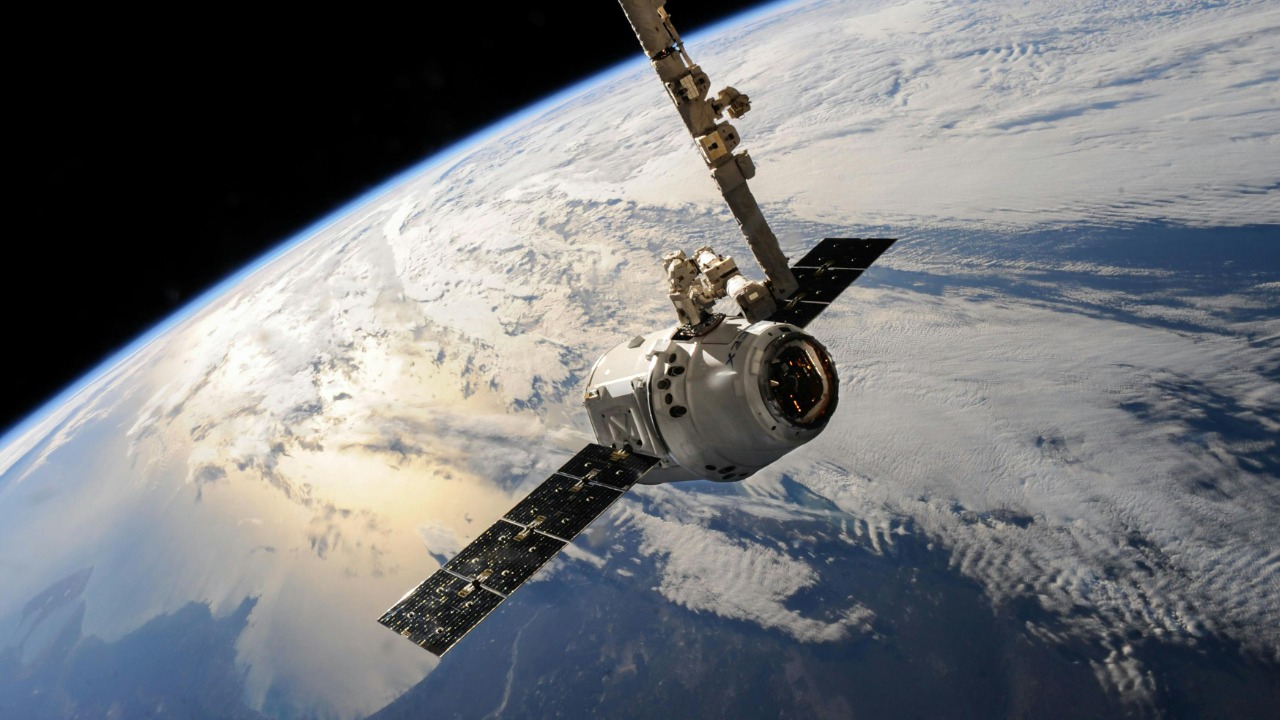

Very low Earth orbit satellites are moving from engineering curiosity to strategic priority, promising sharper images, faster links, and cleaner space around our planet. By flying just a few hundred kilometers above the surface, these spacecraft sit in a sweet spot between atmospheric drag and orbital efficiency, opening a new layer of infrastructure that could reshape communications, climate monitoring, and military operations. I see this emerging band of space as the next contested frontier, where commercial ambition, national security, and sustainability will collide.
What “very low Earth orbit” actually means
Very low Earth orbit, or VLEO, is not just a marketing term, it describes satellites skimming close enough to feel the upper atmosphere yet high enough to circle the planet for months or years. Technical definitions vary, but recent research frames VLEO as a band below traditional low Earth orbit, where drag is strong enough to demand continuous or frequent propulsion. That is a very different regime from the altitudes where most communications and Earth observation constellations operate today.
To understand how low this is, it helps to look at existing crewed platforms. The Tiangong space station, for example, flies at roughly 350 to 450 km, or about 220 to 280 miles, an altitude that already requires regular boosts to counter drag. VLEO concepts often push even lower than that, into orbits where spacecraft must be designed from the start to live in a thin but persistent atmosphere. The payoff is proximity to Earth, and that proximity is what makes this region so attractive.
Sharper images and cheaper sensors closer to Earth
The most immediate benefit of flying lower is simple geometry, the closer a camera is to its subject, the more detail it can capture with the same optics. Engineers have shown that Positioning observation satellites closer to Earth produces clearer imagery at lower cost, because designers can shrink telescope apertures and still hit resolutions that would otherwise demand large, expensive instruments. That shift matters for everything from precision agriculture to disaster response, where sharper pictures translate directly into better decisions on the ground.
Scientists at NASA have also pointed out that lower orbits can shorten mission lifetimes in a way that is actually helpful. Instead of designing satellites to last 10 to 20 years, operators can plan for shorter, more agile refresh cycles, swapping in new sensors as technology improves. That approach mirrors the smartphone world more than the traditional space industry, and it is one reason investors are suddenly paying attention to this slice of orbit.
The commercial rush and a $220 billion bet
Money is already following the physics. Market analysts at Juniper Research project that global investment in VLEO will grow to $220 billion by 2027, a figure that would represent a dramatic shift in how capital is allocated across orbital regimes. That forecast reflects not just Earth observation, but also broadband, Internet of Things connectivity, and in-orbit services that all benefit from lower latency and higher link margins closer to the planet.
Industry events have started to treat VLEO as a distinct category rather than a subset of low Earth orbit. One Closer Look at this market framed VLEO as The New Frontier in Orbit, highlighting how As the fast evolving commercial satellite sector matures, operators are looking for any edge in both commercial and defense space applications. In that context, the $220 billion projection is less an outlier and more a sign that VLEO is being folded into mainstream infrastructure planning.
From Albido to Starlink, real hardware is moving down
The shift to very low altitudes is not theoretical, it is already shaping how new constellations are designed. Imaging startups such as Albido are building satellites specifically for VLEO, betting that ultra high resolution pictures from low orbits will justify the added complexity of drag compensation. In public discussions, Albido’s team has described how flying lower lets them deliver detail that rivals airborne platforms, while still covering wide swaths of territory on each pass.
Large incumbents are also edging down. SpaceX has begun to adjust its Starlink network, with reporting by Jeff Foust January noting that some satellites are being shifted to lower orbits after in orbit anomalies, and that units which are unable to actively deorbit are being allowed to decay naturally. That kind of operational flexibility, moving spacecraft down when needed and relying on drag to clean up dead hardware, is exactly the pattern VLEO advocates say will make this region more sustainable than crowded higher shells.
Why defense planners see VLEO as a strategic high ground
Military strategists have quickly grasped that very low orbits can change the balance of power in space. One analysis argued that VLEO is redefining modern defense operations with advantages that traditional orbits cannot match, from lower latency command links to harder to track satellites that whip around the planet more quickly. While satellites in LEO already support targeting and communications, planners see VLEO as a way to push those capabilities closer to real time, especially for forces that rely on space based intelligence.
At the same time, there is a growing debate over whether this is a genuine revolution or a strategic mirage. A detailed assessment by Jun warned that the low earth orbit of VLEO satellites makes them vulnerable to atmospheric drag and requires constant propulsion corrections to maintain orbit, which could strain logistics and budgets. Only one hit can cause cascading debris fields that make whole proliferated orbital layers unusable and turn global security planning on its head, a risk that looms especially large when constellations number in the thousands.
Regulators, Starlink, and the 15,000 satellite question
Regulators are already wrestling with what happens when VLEO constellations scale up. In Washington, WASHINGTON officials have confirmed that The Federal Communications Commission Space Bureau has opened a review of a SpaceX modification application for a 15,000 satellite VLEO constellation, a process that will test how existing rules handle such dense swarms. The FCC Space Bureau has stressed that this designation does not constitute final approval, but the very scale of the proposal shows how quickly operators expect to fill this orbital layer.
Public concern is not limited to paperwork. As more and more satellites are launched into LEO, SpaceX’s Starlink internet constellation alone will eventually dominate the sky, raising questions about interference, astronomy, and the militarization of commercial networks. But advocates of very low orbits argue that lower altitudes, combined with responsible design, can actually reduce long term debris and make it easier to retire satellites before they become hazards or targets for other space directed energy technologies.
Drag, reboost, and the engineering grind of staying low
Operating in VLEO is brutally hard on hardware. The thin atmosphere at these altitudes constantly saps orbital energy, forcing satellites to fire thrusters or use novel propulsion just to stay aloft. Engineers studying the International Space Station note that Attitude control and propulsive reboost capability is a continuous requirement, which means the space station needs a steady supply of fuel, hardware, and planning. VLEO satellites face the same physics, but without the luxury of large tanks or frequent cargo visits.
That is why propulsion and materials research is so central to this frontier. Many VLEO satellite technologies have reached advanced Technology Readiness Levels, with TRL 7 to 9 systems now being demonstrated for low latency satellite services globally. Many VLEO designs use electric propulsion, advanced coatings, and aerodynamic shaping to squeeze as much life as possible out of each kilogram of fuel. The global very low earth orbit (VLEO) satellite market exhibits strong momentum in advancing VLEO satellite technologies, precisely because without those innovations, the economics of staying low would not close.
Radiation, debris, and why VLEO could be cleaner
Paradoxically, flying closer to Earth can be safer for both satellites and the space environment. Platform benefits arise because VLEO altitudes sit in a more benign radiation environment compared to higher altitudes, reducing the cumulative dose that electronics and solar panels must survive. Recent work on Platform performance in VLEO has highlighted how this lower radiation can extend component life or allow cheaper parts to be used, offsetting some of the penalties imposed by drag.
Debris dynamics also look different this close to the atmosphere. Even in the presence of a full on Kessler cascade, any debris present in VLEO would decay rapidly through the natural operation of drag, rather than lingering for decades. Advocates argue that this self cleaning effect makes VLEO a kind of safety valve for space traffic, a region where failed satellites and fragments are quickly scrubbed from orbit. Even so, the risk of short term collisions remains, and operators will need sophisticated tracking and maneuvering to avoid turning this low altitude refuge into another junkyard.
Resilience, jamming resistance, and infrastructure on the line
Beyond images and broadband, VLEO offers subtle but important advantages for communications resilience. Because these satellites sit closer to the ground, their signals arrive stronger and with less delay, which can improve performance for both civilian and military users. Analysts have noted that VLEO satellites offer benefits unique to their orbit, including better protection to communication infrastructure against jamming and interference, since adversaries must track and target faster moving beams that cover smaller footprints.
That resilience is one reason defense and commercial planners increasingly talk about layered architectures that mix GEO, MEO, LEO, and VLEO assets. A recent feature invited readers to Share this article and Join the conversation, urging policymakers to Follow the evolving debate and Add VLEO as a preferred layer on Google style dashboards of national infrastructure. The subtext is clear, whoever masters this low altitude shell will not just gain better pictures or faster internet, but a more robust backbone for everything from banking to battlefield communications.
The political and strategic stakes of a closer frontier
As VLEO matures, it is colliding with broader concerns about congestion and weaponization in space. Commentators warn that as more and more satellites crowd low Earth orbit, the line between civilian and military infrastructure blurs, especially when commercial constellations like Starlink can be repurposed for defense. That is why some analysts frame VLEO as both an opportunity and a pressure point, a place where national strategies, corporate roadmaps, and international norms will be tested in real time.
At the same time, the technology is advancing too quickly for policymakers to ignore. Jul market research notes that Many VLEO satellite technologies are already at deployment ready TRL levels, meaning the window for shaping norms is closing fast. If regulators, militaries, and industry leaders do not coordinate, the next big space frontier could harden into a patchwork of incompatible systems and contested zones, rather than the resilient, sustainable layer its pioneers envision.
More from MorningOverview