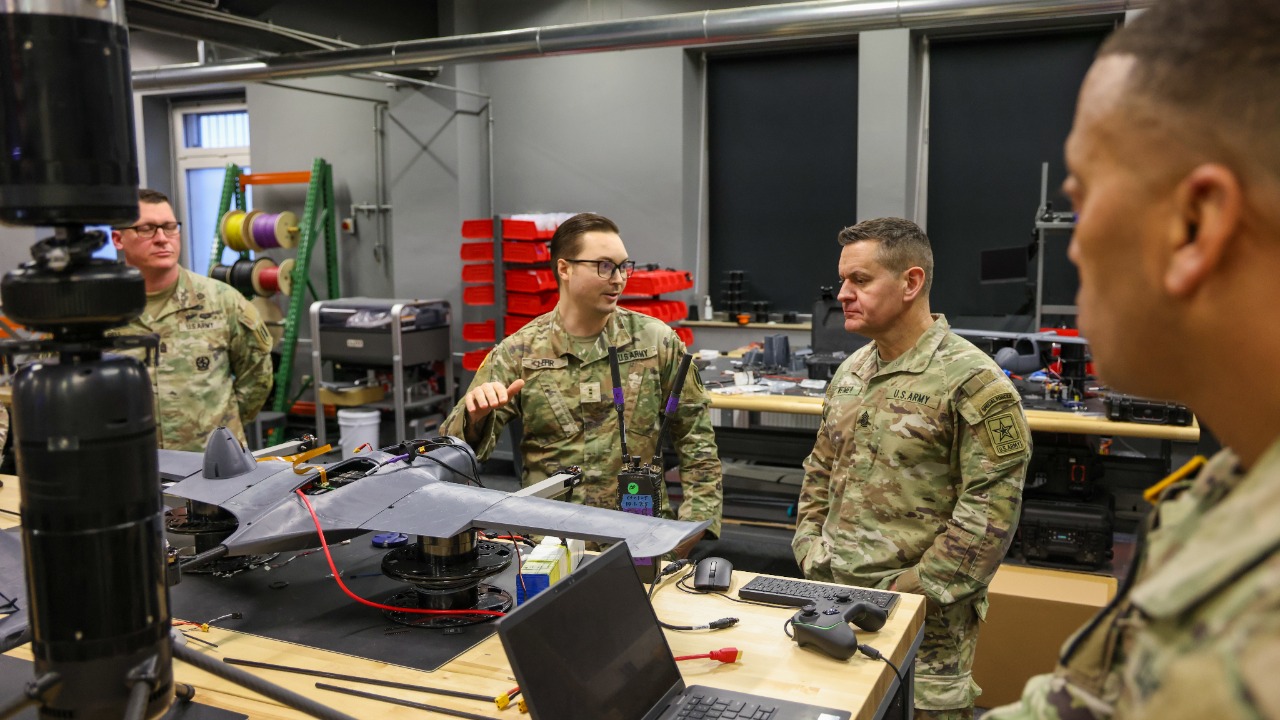

The U.S. Army is turning artificial intelligence from a niche experiment into a core part of how it fights, plans, and sustains itself. By creating a dedicated AI and machine learning officer track, the service is betting that it needs uniformed specialists who can both understand complex models and translate them into battlefield advantage. The move signals a shift from buying tools off the shelf to building an internal brain trust that can shape how algorithms are designed, deployed, and governed across operations.
Instead of treating AI as a bolt‑on capability, the new pathway makes it an official area of concentration with its own training pipeline, promotion logic, and mission set. That choice will influence everything from how logistics convoys are routed to how unmanned systems are tasked in contested airspace, and it will determine whether commanders see AI as a trusted partner or a black box they barely control.
The 49B officer: a new kind of Army technologist
The centerpiece of the initiative is a new area of concentration, 49B, that turns AI and machine learning into a full‑time profession for commissioned officers. Rather than sprinkling data skills across existing branches, the Army is carving out a distinct identity for officers whose primary mission is to design, integrate, and oversee intelligent systems. The 49B designation is meant to sit alongside traditional specialties like armor or signal, but with a mandate to shape how algorithms influence everything from targeting to personnel management.
Reporting on the new 49B area of concentration describes these officers as the Army’s in‑house experts on how to build, field, and use artificial intelligence systems. Their remit stretches across logistics, intelligence, and operations, with an expectation that they will help commanders understand both the power and the limits of machine learning. By formalizing 49B as a career field, the service is signaling that AI fluency is no longer a side skill for hobbyist coders in uniform, but a strategic competency that deserves its own pipeline and leadership track.
From concept to career field: how the Army is standing it up
The Army is not simply renaming existing billets; it is phasing in a new career field with its own accession and training model. Early cohorts will be drawn from officers who already have technical backgrounds, then expanded as the service refines what it needs from AI leaders in the field. That phased approach is designed to avoid flooding units with underprepared specialists while still moving quickly enough to keep pace with adversaries.
Official statements describe how the career field will be phased in, starting with a limited number of 49B slots and growing as demand and training capacity increase. The Army has framed this as part of a broader effort to become a data‑centric force, with AI officers embedded in commands that are already experimenting with predictive maintenance, sensor fusion, and automated planning tools. By sequencing the rollout, leaders hope to build a culture around 49B that prizes both technical rigor and operational relevance.
What AI officers will actually learn to do
Creating a new badge is the easy part; the harder task is defining what skills an AI officer must master to be credible in front of a brigade commander or a software engineering team. The Army’s answer is a curriculum that blends graduate‑level theory with hands‑on work on real systems, from unmanned platforms to data pipelines that feed targeting and logistics tools. The goal is to produce officers who can read a model card, question a training dataset, and still speak the language of maneuver and fires.
According to the Army, Officers selected for the 49B track will undergo rigorous graduate‑level training and gain hands‑on experience in building and deploying AI tools, including work on Defense Capabilities with Unmanned Systems. Separate reporting notes that the role includes training on unmanned and counter‑unmanned systems, as well as networking, software engineering, electronics, and the fundamentals of artificial intelligence and machine learning. That mix is designed to ensure 49B officers can move comfortably between the server room and the operations center, translating algorithmic insights into practical changes in how units fight.
Who can become a 49B, and how they get in
Rather than limiting the new specialty to fresh graduates, the Army is opening the door to mid‑career officers who want to pivot into AI work. That choice reflects a recognition that the service already has captains and majors with computer science degrees or industry experience who are underused in traditional billets. By giving them a formal pathway into AI, the Army is trying to capture that talent before it walks out the door.
Officials have said that Initially, the 49B AOC will be open to all officers eligible for the VTIP, the Voluntary Transfer Incentive Prog that lets them move between branches. The Army has emphasized that those with advanced academic and technical backgrounds will be especially competitive, and that Army officers interested in transferring will be able to apply through that existing mechanism. In practice, that means a signal officer with a machine learning master’s degree or an artillery officer who previously worked in Silicon Valley can formally request a shift into 49B, rather than hoping to land an ad hoc data job.
Why the Army wants officers, not just contractors, running AI
The decision to create a uniformed AI cadre is as much about culture and accountability as it is about code. I read it as a statement that the Army wants people in the chain of command who both understand the math and own the operational consequences of using it. That is a different model from relying primarily on civilian data scientists or vendors, who may build powerful tools but are not the ones making life‑and‑death calls in combat.
One analysis argues that the Army’s decision to create a dedicated AI and machine learning officer track is not just a bureaucratic reshuffle, but a way to ensure that people who understand the technology are responsible for the operational consequences of using it. That logic is echoed in official messaging that describes the 49B AOC as giving the AOC “gives the Army” a group of in‑house AI and machine learning experts who support its move toward becoming a data‑centric force and help meet manning needs. In other words, the service wants AI to be something commanders own, not something that happens to them.
How this fits into the Pentagon AI push
The new AI officer track is not emerging in a vacuum; it is part of a broader push across the Department of Defense to treat algorithms as core infrastructure. The Army’s move aligns with Pentagon AI initiatives that aim to standardize data architectures, accelerate experimentation, and push machine learning into everything from logistics to electronic warfare. By creating 49B now, the service is positioning itself to plug into those efforts with officers who can represent Army interests in joint AI programs.
Coverage of the rollout notes that the Army creates new AI officer career path as part of a wider Pentagon AI agenda, with a focus on embedding machine learning across operations rather than treating it as a lab project. Another report frames the initiative under the banner Army Launches AI, Machine Learning Career Path for Officers, placing it alongside efforts to connect platforms like the Ghostrider Gunship Poised for Starlink, Enabled Battlef to more resilient networks. Taken together, these moves suggest a Pentagon that sees AI as a connective tissue across domains, and an Army that wants its own officers at the table when those architectures are designed.
Inside the training pipeline and early assignments
Once selected, 49B officers will not simply attend a short course and return to their old jobs; they are expected to move through a structured pipeline that builds depth over time. That pipeline includes formal schooling, practical rotations, and assignments that put them in direct support of operational units. The intent is to avoid creating “PowerPoint data scientists” who can brief AI concepts but have never debugged a model under pressure.
Official descriptions explain that Officers selected for the 49B AOC will gain hands‑on experience in building and deploying AI tools that help the Army deter, compete with, and outmaneuver any adversary. Additional reporting highlights that the program is framed as building a dedicated cadre of in‑house experts who will be at the forefront of integrating AI and machine learning into operations, as noted when the Army stands up AI, machine‑learning career field for officers. Early assignments are expected to place 49Bs in units experimenting with predictive logistics, sensor fusion, and unmanned teaming, where they can both learn from and shape real‑world deployments.
Recruiting from Silicon Valley and beyond
To fill the new specialty, the Army is courting not only internal talent but also officers with ties to the commercial tech world. That outreach reflects a tension the service has wrestled with for years: how to tap into cutting‑edge AI expertise without becoming dependent on “weekend warriors” who split their time between a Silicon Valley job and a reserve billet. The 49B track offers a way to bring that experience fully inside the active‑duty force.
One account, written with a skeptical edge, asks What, weekend warriors from Silicon Valley are not good enough, as it describes how the Army is seeking officers willing to commit to AI roles full time. That same report, by Brandon Vigliarolo, notes that over the past 36 years, those systems are numerous, underscoring how long the military has been experimenting with automation without fully integrating it into its core career structures. By contrast, the new AI pathway is pitched as a way to keep that expertise in uniform, with officers who can build long‑term careers around machine learning rather than treating it as a side hustle.
Public messaging and the Army’s AI brand
The Army is not hiding this initiative in internal memos; it is actively marketing the AI officer path as a prestigious and future‑oriented choice. That public posture serves two purposes. It signals to adversaries and allies that the service is serious about AI, and it helps convince skeptical captains that a move into 49B will not derail their promotion prospects.
On social media, The U.S. Army has established a new career pathway for officers to specialize in artificial intelligence and machine learning as an official area of concentration, framing it as a key part of modernization. An Instagram post amplifies the message that The Army on Tuesday announced that it is standing up a dedicated artificial intelligence and machine‑learning career field to build a more lethal, data‑driven force. Tech‑focused coverage underlines the branding with headlines like Army Launches AI and Machine Learning Career Track and Army Introduces AI, Focused Career Path for Officers, describing how beginning in Jan the Army is targeting advanced warfare capabilities and automation with a new emphasis on AI and ML innovations. Together, these messages present 49B as both a cutting‑edge technical role and a core part of the Army’s identity as a modern fighting force.
The stakes: from logistics to lethal autonomy
Behind the branding and bureaucratic details lies a harder question: what kind of AI‑enabled Army is this pathway building toward. By empowering officers to design and oversee machine learning systems, the service is effectively deciding that questions about bias, reliability, and escalation will be handled inside the chain of command. That could be a strength if 49B officers are trained to think critically about ethics and risk, or a vulnerability if they are rewarded mainly for speed and automation.
Official language stresses that the new AI career path is meant to help the Army deter, compete with, and outmaneuver adversaries, not to hand lethal decisions entirely to machines. The broader initiative is framed as part of a move toward a data‑centric force, with the program building a dedicated cadre of in‑house experts who will integrate AI and machine learning into operations. At the same time, the Army’s own description of the Army establishes new AI, machine learning career path for officers, illustrated in imagery credited to Micah Wilson, underscores how closely this effort is tied to unmanned systems and advanced sensing. As those technologies mature, the judgment and restraint of 49B officers will matter as much as their coding skills.
Why this matters beyond the Army
The creation of an AI officer track will ripple beyond the service’s own personnel charts. It sets a precedent for how large institutions, from other military branches to civilian agencies, might professionalize AI expertise instead of scattering it across ad hoc roles. It also raises expectations among allies and partners that the United States will bring uniformed AI specialists to joint exercises and coalition operations, shaping how multinational forces think about data and autonomy.
When the 49B AOC “gives the Army” a group of in‑house AI and machine learning experts, it also gives the Pentagon a template for similar roles in the Air Force, Navy, and Marine Corps. The Army’s own announcement that Army establishes new AI, machine learning career path for officers, and the broader messaging that the role includes training across unmanned systems and core AI disciplines, will likely influence how other services structure their own AI talent. If the experiment succeeds, the 49B patch could become a model for how complex technologies are woven into the fabric of military leadership, rather than left on the margins as contractor‑run projects.
More from MorningOverview