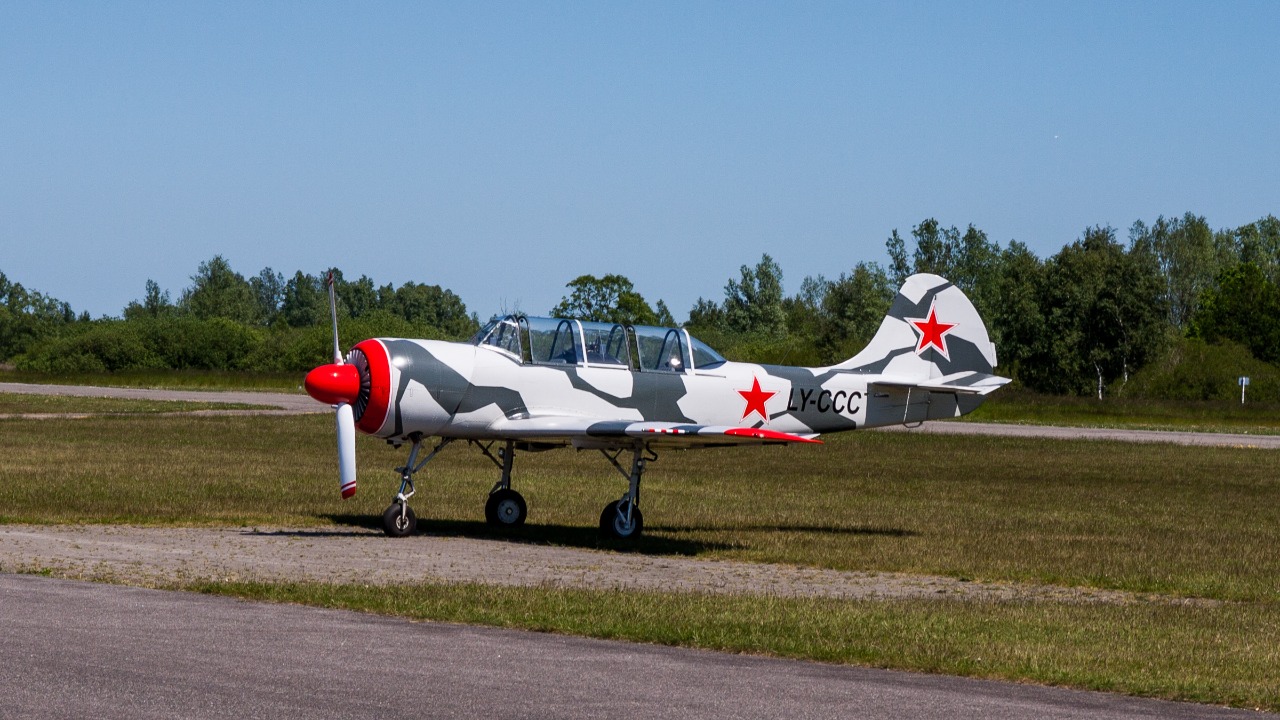

On a warfront dominated by satellites, precision missiles and long-range drones, Ukraine has quietly opened a new chapter in low‑tech air defense. Pilots are climbing into 1970s‑era propeller trainers, flying low and slow, and literally shooting Russian drones out of the sky with rifles and shotguns. The tactic looks like something from an earlier century, yet it is emerging as one of the most cost‑effective ways to blunt Moscow’s drone campaign.
What began as an improvised response to relentless night attacks has evolved into a structured mission profile, with crews trained to stalk unmanned aircraft at close range. The approach reflects a broader pattern in the war, where a country fighting for survival has turned every available tool, from smartphone apps to vintage aircraft, into part of its air defense network.
From flight school trainer to frontline interceptor
The unlikely centerpiece of this story is the Yak‑52, a Soviet‑designed training aircraft that first flew in the 1970s and was never meant to be a combat platform. In Ukraine’s hands, the Yak‑52 has been stripped of its peacetime role and refitted as a kind of airborne pickup truck, carrying a pilot and a gunner who lean out of the cockpit to fire at drones. The airframe’s simplicity, rugged construction and forgiving handling at low speeds make it a surprisingly good match for hunting slow, propeller‑driven targets.
Ukrainian forces have taken these vintage Yak airframes and turned them into a budget interceptor fleet, using them to chase down Russian Shahed‑type drones that cruise at relatively low altitude and speed. Video reports describe how crews in these vintage Yak aircraft fly at night with minimal lighting, relying on ground spotters and thermal optics to close within firing range of the drones they are stalking.
How a 1970s prop plane hunts modern drones
The basic tactic is brutally simple: find the drone, pull alongside it and shoot. Pilots use the Yak‑52’s ability to fly slowly without stalling to match the speed of Shahed‑type loitering munitions and smaller reconnaissance craft. Once they are close enough, a second crew member leans out with a shotgun or rifle and aims at the drone’s engine, fuel tank or control surfaces. At these distances, the engagement looks less like a dogfight and more like a moving skeet shoot, but the effect can be devastating for the unmanned target.
Reports on how modified Yak‑52 aircraft operate say their main targets are Orlan and Zala reconnaissance drones, as well as Shahed explosive drones that Russia uses to strike cities and infrastructure. Crews are said to combine small arms fire with inherited techniques like flying close enough to disrupt a drone’s airflow or clip its wing, a high‑risk maneuver that reflects how far Ukraine is willing to go to prevent another apartment block or power station from being hit.
Rifle-toting crews and World War I style flying
The image of rifle‑toting Ukrainians dangling from open cockpits is not a metaphor. Accounts describe how Ukrainians are literally hunting down Russian drones armed with shotguns and rifles while hanging out of prop planes, a scene that would not look out of place in a World War I newsreel. The crews improvise harnesses and mounts to keep themselves anchored as they fire, then reload while the pilot maneuvers for another pass.
One report notes that Ukrainians are hunting down Russian drones in this way, using the agility of light propeller aircraft to get close enough for small arms to be effective. Another video segment describes how Ukrainians fight Russian drones with old World War I style A‑22s, with pilots flying low and slow, often over rural areas, to intercept incoming threats. In that footage, tagged with Jul and the prompt SUBS, viewers see more Ukrainians preparing to take to the skies in these A‑22 aircraft, reinforcing that this is not a one‑off stunt but a growing part of the country’s air defense mix.
From Yak-52s to A-22s and Spitfire-style fighters
Although the Yak‑52 has become the emblem of this tactic, it is not the only propeller aircraft pressed into service. Light sport planes such as the A‑22, with their high wings and excellent visibility, have also been adapted for drone hunting. Their slow stall speeds and short takeoff and landing performance allow them to operate from improvised strips close to likely drone corridors, which reduces response time when alarms sound at night.
Video reports also highlight how Ukraine’s downing of Russian drones with World War II Spitfire‑style fighters has become a symbolic embarrassment for Vla, the shorthand used for Russian leadership in one clip. In that segment, tagged with Jun and World War II, the narrator describes how these Spitfire‑style aircraft, visually reminiscent of mid‑20th‑century fighters, are being used to down Russian drones on the battlefield. Taken together, the Yak‑52 trainers, A‑22 light planes and Spitfire‑style warbirds form a patchwork fleet of propeller aircraft that Ukraine has turned into a low‑cost interceptor force.
Why low-tech interceptors make economic sense
Behind the spectacle of rifle fire from open cockpits lies a hard economic logic. Shooting down a relatively cheap Shahed drone with a sophisticated surface‑to‑air missile can be a losing trade, especially when Russia launches swarms of drones in a single night. A Yak‑52 sortie that uses a few boxes of shotgun shells to destroy an incoming drone costs a fraction of a modern missile and frees up high‑end systems to focus on cruise missiles and ballistic threats.
Reports on how Ukraine shoots down Russia’s drones on a budget describe a landscape where hundreds of Shahed drones are launched and where Ukrainian forces have to find ways to respond without exhausting their most advanced munitions. In that context, using a decades‑old, low‑cost propeller plane with a rifle in the back seat becomes a rational choice rather than a desperate gimmick. The tactic turns the cost equation on its head, forcing Russia to spend on drones that can be brought down by weapons that would not look out of place in a civilian hunting lodge.
Improvisation under pressure and the limits of high-tech defense
Ukraine’s turn to 1970s prop planes is part of a broader pattern of improvisation under pressure. Earlier in the war, the country leaned heavily on Western‑supplied air defense systems and electronic warfare to blunt Russian missile and drone attacks. As the conflict dragged on and the volume of incoming drones increased, it became clear that no amount of high‑tech hardware could cover every approach route or every small town. That gap created space for local commanders and volunteer pilots to experiment with cheaper, more flexible options.
One report notes that Ukraine has been resorting to improvised methods to counter the flood of drones launched by Russia, and that the country is Unable to stop all of them with conventional systems alone. According to that account, just last year Ukraine’s air defenders were intercepting a significant share of incoming drones each day, but the sheer number of attacks forced them to look for additional tools. In addition to firing from aircraft, pilots also use a technique inherited from earlier eras of aviation, flying close enough to disturb a drone’s stability or force it off course, a tactic described in detail in coverage of how Ukrainian pilots shoot down drones from old propeller planes.
Training, risk and the human factor in the cockpit
Flying a Yak‑52 or A‑22 into the path of a Russian drone is not a job for amateurs. Pilots must be comfortable flying at night, often at low altitude, while coordinating with ground‑based radar and spotter networks. They also have to manage the aerodynamic quirks that come with having a person leaning out of the cockpit with a weapon, which can shift the aircraft’s center of gravity and create unexpected drag. The risk is compounded by the possibility that a damaged drone might explode or shed debris dangerously close to the aircraft.
Video segments on how Ukraine shoots down drones on a budget show crews rehearsing these maneuvers, with pilots practicing tight turns and formation flying to get gunners into position. The human factor is central: unlike automated air defense systems, these missions depend on the judgment, reflexes and courage of small teams who know that a single mistake could be fatal. That reality has turned these prop‑plane crews into a distinct subculture within Ukraine’s broader air defense effort, one that blends the swagger of old‑school aviators with the grim focus of a country under constant attack.
A war shaped by drones, politics and improvisation
The rise of prop‑plane drone hunters cannot be separated from the wider political and strategic context of the war. As the conflict has stretched on, Ukraine has had to adapt to shifting levels of foreign support and changing battlefield conditions. One video report notes that now, as the White House seems to be shifting its position on the war in Ukraine, Keev continues to look for ways to get more out of every piece of equipment it already has. That includes turning to Soviet‑era trainers and civilian light aircraft to fill gaps that more advanced systems cannot cover around the clock.
In another segment, tagged with Sep and framed as How Ukraine is hunting Russian Shahed drones with Soviet aircraft, the narrator describes how these missions fit into a layered defense that also includes mobile anti‑aircraft guns, electronic warfare and ground‑based interceptors. The use of Yak‑52s and similar aircraft is not a replacement for high‑end systems but a complement, one that reflects the ingenuity of a country that has had to stretch every resource. As long as Russia continues to send Shahed, Orlan and Zala drones across the border, Ukraine’s mix of old and new technology will remain central to the fight.
From search results to the skies: a country improvises at scale
For outside observers, the idea of a 1970s prop plane chasing down a modern drone can sound like a curiosity, something to be shared on social media and forgotten. Yet a quick look at the breadth of reporting on Ukraine’s war effort shows that this is part of a much larger pattern. From trench‑built electronic warfare antennas to smartphone‑driven air raid alerts, the country has repeatedly turned improvisation into a strategic asset, using whatever is at hand to close the gap with a larger adversary.
That same spirit is visible in video reports that show more Ukrainians preparing to take to the skies in A‑22s and Yak‑52s, as well as in coverage of how Ukrainian forces are utilizing decades‑old, low‑cost propeller planes to shoot down Russian drones rather than deploy their most advanced jets. One clip, tagged with Kanal13, Jul and SUBS, urges viewers to subscribe while showing pilots and ground crews working together to ready these aircraft for night missions. Another, tagged with Sep and framed around How Ukraine, Russia and the Video Player interface, walks viewers through the technical details of these flights. Together, they capture a simple truth: in a war where drones have become a defining weapon, even a modest propeller plane from the 1970s can still change the outcome of a night in the sky.
What this means for the future of air defense
The sight of a Yak‑52 lining up on a Shahed drone raises uncomfortable questions for militaries far beyond Eastern Europe. If a relatively slow, lightly armed trainer can reliably bring down unmanned aircraft, then the assumptions that have guided air defense procurement for decades may need to be revisited. Countries that have invested heavily in expensive missile systems but neglected cheaper, more flexible options could find themselves facing the same dilemmas that pushed Ukraine to improvise in the first place.
Video explainers that show how Ukraine is hunting Russian Shahed drones with Soviet aircraft suggest that other nations are already paying close attention. Analysts in those segments point out that while not every air force has a stock of Yak‑52s or A‑22s to draw on, many do have older trainers, agricultural planes or light transports that could be adapted for similar roles. The lesson from Ukraine is not that every country should copy its tactics wholesale, but that flexibility, creativity and a willingness to repurpose existing platforms can be just as important as acquiring the latest hardware when the threat evolves faster than procurement cycles.
A low, slow and stubborn answer to a high-tech threat
In the end, the story of Ukraine’s 1970s prop planes is less about nostalgia and more about necessity. Faced with a relentless campaign of drone strikes, the country has reached back into its aviation history and pulled out an answer that is low, slow and stubbornly effective. The Yak‑52s and A‑22s that now prowl the night skies are not symbols of technological backwardness, but of a society that refuses to be paralyzed by the sophistication of the weapons arrayed against it.
Footage of Ukrainians fighting Russian drones with old World War I style A‑22s, clips of Spitfire‑style fighters downing unmanned aircraft, and detailed breakdowns of how Ukrainian forces utilize vintage propeller planes all point to the same conclusion. Whether tagged with Jul, Sep, World War II or framed around Ukrainian and Russian forces, these reports show a country that has turned improvisation into doctrine. As long as drones remain central to modern warfare, the lessons written in the contrails of these aging prop planes will matter far beyond the skies over Ukraine.
More from MorningOverview