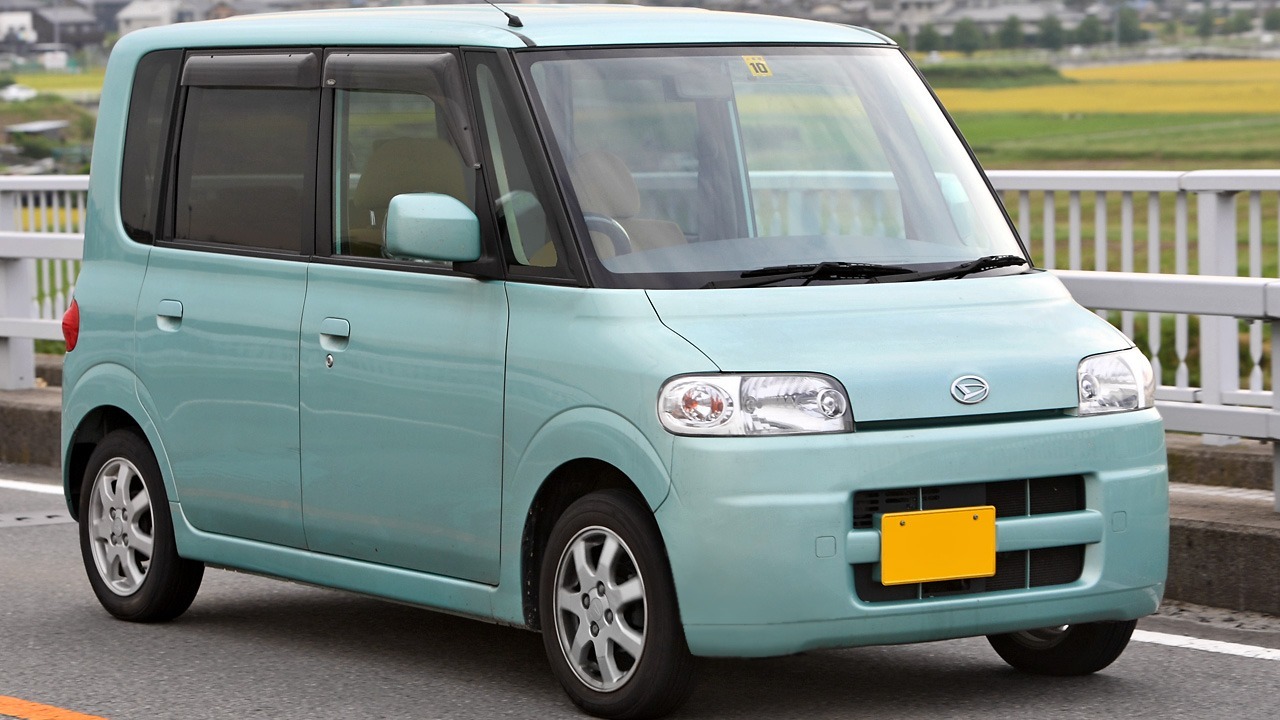

President Donald Trump has framed his push for Japanese-style kei cars as a way to put “tiny” and supposedly cheaper vehicles within reach of more American drivers. The pitch sounds simple: shrink the car, shrink the price tag. In practice, the mix of U.S. labor costs, safety rules, and consumer tastes means his kei car experiment is more likely to raise prices than unleash a wave of $10,000 runabouts.
If anything, the kei idea exposes how hard it is to build truly low-cost cars in the United States without either cutting corners on safety or asking taxpayers to subsidize the difference. The cars may be small, but the policy and market hurdles around them are anything but.
Trump’s tiny-car promise, and what he actually approved
When President Donald Trump talked in Dec about approving the production of “tiny” cars in the United States, he presented it as a green light for a new class of ultra-affordable vehicles. He has been described as “apparently enamored” with the small, boxy kei models that dominate city streets in Asia, and he has leaned on allies such as Representative Sean Duffy to help clear a path for them to be built and sold in America. In his telling, these cars would give budget-conscious drivers a way out of the current market, where new vehicles routinely cost far more than a typical household can comfortably afford.
Trump’s comments fit into a broader narrative that smaller cars are inherently cheaper, and that the main barrier has been political will rather than economics. In December, President Donald Trump said that he had approved the production of “tiny” cars in the United States and cast them as a way to make driving “more affordable than other options,” a message that resonated with voters frustrated by high car payments. That framing glosses over the reality that kei cars are a tightly defined Japanese category with specific tax breaks and design compromises, not a magic formula that can simply be transplanted into the U.S. market, as reporting on Trump’s December approval makes clear.
What kei cars really are, and why they are cheap in Japan
To understand why Trump’s plan is so fraught, it helps to look at what a kei car actually is in its home market. In Japan, kei (short for “light”) vehicles are a formal category of cars, trucks, and vans that are capped in size and engine displacement, and they receive generous tax and insurance breaks in return. What makes them attractive is not just their compact footprint but a whole ecosystem of lower registration fees, cheaper parking requirements, and policies that reward drivers for choosing something smaller and less powerful. That is why a typical kei model can sell for around $10,000 in Japan while still making financial sense for its manufacturer.
Those conditions simply do not exist in the United States. Here, the regulatory system does not carve out a protected niche for tiny cars, and there is no equivalent nationwide package of tax and parking incentives that would make them a default choice for city dwellers. When one recent explainer asked, “What exactly is a kei car? Pronounced like ‘kay,’ they can actually be cars, trucks, or vans,” it underscored how foreign the concept still is to most Americans and how much of their affordability depends on the Japanese policy environment rather than just their dimensions. That same analysis noted that this category has been a tightly managed opportunity for domestic automakers in Japan, not a free-for-all that foreign companies can easily copy, a point that undercuts the idea that U.S. firms can simply scale up a similar kei-style opportunity overnight.
Why building kei-style cars in America would be expensive
Trump’s vision hinges on kei-style cars being built in the United States, not imported from Japan, which is where the economics start to break down. Experts who study the Japanese auto industry point out that a U.S.-manufactured kei-style car would easily soar past the typical $10,000 price tag in Japan, even before dealers add their own markups. Labor costs are higher, suppliers are geared toward larger vehicles, and factories would need new tooling and processes to handle a very different product. The result is that the same basic vehicle that is cheap in Japan becomes a niche, higher-priced curiosity once it is reengineered for American plants and regulations.
That cost gap is not hypothetical. Analysts such as Smitka and others have warned that the combination of U.S. wages, safety equipment, and compliance work would push any American-built kei-style car well beyond the budget segment that Trump is promising to serve. They note that the $10,000 benchmark in Japan reflects not just stripped-down hardware but a whole supply chain optimized for that price point, something U.S. automakers do not currently have. When Smitka and colleagues describe how a U.S.-manufactured kei-style car would “easily soar” past that figure, they are effectively saying that the very feature Trump is selling, rock-bottom pricing, is the one thing his plan is least likely to deliver, as detailed in reporting on Japan’s $10,000 kei cars.
Safety rules and U.S. regulations add hidden costs
Even if automakers could copy Japanese kei designs, they would still have to meet American crash and emissions standards, which are written for a fleet dominated by larger vehicles. Kei cars in Japan are engineered to a different set of expectations, including lower typical speeds and a road environment where other vehicles are also small. To survive on U.S. highways filled with full-size pickups and mega SUVs, a kei-style car would need more structural reinforcement, additional airbags, and other safety systems that add weight and cost. Those upgrades would erode the very simplicity that makes kei vehicles cheap in their home market.
Regulators are unlikely to carve out a weaker safety regime just to make tiny cars pencil out financially, especially at a time when buyers are already anxious enough about vehicle safety and crash-test ratings. Analysts who have looked at Trump’s proposal note that the United States would need to build up new testing and regulatory infrastructure to oversee a kei segment, and that alone would be a heavy lift for agencies that are already stretched. One detailed policy breakdown framed the idea under the headline “President Trump Wants to Build and Sell Kei Cars in America, but Don’t Hold Your Breath,” and it highlighted how the need to “Build and Sell Kei Cars” within existing U.S. rules would force manufacturers to invest in new platforms and compliance work long before they could sell a single unit, a dynamic that makes the whole project look more like a cost center than a quick win, as outlined in the analysis of why you should Don’t Hold Your Breath.
Automakers chase profits, not just presidential ideas
Trump has suggested that car companies are eager to build kei-style vehicles in America and have simply been waiting for a president to say yes. The industry’s own behavior tells a different story. For years, U.S. automakers have been shifting away from small sedans and hatchbacks toward crossovers and trucks, because that is where the margins are. Even when gas prices spike, the profit on a full-size SUV or pickup dwarfs what a company can earn on a tiny city car, especially one that has to be engineered from scratch for a relatively small audience.
Manufacturers have long wanted to do this, just like they have so successfully built in other countries, is how some advocates describe the opportunity, but the fine print usually involves heavy government support or protected markets. In Japan, kei vehicles benefit from a policy framework that makes them a rational business, while in the United States, the same companies make bigger profits on bigger vehicles and have little incentive to cannibalize that with a low-margin microcar. When Trump’s allies talk about how Manufacturers have long wanted to seize this chance, they are often referring to the theoretical appeal of a new segment rather than concrete investment plans, a gap that becomes clear when you read the comments about Manufacturers’ long-standing interest alongside the industry’s actual product lineups.
American drivers are not clamoring for tiny cars
Even if Trump could wave away the cost and regulatory issues, there is still the question of who would buy these cars. Surveys and on-the-ground reporting suggest that U.S. consumers remain deeply skeptical of very small vehicles, associating them with poor crash performance and cramped interiors. A recent feature on kei enthusiasts in the United States opened with the line “Little interest in little cars,” a blunt summary of how niche the market remains. In that story, photographer Michael Noble Jr. captured images for NPR of drivers like Nevi Bergeron, who sits behind the wheel in her Suzuki Cappucci and talks about the joy of owning something unusual, but she is very much an outlier in a landscape dominated by crossovers.
Dealers and analysts quoted in that same reporting point out that most buyers walk onto lots looking for space, perceived safety, and the ability to haul family or gear, not the smallest possible footprint. Automakers have responded accordingly, pouring marketing and engineering resources into larger models that command higher prices and fatter margins. The result is a feedback loop where bigger vehicles generate bigger profits on bigger vehicles, and tiny cars are left as curiosities for enthusiasts rather than mainstream transportation. That context makes it hard to see how Trump’s kei push could suddenly flip consumer preferences, especially when the early adopters highlighted by Michael Noble Jr. for NPR, such as Nevi Bergeron in her Suzuki Cappucci, are framed as exceptions in a market with Little interest in little cars.
Kei cars as an energy and climate idea, not a silver-bullet bargain
Where kei vehicles do have clear appeal is in energy use and emissions. By design, they are lighter, less powerful, and more fuel-efficient than the mega SUVs that dominate U.S. sales, which makes them attractive to policymakers who want to cut oil consumption and urban congestion. Analysts who track global vehicle trends note that Kei vehicles offer a low-cost, high-efficiency alternative to large SUVs, and that they could, in theory, help counter the U.S. uptake of mega SUVs if they were widely adopted. In dense cities, their small size also makes parking and maneuvering easier, which is one reason they have become so popular in Japan’s crowded urban cores.
Those benefits, however, do not automatically translate into lower sticker prices in the American context. Energy savings accrue over time, while buyers still have to confront the upfront cost of a new vehicle that has been engineered to meet U.S. standards and built in U.S. factories. Without the kind of tax breaks and regulatory carve-outs that Japan uses to support its kei segment, the cars would likely arrive as specialty products with modest fuel savings but higher per-unit costs. That is why some experts argue that if the goal is to reduce emissions and oil use, it might be more effective to tighten efficiency rules for the vehicles Americans already buy rather than betting on a small-car revolution, even if Kei vehicles offer a compelling contrast to the current U.S. uptake of mega SUVs.
The political theater around “cute” cars
Trump’s embrace of kei cars is as much about political symbolism as it is about transportation policy. By championing Asia’s “cute” tiny cars, he can present himself as a champion of ordinary drivers who are being priced out of the market, even if the underlying economics do not support his promises. His comments have been widely interpreted as an attempt to show that he is open to unconventional ideas and willing to challenge the auto industry’s status quo, especially at a time when voters are angry about high monthly payments and the sense that new cars are becoming a luxury item.
Yet the way he has rolled out the idea, with sweeping statements about approving production and suggestions that bureaucrats have been the main obstacle, glosses over the complex trade-offs involved. When reports describe how Trump wants Asia’s “cute” kei cars to be built and sold in America, and note that President Donald Trump, apparently enamored by their design, has pressed allies like Sean Duffy to approve production, they also hint at the gap between the photo-friendly image of a tiny car and the hard work of making it viable. That tension is captured in coverage of how Trump wants Asia’s “cute” kei cars in America, which often reads as much like political theater as a concrete industrial strategy.
Why the kei push could still reshape the market, just not as promised
Even if Trump’s kei car push does not deliver a wave of ultra-cheap vehicles, it could still have ripple effects across the industry. By putting a spotlight on the idea of smaller, more efficient cars, he may nudge regulators and automakers to revisit how U.S. rules treat vehicle size and weight, or to experiment with new urban mobility products that borrow some kei traits without fully adopting the Japanese template. City governments that are already struggling with congestion and parking shortages might see an opening to pilot zones or incentives for compact vehicles, even if they are not formally classified as kei.
At the same time, the gap between the political promise and the likely reality could fuel further frustration among buyers who are desperate for relief from high car prices. If the first wave of American-built kei-style cars arrives as quirky, $20,000-plus toys rather than $10,000 workhorses, it will reinforce the sense that the system is stacked against people who just need basic transportation. In that scenario, Trump’s kei experiment would not so much solve the affordability crisis as highlight how deeply it is rooted in labor costs, safety expectations, and corporate profit strategies that no single product category can easily overturn, even one as intriguing as the tiny cars that first captured his imagination in Dec when he approved their production in the United States as a supposed path to something “more affordable than other options.”
More from MorningOverview