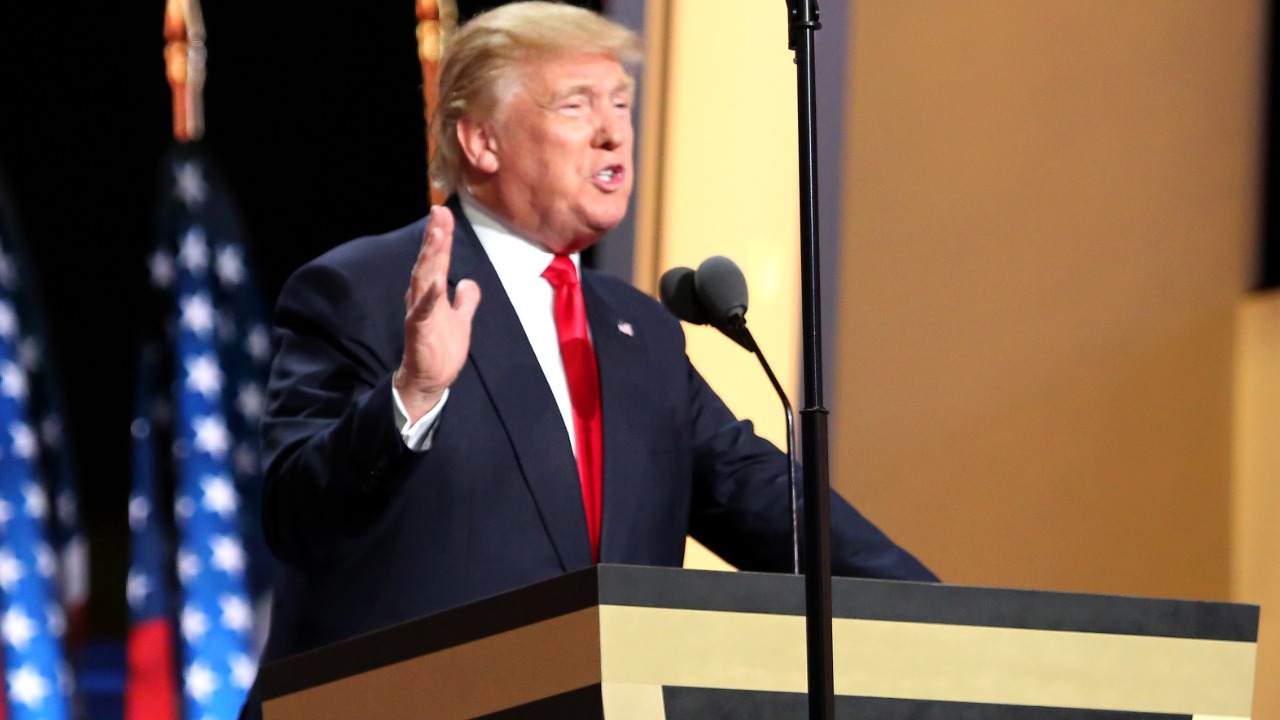

President Donald Trump has turned the auto trade fight into a public dare, telling audiences that if domestic companies will not build the cars he wants, he is prepared to let Chinese manufacturers try. The message cuts against years of industry warnings that a wave of low cost Chinese vehicles could gut U.S. production, even as Trump insists his tariff strategy will keep the playing field level. I see a White House betting that fear of being displaced will shock Detroit into investing more at home, while automakers warn that the same policy mix could open the door to the very rivals they see as an existential threat.
The Detroit dare collides with China fears
Trump’s provocation has been distilled into a simple challenge: if U.S. companies do not expand domestic production, he is ready to welcome Chinese plants on American soil. In a post that quickly ricocheted through Michigan politics, Senator Gary Peters quoted the president saying, “Let China come in,” framing it as an invitation for a foreign adversary to undercut American workers and the future of the auto industry. Peters argued that President Trump’s stance would “open the door” to automakers from China at the expense of union jobs and long term investment in places like Detroit and Flint.
That political backlash sits on top of a drumbeat of warnings from the companies themselves. Major U.S. and global automakers have told Washington that Chinese government backed brands represent a “clear and present threat” to their survival in the American market, pointing to state subsidies and aggressive export targets that could flood showrooms with cheaper models. In a detailed appeal from WASHINGTON, industry leaders stressed that Chinese firms are not just another set of competitors but part of a strategic push by Chinese planners to dominate next generation vehicles, from batteries to software. When Trump dares them to face that competition head on, he is effectively telling Detroit to beat Beijing at its own industrial policy game.
Tariffs, tweaks and the Trump theory of leverage
Trump’s defenders say the dare is not a surrender to Chinese imports but a negotiating tactic layered on top of aggressive tariffs. Earlier in his term, the president slapped a 25 percent duty on imported autos, a move that rattled markets and sent shares of Asia’s automakers lower as investors recalibrated the cost of selling into the United States. The tariff hit brands across the region and raised questions about how companies like Honda and Toyota would absorb higher costs without losing customers in a price sensitive segment.
Trump has since argued that adjustments to those policies have made them a net positive for American manufacturing, particularly in the Midwest. At an appearance with business leaders in Detroit, he touted “tweaks” to the tariff regime that, according to local economic analysis, left Michigan slightly better off in terms of factory output and employment. The president used that stage to repeat his openness to Chinese auto plants in the United States, even as he praised the way tariffs had supported production of vehicles like the Ford F-150 pickup that is made in the state. Supporters in the room heard a president using import duties and the threat of new entrants from China as twin levers to keep jobs in Detroit rather than in Mexico or Asia.
Automakers warn of a “clear and present” Chinese threat
Industry executives, however, are not reassured by the idea that tariffs alone can manage the risk. In a coordinated message delivered in WASHINGTON, major automakers described Chinese government backed rivals as a “clear and present threat” and urged the administration to prevent those companies from using the United States as a dumping ground for excess capacity. The statement, reported by David Shepardson, underscored that this was not a fringe view but a consensus among major manufacturers that see their margins already squeezed by the costly transition to electric vehicles.
Those concerns have only intensified as Chinese brands scale up exports of battery powered cars and SUVs. Top automakers have warned that China is becoming a direct threat to U.S. carmakers, no longer content to sell components or low end models but targeting the same middle class buyers that sustain Detroit’s profits. Executives argue that state subsidies allow Chinese firms to sell vehicles below what it costs American companies to build them, a dynamic they say could hollow out domestic plants if left unchecked. Their message to policymakers is blunt: without tighter barriers, the combination of cheap imports from China and the president’s rhetorical welcome mat could turn the Midwest into collateral damage in a global price war.
Congressional pressure and the politics of “Let China come in”
Trump’s dare has also scrambled the usual partisan lines on trade. Lawmakers from both parties, particularly those representing auto heavy states, have pressed the administration to move in the opposite direction by tightening barriers against Chinese vehicles and technology. A coalition of automakers has urged the Trump administration and Congress to restrict imports of cars, batteries and software from China, warning that without action, domestic firms will lose ground in everything from autonomous driving systems to in car services. Their lobbying campaign frames the issue not just as an economic fight but as a matter of national security, arguing that dependence on technology and services from China could expose critical infrastructure to foreign control.
That argument has found a receptive audience in the Senate, where figures like Gary Peters have used Trump’s own words to rally opposition. In a widely shared post, Peters highlighted the president’s “Let China come in” remark and warned that such a policy would “undercut our automakers” and jeopardize the future of the auto industry. He cast the issue as a choice between backing American workers or giving a leg up to foreign adversaries, a framing that resonates in union halls and local chambers of commerce alike. When I look at that debate, I see a broader struggle over whether the United States should treat Chinese investment as a necessary part of global supply chains or as a Trojan horse that could erode the country’s industrial base from within.
Consumers, costs and the limits of tariff brinkmanship
Behind the political theater, the economics of Trump’s strategy are more complicated than a simple dare. The 25 percent auto tariff that shook markets did not just hit foreign brands; it also raised costs for vehicles assembled in the United States that rely on imported parts. Analysts noted that even if Honda or Toyota build a model in an American plant, components sourced from China become more expensive, a burden that tends to show up in higher sticker prices. Those higher costs are often passed on to consumers, which can dampen demand and complicate the very investment decisions the president is trying to influence.
Trump has tried to square that circle by insisting that his tariffs are targeted at what he calls an “unfair” surge of imports from China, while promising that companies that build in America will be rewarded. In remarks defending his auto policies, he accused China of flooding global markets with subsidized vehicles and vowed to keep duties in place until Beijing changes course. At the same time, he has dangled the prospect of Chinese owned factories on U.S. soil, arguing that if those firms “build their cars here,” they should be allowed to compete. It is a posture that mixes confrontation with conditional openness to cars made under the American flag, even if the corporate headquarters sit in Shanghai or Shenzhen.
More from Morning Overview