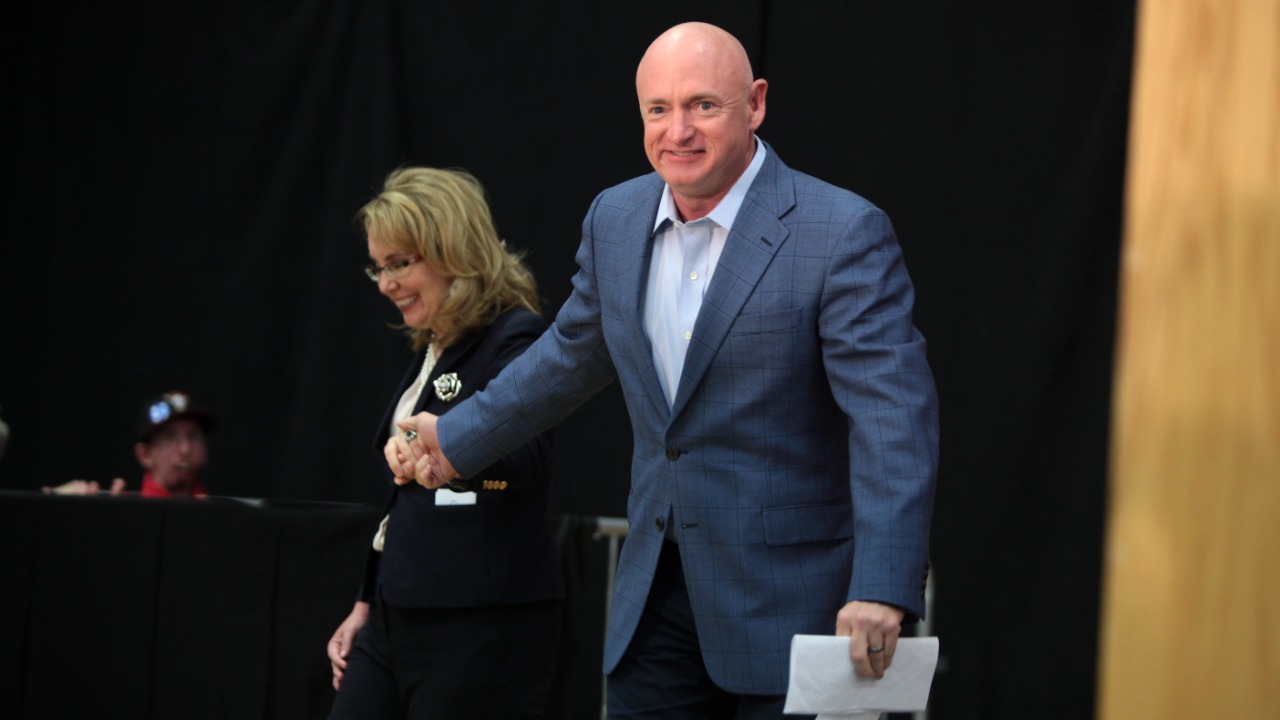

The Trump administration has turned a little-seen video about military ethics into a full-blown confrontation with one of its most prominent critics in uniform. After Senator Mark Kelly joined other Democrats in reminding troops they can refuse unlawful commands, senior officials accused him of undermining the chain of command and moved to punish him in ways that blur the line between political feud and military discipline.
At the center of the clash is a basic question with enormous stakes: when a sitting president and his Pentagon call a warning about “illegal orders” seditious, are they defending civilian control or trying to chill dissent inside the ranks? I see the fight over Kelly’s record and rank as a revealing test of how far the Trump team is willing to go to enforce loyalty, and how much pushback the system can absorb before long-standing norms start to buckle.
The video that lit the fuse
The controversy traces back to a short video recorded in November in which Kelly and five other Democratic lawmakers spoke directly to service members and intelligence personnel about their obligations under the law. In the clip, they stressed that troops must follow lawful commands but can refuse illegal ones, echoing a principle that has been drilled into generations of officers and enlisted personnel. Kelly, a former Navy captain and astronaut, framed the message as a reminder that the oath is to the Constitution, not to any one leader, a point that has taken on sharper edge in a polarized era.
According to one account, Kelly was one of six Democratic lawmakers who appeared in the November video, which was aimed at both military and intelligence community audiences. The group’s message, that “you can refuse illegal orders,” tracked closely with what troops are already taught in training, and it came as officials warned about stress and pressure on the force heading into a contentious political season. That context is crucial, because it undercuts later claims that the video was some radical departure from established doctrine.
Hegseth’s unprecedented censure and demotion push
The Trump administration’s response has been led by Defense Secretary Pete Hegseth, who has treated the video not as a civics lesson but as a disciplinary case. In public statements and internal directives, he has accused Kelly of encouraging insubordination and has moved to use his authority over the retired officer’s military status to send a message. I see that as a striking escalation, because it weaponizes the Pentagon’s personnel tools against a sitting senator over speech that, on its face, restates existing law.
In WASHINGTON, Defense Secretary Pete Hegseth announced that he had issued a formal letter of censure to Democratic Sen Mark Kelly of Arizona over the video, and he coupled that reprimand with a move to reduce Kelly’s military rank and cut his retirement pay. A separate description of the case notes that Defense Secretary Pete Hegseth announces the censure in a way that highlights how unusual it is to revisit a retired officer’s status while he serves as an elected official, a step that could complicate an already unique case and raise separation-of-powers questions.
From Pentagon discipline to Trump’s “traitors” rhetoric
While Hegseth has framed his actions as a matter of good order and discipline, President Trump has gone much further in his public attacks on Kelly and his colleagues. On social media and in remarks to supporters, he has cast the video as an act of betrayal, using language that suggests not just administrative punishment but criminal consequences. That rhetorical escalation matters, because it blurs the boundary between a policy dispute and accusations of capital offenses.
Reporting on the administration’s reaction notes that Trump responded by calling the lawmakers “traitors” and declaring that they should be “ARRESTED AND PUT in jail” over the video. In a separate account, The President labeled the episode “SEDITIOUS BEHAVIOR, punishable by DEATH,” language that would be extraordinary in any context, let alone directed at a group of elected officials and veterans. When the commander in chief talks about death-penalty offenses in response to a reminder about unlawful orders, it sends a chilling signal about how dissent is being interpreted at the highest levels.
How Hegseth is using the machinery of rank and pay
Beyond the rhetoric, Hegseth has been explicit about his intent to hit Kelly where it hurts most in military terms, his rank and his pension. That approach relies on the fact that Kelly, despite being long retired from active duty, still holds a reserve commission that can be adjusted by the Pentagon. I see this as a test case for how far civilian leaders can reach back into a retired officer’s record to punish speech that angers the White House.
One detailed account explains that Hegseth aims to cut Kelly’s retirement pay over what that report calls a “lawful orders” video, signaling that the secretary is prepared to downgrade Kelly’s rank as “Captain Kelly” and reduce the associated benefits. Another report notes that in a statement on X Monday, Secretary Hegseth said he was moving to demote Senator Kelly and cut his retirement pay, underscoring that the financial penalty is not a side effect but a central part of the punishment.
Rebranding the Pentagon and the message to the ranks
The Kelly case is unfolding as Trump’s team reshapes the Pentagon’s identity and language in ways that resonate with his political base. Hegseth has embraced the title “Secretary of War” in some public communications, a throwback label that signals a more aggressive posture and a break from the post–World War II framing of a “Department of Defense.” That rebranding is not just cosmetic, it reflects a worldview in which internal critics are treated as enemies to be crushed rather than voices to be debated.
One local report describes how Sec War Hegseth has moved to demote Senator Kelly, explicitly tying the action to Kelly’s statement that “You can refuse illegal orders.” A short video segment notes that Secretary of War Pete Hegseth announced he had issued a letter of censure to Senator Mark Kelly and was pursuing a reduction in his rank. In another social media clip, Secretary of Defense Pete Hegsett is shown saying the Pentagon is taking action to punish Senator Mark Kelly for participating in the video, even as he acknowledges that the idea of refusing illegal orders is a longstanding principle taught in training, a tension that sits at the heart of the dispute.
Who joined Kelly, and why that matters
Kelly did not act alone when he recorded the video, and the identities of his co-speakers help explain why the message carried weight inside the military community. The group included combat veterans and former officers from different branches, people who have lived the realities of command and the moral strain that can come with it. Their presence undercuts the notion that this was a purely partisan stunt, even if all of them now sit on the Democratic side of the aisle.
One detailed account lists Jason Crow (Colorado), a former Army Ranger, along with Chrissy Houlahan (Pennsylvania), a former Air Force officer, as among the lawmakers who joined Kelly in the video. Another report notes that Captain Kelly’s status as a sitting United States Senator did not exempt him from accountability in Hegseth’s view, and it adds that several of the other participants were also former Army officers who repeated the message that service members and intelligence community members should defy illegal orders. When veterans with that kind of background speak in unison about the law, it is harder to dismiss them as simply trying to score points against Trump.
Kelly’s own response and the “Sopranos” backstory
For his part, Kelly has treated the administration’s threats as both serious and politically motivated, vowing to fight the proceedings while casting himself as someone who has weathered pressure before. He has leaned on his biography as a combat pilot, astronaut, and senator from a swing state to argue that he understands both the stakes for the military and the risks of unchecked presidential power. I read his posture as an attempt to turn a personal vulnerability, his military record, into a platform for broader criticism of Trump’s approach to the armed forces.
In one interview, Kelly shrugged off a Trump court-martial threat and said that growing up in Tony Soprano’s hometown made him resilient, explaining that “When you grow up around” that kind of environment, you learn to stand up to bullies and keep going even when powerful people come after you. That account notes that the warning from Trump came after Kelly and several other Democratic lawmakers posted the video urging service members not to follow unlawful orders, and it adds that Kelly was raised in northern New Jersey. That personal detail, tied to a pop culture reference, is more than color, it is part of how Kelly is trying to frame himself as someone who will not be easily intimidated by threats from the commander in chief.
Democrats, civil-military norms, and the “illegal orders” line
Beyond the personalities, the fight over Kelly’s video is really about where the line sits between lawful obedience and unlawful commands, and who gets to define it. For decades, U.S. military training has emphasized that troops must refuse illegal orders, a lesson drawn from the Nuremberg trials and later abuses. What is new is seeing that principle recast by the administration as a potential act of sedition when voiced by opposition politicians.
One summary of the case notes that the move against Kelly comes more than a month after Kelly and other Democratic lawmakers posted their video warning about following unlawful orders, at a time when officials were already talking about stress and pressure on the force. Another report explains that earlier this year, Hegseth’s censure of Kelly for urging troops to resist unlawful orders was part of a broader news wrap that also mentioned the figure 35 and noted the timing in EST, underscoring how the episode has become a staple in coverage of civil-military tensions. When a standard ethics lesson is recast as a partisan provocation, it raises the risk that future officers will think twice before speaking plainly about the law.
What makes this case so unusual
There is a long history of retired officers criticizing presidents, sometimes in harsh terms, without facing retroactive punishment to their rank or pay. What makes the Kelly case stand out is the combination of his status as a sitting senator, the administration’s willingness to revisit his military record, and the explicit linkage to a video that restates existing doctrine. I see that combination as a potential precedent that could either be normalized or repudiated, depending on how institutions and voters respond.
One detailed local report notes that Hegseth moves to demote Sen Mark Kelly over Democrats’ “illegal orders” video, and it specifies that the notice was Posted Jan 5 at 9:53 am, with the number 53 highlighted in the timestamp. Another account emphasizes that the Department of War and the Department of Defense had already signaled in November that they were looking into Kelly over the video, suggesting a coordinated effort rather than a spur-of-the-moment reaction. When the machinery of government moves in lockstep like that against a single lawmaker, it is hard not to see a broader message being sent to anyone else thinking of speaking up.
The stakes for civil-military relations going forward
As the Kelly saga unfolds, the stakes extend far beyond one senator’s pension statement. At issue is whether the Trump administration can redefine core military ethics as disloyal when voiced by political opponents, and whether the Pentagon’s disciplinary tools can be turned into instruments of partisan enforcement. I view this as a stress test for the unwritten norms that have long kept the U.S. military out of direct political combat, even when individual officers have strong views.
One national report notes that earlier this year, Monday’s statement from Hegseth made clear that “Captain Kelly’s status as a sitting United States Senator does not exempt him from accountability,” a line that could be read either as a defense of equal treatment or as a warning shot to other lawmakers. Another account of the censure underscores that investigating and now punishing a senator for what he and his colleagues had to say about their government could have a chilling effect on how frankly future veterans in Congress speak about the obligations of those in uniform. However the Kelly case ends, it will leave a mark on the unwritten rules that govern the relationship between the White House, the Pentagon, and the people who wear the uniform.
More from Morning Overview