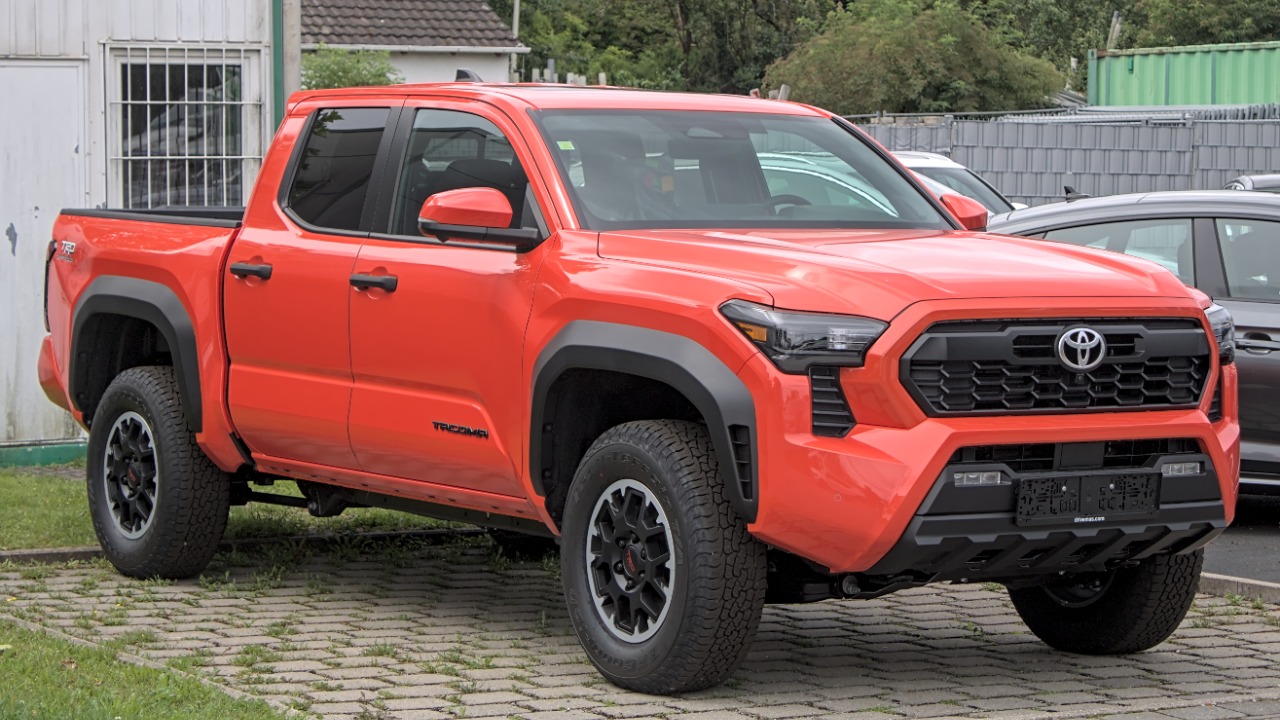

The Toyota Tacoma just closed out a landmark year in the United States, turning a long run of steady popularity into a record‑shattering performance. With sales surging to levels the midsize pickup has never seen before, the truck has cemented its status as the segment’s benchmark while signaling how much headroom still exists in a market that many assumed was already mature.
Behind the headline numbers is a story about product timing, brand loyalty, and a truck that managed to evolve without losing the qualities that made it a staple from job sites to trailheads. I see the Tacoma’s latest results as a case study in how a carefully executed redesign, paired with a broader shift in a company’s lineup, can unlock surprising demand even in a crowded field.
The record that rewrote Tacoma history
The core fact is simple: the Toyota Tacoma just delivered its strongest sales year on record in the United States. Reporting on the truck’s performance notes that nearly 275,000 units found buyers, a figure that underscores how deeply the pickup is embedded in the midsize market. That total is not a marginal improvement, it is a decisive leap that pushes the Tacoma into territory usually reserved for mass‑market crossovers and full‑size trucks.
To appreciate how significant that is, it helps to remember that The Tacoma had already set a high bar earlier in the decade. The truck’s previous best came when Toyota sold 252,490 units, a number that many analysts treated as a natural ceiling for a midsize pickup. Surpassing that earlier record by such a wide margin shows that the Tacoma’s audience is not just loyal, it is expanding, even as new rivals crowd into the segment.
How 2025 blew past a soft patch
The scale of the Tacoma’s rebound becomes clearer when I look at the previous two years. Data on U.S. sales shows that Toyota sold 192,813 Tacoma units in 2024, down from 234,768 in 2023. They were typical generational transition numbers, with buyers holding off as word spread that a new fourth‑generation truck was on the way. That lull set the stage for pent‑up demand once the redesigned model reached showrooms.
By the time the 2025 tally was complete, Tacoma sales had surged to 274,638, a jump that one analysis framed as a Truly Huge Year For Toyota Pickup performance. Another breakdown of the same period notes that the Tacoma, with 274,638 units sold, posted a 42.4 percent increase, marking its best year. That kind of year‑over‑year growth is rare for a model that was already the segment leader, and it suggests that the redesign did more than just retain existing owners.
Dominating a crowded midsize truck field
Context matters, and in pickups the obvious comparison is Ford. One assessment of the truck market points out that Ford may be the king of full‑size pickup trucks, but in the midsize truck space that title goes to Toyota. In that analysis, the Tacoma is described as having demolished the midsize truck competition, with Toyota holding the top spot while Ford focuses its volume on larger models like the F‑150, underscoring how differently the two brands approach the truck hierarchy. The Tacoma’s ability to thrive in this niche shows that there is room for a specialist even in a landscape dominated by full‑size sales.
Sales data backs up that narrative of dominance. A breakdown of Toyota Tacoma Sales Data & Trends describes a midsize pickup market that Toyota controls convincingly, with rivals like the Chevrolet Colorado and GMC Canyon trailing well behind. Another look at the segment notes that while Ford may be the king of full‑size trucks, Toyota has secured the midsize crown, with the Tacoma’s top spot underlining how thoroughly it has outpaced competitors that arrived later to the party.
What changed with the fourth generation
The latest Tacoma is not just a facelift, it is a comprehensive rethink that finally dragged the truck’s cabin and tech into the modern era. A detailed comparison of old vs. new notes that the fourth‑generation Tacoma is a big improvement in the Interior and tech department, addressing long‑standing complaints about dated materials and small screens. Where the third‑generation truck leaned heavily on its reputation for durability, the new model adds the kind of digital interfaces and comfort features that buyers now expect in a daily driver.
That evolution aligns with a broader description of the Tacoma’s place in the market. A research overview explains that the fourth‑generation redesign brought the Tacoma, identified explicitly as the Tacoma ( Toyota Tacoma ), up to date in terms of technology, safety and utility while maintaining its role as a longtime bestseller in the mid‑size pickup class. I see that balance as crucial: Toyota modernized the truck enough to attract new buyers without alienating those who valued its straightforward, work‑ready character.
Why buyers keep choosing the Tacoma
Sales charts tell one story, but the Tacoma’s staying power is rooted in how owners use these trucks. A feature on Taco time describes how The Tacoma, explicitly identified as the Toyota Tacoma, has strong momentum, noting that for model year 2021 the Tacoma sold more than 250,000 units. That earlier milestone shows that the truck’s current record is not a fluke, it is the latest peak in a long climb built on reliability, off‑road capability and a reputation for holding value.
Those qualities translate into real‑world loyalty. The same look at Taco culture emphasizes that the Tacoma appeals to a wide spectrum of drivers, from contractors who need a dependable workhorse to weekend adventurers who prize its off‑road trims. When I connect that profile with the latest sales surge, it is clear that the Tacoma’s best year ever is less about a sudden fad and more about a deepening relationship with an already committed fan base that keeps returning to the truck when it is time to replace or add a vehicle.
How Tacoma fits into Toyota’s electrified push
The Tacoma’s breakout year did not happen in isolation, it unfolded as Toyota reshaped its broader lineup around electrified powertrains. A detailed sales breakdown notes that nearly half of Toyota and Lexus buyers went electrified, highlighting how quickly hybrids and other electrified models are becoming central to the company’s U.S. business. That same report references a moment when Akio Toyoda Teased a Mid Engined Two Seater, a reminder that Toyota is trying to balance efficiency with enthusiast appeal across its portfolio.
On the truck side, the company’s U.S. arm has been explicit about the scale of its electrified growth. Toyota Motor North America reported that its Division records its best‑ever full‑year sales result, with 2025 electrified vehicle sales of 131,851, an all‑time best ever. I read the Tacoma’s success alongside those figures as evidence that Toyota’s truck buyers are increasingly comfortable with the brand’s broader move toward electrification, even if the Tacoma itself remains rooted in traditional internal‑combustion and hybrid‑leaning powertrains rather than full battery electric setups.
From generational dip to breakout growth
Every generational change carries risk, and the Tacoma’s sales dip in 2023 and 2024 shows how that risk usually plays out. The question was whether the new truck would simply restore the prior baseline or unlock new demand. The answer came in the form of that 42.4 percent jump to 274,638 units, which not only erased the transition slump but pushed the Tacoma far beyond its previous high of 252,490 units. That pattern suggests that many buyers were not lost during the redesign pause, they were simply waiting for the new truck to arrive.
Looking at the Tacoma’s trajectory over the first half of the decade, I see a model that has turned a potential vulnerability into a strength. The generational dip documented in the Toyota Tacoma Sales Data and the subsequent surge to nearly 275,000 units show that Toyota timed the redesign well, communicated it clearly and delivered enough substance in the new truck to justify the wait. In a market where missteps can quickly send buyers to rival brands, that is perhaps the most impressive part of the Tacoma’s best year ever.
More from Morning Overview