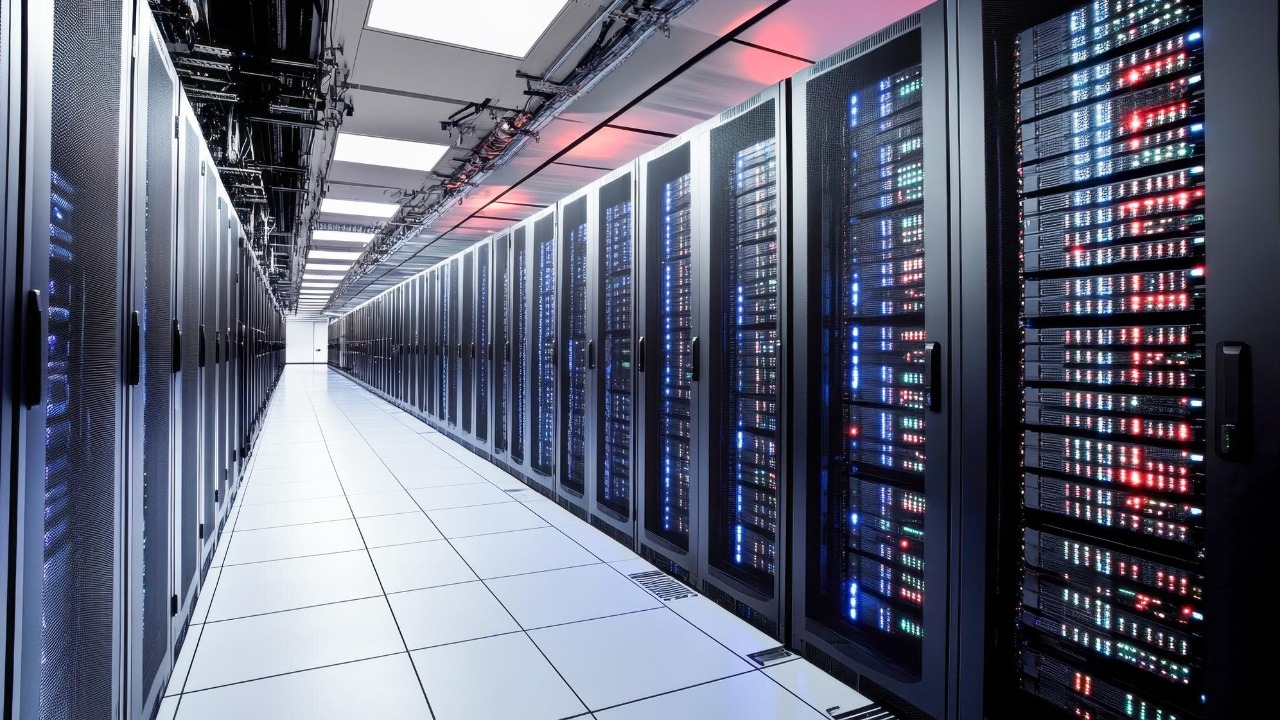

Across the United States, community meetings that once revolved around potholes and school budgets are now consumed by arguments over artificial intelligence infrastructure. Residents are showing up with printouts of their latest power bills and pink slips from employers that have embraced automation, and they are pointing the finger at the sprawling data centers rising on the edge of town. I see a new kind of backlash taking shape, one that links higher electricity costs and AI-driven layoffs into a single story about who pays for the digital future and who profits from it.
The new face of local anger
In city council chambers and county board rooms, data centers have become a convenient villain for a public that is tired of rising costs and economic insecurity. Reports describe Angry residents who see a direct line from the server farms in their backyard to the “job‑killing AI” tools that are reshaping white‑ and blue‑collar work. For people who feel they never asked for this technology, the sight of a massive, heavily secured facility that employs relatively few locals has become a symbol of a broader sense of powerlessness.
That frustration is not confined to one region or political tribe. Accounts of Similar concerns surface from suburban Virginia to rural Midwestern counties, where residents complain that they are being asked to subsidize infrastructure for global tech giants. I hear a recurring theme in these meetings: people feel that the benefits of AI are abstract and distant, while the costs, from higher utility bills to land use conflicts, are immediate and intensely local.
How AI data centers strain the grid
Behind the anger is a simple physical reality: AI models require enormous computing power, and that power has to come from somewhere. Analysts tracking the sector note that total annual U.S. electricity consumption hit a record high in 2024, and that ceiling is being pushed upward by the rapid growth of facilities dedicated to training and running AI systems. One study cited by Oct and How suggests that in some regions, such as parts of central and northern Virginia, data centers already account for a striking share of total power demand.
As more AI‑specific facilities come online, utilities are being forced to upgrade transmission lines, build new substations, and secure long‑term generation contracts at a pace that would have been unthinkable a decade ago. Those investments are not cheap, and regulators often allow companies to recover them through higher rates on all customers, not just the corporate clients that signed the data‑center deals. That is the backdrop for the sense that total demand is rising faster than the grid can comfortably handle, a dynamic that feeds public suspicion that AI is quietly rewriting the social contract around energy without a clear public debate.
When your power bill becomes collateral damage
For households, the most tangible sign of this shift is the monthly bill. In Texas, where a wave of new server farms is colliding with already volatile wholesale markets, consumer advocates warn that electricity costs are likely to climb as data‑center demand soaks up available capacity. One widely cited analysis projects that power demand in the state will grow by almost 70% over the coming decade, and it argues that when overall demand surges, “Energy Rates: When overall demand” rises, residential customers often end up paying more unless regulators aggressively police cost allocation.
Nationally, researchers and reporters have begun to connect the dots between the AI boom and higher household expenses. One recent audio report described how, as a country, “we are spending more to get data centers up and running,” and it illustrated that point with images by Eli Hiller for The Washington Post via Getty Images that showed massive new facilities rising alongside aging grid infrastructure. The message was blunt: the capital costs of this build‑out are being socialized, even as the profits from AI tools remain concentrated among a small group of companies.
From Saline, Michigan to Texas: flashpoints on the map
The politics of this transition are playing out in specific communities that have become test cases for how far residents are willing to go to resist AI infrastructure. In Saline, Michigan, Residents have rallied against the proposed Saline Michigan Stargate data center, a $7 billion project planned on farmland that critics say would strain the grid and transform the character of the area. Their protests highlight a fear that local landscapes are being sacrificed to meet the reliability requirements of a national AI build‑out that will not necessarily deliver commensurate benefits to the people living next door.
In Texas, the tension is less about a single marquee project and more about the cumulative effect of dozens of facilities plugging into a grid that was already under stress. Analysts warn that as AI data centers proliferate, they can exacerbate existing vulnerabilities in a system that has struggled with extreme weather and market volatility. The combination of rapid demand growth and a patchwork of regulatory oversight has turned the state into a case study in how AI can magnify pre‑existing infrastructure weaknesses, rather than simply adding neutral new load.
Politicians join the backlash
Local anger has not gone unnoticed by elected officials, who are increasingly willing to frame AI data centers as a culprit in rising utility costs. In one widely shared report, Jan coverage quoted U.S. politicians, including figures highlighted by Lisa Monica and Ramdhani Pratama, who argued that the rapid expansion of large‑scale data centres is helping to push U.S. power tariffs higher. Their rhetoric reflects a broader shift in which AI is no longer treated as an abstract innovation issue but as a kitchen‑table economic concern.
At the national level, the politics are even more complex. One analysis described how, Amid a cascade of headlines about AI driving a financial bubble, job cuts, higher energy prices, suicides, and an increasing number of scams, President Donald Trump is weighing an executive order that critics say would shield his big tech donors from state‑level AI regulations. That tension between local officials who want more control and a federal government that is often more sympathetic to industry concerns is likely to be one of the defining political fights over AI infrastructure in the coming years.
Tech’s expansion playbook meets organized resistance
On the other side of the table sit the companies and developers who see AI data centers as the backbone of the next economic boom. Reporting describes how Tech companies and developers are looking to plunge billions of dollars into ever‑bigger facilities to power artificial intelligence, often promising local tax revenue and a sheen of innovation in return. Their pitch leans heavily on the idea that communities must choose between embracing this infrastructure or being left behind in the next wave of digital transformation.
Yet the pushback is starting to change the calculus. Accounts of how Opposition spreads as data centers fan out describe projects that have lost rezoning petitions after organized campaigns by residents. Commercial real‑estate specialists like Andy Cvengros, who helps lead the data center practice at a major firm, now talk openly about the risk that community resistance will derail carefully planned investments. I see a feedback loop emerging: the more aggressively companies expand, the more they galvanize local opposition that forces them to rethink where and how they build.
AI, automation, and the fear of job‑killing machines
Even if the power‑bill story were not so potent, the labor dimension of AI would still make data centers a lightning rod. Analysts tracking the job market warn that, Dec briefings suggest, The Brief is that After the rise of AI video tools in 2025, 2026 could bring visible job losses, especially in fields like customer service, content production, and some professional services. When workers in those sectors look out their car windows and see a new data center, it is not hard to understand why they might connect that building to the anxiety they feel about their own careers.
Economists who study automation argue that the underlying dynamic is not new. As one influential analysis put it, In general, automation also shifts compensation from workers to business owners, who enjoy higher profits with less need for labor. That shift can be mitigated if workers gain new skills and if policy steers investment toward complementary roles, but in the short term it often feels like a zero‑sum game. When people show up at town halls to denounce “job‑killing AI,” they are giving voice to a long‑running fear that this time, the machines really are coming for them.
Public opinion hardens around AI and higher bills
Surveys suggest that the public is increasingly willing to blame AI for their rising costs, even when the underlying picture is more complicated. One recent poll found that most Americans now fault AI for higher utility bills, even though analysts caution that Role of Rising Power Costs is only one piece of a broader puzzle that includes fuel prices, grid upgrades, and regulatory choices. Still, the perception that Artificial intelligence is driving a “pricing problem” is politically powerful, and it is shaping how voters respond to both local zoning fights and national policy debates.
Media coverage has amplified that narrative by highlighting the most dramatic examples of AI‑related strain. One widely shared explainer on Why AI data center costs may be driving up your electric bill, produced for the science podcast Short Wave at NPR, walked listeners through the mechanics of how large industrial customers can shift costs onto residential ratepayers. That kind of storytelling helps people connect abstract grid dynamics to the line items on their own bills, reinforcing the sense that AI is not just a tech story but a pocketbook issue.
Forecasts of an AI reckoning in 2026
Experts who track the AI sector are increasingly warning that 2026 could be a turning point, not just for the technology itself but for the politics surrounding it. In a widely discussed forecast, Shana Lynch reported that leading researchers believe the industry is entering a phase where the costs of AI, from energy use to labor disruption, will become more visible to the public. After years of fast expansion and billion‑dollar bets, those experts suggest, the coming year may mark the moment when societies start to demand a clearer accounting of who benefits and who bears the externalities.
Financial analysts are sounding their own alarms. One prominent AI investor, described as a “super‑bull” who backed a major Nvidia‑Groq deal, has warned that the current build‑out of AI infrastructure could fuel a broader financial crisis if expectations about future returns prove unrealistic. In that analysis, Data centers are likened to earlier speculative frenzies, from railroads to telecoms, that left behind stranded assets and socialized losses. When I listen to residents at town halls talk about being stuck with higher bills while investors chase the next big thing, I hear an echo of those historical cycles.
Washington’s uneasy balancing act
National policymakers are caught between the desire to nurture a strategic industry and the need to respond to voter anger over costs and jobs. A recent overview of the political landscape noted that, Dec observers see at least five key AI fights on the horizon, including energy use, labor impacts, and international competition. However, the president has previously signaled interest in engaging with the Chinese Preside on AI issues, underscoring how deeply intertwined domestic infrastructure decisions are with global strategic competition.
At the same time, regulators and legislators are grappling with how to structure incentives so that AI growth does not simply translate into higher bills and more precarious work. Some proposals focus on requiring data‑center operators to fund grid upgrades directly or to meet strict efficiency and clean‑energy standards. Others look to labor policy, from retraining programs to stronger safety nets, to cushion the blow of automation. The choices Washington makes in the next few years will determine whether town‑hall rage hardens into a lasting anti‑AI movement or evolves into a more nuanced demand for fairer distribution of the technology’s costs and benefits.
The frenzy, the grid, and what comes next
Underlying all of this is a sense that the pace of AI deployment has outstripped the capacity of existing institutions to manage its side effects. One widely cited analysis described an AI data center “frenzy” that is pushing up electricity demand and fueling higher prices for U.S. households, arguing that Nov evidence shows these facilities are becoming a significant reason for price inflation in some markets. That same report warned that without better planning, the grid could be headed toward a crisis as utilities scramble to keep up with demand from AI while also meeting reliability and climate goals.
For now, the debate is playing out project by project, rate case by rate case, town hall by town hall. But as more residents connect their higher bills and job anxieties to the data centers rising nearby, the pressure for a more coherent national strategy will only grow. Whether that strategy emerges through thoughtful policy or through the blunt force of public backlash will depend on how quickly leaders, companies, and communities can move from shouting matches to concrete bargains about what AI owes the people who are paying its hidden costs.
More from MorningOverview