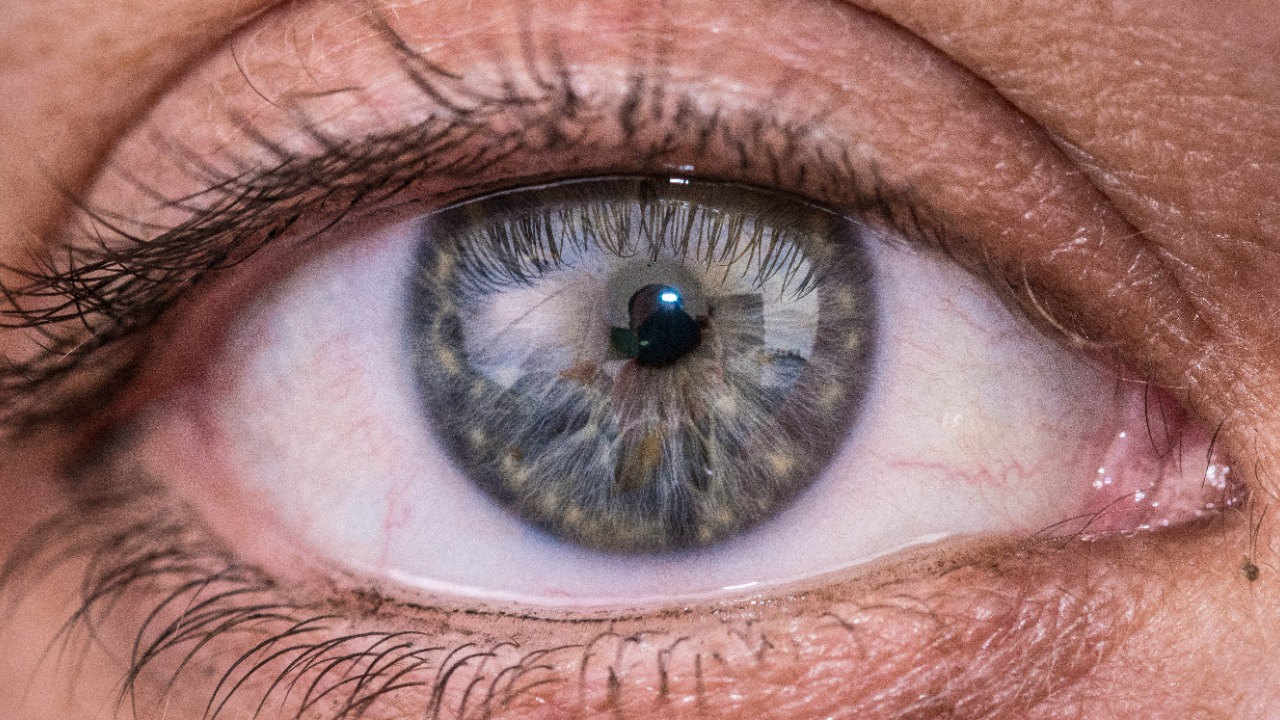

A tiny wireless chip placed at the back of the eye is giving people with severe vision loss something they had been told they would never regain: the ability to see letters, shapes and even words again. By pairing that implant with smart glasses and sophisticated image processing, researchers are turning light into electrical signals that the damaged retina can still understand, opening a new chapter in sight restoration for conditions once considered untreatable.
The early results are partial and imperfect, but they are also concrete and repeatable, from reading short sentences to navigating crowded pavements. For patients who had been living in a world of blurred shadows, the prospect of structured vision, sometimes called form vision, is already life changing and hints at what the next generation of bionic eyesight could deliver.
How the tiny implant and glasses work together
The core of the breakthrough is a postage stamp sized chip that surgeons slide under the retina in the area damaged by macular degeneration. In reports from Stanford Medicine, that device is described as a tiny wireless prosthesis that replaces the destroyed light sensing cells in the macula with an electronic grid of pixels. Instead of relying on the eye’s own optics, a pair of high tech glasses captures the scene in front of the wearer, processes it in real time and beams an infrared image onto the chip, which then stimulates the remaining retinal circuitry.
The same concept is highlighted in social media posts from Stanford Medicine, which describe a tiny wireless chip implanted in the back of the eye and a pair of high tech glasses that together allow patients to see once again. A related description from the same research group explains that a tiny wireless chip implanted under the retina can restore central vision, also known as form vision, in people who had lost it to advanced disease, by converting projected images into patterns of electrical activity that the brain can learn to interpret under the retina.
Evidence from rigorous clinical trials
The promise of this technology is not based on a single anecdote but on structured testing in people who were effectively blind in the center of their vision. A pivotal clinical trial described in Nature reports that the study involved 38 people with advanced macular degeneration, all of whom had lost central sight. That clinical trial, also detailed in New England Journal coverage, enrolled 38 people and set out to measure whether the implant and glasses could restore the ability to read again, not just detect light.
A separate summary of the same work notes that the study enrolled 38 patients across 17 hospitals in five countries, testing a prosthesis called PRIMA in people who had been told their vision loss was permanent groundbreaking trial. Media coverage compiled by the UPMC Vision Institute describes how an eye implant helped nearly 30 blind patients regain some visual function, summarizing early experiences from this and related studies in a way that underscores how unusual it is for people with such advanced disease to recover any structured sight at all for these patients.
What patients can actually see
For people living with age related macular degeneration, the central part of the retina that handles detailed vision is scarred, leaving only limited peripheral sight. Reports from BBC coverage explain that in those with the condition, cells in a tiny area of the retina at the back of the eye die off, which makes reading, recognising faces and driving impossible. Before receiving the implant, trial participants described a world of vague outlines and darkness, a reality captured in a short video that invites viewers to imagine losing sight so completely that they cannot read or recognise faces until a chip offers a narrow window of restored perception in one clip.
After surgery and rehabilitation, the same patients began to report that they could see letters, high contrast shapes and short words when using the glasses and implant together. A detailed account of the European arm of the trial notes that they had only limited peripheral vision before having the device implanted at hospitals in five European countries, and that the company behind the technology said the implant restored central vision to a level that allowed reading large print and recognising simple objects across European sites. Another report describes how a wireless retinal implant and smart glasses restored reading vision to people with macular degeneration, highlighting that Science Corporation’s eye implant, Prima, enabled users to read again at modest speeds when the system was tuned correctly Prima system.
Why experts call it life changing but not a cure
Surgeons involved in the international research have been careful to balance enthusiasm with realism. In one assessment, specialists described the results as astounding and a major advance, while still stressing that the restored sight is not the same as natural vision and requires training to use effectively in international research. A leading retinal surgeon, Dr Mahi Muqit, who is heading the UK arm of the study, has described the implant as pioneering and life changing, emphasising that patients can detect light and shapes again and are starting to use this artificial vision in their daily lives in UK testing.
Independent observers echo that cautious optimism. Royce Chen, a macular degeneration expert at Columbia University, told The Times that the device represents a significant step for patients who had been told their vision loss was permanent, while also noting that the current resolution is limited and far from restoring normal sight in expert commentary. Another expert, Vavvas, who has followed the development of PRIMA, has been quoted saying that the current iteration of PRIMA is a kind of prototype that lets legally blind patients read again, but that it does not yet achieve 20/20 visual resolution and will need further refinement legally blind patients. In another account, a participant using The Prima device described how learning to read again is not simple, but that the more hours they put in, the more they pick up, underscoring that rehabilitation is as important as the hardware itself with The Prima.
Next generation bionic vision and unanswered questions
Researchers are already sketching out what the next wave of implants might look like. Technical summaries shared on social media note that Researchers are already working on next generation implants with more and smaller pixels, as well as potential colour perception, which could bring users closer to normal levels of visual acuity and richer scenes in future designs. Another explainer notes that the next version of the chip may boost resolution fivefold, bringing users even closer to reading speeds and object recognition that feel natural in everyday life future chip. Developers of the system have also said they are working on software that will allow users to see in grayscale, refining the way images are encoded so that contrast and depth cues are easier for the brain to decode through new software.
At the same time, the field is grappling with questions that go beyond engineering. A short video that describes scientists creating an implant that gives blind people back their vision points out that more than 5 million people could one day benefit, but it also hints at the scale of manufacturing, training and support that would be needed to reach them in one overview. Another clip frames the technology as the beginning of bionic eyesight, with scientists in the UK testing a tiny retinal microchip that helps people with severe vision loss detect light and shapes again, turning what once sounded like science fiction into a practical, if still limited, form of sight restoration in UK trials. Alongside the implant work, broader vision science efforts, including those highlighted on platforms such as Science.xyz, are exploring how stem cells and gene based therapies might complement electronic prostheses, suggesting that the future of restoring sight will likely blend biology and silicon rather than rely on a single solution.
More from Morning Overview