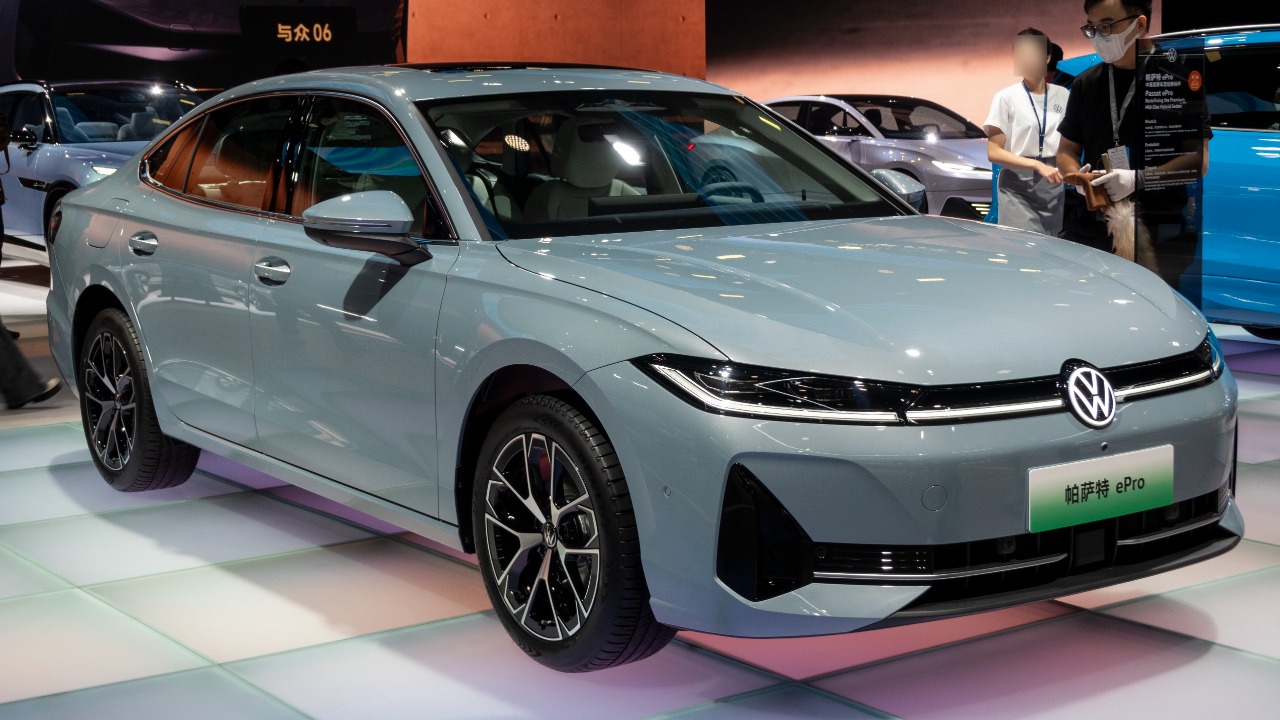

The idea of a family sedan quietly covering roughly 800 miles on a single tank of fuel sounds like a throwback to a different automotive era, yet it is exactly the kind of number that is suddenly back in the spotlight. As electric cars wrestle with charging infrastructure, battery costs and real‑world range, a new generation of ultra‑efficient Volkswagens is reviving the argument that long‑legged hybrids and diesels can make pure EVs look like the niche option. I see that tension most clearly in the latest Passat variants, which combine old‑school distance capability with new‑school electrification.
At one end of the story sits a modern plug‑in Passat for China that blends substantial electric range with serious tank‑to‑tank mileage, and at the other is a diesel Passat that already proved a decade ago that 800 miles between fuel stops is not fantasy. Together they frame a simple question: if a mainstream VW can do cross‑country distances without drama, how much sense does it still make to push every driver toward a full battery electric?
This VW and the 800‑mile headline number
The claim that “this VW can go 800 miles on a tank” is not marketing spin, it is a shorthand for how far a carefully engineered, efficiency‑focused sedan can stretch a gallon of fuel. In coverage of a long‑range Volkswagen, the figure of 800 miles per tank is used as a benchmark for what a modern VW can achieve when range is treated as a core design goal rather than an afterthought. That number instantly outmuscles the real‑world highway range of most current electric cars, especially once cold weather, high speeds or heavy loads are factored in, and it does so without asking drivers to change their refuelling habits.
What makes that headline figure so provocative is not just the distance itself but the way it reframes the EV conversation. If a conventional‑looking sedan can cover 800 miles between fuel stops, the perceived advantage of a 300‑mile electric car that needs a fast charger and a half‑hour break starts to look less compelling for drivers who value uninterrupted travel. I find that this is where the emotional appeal of long‑range combustion and hybrid cars collides most directly with the policy push toward electrification.
Passat TDI and the diesel era’s distance benchmark
Volkswagen has been here before. A decade ago, reviewers were already noting that the Passat TDI could travel nearly 800 miles before needing a gas station, despite offering a large and comfortable interior in the midsize sedan market. That car delivered the fuel economy of a compact while giving families the space and refinement they expected from a bigger vehicle, which made its range feel like a bonus rather than a compromise.
The diesel story went even further in hyper‑miling hands. In an officially recognised run, a VOLKSWAGEN PASSAT TDI CLEAN DIESEL SETS world record for fuel economy around the lower 48 U.S. states at 77.99 M miles per gallon, a figure that still looks startling next to many hybrids. I see that achievement as proof that the basic Passat platform, when paired with a frugal powertrain and driven with care, has long been capable of the kind of distance that EV advocates often claim as a future promise rather than a present reality.
The China‑only Passat ePro and its plug‑in twist
The latest twist in this story comes from China, where Volkswagen is rolling out a plug‑in Passat that blends serious electric capability with long‑haul flexibility. Built by SAIC and Volkswagen, the Passat ePro sits on a new plug‑in‑specific architecture that is engineered around a quoted 150 Km EV Range, 1,300 Km Total Built on the same optimistic test cycle. Those figures, even allowing for test‑cycle optimism, suggest a car that can handle daily commuting on battery power alone while still offering a tank‑to‑tank distance that rivals or exceeds the old diesel champions.
In parallel coverage, the same This China‑only Volkswagen Passat hybrid is described as boasting nearly 100 miles of electric range, with the phrase “100 miles” used as a simple translation of that 150 Km EV Range into a figure that is easier for U.S. readers to grasp. Volkswagen is giving its China market sedan the kind of tech‑heavy cabin Chinese buyers now expect, but the real strategic punch lies in that combination of long electric running and a 1,300 Km Total Built range that makes holiday trips on petrol feel effortless. When I look at those numbers, I see a car that quietly undercuts the idea that only a full battery electric can deliver a low‑emission daily drive.
How 800 miles compares with today’s EV reality
Set against that backdrop, the 800‑mile talking point becomes a way to measure how far EVs still have to go in practical terms. Most mainstream electric cars today offer between 250 and 350 miles of rated range, and real‑world conditions often trim that figure. By contrast, a Passat that can realistically approach 800 miles on a tank, or a plug‑in Passat ePro that pairs 150 Km EV Range with 1,300 Km Total Built, offers a kind of psychological freedom that no current EV can match without multiple charging stops.
Charging infrastructure is improving, but it still introduces friction that long‑range combustion and hybrid cars simply avoid. A driver in a Passat TDI or a Passat ePro can refuel in minutes and be back on the road, while an EV driver must plan around charger availability, charging speeds and potential queues. I find that this difference matters most to drivers who regularly cover long distances, where the ability to treat a car as a 48‑state mile‑muncher rather than a carefully managed device is part of the appeal.
Volkswagen’s evolving stance on EVs and extended‑range hybrids
Volkswagen’s product decisions suggest that the company itself no longer sees pure EVs as the only answer. In reporting that carried the subheading Finally, Some Sense Around Here, The German manufacturer is described as studying the addition of range extenders to its high‑selling sport‑utility vehicles in the United States. That move would effectively bring the logic of the Passat ePro, with its substantial electric range backed by a combustion safety net, into the SUV segments that dominate American roads.
I read that shift as an admission that the market is more nuanced than early EV evangelists suggested. The German brand is still investing heavily in battery electric platforms, but by exploring extended‑range hybrids it is also acknowledging that many buyers want the low‑emission benefits of electric drive without the anxiety of relying solely on chargers. In that context, a VW that can cover 800 miles on a tank is not a relic of the past, it is a template for how the company might blend efficiency and convenience across its line‑up.
The new 2026 Passat: efficiency without drama
Even in its conventional European form, the latest Passat shows how far efficiency has come without resorting to full electrification. For the 2026 model, What are the running costs is answered with a claim that the 1.5-litre mild hybrid Passat can return between 50 and 52 miles per gallon, figures that position it as a distance mile‑muncher in its own right. Those numbers do not grab headlines like 800 miles per tank, but they quietly make the case that a well‑tuned mild hybrid can deliver impressive economy without plugs or range anxiety.
From my perspective, this matters because it shows that Volkswagen is not betting everything on one technology. The 1.5-litre mild hybrid Passat, the plug‑in Passat ePro with its 150 Km EV Range and 1,300 Km Total Built, and the historical Passat TDI that could approach 800 miles on a tank all sit on the same continuum. They are different answers to the same question: how do you move a family and their luggage long distances in comfort while burning as little fuel as possible?
Performance, practicality and the Golf GTI connection
Range is only part of the story, because drivers still care about how a car feels. In a preview of the new Passat Variant, viewers are invited to “picture this you’re cruising down the highway in a wagon that’s packing a D-tuned Golf GTI engine wrapped in a sleek body,” a reminder that efficiency does not have to mean boredom. By detuning a performance‑oriented engine for wagon duty, Volkswagen is trying to balance brisk acceleration with the kind of relaxed, low‑rev cruising that supports strong fuel economy.
I see that approach as part of a broader attempt to make long‑range cars desirable rather than merely rational. A Passat Variant that borrows character from the Golf GTI while still delivering the kind of consumption figures associated with the 1.5-litre mild hybrid or the Passat TDI CLEAN DIESEL SETS record car is easier to sell than a purely utilitarian eco‑special. It suggests that the 800‑mile talking point can coexist with driving enjoyment, which is something many early EVs struggled to offer outside their straight‑line acceleration party trick.
Why long‑range VWs make some EVs look like a hard sell
When I put all these threads together, the argument that long‑range Volkswagens make some EVs look pointless is less about dismissing electric cars and more about highlighting how narrow their current use case can be. A driver who can commute on electricity in a Passat ePro, thanks to its roughly 100 miles of electric range, then drive 1,300 Km Total Built on a family trip without thinking about chargers, is unlikely to see the appeal of a pure EV that needs careful route planning. The same logic applies to a Passat TDI that can approach 800 miles on a tank in mixed driving.
None of this means EVs are doomed, but it does suggest that the race for range is not theirs to win by default. As long as cars like the Passat TDI CLEAN DIESEL SETS record holder can demonstrate 77.99 M miles per gallon around 48 states, and as long as plug‑in hybrids like the China‑only Volkswagen Passat ePro can offer 150 Km EV Range with 1,300 Km Total Built, the case for forcing every buyer into a battery electric looks weaker. I find that the more Volkswagen leans into this multi‑track strategy, the more it exposes how much of the EV push has been driven by regulation and image rather than by a clear‑eyed assessment of what drivers actually need from their cars.
More from MorningOverview