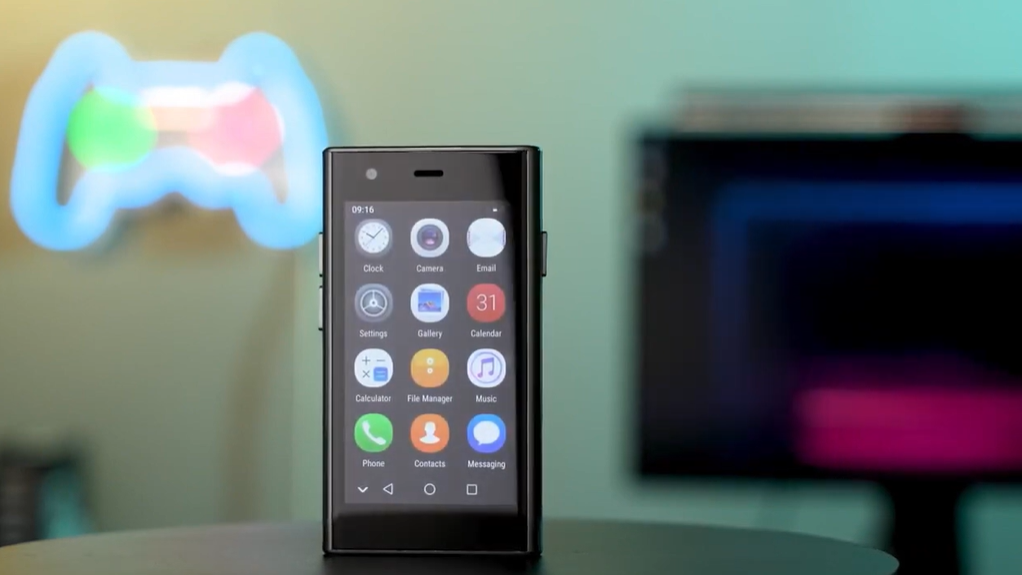

Smartphones were sold as tools of productivity, but for many of us they have quietly become the main obstacle to getting anything done. The idea behind a tiny, roughly $85 phone is not to add yet another gadget to your life, but to strip your digital habits back to the essentials so your attention is no longer hijacked by every ping, reel, and notification. By shrinking the screen, cutting the app buffet, and reframing what a phone is for, this kind of device can turn your pocket from a distraction slot machine into something closer to a calm, utilitarian tool.
I see the appeal of that shift everywhere from classrooms to offices, where people are desperate for a way to stay reachable without being constantly reachable by everything. A small, inexpensive handset that calls, texts, and runs only what you truly need is not a nostalgic toy, it is a deliberate design choice that aligns with what we know about focus, habit formation, and the way attention works in a digital environment.
Why your current phone is wrecking your focus
Modern smartphones are engineered to maximize engagement, not concentration, and the result is a steady drip of interruptions that fragments your day into tiny, unproductive slices. Each notification, whether from email, Slack, Instagram, or a news alert, forces a micro decision that pulls your brain out of deep work and into a shallow, reactive mode. Over time, that constant context switching erodes your ability to stay with a single task, which is why so many people report feeling busy all day yet oddly unable to point to what they actually finished.
Research on digital habits backs up what most of us feel intuitively: the more often you check your phone, the harder it becomes to manage your time with any discipline. Guidance on managing digital distractions emphasizes that you need clear boundaries, such as specific blocks for checking messages and protected stretches for uninterrupted work, if you want to reclaim your schedule from your apps. Advice on time management stresses that limiting notifications, batching communication, and creating device-free, focused work periods can be highly effective, which is exactly the kind of structure a simpler device can support when paired with strategies like those described in resources on the impact of digital distractions.
The rise of “dumbphones” as a deliberate lifestyle choice
In response to that overload, a growing number of people are not just turning off notifications, they are abandoning full-featured smartphones altogether in favor of so-called Dumbphones. These devices, better described as minimalist or feature phones, intentionally limit what you can do so that your default state is offline rather than endlessly scrolling. Instead of a home screen packed with icons, you get a stripped down interface that prioritizes calls, texts, and maybe a handful of basic tools, which makes it much harder to fall into the reflex of opening social media whenever you feel a flicker of boredom.
Fans of this movement talk about wanting more presence in their daily lives, more time for real conversations, and less of the low-level anxiety that comes from being always on. Advocates point out that Dumbphones provide a chance to disconnect a little, break an unhealthy attachment to apps, and reclaim focus for things that actually matter, from reading to hobbies to face-to-face relationships. That ethos is captured in discussions of how Dumbphones, better defined as minimalist or feature phones, can create more space for focus and real connections by removing the constant lure of feeds and notifications.
The tiny $85 phone that fits in the palm of your hand
Into this landscape comes a class of ultra small smartphones that try to split the difference between a full-featured device and a minimalist brick. One of the most striking examples is a credit card sized handset that was originally pitched not as a replacement, but as a companion to your main phone. The idea was simple: when you did not feel like carrying a big slab of glass, you could pop a tiny device into your pocket that still handled calls, texts, and a few essential apps, without inviting the same level of distraction.
That concept is embodied in The Palm Phone, which was designed to be used as a companion device and later became available unlocked so it could stand on its own for people who wanted a smaller, more focused option. The Palm Phone is small enough to disappear in your hand yet still runs Android, which means you can technically install the same apps as on a larger device, but the cramped screen and limited battery naturally discourage long sessions of video or gaming. Reporting on how The Palm Phone was originally designed to be used as a companion device underscores that its core purpose is to give you a way to stay connected without feeling like you are carrying your entire digital life everywhere you go.
Palm, Verizon, and the idea of a phone for your phone
The Palm brand’s return to the market illustrates how mainstream this craving for less has become. When Palm reappeared with a tiny handset positioned as a “phone for your phone,” it was not chasing spec sheet bragging rights, it was tapping into a sense that the big rectangle in your pocket had become too central to your identity. By making something the size of a credit card and tying it to an existing line, the company was effectively saying that you might need a smaller, calmer version of your digital self for nights out, workouts, or weekends.
That strategy was reinforced by Palm’s partnership with Verizon, which initially offered the device as an exclusive add-on rather than a standalone replacement. The framing was clear: this was a lifestyle accessory for people who wanted to be reachable without being fully online, a way to leave the main phone at home while still having maps, messages, and music in a more constrained form. Coverage of how Palm returned with a phone for your phone through Verizon highlights that this was part of a broader trend toward devices that intentionally do less, not more, in order to fit a healthier relationship with technology.
How the Light Phone turns “just a phone” into a feature
If the Palm approach is to shrink the smartphone, the Light Phone philosophy is to redefine it entirely. Instead of a bright, app filled screen, the Light Phone II uses an E ink display that looks more like a Kindle than an iPhone, which immediately changes how you interact with it. The interface is monochrome, the animations are slow, and the entire experience is designed to feel calm and almost boring, which is precisely the point if you are trying to avoid the dopamine spikes that come from colorful icons and endless notifications.
The company describes the Light Phone II as its lightest phone with an E ink screen, and it now even includes a camera while still resisting the temptation to become a full entertainment device. The marketing language leans into the idea that it Moves at the speed of light in the sense of being quick and responsive for core tasks, while Our design choices keep the feature set intentionally narrow so it remains “just a phone” rather than a pocket computer. On its own site, the makers explain that the Light Phone II is Our lightest phone with an E ink screen, which signals how central that low stimulation display is to the entire concept of using hardware to nudge you toward a less distracted life.
From Kendrick Lamar to Strategist readers, the anti smartphone goes pop
Minimalist phones are no longer a fringe experiment for tech skeptics, they are edging into pop culture and mainstream shopping lists. When a high profile artist like Kendrick Lamar backs a device, it sends a signal that opting out of the app race can be a style statement as much as a personal discipline choice. The messaging around these collaborations often emphasizes that the draw is precisely that the device is not very smart by modern standards, which flips the usual marketing script on its head.Coverage of Kendrick Lamar’s involvement with The Light Phone notes that, as the press release puts it, The Light Phone II is “just a phone,” a line that captures the appeal for people who are exhausted by the constant pressure to be online. At the same time, consumer guides aimed at everyday readers have started recommending minimalist options, pointing out that if you want an even more limited phone, the company still sells the Light Phone II with an even less distracting E ink screen and no camera. One such guide explains that the Light Phone II has an even less distracting E ink screen and lacks a camera, while another profile of the collaboration stresses that The Light Phone II is “just a phone”, which together show how the anti smartphone narrative is being framed as both practical and aspirational.
Unihertz Jelly and the appeal of the world’s smallest 4G smartphone
Not everyone wants to give up apps entirely, and that is where devices like the Unihertz Jelly 2E come in. Billed as one of the world’s smallest 4G smartphones, it offers a fully functional Android experience in a body that looks almost like a toy compared with a standard flagship. The screen is tiny, the keyboard cramped, and the battery modest, which naturally discourages long sessions of video or gaming, yet for quick tasks like messaging, navigation, or two factor authentication, it can be perfectly adequate.
Descriptions of the Unihertz Jelly 2E emphasize that, overall, it is a compact and portable smartphone that delivers a complete Android experience despite its size. While it may not satisfy someone who wants to edit video or play graphics heavy games, it is a strong choice for those who prefer smaller devices and are willing to trade screen real estate for portability and a built in brake on their scrolling habit. Retail listings explain that Overall, the Unihertz Jelly 2E is a compact and portable smartphone that offers a fully functional Android experience, while still being a choice for those who prefer smaller devices, which makes it a compelling example of how shrinking the hardware can gently push you toward more intentional use.
How a tiny phone works with, not against, your brain
The reason a small, limited phone can feel so liberating has as much to do with psychology as with technology. Attention is not an infinite resource, it is more like a muscle that tires with overuse, and every time you glance at a notification or swipe to refresh a feed, you are spending a bit of that capacity. Over the course of a day, those micro hits add up, leaving you mentally fatigued and more likely to procrastinate on the tasks that actually matter, which is why so many people find themselves doomscrolling late at night instead of sleeping or reading.
One way to counter that is to reduce the number of decisions your brain has to make about your phone in the first place. A tiny device with a limited interface removes many of the tempting options, so you are not constantly choosing between work and distraction every time you unlock the screen. That is similar in spirit to educational approaches that focus on simplifying the environment so learners can concentrate on core skills, a principle that underpins literacy projects which design materials to minimize cognitive overload. Organizations such as TextProject have long argued that carefully structured content can help readers build fluency without unnecessary complexity, and the same logic applies to your digital life: when the tool is simpler, your mind has more room to focus on what counts.
More from MorningOverview