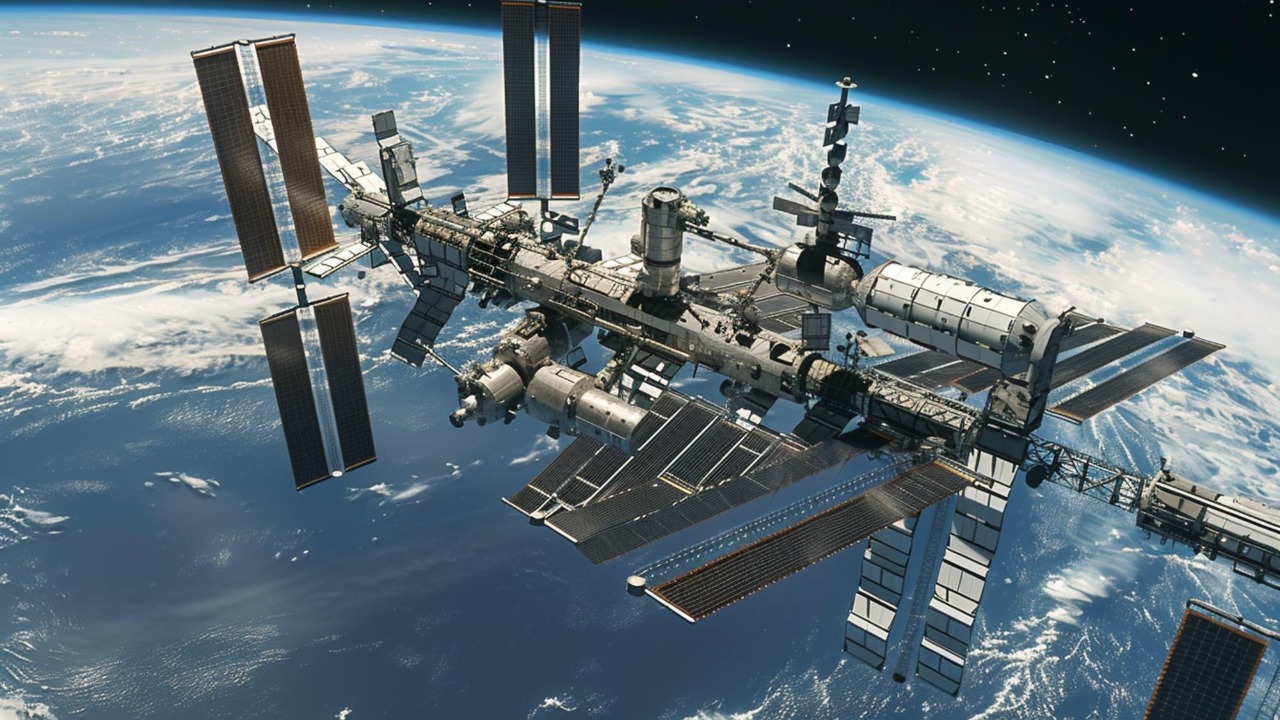

The next generation of space stations will not be assembled piece by piece like orbital Lego sets. Instead, companies are racing to launch compact capsules that unfurl into vast habitats once they reach orbit, turning a single rocket flight into an entire outpost. That shift, from rigid modules to inflatable and reconfigurable structures, is quietly rewriting the economics and design language of living and working in space.
At the center of that race is a concept so audacious it sounds like science fiction: a commercial station that rides to orbit as one payload, then expands to full size in place. Around it, rivals are testing blast-proof fabric shells, designing boutique “space hotels,” and planning private research labs, all betting that Low Earth Orbit will soon be crowded with business-ready real estate.
From ISS megaproject to single-launch stations
The International Space Station is the benchmark for what it once took to build a permanent home in orbit, a sprawling complex that was painstakingly assembled segment by segment and launched on many expensive missions. That model produced a unique laboratory but also locked human spaceflight into a paradigm where every cubic meter of pressurized volume required its own heavy metal shell and dedicated launch. As commercial players move in, they are treating that legacy as a cautionary tale rather than a template, looking for ways to compress an entire outpost into a single rocket fairing before letting it blossom in microgravity, a contrast highlighted in coverage of the ISS and newer concepts for expandable stations in recent analysis.
That is where the “one capsule, full station” idea becomes more than a gimmick. By using inflatable or reconfigurable structures, designers can pack a compact, dense payload that only reveals its true dimensions once it is safely in orbit, a strategy that promises to slash launch costs and simplify assembly. Reporting on this new generation of habitats notes that some proposed stations would ride to space on a single mission and then expand to their full dimensions in orbit, a dramatic departure from the multi-launch architecture that defined the ISS era and a key selling point in descriptions of a proposed space station designed for deployment in one launch.
Max Space and the Thunderbird “bonkers” concept
Into that context steps Max Space with its Thunderbird Station, a project that has drawn attention precisely because it leans so hard into the single-launch idea. The company is proposing a commercial outpost built around a single module that can be launched compact and then expanded in orbit, a design that aims to deliver a large, usable interior volume without the mass and complexity of multiple rigid segments. Coverage of the plan notes that Max Space wants Thunderbird Station to demonstrate how a single module can scale to larger sizes and support a range of missions, a vision laid out in reporting on Max Space and its Thunderbird Station concept.
The “bonkers” label attached to Thunderbird is less about frivolity and more about how radically it departs from the ISS playbook. Instead of a cluster of metal tubes, the design calls for an inflatable structure that rides to orbit in a compact form and then expands to its full dimensions, with reporting describing how the station would be launched as a single payload and then unfurl into a much larger habitat once in place. That same coverage emphasizes that the International Space Station required many launches and years of assembly, while Thunderbird is pitched as a station that can reach its operational size from a single capsule, a contrast underscored in descriptions of the Thunderbird station dimensions and its expandable design.
How a whole station fits on one Falcon 9
The key enabler for Thunderbird’s “one flight, full station” promise is the workhorse rocket it is designed to ride on. Reporting on the project notes that Startup Max Space intends to launch the Thunderbird Max Space station on a Falcon 9, treating the rocket as a kind of orbital moving truck that can deliver the entire outpost in one go. By designing the habitat to fit within the Falcon 9 fairing and then expand once in orbit, the company is trying to exploit the rocket’s relatively low cost and high reliability to make a private station economically viable, a strategy described in detail in coverage that explains how a space station can be built in a single Falcon 9 flight. Other reporting on Thunderbird reinforces that point, describing it as a US firm’s reconfigurable space station that could fly to orbit in a single Falcon 9 launch, unlike other stations that require multiple missions and complex on-orbit assembly. By leaning on a single, well understood launch vehicle, Max Space is betting that customers will see Thunderbird as a simpler, more predictable platform, one that can be deployed quickly and then reconfigured as needs evolve, a pitch captured in descriptions of a US firm’s reconfigurable space station that is explicitly designed for a single Falcon 9 rocket launch.
Inside an inflatable orbital “bounce house”
For all the focus on rockets and deployment, the real test of these habitats is what they are like inside once they are fully expanded. Reporting on inflatable stations has leaned into the contrast, describing them as part bounce house, part groundbreaking space technology, a mix of playful imagery and serious engineering. That duality is not accidental, since the same flexible materials that make a children’s inflatable resilient and forgiving are being adapted into multi-layered shells that can protect astronauts, equipment, and even a vegetable garden in orbit, a combination highlighted in coverage that calls these habitats part bounce house, part groundbreaking space technology.
Thunderbird’s backers are not shy about the ambition behind that approach. Reporting on the project notes that bosses hope the space station will serve as a lab with breathtaking views of Earth and eventually as a replacement for the ISS, with the inflatable structure providing the volume needed for laboratories, living quarters, and observation areas. The same accounts describe how the station is targeted for launch in 2029 and is being pitched as a future hub for research and tourism in orbit, with its flexible shell and reconfigurable interior meant to support both roles, a vision captured in descriptions of how bosses hope the space station will one day replace the ISS while looking down on Earth.
Sierra Space’s blast-tested inflatable habitats
Max Space is not the only company betting on expandable structures, and some of its rivals have already put their hardware through brutal tests. Earlier testing by Sierra Space involved deliberately exploding a full-scale expandable space station structure on the ground, a dramatic trial designed to prove that the habitat could endure the kinds of forces and failures it might face in orbit. Video and reporting on the test show Sierra Space successfully bursting the structure on purpose to validate its strength and failure modes, a milestone that underscored how seriously the company takes the challenge of making an inflatable station safe, as seen in coverage of how Sierra Space successfully exploded its full-scale expandable space station structure.
Sierra Space is positioning itself as a leader in what it calls business-ready commercial space stations, with executives explicitly talking about shaping a new era in humanity’s exploration and discovery in Low Earth Orbit and beyond. The company’s public statements describe a roadmap that includes a key test in Q1 of 2025 and emphasize that its expandable habitats are meant to support commercial activity from day one, not just government-led science, a stance laid out in a press release where leaders at Sierra Space say, “At Sierra Space we are intent on shaping a new era in humanity’s exploration and discovery in Low Earth Orbit and beyond.”
Life habitats and luxury design in orbit
Behind those tests sits a broader product strategy. Sierra Space is developing its LIFE (Large Integrated Flexible Environment) habitat as a core building block for future stations, presenting it as a spacious, expandable module that can support crews and experiments in orbit. The company’s materials describe how the LIFE habitat is designed to launch compact and then expand to provide a large interior volume, with integrated systems for life support, power, and docking, a concept detailed on the dedicated page for the Life Space Habitat that explains how the flexible shell becomes a full-fledged orbital home.
At the same time, other players are rethinking what the inside of a station should feel like, not just how it is launched. One high profile commercial station has been described as looking like a luxury hotel inside, guided by an iconic former Apple designer who is bringing consumer-grade aesthetics to orbital interiors. Reporting on that project notes that aluminum, long a staple of spacecraft interiors, is being reconsidered in favor of materials and layouts that prioritize style and comfort, with the goal of making space travel feel less like a lab visit and more like a boutique stay, a shift captured in descriptions of how The World’s First Commercial Space Station Looks Like a Luxury Hotel Inside.
Vast’s Haven-1: a smaller, sooner private station
While Thunderbird and LIFE aim for large, expandable habitats, Vast is taking a more modest but near-term approach with its Haven-1 station. The company has unveiled designs for Haven-1 as a compact outpost that can host up to four astronauts at a time, with amenities tailored for both professional crews and potential private visitors. Reporting on the design notes that the station comes equipped with features such as dedicated sleeping quarters and workspaces, and that Vast is structuring its development so that parallel manufacturing and testing tasks can proceed efficiently, details laid out in coverage that describes how Vast unveils designs for Haven-1 Station with specific amenities.
Vast has also been open about its technical progress. The company has reported that in July 2024 it began key structural tests and, building on that success, started manufacturing its flight-ready primary structure in January 2025, keeping Haven-1 on track to support human spaceflight and scientific research in Low Earth Orbit. Those milestones are presented as proof that the project is moving from concept art to hardware, with the company emphasizing that it is already fabricating the core of the station, as described in an update that explains how, building on earlier tests, Vast began manufacturing its flight-ready primary structure in January 2025.
Haven-1’s Starlink link and future mega-habitats
Haven-1 is also a testbed for how future stations will stay connected and scale up. Reporting on the project notes that experiments on board can be monitored from the ground thanks to a Starlink connection, a detail that hints at how commercial broadband constellations are becoming part of the infrastructure for orbital research. The same coverage outlines Vast’s future plans, explaining that in 2025 Vast Spac intends to move toward a much larger station with a volume of 500 cubic meters, using Haven-1 as a stepping stone toward that more ambitious habitat, a roadmap described in an article that highlights how In 2025, Vast Spac will pursue a station with 500 cubic meters of volume.
Vast’s own description of Haven-1 reinforces that trajectory. The company presents the station as a dedicated microgravity lab and habitat that can support up to four astronauts, with infrastructure designed for both government and commercial users. Its public materials emphasize that Haven-1 is intended to be the first step in a series of increasingly capable stations, with the initial module serving as a pathfinder for larger, more complex habitats that will follow, a vision laid out on the official page for Haven-1 that positions it as the starting point for a scalable family of stations.
Inflatable habitats beyond Earth orbit
The race to build inflatable and expandable stations is not limited to Low Earth Orbit. Companies working on these technologies are explicit that they see them as key to exploring the Moon and Mars, where shipping rigid structures piece by piece would be prohibitively expensive. One executive, identified as Jong, has said that “We are gearing up to fly our maiden mission in 2026,” describing how the group has received support and is moving toward deploying expandable habitats that could eventually support crews beyond Earth orbit, a timeline and ambition laid out in reporting that quotes Jong and notes that, “We are gearing up to fly our maiden mission in 2026,” Jong told Space.
Those same reports point out that the Max Space website states its own plans for expandable habitats, tying the company’s orbital Thunderbird ambitions to a broader push toward modular, inflatable infrastructure for deep space. The logic is straightforward: if a station can be launched as a compact capsule and then expand into a large, shielded volume in Low Earth Orbit, the same approach could be adapted for lunar orbit, the lunar surface, or even Mars transit vehicles. In that sense, the “bonkers” station that unfolds from one capsule is not just a clever way to replace the ISS, it is a prototype for how humans might build entire villages in space using rockets that already exist.
The wider commercial race and what comes next
Behind the headline-grabbing concepts, a broader ecosystem of companies is converging on similar ideas, each trying to carve out a niche in the coming orbital economy. Sierra Space, for example, presents itself as a full-service space company, with its main site describing a portfolio that spans spaceplanes, habitats, and in-space infrastructure, all aimed at enabling commercial activity in orbit and beyond, a scope laid out on the company’s homepage at Sierra Space. That breadth matters because it suggests that future stations will not be isolated projects but parts of integrated systems that include transportation, logistics, and on-orbit services.
At the same time, the broader tech landscape offers a cautionary backdrop. When Hyperloop One shut down, reporting noted that there are also other similar companies around the world which continue to work on the concept, a reminder that bold engineering visions can outlast individual firms even when early leaders stumble. The same dynamic is likely to play out in commercial space stations, where some of today’s names may fade while others build on their work, a pattern captured in coverage that points out that There are also other similar companies around pursuing the same underlying ideas.
More from MorningOverview