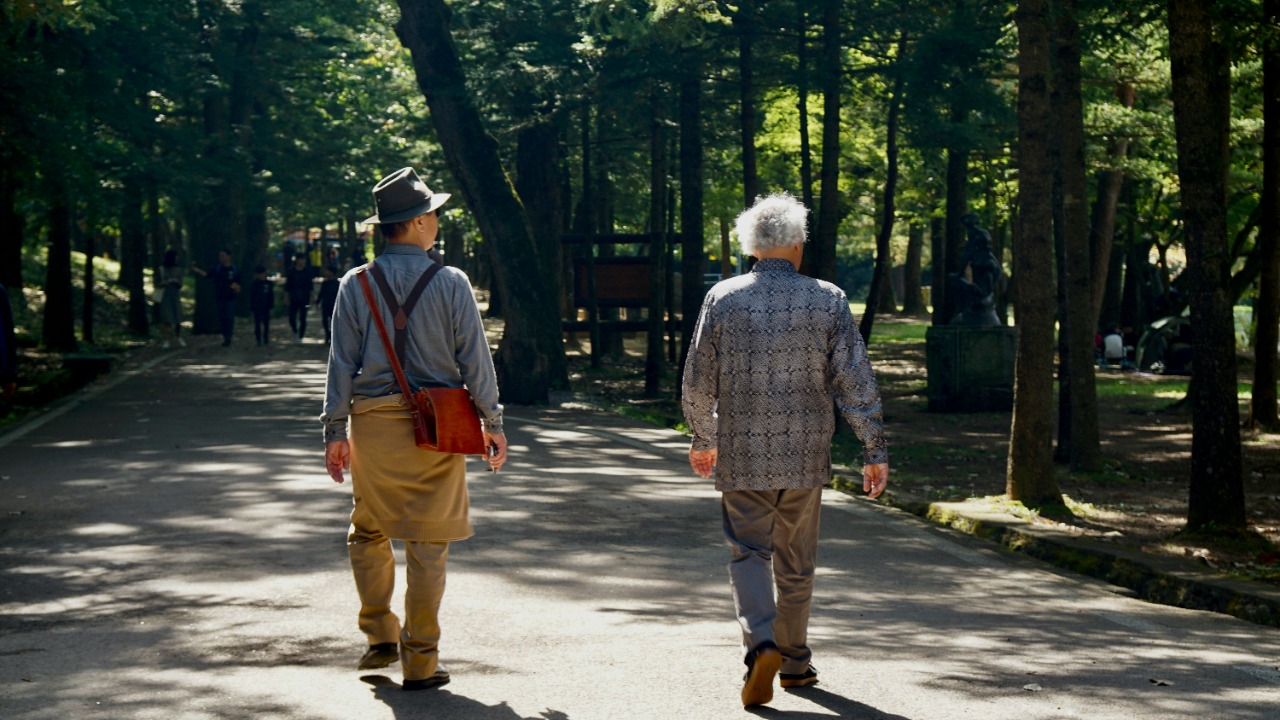

Time rarely feels neutral. A quiet walk in the woods can stretch a single hour into something spacious and restorative, while a terrifying near‑miss on the highway can make a few seconds feel like slow motion. Far from being fixed, our sense of time bends under pressure from the natural world, our bodies and our emotions, which can leave us feeling as if the days are slipping away or suddenly grinding to a halt.
Researchers are finding that specific natural phenomena, from forest landscapes to circadian rhythms and intense emotional states, systematically warp how long moments seem to last. By tracing how these forces work on the brain, I can show why time sometimes feels elastic, and how small changes in environment and attention can subtly reclaim it.
Why the brain’s clock is so easy to fool
What we casually call “time” is really a construction, built by the brain from sensory input, memory and expectation. Experimental work on time perception shows that People do not carry a single internal stopwatch, but instead rely on multiple overlapping systems that estimate duration, sequence events and judge how long ago something happened. One striking example is Telescoping, the tendency to remember recent events as if they occurred further in the past and distant events as if they were more recent, which already hints at how malleable our temporal sense can be.
Because these systems are distributed and context dependent, they are highly sensitive to what is happening around and inside us. Studies of time perception in healthy subjects indicate that working memory load, mood and physiological state all shift how long intervals feel, even when the actual seconds are identical. That fragility is exactly why natural settings, bodily rhythms and emotional surges can so dramatically alter whether time seems to crawl, race or slip through our fingers.
Nature’s “time travel”: how green spaces stretch the day
One of the most robust findings in recent research is that being outdoors, especially in green environments, can make time feel more abundant. In controlled experiments, people who walked through parks or forests tended to overestimate how long they had been out, reporting a sense of expanded time compared with those in busier streets. A study on how Time grows on trees found that Time spent on a walk in a nature setting was overestimated compared to actual time, while time spent on a walk in an urban setting was underestimated, suggesting that natural scenes slow the subjective clock.
Researchers argue that this expansion is partly about attention and mental load. When we are in nature, we are less bombarded by deadlines, notifications and traffic noise, and more gently engaged by birdsong, shifting light and the texture of leaves. Reporting on how nature can alter our sense of time notes that these environments encourage a softer, more reflective focus that makes minutes feel fuller rather than rushed. That is why some psychologists describe a “Perspective shift: Nature’s time travel” when people step away from screens and into woods or along a shoreline, as highlighted in coverage of how nature experiences alter time perception.
Why urban life compresses hours into blurs
If trees and rivers stretch time, dense cities often do the opposite. Urban environments bombard the brain with stimuli, from honking cars to flashing ads, which can push us into a kind of perceptual triage where only the most urgent signals get through. Follow‑up work on the “Time grows on trees” experiments showed that participants exposed to urban settings not only underestimated how long they had been walking, but also reported feeling more rushed and less refreshed, a pattern confirmed in analyses of time perception when exposed to urban settings.
That compression is not just about noise, it is about how the city hijacks attention. When every crossing demands vigilance and every storefront competes for a glance, there is little spare capacity for the kind of open, drifting awareness that seems to slow time. Coverage of how being in nature affects time notes that people in built environments tend to focus on schedules and productivity, which reinforces a sense of scarcity. By contrast, those in green spaces report a more stable experience of time, as if the day has been gently decelerated.
Circadian rhythms: the body’s hidden metronome
Behind these environmental effects sits a quieter force, the circadian system that keeps our physiology on a roughly 24‑hour cycle. The internal clock that regulates sleep and wakefulness also shapes how we experience duration, in part through its control of body temperature and alertness. Work on tracking how the environment influences circadian rhythms shows that the circadian clock affects a broad range of physiological parameters, including body temperature and the immune response, which in turn can nudge the brain’s timing mechanisms faster or slower.
Laboratory studies of circadian fluctuation of time perception report that During the subjective day, produced times were shorter than during the subjective night, indicating that people’s internal clocks run “fast” when they are naturally more alert. A related analysis of Core body temperature found a significant negative correlation between produced times and core temperature, summarized in section 3.3 as 3.3, which means that when the body is warmer, intervals feel shorter. This dovetails with broader theories, described in work on why More recent theories about how we experience time, which suggest that One reason time seems to speed up with age is that our baseline processing and body temperature patterns change, altering how quickly we sample the world.
Emotions, flow and the strange physics of “fun”
Emotional intensity is another powerful lever on the brain’s clock, and it often works in counterintuitive ways. Psychologist Ruth Ogden has emphasized that our sense of time is heavily interlinked with our emotions, with anxiety and boredom stretching minutes while excitement can make hours vanish. Reviews of Emotions as drivers of temporal distortions argue that arousal and attention are key: when we are highly engaged, we process more information per unit time, which can either compress or expand our sense of duration depending on context.
One vivid example is the “flow” state, when someone is so absorbed in a task that they lose track of the clock. Analyses of the fluidity of time note that a key feature of flow is a distorted sense of time, typically a feeling that time has passed faster than it actually has. Neurochemical work suggests that Unexpectedly pleasurable events boost dopamine release, which should cause your internal clock to run faster, as detailed in research on how Unexpectedly pleasurable events affect timing. Your subjective sense of time is then altered so that enjoyable intervals seem shorter, while unpleasant or threatening ones can feel longer than they are.
Fear, danger and the slow‑motion effect
At the other end of the spectrum, acute fear can make time appear to dilate, a phenomenon sometimes described by people who have been in car crashes or other emergencies. In these moments, the brain floods with stress hormones and ramps up processing, which can create the impression that the outside world has slowed down. The term tachypsychia captures this altered state, and definitions of tachypsychia describe it as a condition, also known as the “time warp effect,” in which Increased arousal during stressful or emotionally charged situations leads to changes in the perception of time.
Neuroscientists studying why time seems to slow in danger argue that the effect is less about an external slowdown and more about how densely memories are laid down. Reporting on why time slows when you are in danger notes that As a general rule, the more information, such as perceptions, sensations and thoughts, that our minds process, the slower time feels, because the brain later interprets the rich memory trace as having taken longer. Related work on time slowing for memorable events suggests that Here, limited resources to process information may act as a sort of bottleneck, and But it is possible that the brain can stretch subjective time when it is forced to prioritize a single novel image, which is exactly what happens in a crisis.
Altered states and the extremes of elastic time
Beyond everyday emotions, more unusual states of consciousness can push time perception to extremes. Research summarized under the title How Altered States of Consciousness Change Time Perception notes that Time perception varies depending on context, often slowing down in emergencies and speeding up during flow states, but it can also fragment or even disappear entirely under certain drugs or meditative practices. In these conditions, the usual cues that anchor us to clock time are disrupted, leaving people unsure whether minutes or hours have passed.
Everyday life offers milder versions of this in the form of intense absorption or dissociation. Coverage of why time speeds or slows with state of mind reports that Around 85 percent of people report having at least one Tee in their lifetime, and During Tees, people often describe feeling detached from their surroundings, with time either stretching or compressing in unsettling ways, as detailed in analysis of how Around 85 percent of people experience such episodes. These altered states underscore that our sense of duration is not just a passive readout of the clock, but a deeply personal and fluid experience shaped by consciousness itself.
How memory and age quietly rewrite the past
Even when the present feels stable, memory can subtly rewrite how long the past seems to be. Psychologists studying time perception note that This effect may be one of several reasons that time seems to move much slower for younger people and seems to pass by more quickly as they age, because children are constantly encountering new experiences that create dense, detailed memories. As novelty declines in adulthood, fewer distinct memory “markers” are laid down, so years can blur together and feel shorter in retrospect.
Physiology appears to reinforce this psychological shift. Analyses of lifespan timing, including the work on why why half of the life you experience is over by age 7, highlight that More recent theories about how we experience time draw on psychology and science, and One says that our sense of time is governed by how much information we process and that time seems to pass slower when our body temperature is higher. As metabolic and neural processing rates change with age, the brain may literally be sampling the world at a different pace, which could help explain why childhood summers feel endless while adult years vanish.
Using natural phenomena to reclaim a sense of time
Understanding these distortions is not just an academic exercise, it offers practical ways to feel less as if life is slipping away. If nature reliably expands subjective time, then deliberately scheduling walks in parks, gardening or even tending to houseplants can create pockets where the day feels less compressed. Studies showing that This is in part because natural settings reduce cognitive load and restore attention suggest that even short, regular exposure can counteract the sense of temporal distortion many people reported during the pandemic lockdowns, when days blurred together indoors.
Emotional awareness is just as important. Guides on How Emotional States Can Slow Down and Speed Up Time emphasize that recognizing how moods and arousal levels skew our internal clock can help us respond more deliberately, rather than simply feeling that time is out of control. Reviews of Emotions as powerful drivers of distortions in time perception point to attention as a central mechanism, which means that practices that steady attention, from mindfulness apps like Headspace to simple breathing exercises, can subtly stabilize how quickly or slowly moments seem to pass.
The elastic present: why time will never feel purely objective
All of this points to a simple but unsettling conclusion: there is no single, objective way that time “should” feel. Our sense of duration is constantly being rewritten by landscapes, light levels, body temperature, emotional surges and the density of our memories. Syntheses of the brain’s timing systems argue that Our sense of time may be the brain’s way of tracking how much is happening, which is why it speeds up when we are having fun and slows down when we are bored or afraid.
That elasticity can be disorienting, but it also means we are not entirely at the mercy of the clock. By choosing environments that calm rather than overload, paying attention to circadian cues and treating emotions as signals rather than enemies, I can nudge my own experience of time toward something richer and less frantic. The natural phenomena that warp our temporal sense are not going away, but with a clearer view of how they work, it becomes easier to notice when time feels like it is slipping and to gently, deliberately, slow it down.
More from MorningOverview