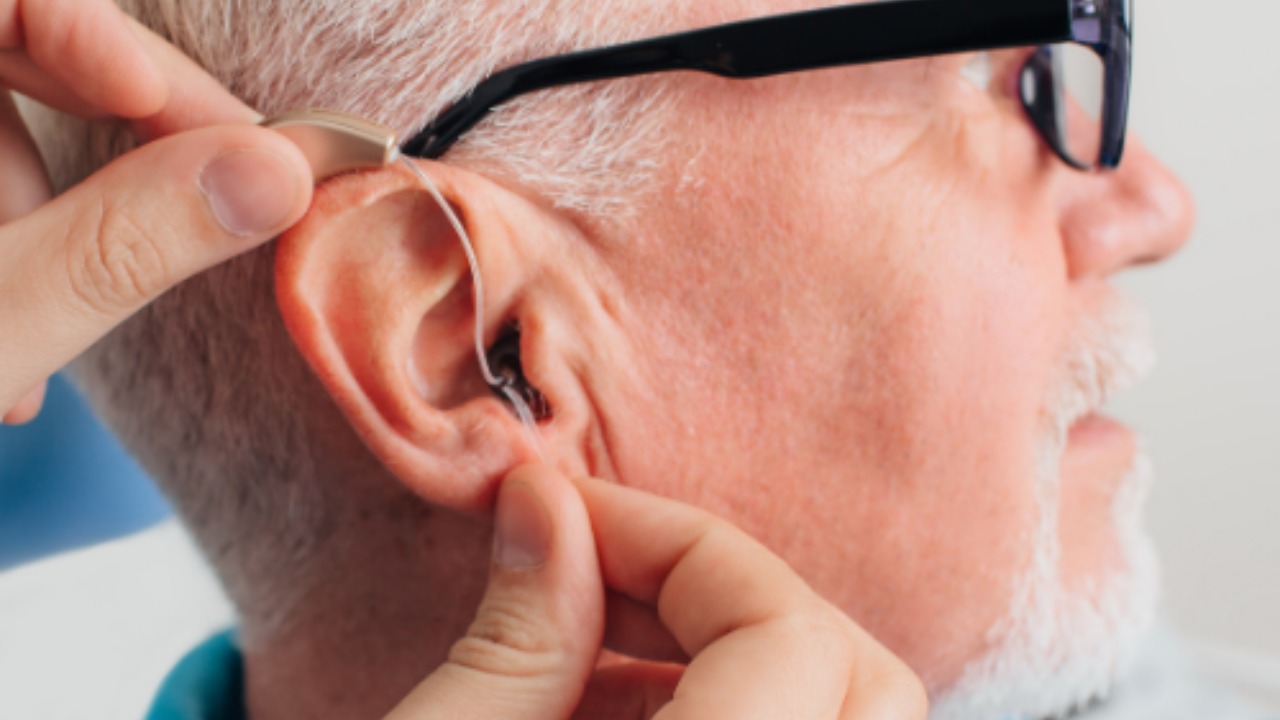

Hearing aids are quietly undergoing a revolution, shifting from simple sound amplifiers to wearable computers that can read the signals coming from your brain. Instead of guessing what you want to hear, the next generation of devices is learning to follow your attention and ease the mental strain of listening in noisy, complex environments. I see this shift as the moment hearing technology stops fighting against the brain’s limitations and starts working with them.
Researchers and manufacturers are now combining tiny sensors, artificial intelligence and neuroscience to build hearing aids that respond to your focus in real time. The goal is not only clearer conversations in crowded rooms, but also healthier brains over decades of use, as scientists link better hearing support to slower cognitive decline and a lower risk of dementia.
The cocktail party problem meets brain tech
For anyone with hearing loss, the classic nightmare is a loud restaurant or family gathering where voices, music and clattering dishes blur into one exhausting wall of sound. Traditional hearing aids can boost volume and filter some background noise, but they still struggle to pick out the one voice you care about in a crowd. Engineers often describe this as the “cocktail party problem,” and it is exactly where brain driven hearing technology is now making its boldest promises.
In recent work highlighted under the phrase Tracking brain and eye signals, researchers show how sensors can monitor where your attention is directed and feed that information into smarter sound processing. One scenario begins with the word Imagine you are at a bustling dinner party, and the device uses subtle biosignals to lock onto the person you are actually trying to follow. Instead of amplifying the entire room, the system selectively enhances that speaker, cutting through the chaos in a way that feels closer to natural hearing.
How EEG lets hearing aids “listen” to your brain
To follow attention, these experimental devices rely on a technology that has long been a staple of neuroscience labs: EEG. EEG, or electroencephalograph, measures the brain’s electrical activity using surface electrodes placed on the scalp, capturing the tiny voltage changes produced by neurons in the cerebral cortex. For hearing research, those signals can reveal which sounds the brain is tracking most closely, effectively turning attention into a readable data stream.
In one study on inattentional deafness, scientists used 29 electroencephalography EEG channels on a headset, with ground and reference electrodes on the temporal bone behind the ears to minimize external noise pickup and artifacts. That kind of dense sensor array is not yet practical for everyday hearing aids, but the same principles are being adapted into smaller, more discreet configurations. When paired with algorithms that decode which speaker a listener is focusing on, EEG gives hearing devices a direct line into the brain’s own selection process.
From lab prototypes to “mind reading” hearing aids
The leap from lab to real life is already underway, with early systems that quite literally read neural signals to steer sound. In one project described as tackling noisy social settings, researchers placed sensors in and around the ear to pick up brain activity, then used software to determine which voice the listener was attending to. From there, it detects brain waves in the listener’s auditory cortex which indicates where the listener’s attention lies, a method that has been likened to an audit of competing sound sources in the environment.
These systems are still experimental, but they show how brain driven control could eventually be built into commercial devices. A related line of work, described in a focused section on EEG technology for hearing aids, argues that monitoring neural responses can help devices distinguish between sounds the user is trying to comprehend and those they are ignoring. Instead of relying only on external microphones and preset programs, future aids could constantly adjust based on the ebb and flow of attention, making listening less tiring and more intuitive.
AI hearing aids that think like you
Even without full brain wave decoding, artificial intelligence is already reshaping how hearing aids respond to complex soundscapes. The latest devices use machine learning to recognize patterns in speech, noise and user behavior, then adapt automatically in ways that older, manual programs never could. I see this as a shift from static presets to systems that, in effect, learn how you like to hear.
One overview of current trends describes Artificial Intelligence That Thinks Like You, where advanced processors analyze the acoustic scene and prioritize the sounds that matter most to the wearer. Another explainer on the synergy between hearing aids and AI asks How AI can help hearing aids work better and notes that, over time, these systems become more accurate at making correct decisions about what to amplify. Instead of the user constantly tweaking volume and programs, the device quietly learns from experience.
Commercial devices already leaning into the brain
Major manufacturers are now marketing hearing aids that explicitly claim to support how the brain processes sound, even if they do not yet read EEG signals directly. One prominent example is The Oticon Intent, which is pitched as bringing something new to hearing aids by focusing on the user’s listening intentions rather than just the external environment. The device uses multiple sensors to infer where attention is directed, then shapes sound to match that focus.
In a deeper breakdown of its BrainHearing Technology Explained, the company describes how the system aims to help users hear what matters without straining to hear. A separate overview of Key Features of Oticon Intent highlights BrainHearing Technology as one of the standout elements, designed to support the brain’s natural way of organizing sound even in challenging listening environments. While these devices are not decoding raw brain waves, they are clearly built around a cognitive model of listening rather than simple amplification.
AI flagships: Genesis and Vitality AI
Other brands are taking a similar path, using AI to approximate what a brain aware hearing aid might do. One flagship line, Genesis artificial intelligence hearing aids, is marketed as a platform that constantly scans the environment and uses deep learning to separate speech from noise. The system is designed to recognize different listening situations, from quiet conversations to busy streets, and adjust automatically to keep speech clear and comfortable.
Another example is a family of devices introduced under the banner The Future of Hearing Technology is Here with Vitality AI. These hearing aids promise best in class sound and speech clarity, along with next generation connectivity that keeps audio consistent everywhere you go. By combining powerful processors with cloud based learning, products like Genesis and Vitality AI are edging closer to devices that can anticipate user needs in real time, a necessary step toward truly brain tuned hearing support.
Sound processing that protects brain health
The push toward brain aware hearing aids is not just about comfort in noisy rooms, it is also about long term brain health. Untreated hearing loss has been linked to a higher risk of cognitive decline, and researchers are now asking whether better hearing support can slow that trajectory. I see this as one of the most consequential questions in the field, because it reframes hearing aids as preventive brain health tools rather than optional accessories.
One cognitive health analysis reports that a hearing aid intervention resulted in a 48% slowing of global cognitive decline in a high risk group, with particular benefits in language related cognitive function. Another review titled Breaking Down the Research points to a landmark study in JAMA Neurology that analyzed data from over 137,000 participants and found that hearing loss was associated with a higher risk of dementia in later years. Together, these findings suggest that devices which reduce listening effort and keep people engaged in conversation could have profound effects on brain aging.
Modern hearing aids as brain friendly wearables
Clinicians are already framing modern hearing aids as tools that support cognitive wellness, not just audibility. One practice notes that modern hearing aids enhance brain health by keeping the auditory system active and reducing the mental load required to decode speech. Instead of forcing the brain to work overtime to fill in missing sounds, well fitted devices provide a clearer signal, freeing up resources for memory, attention and social interaction.
Within that same discussion, a section titled ReSound’s AI-Powered Sound Processing explains how specific products aim to improve awareness without extra cognitive effort. By automatically adjusting to different environments and emphasizing speech cues, these systems are designed to reduce listening fatigue, a key factor in whether people actually wear their hearing aids throughout the day. The more consistently they are used, the more likely they are to support long term brain health.
Beyond speech: connectivity and everyday cognition
As hearing aids become smarter, they are also becoming more connected, turning into hubs for digital life that can reduce friction in everyday tasks. One overview framed under the phrase More Than Just Speech notes that today’s devices connect directly to phones, televisions and other electronics, allowing users to stream music, calls and alerts straight to their ears. This kind of seamless integration can lower the cognitive burden of juggling multiple devices and interfaces, especially for older adults managing complex routines.
Another point in that discussion emphasizes that Today hearing aids are designed to support social engagement by making it easier to participate in group conversations and public events. When combined with AI features that automatically adapt to different acoustic scenes, connectivity turns hearing aids into general purpose assistive wearables. They help users stay informed, entertained and connected, all of which are linked to better cognitive outcomes over time.
The road ahead: from biosignals to everyday products
For now, fully brain controlled hearing aids remain a work in progress, with researchers still refining how to capture and interpret biosignals in a form factor small enough for daily wear. A detailed overview of these efforts, titled These Hearing Aids Will Tune in to Your Brain, notes that there are several technical and ethical hurdles, but the field is progressing at a rapid clip. Engineers must balance battery life, comfort and signal quality while ensuring that any brain data collected is handled securely and transparently.
At the same time, incremental advances are already filtering into products that consumers can buy, from BrainHearing style processing in All About the Oticon Intent to AI driven scene analysis in Genesis artificial intelligence devices. A separate blog on Vitality AI underscores how companies are already selling the idea that smarter hearing aids can go beyond better hearing to support overall quality of life. As EEG based attention tracking matures and merges with these commercial platforms, the promise of hearing aids that truly tune themselves to the brain is moving from science fiction toward everyday reality.
More from Morning Overview