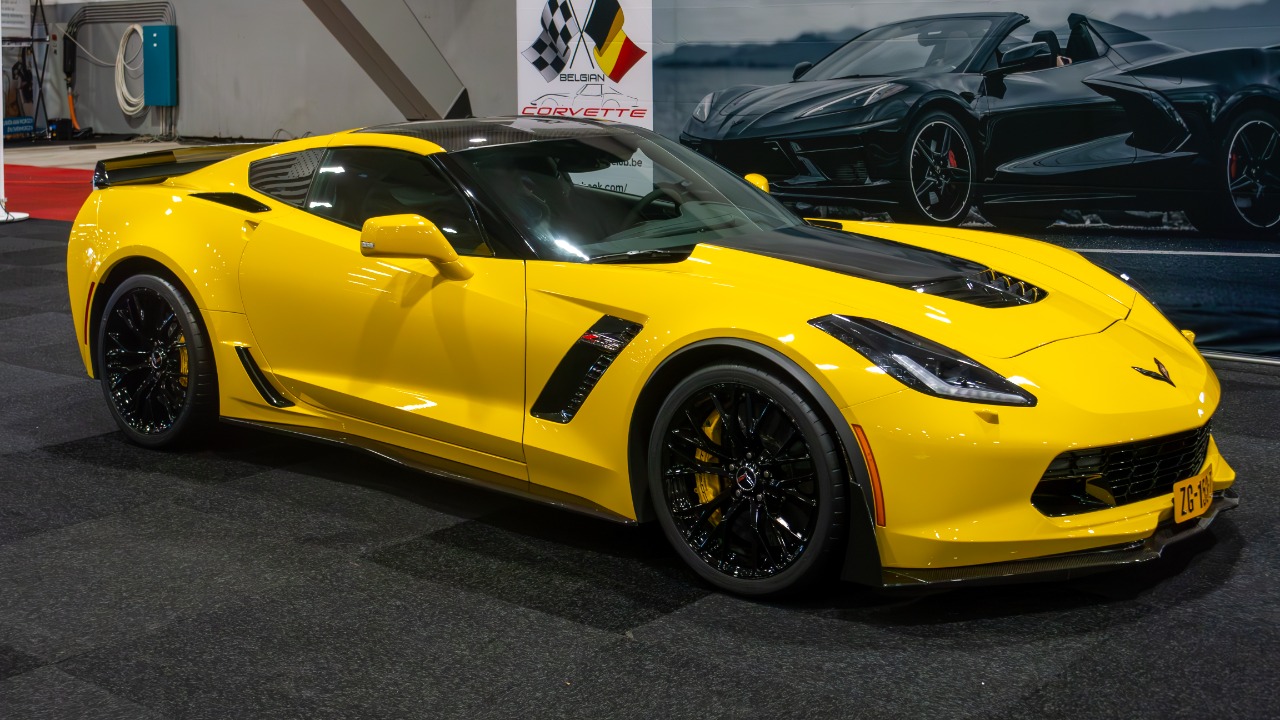

Gasoline performance is not quietly fading into history, it is still rewriting the record books. A small group of American machines can rip from 0 to 60 miles per hour in less than three seconds without any electric motors helping out, relying purely on internal combustion and clever engineering. I set out to trace how these cars achieve that violence, and what they say about the future of speed in a market tilting toward hybrids and EVs.
These are not theoretical numbers from lab benches, they are verified figures from factory test tracks and independent timing gear. From drag-strip specials to mid‑engine supercars, they prove that the right mix of displacement, boost, grip, and gearing can still put old‑school fuel at the sharp end of modern performance.
The shrinking club of sub‑3‑second gas American cars
The headline figures are stark: only a handful of gasoline American cars can sprint to 60 miles per hour in under three seconds, and every one of them is a focused performance weapon rather than a daily commuter. Lists of In the American sports cars that can reach 60 miles per hour in that window read like a roll call of modern legends, from drag‑strip Dodges to track‑bred Corvettes and low‑volume supercars. The common thread is that each one is engineered around acceleration, with powertrains and chassis tuned to turn fuel into forward motion as brutally and consistently as possible.
That exclusivity is partly a function of physics and partly of priorities. More than More than 80% of vehicles currently sold in the United States are still gasoline powered, yet only a tiny fraction of those can match the 0–60 times of cutting‑edge EVs. They are the outliers that treat emissions rules, tire technology, and customer expectations as constraints to be engineered around rather than reasons to slow down. In a market where hybrids and electric crossovers are soaking up attention, these cars keep the internal combustion flag planted firmly in the sub‑3‑second territory.
Dodge Demon 170 and the drag‑strip definition of quick
Nothing captures the current peak of gas‑only American acceleration like the latest Demon 170. Built as a street‑legal drag car, it is calibrated around the launch, with suspension geometry, tire compound, and power delivery all optimized for that first, violent second. In a detailed drive review, an on‑board timer shows the Demon 170 ripping from 0 to 60 in a claimed 1.66 seconds when the surface, tires, and fuel blend all cooperate, a number that pushes into territory once reserved for full race cars.
That performance is not an accident, it is the result of a philosophy that treats the quarter‑mile as the primary mission. Earlier domestic rankings of ultra‑quick sports cars already placed The Dodge Challenger SRT Demon at 2.3 seconds to 60, quicker than some European hypercars. The Demon 170 simply pushes that template further, using more aggressive tuning and drag‑radial rubber to turn a gasoline V8 into a launch experience that feels closer to a slingshot than a conventional car.
Corvette Z06 and ZR1: supercar speed without a plug
If the Demon 170 is the quarter‑mile king, the modern Corvette family is the all‑rounder that proves a gas‑only American sports car can match European exotics on a road course and still crack the 3‑second barrier. Chevrolet’s own performance breakdown for the eighth‑generation lineup shows the Corvette Stingray with the available Z51 package hitting 0 to 60 m in 2.9 seconds, while the Z06 with the available Z07 package cuts that to 2.6 seconds. Those are supercar numbers delivered by a naturally aspirated V8 and a dual‑clutch transmission, not by electric torque fill.
The Z06 in particular is positioned as a track‑focused Corvette Supercar within the broader Chevrolet lineup, with its own Specs Accessories Inventory Owner Resources Request and Test Dri tools aimed at buyers who want race‑car responses in a road‑legal package. As the family expands toward even more extreme variants, including a Corvette ZR1 that is being discussed with power figures deep into four digits, the message is clear: the bow‑tie brand is not ready to surrender the internal combustion performance crown to batteries just yet.
Ford GT and the mid‑engine American school
Not every gas‑only American rocket is front‑engined or drag‑strip focused. The modern Ford GT, built in limited numbers as a carbon‑fiber showcase, uses a twin‑turbo V6 and a mid‑engine layout to chase lap times and top speed rather than quarter‑mile slips. In performance rundowns of American cars that can reach 60 M in under three seconds, the GT is singled out for its ability to combine a 216 MPH top speed with a ferocious launch, using aerodynamics and gearing to claw its way to 60 mph with the same urgency as its V8 rivals. That blend of endurance‑race heritage and straight‑line aggression keeps it firmly in the sub‑3‑second conversation.
What makes the GT particularly interesting in this context is that it shows how varied the engineering paths to this level of acceleration can be. In the same survey of Ford performance, the car is grouped with supercharged V8 monsters from Dodge and Chevrolet, yet it relies on smaller displacement and turbocharging to get there. That diversity underlines a broader point: the sub‑3‑second club is not a single formula, it is a set of different answers to the same question of how quickly a gasoline engine can haul a car to highway speed.
How boost and combustion science unlock sub‑3‑second runs
Strip away the badges and bodywork, and the physics behind these launches comes down to how much air and fuel can be crammed into the cylinders and how efficiently that mixture can be turned into torque. Technical research on internal combustion supercharging notes that forcing more air into the engine means more oxygen is available, so more fuel can be burned, and “this added air and fuel creates more power during combustion, and the net power output of the engine is increased” when a turbocharger is used. That simple sentence from a detailed comparison of turbocharger and pressure wave compressor designs captures why so many of these cars rely on forced induction to hit their numbers, and it is backed up by controlled testing in the performance comparison of different boosting systems.
Superchargers attack the same problem from a different angle, trading some efficiency for immediacy. As one training text on automatic transmissions and drivetrains explains, there is a delay or lag from the time the driver depresses the accelerator and when boost occurs with a turbo, while However, Superchargers increase the density of the air charge immediately, which leads to a more powerful combustion in the cylinder. That instant response is exactly what a car like the Demon 170 or a supercharged Corvette Z06 needs when the driver sidesteps the brake at the tree. The engineering trade‑off is that superchargers sap some crankshaft power to spin, but in the context of a 700‑plus‑horsepower engine, the gain in launch consistency is worth the parasitic loss.
Corvette ZR1X and the horsepower arms race
Beyond the cars already on sale, the next wave of American gas performance is being defined by projects like the Corvette ZR1X, which push power figures into territory that would have sounded like science fiction a decade ago. Reporting on that model’s development cites output of 1,250 hp and a Base Trim Torque rating of 973 lb‑ft, with the Make listed as Chevrolet and the Model as Corvette, and a projected 0–60 M time of under 2 seconds. Those numbers, laid out in a detailed breakdown of why there are only a few American cars more powerful than this Corvette project, show how far the internal combustion envelope is still being stretched.
What matters for the sub‑3‑second conversation is not just the headline horsepower, but how that torque is delivered. With 973 lb‑ft available, the limiting factor becomes traction and drivetrain durability rather than engine output. That is why the ZR1X and its peers are expected to pair their engines with advanced launch control, wide rear tires, and aerodynamics that can generate downforce without crippling straight‑line speed. In other words, the horsepower war is now inseparable from a grip war, and the cars that win both will be the ones that dip deepest into the 2‑second bracket while still burning gasoline.
Why gas still dominates sales even as EVs win spec‑sheet races
On paper, it might seem odd that internal combustion acceleration records still matter when electric sedans and crossovers can already deliver instant torque and sub‑3‑second sprints. The answer lies in the showroom. Consumer finance analysis points out that more than 80% of vehicles currently sold in the United States are neither hybrid nor fully electric, they are gasoline powered, and that reality shapes where automakers invest their engineering budgets. A breakdown of models that show hybrid cars might be right for you notes that They are gasoline-powered c for the vast majority of buyers, which means the emotional halo of a record‑setting gas performance car still has marketing value.
From my perspective, that context explains why brands like Dodge, Ford, and Chevrolet continue to pour resources into these halo projects even as they roll out plug‑in crossovers and battery‑electric trucks. A Demon 170 or a Corvette Z06 is not just a toy for a small group of enthusiasts, it is a statement that the company still knows how to make internal combustion exciting. That message matters to the millions of customers who will never see 0–60 in under three seconds but still want their family SUV or pickup to feel like it comes from a brand that understands performance.
American supercars and the broader performance ecosystem
The sub‑3‑second club also overlaps heavily with a broader ecosystem of American supercars and hypercars that use similar engineering tricks, even if their production numbers are tiny. A survey of The Best American Made Supercars and Hypercars Of All Time highlights names like Hennessey Special Vehicles and Czinger, companies that build low‑volume machines with power‑to‑weight ratios and aerodynamics aimed squarely at the world’s most exotic rivals. These cars may not always chase 0–60 bragging rights as their primary metric, but they live in the same performance neighborhood as the Demon and the Corvette, and they rely on the same mix of high‑output engines, advanced materials, and obsessive tuning to get there.
What I find striking is how interconnected this world has become. When a list of The Best American machines includes both track‑only hypercars and road‑legal bruisers, it underscores that the line between a “muscle car” and a “supercar” is now blurry. A front‑engine coupe that can hit 60 in under three seconds on pump gas is operating in the same performance space as a carbon‑tub exotic, and that cross‑pollination of ideas is good for enthusiasts. It means that lessons learned in wind tunnels and on race circuits eventually filter down to the showroom floor, whether in the form of better tires, smarter traction control, or more efficient cooling for boosted engines.
Where gas‑only acceleration goes from here
Looking ahead, the question is not whether electric cars will continue to dominate the raw 0–60 charts, but how far gasoline‑only machines can still push their own limits before regulations, costs, and physics close the window. Current lists of Feb The Only Gas Powered American Cars That Can Reach 60 M In Under Seconds already read like a greatest‑hits compilation, with entries such as the 2015–2019 Chevrolet Corvette C7 Z06, the latest Demon 170, and a mix of boutique supercars from Hennessey, Saleen, SSC, and other Supercars specialists. That roster, laid out in detail in a survey of Feb The Only Gas Powered American Cars That Can Reach MPH In Under Seconds, suggests that the easy gains have already been harvested.
Yet as long as engineers can find new ways to feed more air and fuel into cylinders, trim weight, and put power to the pavement, I expect a few more records to fall. The Corvette ZR1X’s projected under‑2‑second sprint, the Demon 170’s 1.66‑second claim, and the steady refinement of launch control systems all point to a future where the gap between gas and electric 0–60 times narrows again at the very top of the market. For enthusiasts, that is good news. It means that even in an era of charging networks and kilowatt‑hour specs, there will still be room for the uniquely visceral thrill of a gasoline engine clawing its way to 60 miles per hour in less time than it takes to read this sentence.
More from MorningOverview