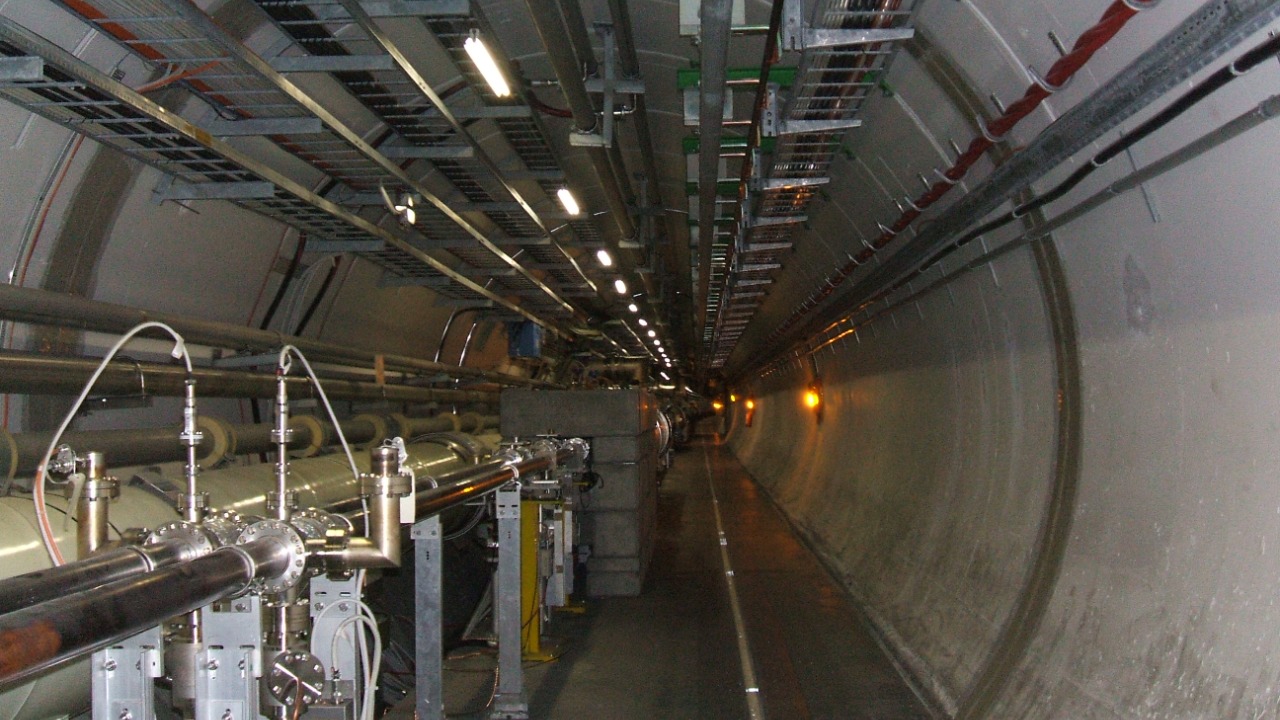

The Large Hadron Collider is entering a rare quiet spell, with its proton collisions halted so engineers can prepare the machine for a more powerful future. The shutdown is not a sign of trouble so much as a planned pivot, trading short term data for long term upgrades that will reshape what this collider can do in the next decade.
What “shutting down” the LHC actually means right now
When people hear that the Large Hadron Collider is shutting down, it can sound like a permanent farewell. In reality, the collider at CERN is being taken out of collision mode so that teams can carry out intensive maintenance and upgrade work that is impossible while beams are circulating. The pause follows a familiar seasonal rhythm in which the complex of machines that feeds the collider powers down at the end of the year before gradually restarting, but this time the quiet period is the front edge of a much more ambitious overhaul.
Earlier winter stops were framed as routine maintenance, with CERN noting that the particles are back each year once the accelerator chain is recommissioned. What is different now is that the current halt is explicitly tied to a broader schedule that shifts the collider from its third major running period into preparations for a high luminosity era, a change that will require more than simply warming up magnets after a few cold months.
From extended Run 3 to an accelerated pause
Only a short time ago, the official plan was for the LHC’s third run to continue well into the middle of the decade. CERN’s own schedule update in Oct described how The LHC would keep operating before entering a long technical stop. In that plan, the collider’s third run was set to be extended until July 2026, with a significant maintenance and upgrade period, known as LS3, to follow.
That earlier roadmap, detailed in another Oct note that explained how The LHC’s third run had been stretched and LS3 lengthened, has now effectively been overtaken by events. New reporting at the end of 2025 and in Jan 2026 makes clear that the collider is being switched off for major work earlier than that original July 2026 horizon, so the current shutdown marks a schedule revision rather than a simple continuation of the previous plan.
A collider that already eased into quiet mode
The transition into this deeper pause did not happen overnight. By late 2024, CERN was already signaling that the collider was winding down operations for the year, with social posts noting that The Large Hadron Collider at CERN had shut down for 2024 to enter its regular winter maintenance period. That seasonal stop is part of the normal operating cycle, when cryogenic systems, magnets and detectors can be inspected and repaired.
In 2025, the pattern repeated, but with a sharper edge. A December update celebrated that CERN scientists at the Large Hadron Collider, or LHC, had achieved precise measurements of top quark pairs, then added that the machine was officially off for 2025. That phrasing signaled that the usual winter lull was now blending into a more extended pause, setting the stage for the shutdown that began around New Year.
The New Year switch off and Mark Thomson’s mandate
The current shutdown crystallized at the turn of the year, when coverage in Jan reported that the collider was being taken offline so that it could receive a significant facelift. One account noted that, even for something responsible for one of the most important scientific discoveries in history, a pause was needed so that upgrade work that started on New Year’s Day could proceed, describing how Even this flagship machine must occasionally stand still to move forward.
That timing coincides with a leadership handover at CERN. A detailed profile of the incoming director general explained that Getting the high luminosity version of the LHC running will dominate Mark Thomson’s five year tenure, and that he is taking charge just as he has to switch the collider off. The same reporting stressed that the LHC, and the planned Future Circular Collider or FCC, sit at the heart of his agenda, so the shutdown is inseparable from a broader strategic push rather than a retreat.
Why the shutdown is happening earlier than first planned
On paper, the collider was supposed to keep smashing protons for longer. The Oct schedule that extended Run 3 to July 2026 and lengthened LS3 reflected a compromise between squeezing out more data and giving engineers enough time to prepare the machine for its high luminosity phase. The new reality, in which the collider is already off in early 2026, shows that the balance has tipped toward starting the heavy work sooner than that earlier document anticipated.
Part of the reason lies in the scale of the tasks ahead. An opinion piece from Oct described how teams are Preparing for high luminosity by drilling 28 vertical cores to link new underground caverns to the LHC tunnel, among other demanding civil engineering jobs. Those works, along with upgrades to magnets and detectors, require long access periods and careful coordination with the experiments and the CERN Directorate, so bringing the shutdown forward gives the teams more breathing room to complete them properly.
What the collider achieved before the pause
The decision to stop colliding protons now comes after a productive stretch of physics. CERN’s own year end review highlighted how, in 2025, CERN used the Large Hadron Collider to perform detailed studies of the Higgs boson, while other accelerators reached crucial milestones. Those results build directly on the collider’s earlier discovery of the Higgs and show that even in its current configuration, the machine is still pushing the frontiers of particle physics.
Alongside the headline Higgs work, the collider’s experiments have been refining measurements of heavy particles such as the top quark. The December note that the Large Hadron Collider was off for 2025 pointed out that scientists had detected top quark pairs produced in photon photon collisions, using the fact that these are the heaviest elementary particles to probe the Standard Model. That kind of precision study is exactly the sort of physics that will benefit from the higher collision rates the upgrades are meant to deliver once the collider restarts.
Life inside CERN during a long quiet spell
A shutdown does not mean the laboratory falls silent. Even in a normal year, CERN describes how, every February, as the first green shoots of spring appear, the hustle and bustle begins again as the accelerator complex is brought back online, recalling how the first protons of 2025 circulated in Linac4 once And every part of the chain is recommissioned. During a longer technical stop, that same energy is redirected into opening equipment, replacing components and testing new systems rather than steering beams.
Researchers and engineers also use the pause to reflect on what the last run delivered and to plan the analyses that will occupy them while the magnets are cold. A 2025 highlight reel noted that the Higgs programme and other accelerator milestones were already reshaping theory work, and social posts from the community, such as a Threads update where The Large Hadron Collider at CERN was again said to be shut down for 2024, show how physicists treat these pauses as part of the rhythm of life at the lab rather than an interruption of it.
How Thomson and his team frame the pause
Mark Thomson has been keen to stress that taking the collider offline does not mean the excitement is over. In comments reported in Jan, he acknowledged that, on the surface, it might sound as if he is taking the reins at a less thrilling moment, only to insist that he is actually stepping in at a time when the machine is on the cusp of a major transformation. One account quoted him explaining that, But while it may sound like a lull, he expects to be busier than ever with the machine hammering away once the upgrades are complete.
That framing matters because it underlines that the shutdown is a choice, not a crisis. The same profile that set out how getting the high luminosity LHC running will dominate Thomson’s tenure also noted that he is taking charge of decisions about the Future Circular Collider in the big atom smasher’s tunnel. In other words, the current pause is being used to align near term work on the existing collider with longer term plans for what might eventually replace or complement it.
The shutdown as a bridge to an even bigger machine
Behind the immediate engineering tasks lies a larger question about the future of high energy physics in Europe. For roughly a decade, top minds at CERN have been drawing up plans for a successor to the Large Hadron Collider, a network of magnets that bends beams of protons around a 27 kilometre ring at velocities approaching the speed of light. Those plans, which focus on a proposed Future Circular Collider, were described in detail in a report that explained how For roughly that long, scientists have been weighing how to build an even larger ring under the countryside straddling Switzerland and France.
The current shutdown, and the high luminosity upgrades it enables, are part of that story. By pushing the existing collider to its limits, CERN can extract as much physics as possible from the current infrastructure while also testing technologies, such as advanced magnets and new detector concepts, that will be essential if the Future Circular Collider goes ahead. In that sense, the quiet period now beginning is less an ending than a bridge between the LHC that discovered the Higgs and the machines that might one day go far beyond it.
More from MorningOverview