
Japanese brands built their reputations on bulletproof family sedans, yet some of their most compelling four-doors now sit in the shadows of crossovers and German badges. Beneath that sensible image is a deep bench of performance sedans that mix pace, reliability and everyday usability in ways the spec sheets alone do not reveal. I want to focus on the cars that quietly deliver, the ones enthusiasts whisper about while everyone else shops for SUVs.
From overlooked luxury bruisers to JDM-only specials, these sedans show how far Japanese engineering can be pushed when comfort is not the only goal. They are not always the obvious choices, but that is exactly what makes them interesting for drivers who care about character as much as 0–60 times.
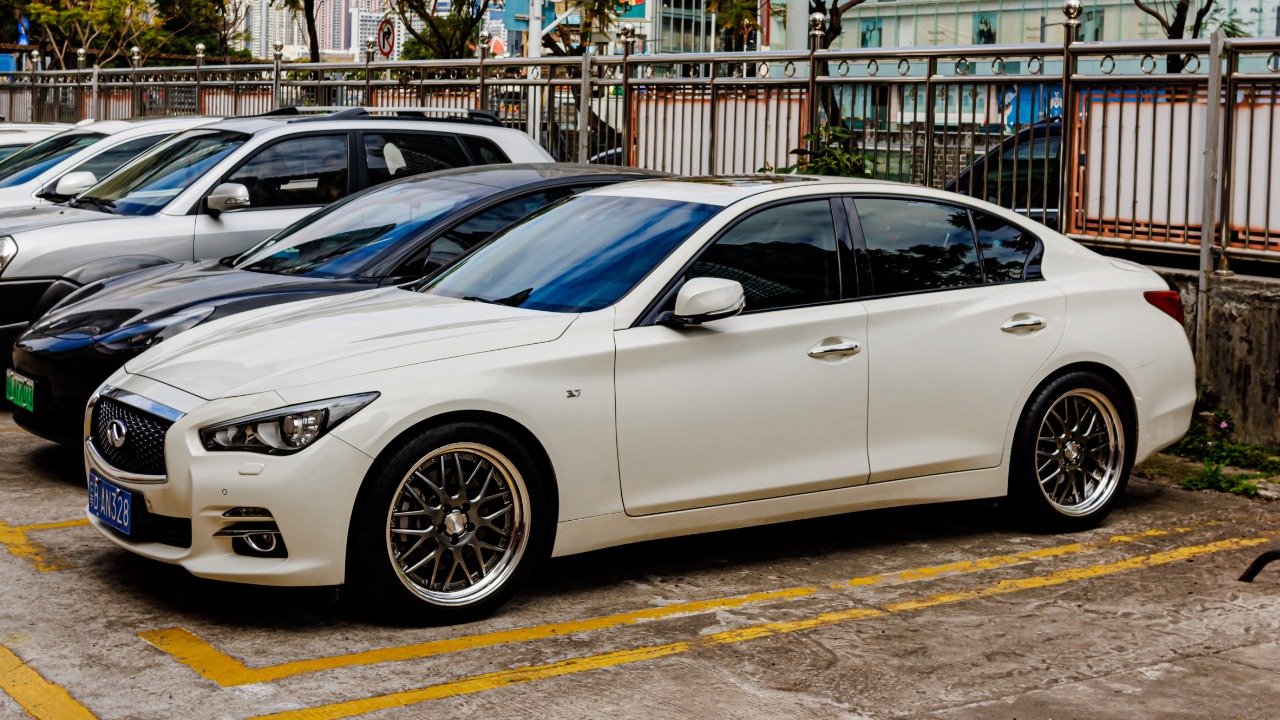
The Infiniti Q50 and the case for the “hidden” sports sedan
When people talk about fast four-doors from Japan, the conversation usually jumps straight to rally-bred icons or the latest German rival. In that noise, the Infiniti Q50 has become a textbook example of a car that enthusiasts underrate. In a feature explicitly asking “Which Japanese Sports Sedan Is Often Overlooked,” the answer is this “undeniably handsome” Infiniti Q50, a car that pairs serious power with a cabin packed full of digital driving functions and integrated climate controls.
What keeps the Q50 in the blind spot is not a lack of substance but a crowded field and a badge that lacks the cachet of the German three. Yet its reported reliability score of 83 out of 100 shows that this is not just a quick sedan, it is a durable one that can stand beside some more obvious choices without flinching. That balance of performance and dependability is exactly why the same analysis highlighted the Q50’s Reliability Score: 83/100 as a key reason it deserves more attention from buyers who want speed without sacrificing long-term peace of mind.
Mazda’s quiet performance streak: from 3 to 6 MPS
Mazda has spent years cultivating an image built on steering feel and driver engagement, and that philosophy shows up most clearly in its smaller sedans. In a rundown of affordable performance four-doors, the Mazda 3 is singled out as “The Perfect Blend Of Sportiness And Pr,” a reminder that even the compact end of the range can deliver genuine fun when the chassis is tuned properly. That same list of “These Are The Sickest Japanese Sports Sedans You Can Buy For Cheap” positions the Mazda offerings as value plays that do not ask drivers to trade involvement for practicality.
Further up the ladder, the Mazda 6 MPS shows how far the brand was willing to push the formula. Described as “Perhaps one of the most underrated and overlooked high-performance cars of the past decade or so,” this rare sedan combined turbocharged power with all-wheel drive in a package that could run with rally-bred rivals from Subaru and Mitsubishi while flying under the radar. That assessment of the Mazda 6 MPS as a match for those rally-bred rivals underscores how much performance potential sits inside what many still see as a sensible family body.
Lexus GS F and the luxury bruisers hiding in plain sight
At the luxury end of the spectrum, the Lexus GS F has quietly evolved from showroom underdog to emerging cult favorite. One detailed look at the car frames it as “Lexus GS F – Forgotten, But Making A Renaissance,” arguing that this Japanese luxury sedan is now being rediscovered for its naturally aspirated V8 character and rear-drive balance. That same piece notes that This Japanese four-door was engineered with a different mission in mind than the softer GS models, prioritizing driver engagement over pure isolation.
Elsewhere, the GS F is already being discussed as a future collectible. A separate analysis notes that “Such is the case with the Lexus GS F, a rear-wheel-drive luxury sedan that the Japanese automaker produced from 2016” and goes on to compare its appeal to high-performance E-Class sedans wearing the AMG badge. That comparison positions the Lexus GS F as a Japanese answer to the German super-sedan template, one that trades turbocharged torque for a more old-school, high-revving personality.
JDM-only sedans and the Mark X GRMN phenomenon
Some of the most intriguing Japanese performance sedans never officially left their home market, which only adds to their mystique abroad. Guides to the JDM scene point out that these JDM (Japanese Domestic Market) cars are niche, performance-focused machines that enthusiasts in the USA and the United Kingdom often treat like dream garage material. One overview notes that “But in countries like the USA or the United Kingdom, these JDM (Japanese Domestic Market) cars are niche, performance-focused machines that enthusiasts chase through imports and auctions,” a sentiment captured in the way But in countries like the USA or the United Kingdom, these JDM sedans are treated as rare finds rather than everyday transport.
Within that world, the Toyota Mark X GRMN has become a touchstone. Official coverage describes it as “Toyota Mark X GRMN revealed for Japanese market Rear-drive manual sedan added to JDM-only GRMN family NEWS,” underlining that this is a rear-drive, manual-transmission sedan built specifically for Japan. That same description of the Toyota Mark X GRMN as part of a JDM-only GRMN family shows how Toyota used its Gazoo Racing know-how to create a sedan that feels more like a track car with rear doors than a commuter.
Enthusiast accounts go even further, calling the 2019 Toyota Mark X GRMN “when Toyota built a 90s BMW,” a rear wheel drive sedan a bit smaller than a Camry with a 3.5 liter V6, a six-speed manual and a Torsen limited slip differential. That vivid description of the Toyota Mark X GRMN as a kind of Japanese-built 90s BMW captures why it has become a symbol of what enthusiasts mean when they talk about “forbidden fruit” sedans.
Forgotten nameplates and the deep JDM bench
Beyond the headline cars, there is a long list of Japanese performance sedans that even seasoned enthusiasts may struggle to recognize. One survey of “10 Japanese performance sedans you’ve never heard of” highlights how brands like Mitsubishi and Honda quietly turned out serious machinery, from a 2002 Honda Torneo Euro R Silver Front Angle to various Mitsubishi specials. That same rundown of Japanese four-doors shows how deep the bench runs once you look past the usual Skyline and Evo references.
Another list of “10 Japanese Performance Sedans You’ve Never Heard Of” goes even more obscure, calling out a 1981 Mitsubishi Lancer EX 2000 Turbo White Front Angle Mitsubishi and a 2001 Toyota Verossa Black Front Angle Toyota as examples of how the segment has evolved. By spotlighting the Mitsubishi Lancer EX and the Toyota Verossa in this way, the piece underlines that the Japanese industry has been experimenting with turbocharged, rear- and all-wheel-drive sedans for decades, often without exporting them widely.
Value hunters, Reddit wisdom and the JDM mindset
For buyers chasing value rather than rarity, Japanese sedans still offer a compelling mix of price and performance. A guide aimed at budget-conscious enthusiasts notes that “These Are The Sickest Japanese Sports Sedans You Can Buy For Cheap,” and places models like the Mazda 3 near the top for delivering that “Perfect Blend Of Sportiness And Pr” without premium pricing. In parallel, a separate ranking of top value four-doors points out that while many know the original Mazda 3 Hatchback, the Mazda 3 Sedan is an overlooked model that continues to offer a safe and easy drive, a point made explicitly in the line “I’m sure we’re all familiar with the original Mazda 3 Hatchback, but the Mazda 3 Sedan is an overlooked model that continues to offer a safe and easy drive,” which casts the Mazda sedan as a sleeper choice.
Online communities echo that logic. In one Reddit thread titled “Underrated Japanese Sedans?” the Comments Section includes a blunt piece of advice: “For $25k and Japanese reliability, you probably want a Honda Accord. This proba…” That kind of grassroots endorsement of the Japanese Honda Accord as a go-to choice for reliability and value shows how, even outside enthusiast circles, the default assumption is that Japanese sedans will simply work, year after year.
Why enthusiasts still chase Japanese four-doors
Part of the appeal of these cars lies in how they fit into the broader JDM culture. Enthusiast guides explain that JDM cars are renowned for their unique blend of performance, reliability and striking aesthetics, a combination that helps them bring power and precision to the table without sacrificing daily usability. One explainer on what JDM means notes that JDM models have become shorthand for that mix of traits, which is exactly what makes a fast sedan so attractive to drivers who need four doors but still care about how a car feels.
That perception extends beyond cars into broader Japanese enthusiast culture. In a discussion about watches, one commenter draws an Analogy to JDM cars, noting that in the US abroad they are perceived as rare and coveted, with Skylines, Supras and NSXs turning heads whenever they appear. The way this Analogy leans on JDM Skylines and Supras shows how deeply the idea of Japanese performance machinery has seeped into enthusiast shorthand, and performance sedans sit squarely inside that same halo.
Concepts, bargains and the shrinking playground
Even when some of these sedans never reach showrooms, the concepts behind them reveal how ambitious Japanese brands can be. The Infiniti Q50 Eau Rouge concept, for instance, was Designed to express Infiniti’s design vision of a high-performance variant of its Q50 premium sports sedan, with talk of 372 kW and 812 Nm should it reach production. That description of how it was Designed shows that even if the Eau Rouge never made it to customers, the underlying Q50 platform was capable of handling supercar-level outputs.
At the same time, long-time observers note that it is not easy being a fan of Japanese cars these days, because Most no longer offer the smorgasbord of performance models that once defined the segment. One nostalgic reflection laments that Japanese brands have trimmed back the enthusiast-worthy sedans that made them great altogether, even as a handful of bargains remain in the used market.
Those bargains are still out there for buyers willing to look. A guide to the best JDM sports car bargains on the used market notes that these cars offer qualities that help owners make long-term savings, from reliability to strong residuals, and includes several four-door options alongside coupes. That same overview of 9 Best JDM sports car bargains underscores that the smart money often goes to Japanese metal when performance per dollar is the priority.
Why these sedans matter now
In an era dominated by crossovers, the overlooked Japanese performance sedan represents a different kind of automotive value. Enthusiast pieces on “JDM Envy” point out that a couple years back, Toyota’s Gazoo Racing division even offered a limited production version of the Mark X GRMN equipped with a six-speed manual transmission and other track-ready bits, a reminder that manufacturers still see a business case for hardcore four-doors. That description of how Toyota Gazoo Racing treated the Mark X GRMN shows that the formula still resonates when it is executed with conviction.
For drivers, the takeaway is simple. Whether it is a Q50 with a strong reliability record, a Mazda 6 MPS that can embarrass rally-bred rivals, or a JDM-only Mark X GRMN that channels a 90s BMW, the Japanese performance sedan remains one of the most interesting corners of the market. The challenge is not finding the cars, it is recognizing their value before everyone else does.
More from Morning Overview