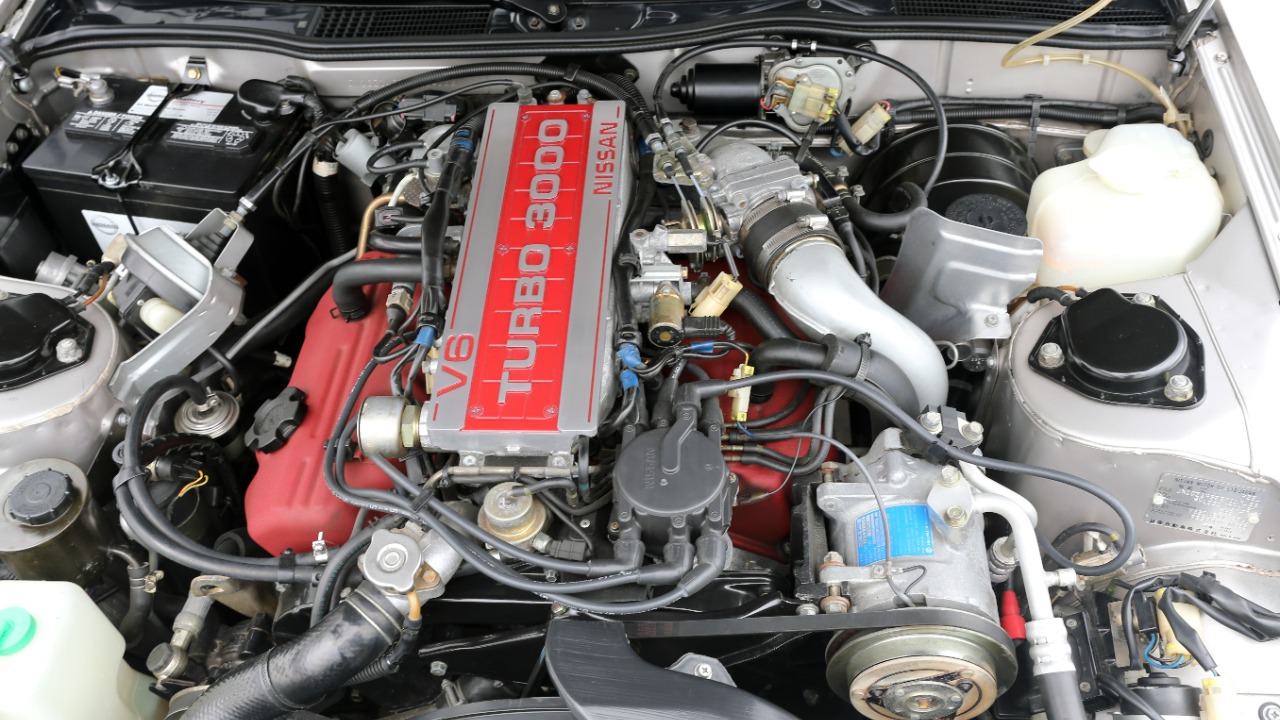

By the time the 1990s hit full stride, one V6 had quietly reset expectations for what a 300 horsepower sports car could feel like. The twin-turbocharged heart of the Nissan 300ZX did not just chase big numbers, it delivered them with a level of smoothness and everyday civility that made 300 hp seem almost casual. To understand how that happened, I have to trace the path from the first twin-turbo experiments to the moment Nissan’s Z32 finally made that benchmark feel effortless.
The Maserati Biturbo lights the twin-turbo fuse
Long before Japan perfected the formula, Italy took the first bold step into twin-turbo territory. The Maserati Biturbo arrived as a compact luxury coupe that tried to democratize exotic performance with forced induction on a V6. Officially unveiled in the early 1980s, it carried the weight of reviving a storied brand by pairing everyday usability with serious speed potential. That ambition made it the template for what a modern boosted six could be, even if the execution was not yet fully polished.
Under the hood, Maserati’s engineers created a small displacement engine that leaned heavily on boost rather than cubic inches. Output for the 2.5-liter version typically ranged around 180 horsepower in standard form, a healthy figure for a compact executive car of its era. The Biturbo V6 was engineered as a turning point, using two small turbochargers to keep lag manageable while still delivering a strong midrange. It proved that a twin-turbo V6 could be both compact and potent, even if reliability and refinement issues kept it from feeling truly effortless.
The world’s first twin-turbocharged car and its limits
That early Maserati did more than just wear a marketing-friendly badge, it carved out a genuine first. The World’s First Twin-Turbocharged Car Was a Maserati, a fact that still surprises enthusiasts who associate twin turbos with later Japanese and German icons. As one detailed history of The World First Twin Turbocharged Car Was Maserati makes clear, this was a pioneering move that predated halo machines like the Porsche 959 at Fiorano by several years. In other words, the Biturbo was not following a trend, it was setting one.
Yet for all its innovation, the Biturbo never made its power feel completely relaxed or accessible. Contemporary accounts often describe a peaky delivery and a chassis that struggled to keep up with the engine’s character. A later breakdown of the model’s specifications notes how the Specs table for the export version focused on Engine, Horsepower, 0 to 60 M, and Top Speed, but the numbers never quite translated into the seamless, confidence-inspiring performance that drivers would eventually demand. The Biturbo proved that a twin-turbo V6 could hit impressive figures on paper, yet it also highlighted how far the industry still had to go before such power felt natural and unstrained.
Nissan learns from Europe and redefines the Z
By the late 1980s, Nissan was watching these European experiments while plotting a reinvention of its own sports car icon. The company’s Z lineage had evolved from raw, relatively simple coupes into heavier, more luxurious grand tourers, and the new generation needed to restore credibility without abandoning comfort. A detailed timeline of the model’s evolution notes how, as the classic muscle era faded, Dec era cars had already begun to emphasize the model’s added luxury features, which made the next step even more critical. Nissan had to deliver serious performance while keeping the car usable as a daily driver.
The answer was a clean-sheet redesign that treated the engine bay as a technology showcase rather than a simple powerplant compartment. Engineers developed a compact, high-tech V6 that could accept forced induction without sacrificing smoothness or reliability. When the Z32 generation finally arrived, it was clear that Nissan had studied the lessons of cars like the Maserati Biturbo and decided to go further. The new car’s proportions, suspension geometry, and electronics were all tuned around the idea that a powerful V6 could be both sophisticated and approachable, not just fast in a straight line.
The Nissan 300ZX Twin Turbo hits 300-HP
That philosophy crystallized in the twin-turbocharged version of the Z32, which delivered a headline figure that still resonates: 300-HP from a compact V6. Reporting on the car’s development notes that The Nissan 300ZX Had The First 300-HP Twin Turbocharged V6, a milestone that marked the moment a mainstream manufacturer made that kind of output feel almost routine. In that context, The Nissan Had The First Twin Turbocharged V6 from Nissan that truly normalized 300 horsepower in a production sports car, rather than reserving it for ultra-rare exotics.
What set this engine apart was not just the number on the brochure, but how calmly it delivered that performance. Contemporary tests and later retrospectives describe a broad, flat torque curve and a willingness to rev that made the car feel strong in any gear. A closer look at the Z32’s market positioning shows how the Oct era Nissan Offered a Mighty Twin Turbo V6 In The 1990s, with the production 300ZX Twin Turbo often compared directly to contemporary Porsche 911 Carrera models on both power and refinement. That comparison underlined just how far the twin-turbo V6 concept had come since the Biturbo years.
How the 300ZX Twin Turbo shaped ’90s speed
Once the Z32 was on sale, its influence spread quickly through both the showroom and the tuning world. The Nissan 300ZX Twin Turbo arrived at the start of the 1990s and immediately helped define what that decade’s performance cars would feel like, with a blend of high speed stability and everyday comfort that made it a genuine grand tourer. One detailed retrospective on The Nissan 300ZX Twin Turbo argues that this car effectively shaped 1990s speed, setting expectations for how a fast coupe should accelerate, corner, and cruise at high velocity without drama. In that sense, the Z32 did not just join the performance conversation, it helped write the script.
Owners and reviewers alike praised the way the car’s chassis and electronics worked with, rather than against, the engine’s output. A period review of a 1995 example recalls that Jan When you go high-tech, large money follows, noting that in 1990 the twin-turbo 300ZX was a $33,000 car, a serious investment for buyers of the time. Yet that price brought a level of sophistication that justified the cost, from the engine management to the suspension tuning, and it helped cement the car’s reputation as a technological flagship rather than a simple muscle machine.
Technology that made big power feel easy
The Z32’s drivetrain did not exist in isolation, it was part of a broader push to integrate advanced systems that could fully exploit the engine’s potential. One standout example was Nissan’s rear-wheel steering system, which debuted in this family of cars. A technical feature on the early 300ZX Turbo notes that the model marked the U.S. introduction of Nissan’s Super HICAS, short for Super High Capacity Actively Controlled Steering, which subtly steers the rear wheels to improve agility and stability. That innovation, highlighted in a deep dive on Dec Turbo Nissan Super HICAS Super High Capacity Actively Controlled steering, helped the car feel smaller and more responsive than its curb weight suggested.
From behind the wheel, these systems combined to make the 300 horsepower figure feel almost understated. Modern enthusiasts who revisit the car often remark on how composed it remains at speed, with one detailed video review of a 1990 Nissan 300ZX Twin Turbo describing how the chassis, brakes, and engine work together to deliver performance that still feels contemporary. That harmony is what truly made this twin-turbo V6 special: it was not just powerful, it was integrated so well that the driver could exploit most of its capability without wrestling the car or worrying about sudden, unpredictable surges of boost.
The legacy of the effortless 300-hp V6
Looking back now, it is clear that the Z32’s twin-turbo V6 did more than just win comparison tests, it reset the baseline for what enthusiasts expected from a high performance engine. Where the Maserati Biturbo had shown that a twin-turbo V6 was possible, the Nissan 300ZX proved that such an engine could be refined, durable, and friendly enough for daily use. That shift from fragile curiosity to dependable powerhouse is what allowed later generations of turbocharged V6s to flourish across the industry, from Japanese sports cars to European grand tourers.
Even today, the car’s reputation continues to grow as enthusiasts reassess its place in history. Modern buyers hunting for 1990s performance icons increasingly recognize that the Z32’s twin-turbo V6 was the point where 300 horsepower stopped feeling like a wild, barely contained figure and started to seem like a natural, almost expected level of output. In that sense, the first 300-HP twin-turbo V6 that made the number look easy did more than just power a single model, it quietly redefined what fast felt like for an entire generation of drivers.
More from Morning Overview