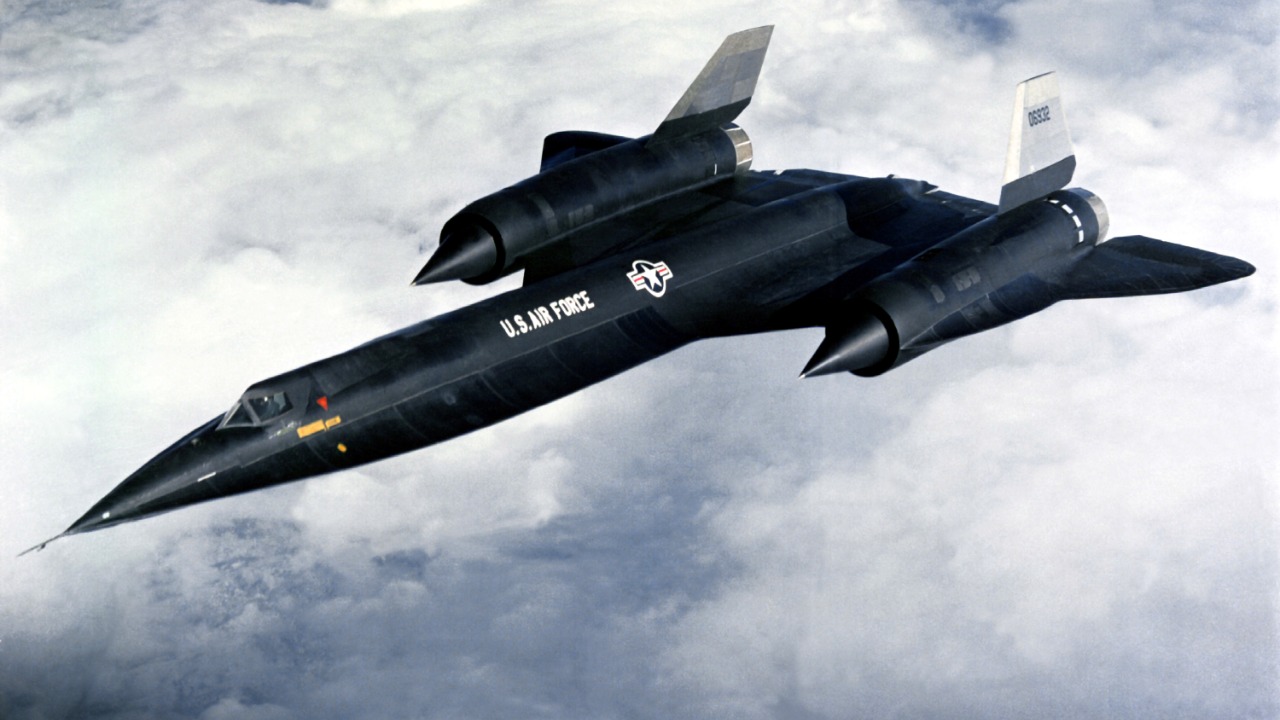

The most influential aircraft in modern aviation did not debut at an air show or in a glossy brochure. It arrived in total secrecy, flown by pilots whose names were classified, from a desert base that officially did not exist. The Central Intelligence Agency’s A-12 “Oxcart” program quietly pushed speed, altitude, and materials science so far beyond the state of the art that its fingerprints still show up in cutting-edge designs today.
Built to outrun missiles and cameras alike, the A-12 was a reconnaissance machine that forced engineers to rethink what an airplane could be. Its radical structure, exotic materials, and tightly controlled test program at a remote Nevada airfield created a template for how the United States develops black projects, from later spy planes to hypersonic concepts.
The CIA’s need for a plane that could not be caught
When the CIA turned to Lockheed for a new reconnaissance platform, the agency was chasing a simple but unforgiving requirement: survive over hostile territory without being shot down. That meant flying higher and faster than any interceptor or surface-to-air missile could reliably reach, and doing it with a radar signature small enough to delay detection. The result was the A-12, a single-seat aircraft that the CIA later described in its own historical material as a purpose-built high altitude, high speed reconnaissance system, designed from the outset for covert operations and operated under the code name Oxcart.
To keep that capability hidden, the agency based the program at a remote Nevada test site that would become synonymous with secrecy. The desert facility, better known today as Area 51, offered the isolation needed to test an aircraft that left a distinctive sonic footprint and contrails at extreme altitude. Its maiden flight took place there, and the base’s radar and range infrastructure evolved around the demands of tracking a jet that operated at speeds and heights that still challenge today’s cutting-edge aircraft. The CIA’s insistence on compartmentalization, from the base to the supply chain, set a pattern for how later stealth and reconnaissance programs would be shielded from public view.
Radical design: titanium, speed and survival
The A-12’s structure was as secret as its mission. To survive the heat generated at sustained cruise above Mach 3, Lockheed’s engineers turned to titanium and specialized fuel formulations, creating an airframe that was more a controlled heat sink than a conventional airplane. The CIA’s own archival description of the program highlights how the aircraft’s skin, internal structure, and systems were optimized for extreme altitude reconnaissance, with every major component shaped by the need to manage temperature, reduce radar cross section, and carry sophisticated cameras in a slender fuselage built for reconnaissance.
Even the pilot’s clothing became part of the engineering solution. A-12 crews wore full pressure suits that functioned as self-contained life support systems at the aircraft’s operating ceiling, where cabin depressurization would be instantly fatal. Those suits carried emergency instructions printed on their sleeves, a stark reminder that ejection at those speeds and altitudes was a last resort. The combination of titanium structure, specialized fuel, and pressure-suited pilots created a tightly integrated system that anticipated later high performance aircraft, including the better-known SR-71, and established design norms for how to keep humans alive at the edge of the atmosphere.
Area 51 as a factory for the future
The A-12 did more than occupy Area 51, it reshaped the base into a laboratory for advanced flight test. The aircraft’s maiden flight from the Nevada facility required new approaches to radar tracking, telemetry, and range safety, because the jet’s speed and altitude pushed beyond what existing systems were built to handle. Over time, the same desert runways and instrumented ranges that supported the A-12 became a permanent home for testing aircraft whose performance and signatures could not be exposed to public airspace, a role that continues to define Area 51 in the public imagination.
Accounts from those familiar with the base’s evolution describe how its radar and range capabilities were upgraded to keep pace with the A-12’s performance, then repurposed for later programs. The pattern is clear: a secret aircraft arrives, the base adapts, and the resulting infrastructure becomes the launchpad for the next generation. In that sense, the A-12 did not just benefit from Area 51’s isolation, it effectively built the modern version of the test range that would later host other classified platforms, from stealth prototypes to unmanned systems, all following the operational model first refined for Oxcart.
From A-12 to SR-71: a family of black aircraft
The A-12’s most direct legacy is the SR-71, a derivative that took the basic configuration and adapted it for the United States Air Force. The CIA’s own historical material notes that the A-12 was retired in the late 1960s, but its design lived on in the twin-seat reconnaissance aircraft that followed. In public video explainers, the A-12 is described as the forerunner of the SR-71, with the same distinctive chines, engine nacelles, and blended wing body that allowed both aircraft to cruise at sustained high Mach numbers, a lineage that is highlighted in modern retrospectives of the aircraft.
Analysts who have compared the two programs point out that the A-12 went head to head with its Air Force cousin inside the Pentagon’s own budget debates. The CIA’s single-seat jet, optimized for speed and altitude, faced competition from the SR-71 “Blackbird,” a secret derivative project from the same design house. Reporting on that rivalry notes that Lockheed developed the Blackbird as a follow-on that could meet broader military requirements, and that the A-12’s operational record, including its role in the later stages of the Vietnam War, was ultimately not enough to save it from cancellation once the Air Force platform gained momentum.
The quiet demise and long shadow of Oxcart
Despite its technical success, the A-12 program was short lived. The CIA’s own museum account records that the aircraft was retired on 28 May 1968, ending its operational life after only a handful of reconnaissance missions. The same archival material notes that the A-12’s full pressure suits, emergency procedures, and mission profiles were all tailored to a very specific intelligence requirement, which made the aircraft vulnerable when strategic priorities shifted and the Air Force’s SR-71 offered a more flexible platform for long term use. The CIA’s affection for the aircraft, documented in later analyses of how the agency “loved” the A-12 but could not prevent its retirement, underscores how political and budgetary forces can override even the most advanced technology.
Yet the end of A-12 operations did not end its influence. Modern video histories describe how The Lockheed A-12 was the forerunner of the SR71and that its innovations in materials, aerodynamics, and systems integration helped shape the history of this legendary aircraft family. Enthusiast communities that track the aircraft’s story, including posts about the CIA version of the SR-71 displayed at Langley VA, emphasize that Oxcart was the CIA’s own Mach 3 reconnaissance platform and that its performance metrics still command respect. The fact that the aircraft remained classified for years after retirement only deepened its mystique, allowing its technical achievements to seep quietly into later programs without public fanfare.
From Blackbird to hypersonic concepts
The A-12’s structural and propulsion lessons did not stop with the SR-71. The Blackbird’s retirement left a gap in high speed reconnaissance that modern designers are now trying to fill with hypersonic concepts. One of the most prominent is the Lockheed Martin SR 72, a proposed unmanned or optionally piloted aircraft that would build on the legacy of the retired Lockheed SR-71 Blackbird. The very idea of an SR-72 assumes that the basic logic of Oxcart still holds: in an era of dense air defenses and contested space assets, there is enduring value in a platform that can sprint across hostile airspace faster than an adversary can react.
In that sense, the A-12’s most important contribution may be conceptual rather than mechanical. It proved that a secret program, run by The CIA in partnership with Lockheed Martin, could leapfrog existing technology by embracing risk, exotic materials, and a test regime centered on a place like Area 51. Later black projects, from stealth bombers to experimental unmanned systems, have followed that pattern. The A-12’s story, from its first flights over the Nevada desert to its quiet retirement and eventual display at CIA headquarters in Langley VA, shows how a single classified aircraft can quietly rewrite the rules of aviation, then pass that playbook on to successors that will themselves remain in the shadows for years to come.
More from Morning Overview