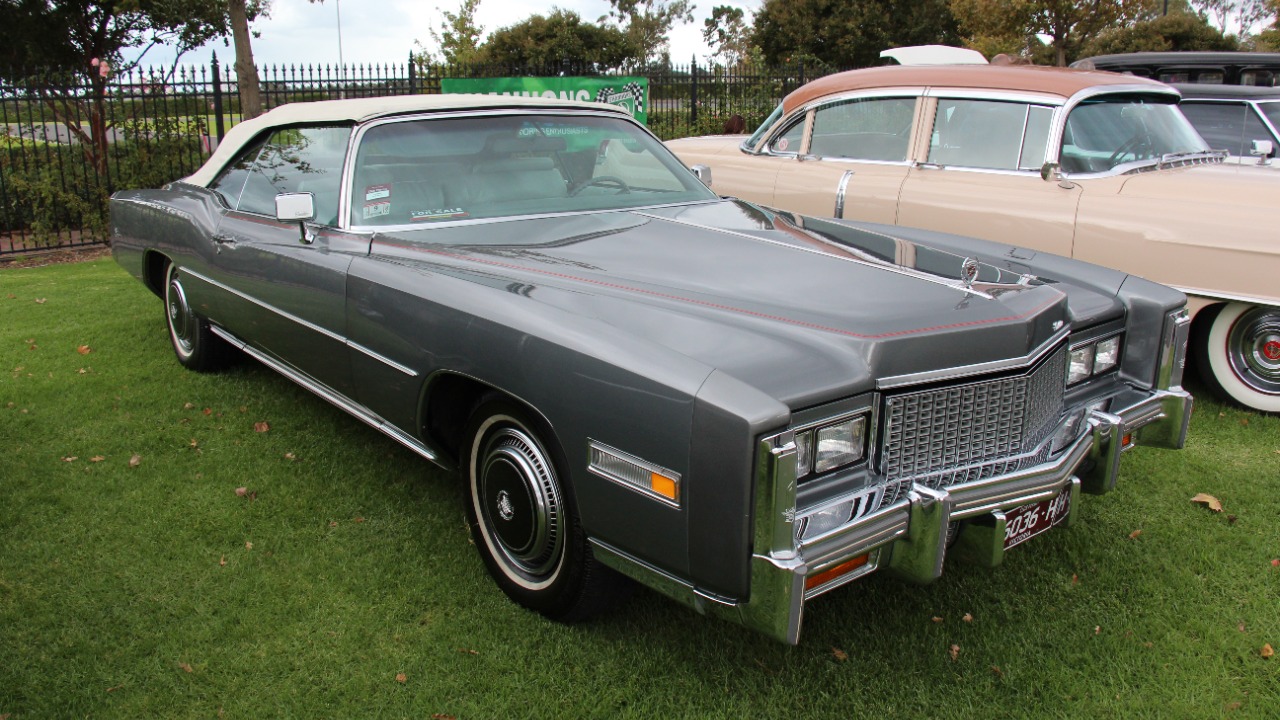

The Cadillac 500 V8 arrived at the height of America’s big‑car era, yet even in that context it was an outlier, a powerplant so outsized that it still sounds like a misprint. It was not just large in cubic inches, it was engineered with a set of quirky priorities that made it both technically clever and slightly absurd, a luxury engine that quietly doubled as a torque monster. I see it as one of the strangest crossroads in Detroit history, where comfort, excess and some surprisingly smart engineering all met in a single cast‑iron block.
Big‑car luxury that demanded an equally oversized heart
When people think of Cadillac in its classic era, the mental image is not a stopwatch or a drag strip, it is a vast sedan gliding down the highway with plush leather, chrome everywhere and barely a whisper from under the hood. That expectation of effortless motion is what made a giant V8 feel less like a brag and more like a requirement, because moving a full‑size luxury car with that kind of serenity takes torque more than headline horsepower. In period, the brand’s identity was built on the idea that the driver should never feel the strain of weight or speed, only the sense that the car was idling through space, and the 500 cubic inch engine was the mechanical expression of that promise.
Video explainers on the engine’s history underline how this culture of comfort shaped the hardware, with hosts like Jun describing Cadillac as the company people associated with big cars, soft suspensions and that floating ride. In that context, the 500 V8 was less a stunt than a logical escalation, a way to keep these ever‑larger cars feeling light on their feet without resorting to high‑revving, temperamental performance tuning. The engine’s weirdness starts right there, in the decision to pour so much displacement into an application that was officially about quiet luxury rather than quarter‑mile times.
Born from the 472, stretched in all the right (and odd) ways
The 500 V8 did not appear from thin air, it was an evolution of an already substantial engine that Cadillac had just put into production. Engineers started with the existing 472 cubic inch design and then pushed it further, a choice that let them reuse much of the architecture while still chasing a new level of torque. The key change was in the bottom end, where they increased the stroke length from 4.06 inches to 4.304 inches, a seemingly small tweak on paper that transformed the character of the engine by giving each piston a longer lever arm on the crank.
Technical breakdowns of the program explain that the 500 grew out of the 472 specifically through that stroke increase from 4.06 to 4.304, rather than a wholesale redesign. That choice kept the engine relatively compact for its displacement and helped control costs, but it also meant the big Cadillac V8 carried some of the quirks of its predecessor, including its low‑revving nature and emphasis on midrange pull. The result was an engine that looked conventional on a blueprint yet behaved like something much larger than its already huge numbers suggested.
Launched into a muscle‑car world it was never meant to join
The timing of the 500’s debut made its story even stranger, because it arrived just as Detroit’s muscle‑car wars were peaking. In that same moment, Chrysler was loudly promoting its 446 pack and Chevy was pushing its LS6454, engines that were sold on quarter‑mile bravado and high specific output. Against that backdrop, Cadillac quietly rolled out a 500 cubic inch V8 that, on paper, could have joined the fight, yet the company insisted on framing it as a tool for serene highway cruising rather than a weapon for stoplight battles.
Enthusiast retrospectives point out that while Chrysler and Chevy were chasing glory with the 446 and LS6454, Cadilla engineers were content to let their giant engine work almost anonymously under massive hoods. That disconnect is part of what makes the 500 so oddly compelling: it had the raw displacement to be a headline muscle motor, but it was tuned and marketed as if performance were almost an accidental side effect. The car world around it was obsessed with sizzle, yet Cadillac treated its biggest V8 like a quiet luxury appliance.
GM’s last classic big block, hiding clever engineering under the excess
Within General Motors, the 500 occupies a special place as the final expression of the traditional American big block formula. It was the last time the company committed to a passenger‑car engine that large, and it arrived just before emissions rules and fuel crises made such projects politically and economically impossible. That alone would make it historically important, but what stands out to me is how much thought went into making this giant engine relatively light and efficient for its size, even as it symbolized peak excess.
Analyses of the program describe how The Cadillac 500ci V8 Was GM’s Last Classic Big Block, and they note that engineers trimmed weight compared with earlier designs while still prioritizing smoothness and durability. Still, despite that emphasis on size and style versus outright performance, the engine’s architecture left room for enthusiasts to later unlock more power with relatively simple modifications. That combination of corporate conservatism and latent potential is part of what makes the 500 feel so unconventional: it was both the end of an era and a platform that hot‑rodders could bend to their own purposes.
The largest Cadillac V8 ever, and strangely modest on paper
In raw numbers, the 500 cubic inch displacement translated to about 8.2 liters, making it the largest V8 Cadillac ever installed in a production car. That figure alone puts it in rare company, even among American land‑yacht engines, and it explains why the motor has become a kind of shorthand for the outer limits of factory excess. Yet the factory ratings, especially in its later years, were surprisingly restrained, with some versions officially producing around 190 horsepower, a figure that sounds almost timid for such a massive lump of iron.
Historical breakdowns of the engine’s specs describe it as a 500 cubic in 8.2 L V8, the largest Cadillac ever put into regular production, and note that certain emissions‑era calibrations were rated at 190 horsepower. That mismatch between size and stated output is one of the engine’s weirdest traits, a product of changing measurement standards, tightening regulations and Cadillac’s own decision to prioritize low‑rpm torque over peak numbers. On paper it looked almost lazy, but in real‑world driving it delivered the kind of effortless shove that made two‑and‑a‑half‑ton cars feel unexpectedly light off the line.
Part of a long V8 lineage, yet an outlier even within Cadillac
Cadillac did not stumble into big V8s by accident, it had been building them for decades by the time the 500 arrived, and the company’s engineers had already cycled through multiple generations of layouts and displacements. Depending how you break them down, there have been at least eight generations of Cadillac V8s, each with its own quirks and engineering priorities, from early flatheads to more modern overhead‑valve designs. Within that family tree, the 500 stands out not just for its size but for the way it pushed the existing architecture to its absolute limits without tipping into full‑race territory.
Historical overviews of the brand’s engines explain that, Depending how you count Cadillac V8 generations, the 500 cubic inch, or 8.2 liter, engine sits near the top of that evolutionary ladder as both a culmination and a dead end. It was a beneficiary of the block and head designs that came before it, yet it arrived just as the industry was pivoting toward smaller, more efficient powerplants. That tension between continuity and abrupt change is part of why the 500 feels so singular: it is recognizably a Cadillac V8, but it also marks the point where the old way of doing things simply could not stretch any further.
One of the largest production engines, built for torque more than glory
Even outside Cadillac’s own history, the 500 ranks among the largest engines ever fitted to a regular production car, a fact that still raises eyebrows in an era of turbocharged fours and downsized sixes. Yet its mission was never to chase the highest specific output or the loudest exhaust note, it was to deliver a tidal wave of low‑rpm torque that could move heavy luxury cars with minimal fuss. That focus on usable shove rather than peak power is part of what makes the engine feel so counterintuitive today, when performance is often measured in headline horsepower figures.
Modern retrospectives describe the 500 as One of the largest engines ever installed in a production car, with a displacement of 8.2 liters, and they emphasize how its generous bore and stroke made it a natural torque producer. That characteristic suited Cadillac’s priorities perfectly, even if it meant the engine never became a poster child for raw performance in the way some smaller, more aggressively tuned V8s did. The weird brilliance here is that the company built a record‑setting engine and then used it to make its cars feel calmer rather than crazier.
Developed in a shrinking‑engine era, by engineers who went the other way
By the time the 500 was being developed, much of the global automotive world was already starting to talk about smaller, more efficient engines as the future. Concerns about emissions, fuel consumption and looming regulations were pushing many manufacturers toward downsizing, experimenting with lighter blocks and more sophisticated combustion strategies. Against that backdrop, Cadillac’s decision to green‑light an even larger V8 looks almost defiant, a statement that its luxury cars would not compromise on the effortless performance its customers expected.
Video histories of the program describe how, in 1970, while the rest of the automotive world was talking about smaller, more efficient engines, Cadillac engineers were busy finalizing a 500 cubic inch V8 for their biggest models. That choice now reads as both bold and slightly out of step, a bet that the brand’s traditional formula could survive the coming regulatory storm. In practice, the engine’s life in production was relatively short, squeezed by fuel crises and changing tastes, but its existence captures a moment when Cadillac chose to double down on its core identity rather than preemptively retreat.
A brilliantly odd legacy that still shapes how enthusiasts see Cadillac
Looking back, the Cadillac 500 V8 occupies a strange space in car culture, remembered both as a symbol of excess and as a surprisingly sophisticated piece of engineering. Enthusiasts prize it today not just for its sheer size but for the way it responds to tuning, with that long stroke and generous displacement offering a deep well of torque for hot‑rodded builds. At the same time, its stock applications in massive luxury cars have become icons of a lost era, when comfort and quiet were considered just as important as acceleration times.
Modern commentators like Jun and others who revisit the engine’s story tend to frame it as a kind of forgotten muscle hero hiding in plain sight, a motor that could have been marketed as a performance flagship but instead spent its prime years wafting around in formal sedans. That dual identity is what makes the 500 feel so brilliantly weird to me: it was the largest V8 Cadillac ever built, born from the 472 with a stroke stretched from 4.06 to 4.304, launched into a world obsessed with the 446 and LS6454, and remembered today as both GM’s Last Classic Big Block and a quiet servant of luxury. Few engines have ever been that big, that capable and that strangely modest about it.
More from MorningOverview