
The next phase of automation is not a distant prospect but a live restructuring of how products are made, buildings are raised, and services are delivered. Across factories, construction sites, hospitals, and banks, software and machines are taking on more of the routine work while humans are pushed toward higher judgment and oversight. The wave is rising quickly, and the pace of change in 2026 will test how ready leaders really are for an economy built on intelligent systems.
What is emerging is less a single technology shift than a layered transformation: artificial intelligence, robotics, cloud platforms, and data infrastructure are converging into what many executives now describe as “always‑on” digital operations. I see the most successful organizations treating this as a redesign of work itself, not just a cost‑cutting exercise, and the evidence from manufacturing, construction, health, and finance suggests that approach is becoming a competitive necessity.
Hyperautomation moves from buzzword to operating model
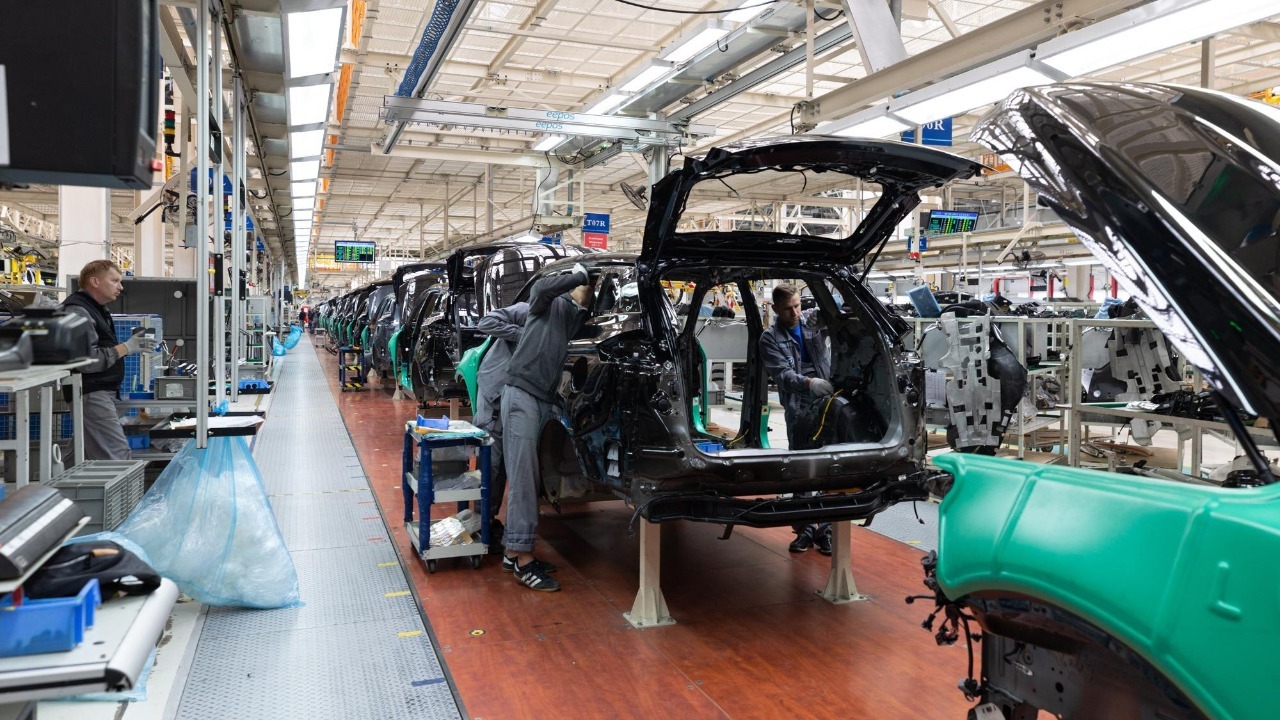
In 2026, the center of gravity in automation is moving from isolated pilots to what specialists call hyperautomation, where software, AI, and physical systems are orchestrated end to end. Analysts tracking Automation Trends describe hyperautomation as the new standard, with autonomous systems expanding beyond controlled environments into more complex operations. That shift is visible on factory floors, where industrial robots are no longer just welding or packing but are tied into planning software, quality systems, and predictive maintenance tools that adjust in real time.
Behind this acceleration is a maturing AI stack that can handle unstructured data, from camera feeds to maintenance logs, and then act on it. Experts tracking the future of Automation argue that AI will help make more nuanced decisions inside workflows, allowing organizations to digitize processes across the business instead of just at the margins. I see that as the real break from earlier waves of automation: the goal is no longer to bolt a robot onto a single task, but to wire entire value chains so that data, algorithms, and machines can coordinate with minimal human intervention.
Manufacturing becomes a test bed for intelligent efficiency
Manufacturing is where this new model is most visible, and the sector is turning into a proving ground for what intelligent efficiency actually looks like. Industry forecasts for the Manufacturing Industry in 2026 highlight AI‑driven systems that optimize production schedules, reduce downtime, and improve product and service quality. That is not just about squeezing more units out of a line; it is about using data to reconfigure operations quickly when supply chains shift or customer demand changes, something that has become a board‑level concern after years of volatility.
Education and workforce pipelines are adjusting in parallel. A recent Manufacturing outlook notes that one of the most significant shifts is the rise of technicians who can monitor machines in real time, interpret sensor data, and work alongside collaborative robots. Consulting groups expect simulation-led engineering and operations to move from concept to essential capability, letting manufacturers test production changes virtually before they touch physical equipment. In my view, that combination of digital twins, AI scheduling, and skilled operators is turning plants into living software systems, where code and machinery evolve together.
Construction, health, and finance show how far automation can stretch
Outside the factory, some of the most striking changes are happening in sectors that once seemed too messy or human‑centric to automate. In construction, a surge of robotics is reshaping how heavy machinery is used, with one fast‑growing category focused on turning bulldozers, excavators, and haul trucks into semi‑autonomous fleets. Reporting on Heavy Equipment Goes highlights how companies like Bedrock Ro are using automation to keep people out of hazardous zones while maintaining productivity on complex sites. I see that as a preview of how physical risk will increasingly be shifted from workers to machines, especially in mining, energy, and large‑scale infrastructure.
Healthcare and finance are undergoing their own automation rewrites, driven as much by data flows as by robots. In global health, one of the most consequential shifts is the move to digital tools for frontline staff, with Community Health Workers at Scale as national platforms roll out across 30 low and middle income countries by year‑end 2026. Those systems let workers capture data locally and sync when connectivity returns, automating reporting and triage in places that previously relied on paper. In financial services, analysts tracking Industries Leading in AI note that Manufacturing and Industrial Automation sit alongside Financial Services and Banking at the front of the pack, where algorithmic credit scoring, fraud detection, and customer service bots are now core infrastructure rather than side projects.
AI’s new phase: from experimentation to embedded co‑worker
Artificial intelligence is the connective tissue in all of this, and its role is shifting from experimental add‑on to embedded co‑worker. Analysts tracking the next wave of AI argue that After several years of experimentation, AI is entering a phase defined by real‑world impact, augmenting people and amplifying their expertise rather than simply automating away tasks. I see that in how generative models are being used to draft engineering documentation, propose code changes, or summarize complex regulations, with humans still responsible for validation and final judgment.
At the same time, the spread of AI into routine workflows is widening the set of jobs touched by automation. A recent survey of Industries Most Impacted and Disrupted by AI in 2026 lists 50 sectors where algorithms are already reshaping roles, particularly in repetitive and standardized work. The same analysis flags a section titled Related, Reasons Humans should fear AI, underscoring the anxiety that comes with Industrial robots taking on more tasks once reserved for entry‑level staff. In my view, the critical question is not whether AI will displace some functions, but whether organizations invest enough in reskilling so that workers can move into the higher value tasks that AI cannot yet handle.
Workforce, skills, and the 2026 planning crunch
All of this is colliding with a tight labor market and a skills gap that is widening as automation spreads. Talent specialists tracking the new global landscape argue that rapid digitalization across industries is driving demand for roles in Technology, IT, AI & Data, Cybersecurity, Cloud, and Digital Services, even as some routine positions shrink. I see a bifurcation emerging: organizations that treat training as a strategic asset are able to redeploy workers into these new roles, while those that do not risk deepening inequality inside their own ranks.
That is why 2026 is shaping up as a planning crunch for executives who have delayed serious automation strategies. Industry advisors argue that the coming year is a CRITICAL YEAR FOR, with competitive pressure and maturing tools making automation hard to ignore. In my judgment, the organizations that will navigate this wave best are those that pair clear investment roadmaps with honest conversations about job redesign, using automation to strip out drudgery while opening paths into higher skill work rather than treating technology as a blunt instrument for headcount cuts.
Strategy in an era of always‑on automation
For leaders, the strategic challenge is less about picking individual tools and more about deciding how far and how fast to rewire their operating models. Analysts of the WHY behind automation adoption point out that while it has become more common, many companies still treat it as a series of disconnected projects rather than a coherent program. I see the more advanced players building cross‑functional teams that bring together operations, IT, and frontline staff to map where hyperautomation, AI, and robotics can deliver the most value, then sequencing deployments so that early wins fund more ambitious changes.
At the same time, the technology stack itself is evolving quickly. Analysts looking at What Are the in Automation emphasize that AI will help make more nuanced decisions inside workflows, while specialists tracking Hyperautomation expect autonomous systems to expand beyond controlled environments. In my view, that makes 2026 less a finish line and more a pivot point: organizations that use this period to build resilient, data‑rich, and worker‑centric automation strategies will be positioned to ride the next decade of change, while those that hesitate may find the wave has already passed them by.
More from Morning Overview