
For more than a century, motorcycle builders have chased a single, brutal benchmark: a street‑legal machine that can genuinely hit 200 miles per hour. The number is simple, but the path to it has been anything but, tangled in engineering limits, corporate politics, and a quiet truce among manufacturers who feared what would happen if they actually got there. To understand which bike truly became the first road‑going 200‑mile‑per‑hour missile, I have to trace the arms race that led right up to the brink, then look at the riders and tuners who finally pushed past it.
The story starts with showroom superbikes that flirted with the number, from factory rockets that topped out just shy of the mark to turbocharged one‑offs that blew straight through it. Along the way, the debate over what counts as “production” and “street legal” has been as fierce as the competition itself, and the answer to who got there first depends on how strictly you define those terms.
The century-long race to ever higher speeds
Motorcycle speed has never been static, and the modern 200‑mile‑per‑hour chase is only the latest chapter in a rivalry that stretches back to the earliest internal‑combustion bikes. For decades, manufacturers traded bragging rights in small increments, each new flagship nudging the top speed a little higher while staying just on the right side of what regulators and insurers would tolerate. That pattern hardened into a full‑blown arms race as big‑bore sportbikes emerged, with each generation of liter‑class machines edging closer to the double‑century mark.
Over time, that escalation became so intense that it is now described as a “race to ever higher speeds” among the fastest production motorcycles, a contest that eventually forced companies to confront how far they were willing to go on public roads. Lists of the quickest showroom bikes, which highlight models like the Suzuki Hayabusa, make clear that the pursuit of top speed has been central to brand identity, not a side project. The 200‑mile‑per‑hour barrier was the logical, if dangerous, endpoint of that trajectory.
Hayabusa, ZX-12R and the invisible ceiling
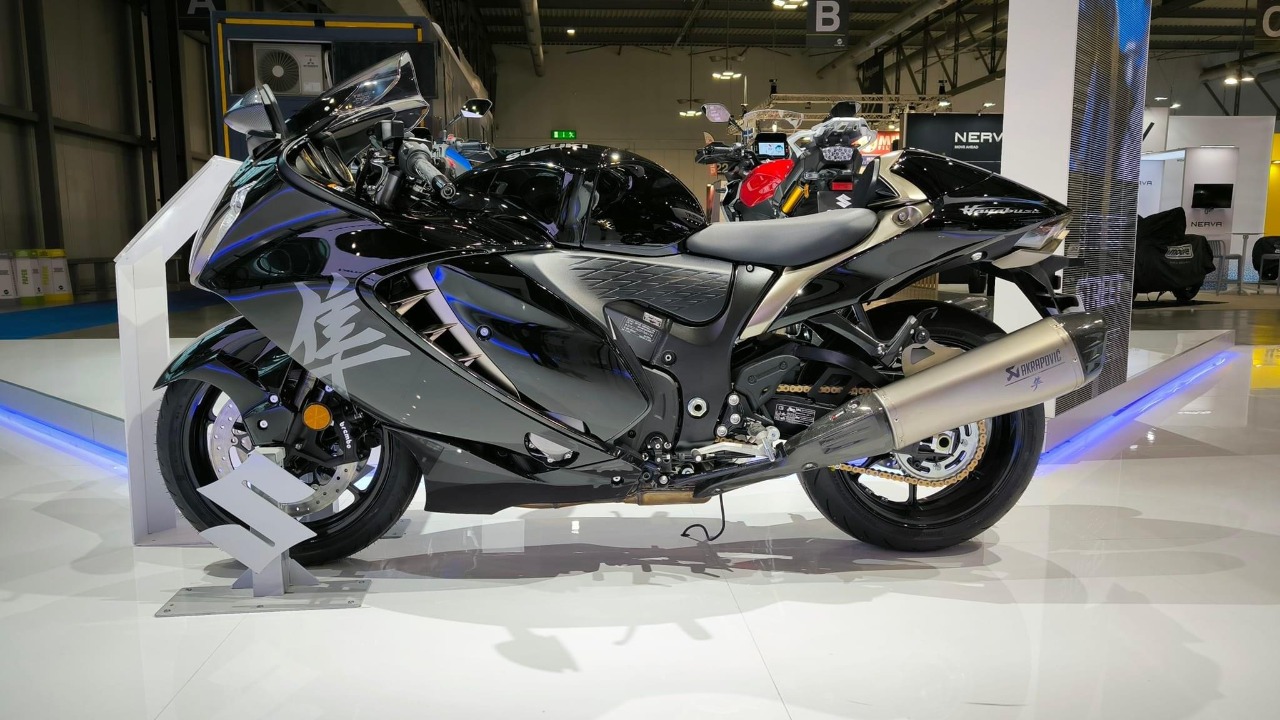
By the late 1990s, the numbers on spec sheets were getting uncomfortably close to 200, and the Suzuki Hayabusa became the lightning rod for the debate. In independent testing, the Jan Hayabusa was clocked at 194 m under ideal conditions, a figure that stunned riders precisely because it came from a bike you could register, insure, and ride to work. That performance made the Hayabusa the de facto benchmark for high‑speed street machines, even though it still fell short of the magic 200‑mile‑per‑hour figure in stock trim.
At almost the same moment, Kawasaki was preparing its own answer, the ZX‑12R, a machine explicitly developed to challenge the Hayabusa at the top of the speed charts. The project came so close to its goal that later analysis has focused on Why Was the Kawasaki ZX apparently Silenced Right Before Breaking MPH, with the bike effectively reined in just as it was poised to cross the line. That episode crystallized the sense that an invisible ceiling had been imposed on production motorcycles, not by physics, but by corporate caution and political pressure.
The gentleman’s agreement and the 186 mph lid
Faced with rising scrutiny from governments and safety advocates, the major Japanese and European brands quietly opted for self‑restraint. Rather than risk formal regulation, they agreed to cap the top speed of their flagship sportbikes at roughly 186 miles per hour, a limit that became known as the “gentleman’s agreement.” The Hayabusa, ZX‑12R, and their successors were all shaped by this informal pact, which allowed manufacturers to keep selling extreme performance while signaling that they would not push road‑legal machines into the 200‑mile‑per‑hour zone.
Modern rundowns of the quickest street‑legal motorcycles still treat that 186‑mile‑per‑hour ceiling as a defining feature of the category, noting how current superbikes are electronically limited even though their engines and aerodynamics could go further. Analyses of the fastest street-legal motorcycles describe how this cap lets companies preserve performance appeal without provoking a regulatory backlash, while lighter and more focused models nibble at the edges of the agreement. In practice, the truce meant that any true 200‑mile‑per‑hour road bike would have to come from outside the mainstream corporate playbook.
What “street-legal” really means at 200 mph
Before naming a first 200‑mile‑per‑hour road bike, I have to be clear about what counts as “street legal.” At its simplest, the term means a machine that can be registered and ridden on public roads, with working lights, mirrors, and emissions equipment. In some forms of competition, that definition is taken literally: in certain hill‑climb and time‑trial events, Any type of motorcycle is allowed as long as it is street legal, which means the same plate and paperwork you would need to commute across town. That standard is very different from a pure race bike or a land‑speed special that never leaves a closed course.
At 200 miles per hour, however, the line blurs. Some of the fastest machines to wear license plates are effectively race bikes with just enough equipment bolted on to satisfy the letter of the law. Modern surveys of the fastest street motorcycles acknowledge this tension, noting that “Track” only motorcycles are usually excluded, except for rare cases where a record‑holding machine has been adapted for limited road use. That nuance matters, because the first bike to crack 200 miles per hour while technically street legal was not a mass‑produced showroom model, but a heavily modified turbocharged monster that still carried a plate.
Avenue A, 1992: when the “bullshyte” ended
The breakthrough moment came not from a factory brochure, but from a late‑night run on a wide, deserted stretch of pavement known as Avenue A. In late 92, a rider named Kizer piloted a retuned, uncorked Kawasaki ZX‑11 that had been transformed with forced induction and fuel‑system upgrades. That machine, a Turbo ZX‑11, was still a street bike in the legal sense, but it was a very long way from stock. The run was carefully measured, and when the numbers came back, they showed that the bike had broken through the 230 m barrier on that much wider, safer environment.
The impact of that achievement was immediate. The story of the Avenue A run was splashed across enthusiast circles as the day the “bullshyte” ended about 200‑mile‑per‑hour street bikes, because it replaced bar‑stool claims with verifiable data from a real, plated machine. A broader account of that era describes how Our world of high‑speed motorcycling changed that day on Avenue A, when Terry Kizer and his Turbo ZX‑11 proved that a road‑legal motorcycle could not only touch 200, but sail far beyond it. From that point on, the question was no longer whether it was possible, but who could do it in a way that resembled a production bike.
Terry Kizer, Mr. Turbo and the “Superbikes from Hell”
The man behind that Avenue A milestone, Terry Kizer, was not just a fast rider, but a builder with a singular focus on forced‑induction performance. Through his company, Turbo and its Mr. Turbo brand, he created a series of drag bikes that dominated quarter‑mile strips and pushed the boundaries of what street‑based machines could handle. Those efforts did not stop at the dragstrip; they also fed into Land Speed Record projects that treated production‑derived motorcycles as platforms for outright velocity.
In 1992, Kizer’s work culminated in the infamous “Superbikes from Hell” series, a set of turbocharged street machines that blurred the line between custom builds and production models. These bikes were based on recognizable showroom platforms, but their engines, fueling, and aerodynamics were reworked so extensively that they operated in a different universe from their stock counterparts. The Avenue A ZX‑11 was a direct descendant of that philosophy, a road‑registered motorcycle engineered with the same mindset as a land‑speed racer. In practical terms, that made Kizer’s turbocharged Kawasaki the first street‑legal motorcycle to not only crack 200 miles per hour, but to obliterate it.
Production vs. modified: who owns the 200 mph crown?
Once Kizer’s turbo ZX‑11 had rewritten what a street‑legal bike could do, the debate shifted to a narrower question: which unmodified production motorcycle would be the first to reach 200 miles per hour in factory form. Enthusiasts and engineers alike drew a hard line between a bike that left the showroom ready to run and one that had been transformed with aftermarket turbos, injectors, and custom mapping. In that stricter sense, the Hayabusa’s verified 194 m top speed under ideal conditions became the reference point, even though it still fell short of the double‑century mark.
That distinction is why lists of the fastest production motorcycles separate stock machines from modified specials. In the production category, the 200‑mile‑per‑hour crown has remained elusive in official, unrestricted form, largely because of the gentleman’s agreement and the legal risks of selling such a bike to the general public. In the modified, yet still street‑legal realm, Kizer’s Avenue A run stands as the first clear, documented case of a motorcycle with a license plate exceeding 200 miles per hour, and doing so by a wide margin.
How far and how long it takes to reach 200 mph
Even if a motorcycle is capable of 200 miles per hour, actually reaching that speed on real pavement is a separate challenge. Acceleration, traction, and available distance all matter, and riders who have tried to model the problem often turn to drag‑racing data and calculators. In one detailed discussion of the distance to reach 200mph, enthusiasts note that a highly tuned V&M Yamaha R1 managed 189 miles per hour with about 175 rear‑wheel horsepower, using that figure as a baseline for estimating how much more road and power would be needed to push into the 200‑mile‑per‑hour range.
Those back‑of‑the‑envelope calculations underscore why Kizer’s Avenue A run required a “much wider, safer environment” and why modern high‑speed testing often takes place on closed airstrips or dedicated proving grounds. The Sep thread that mentions the V&M R1 also highlights how riders lean on a “Last 1/4 mile calculator” to approximate the space required, a reminder that the physics of acceleration are as unforgiving as the legal and ethical questions around attempting such speeds on public roads.
Why the 200 mph street bike still matters
Today, the idea of a 200‑mile‑per‑hour street‑legal motorcycle sits at the intersection of engineering pride, regulatory caution, and rider fascination. Manufacturers continue to build machines that are electronically capped below that figure, even though their engines and chassis could likely go faster, because the risks of openly selling a 200‑mile‑per‑hour showroom bike outweigh the marketing upside. At the same time, tuners and private builders keep exploring the limits, following the template set by Kizer’s turbocharged ZX‑11 and the “Superbikes from Hell” that proved what was possible more than three decades ago.
In that context, the answer to who built the first street‑legal motorcycle to crack 200 miles per hour depends on how you frame the question. If the standard is a bone‑stock production bike, the barrier remains officially unbroken, with the Hayabusa’s verified 194 m run and the ZX‑12R’s curtailed potential standing as near misses. If the standard is a road‑registered machine that can legally wear a plate, then Terry Kizer’s turbo ZX‑11 on Avenue A, backed by the legacy of Turbo and his land‑speed work, stands as the first documented street‑legal motorcycle to not only touch 200 miles per hour, but to leave it far behind. Unverified based on available sources.
More from Morning Overview