
Texas has already proved it can blanket its wide open land with solar farms, yet the most valuable part of the industry, the manufacturing of panels and components, still tilts heavily toward China. If the United States is serious about energy security and industrial competitiveness, the next phase of the solar boom has to be built in Texas factories, not shipped in from overseas. I see a clear case for shifting the center of gravity of American solar manufacturing to Texas and away from Chinese control of the supply chain.
Texas already has the solar backbone, but not the factory muscle
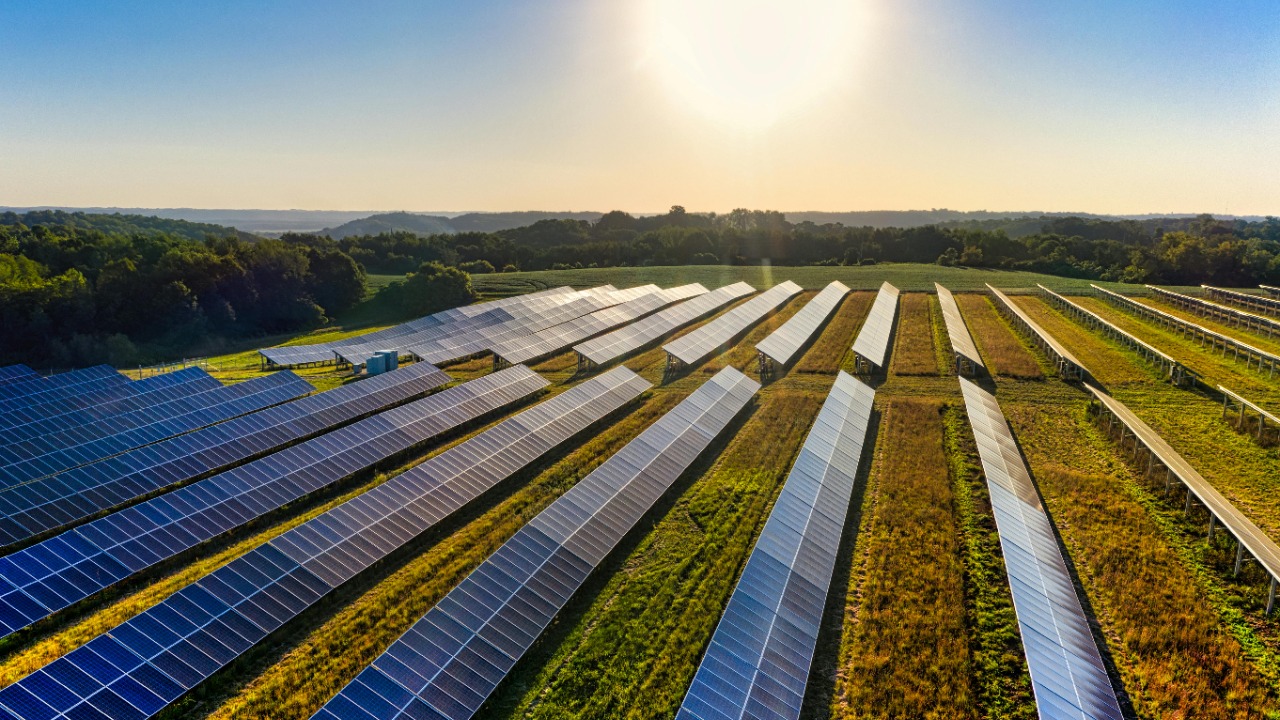
Texas has quietly become one of the country’s solar power workhorses, with large scale projects turning the state’s abundant sun and land into electricity that rivals its oil and gas output. That buildout has created pride and political capital, yet most of the high value equipment still arrives in crates from abroad instead of rolling off local assembly lines, which is why advocates argue that America’s solar manufacturing should be rooted in Texas rather than ceded to China. The state’s existing grid-scale solar footprint gives it a ready made customer base for modules, inverters and tracking systems that could be produced locally instead of imported.
That logic builds on a long running industrial base that predates the current boom. As far back as Feb, business leaders were pointing out that “from glass manufacturing in Wichita Falls to Steel Fabrication in Brownwood, Texans are contributing to the solar industry,” highlighting how communities like Wichita Falls and Brownwood already supply key materials and components. Those early pleas from Texans for stronger state support show that the groundwork for a full manufacturing ecosystem has been in place for years, waiting for policy and investment to catch up.
China’s grip on the supply chain is a strategic vulnerability
While Texas builds solar farms at record pace, China still dominates the upstream pieces that make those projects possible, which is a glaring strategic risk. Analysts of the clean energy supply chain note that in some segments of solar manufacturing, China controls 97, 98% of specific components, leaving American developers exposed to geopolitical shocks, trade disputes and price manipulation. When a single country holds that kind of market share in technologies that underpin the power grid, it is not just an economic issue, it is a national security concern.
Texas officials have started to treat it that way. Lt. Gov. Dan Patrick has pushed the issue into the spotlight, with Gov. Dan Patrick calling for the Texas Senate to investigate solar firms over alleged financial ties to China and summoning Executives from Ontario based companies to testify. Those hearings, which also intersect with proposals to limit certain foreign businesses from buying Texas land, show how deeply Gov. Dan Patrick and other leaders now link solar investment to questions about China and control of critical infrastructure.
The concern is not abstract. In a widely shared social media post, the lieutenant governor warned that “our power grid is Texas’ lifeline” and cited a report suggesting China may have a stake in two solar companies operating in the state. His call to action, framed around the idea that Our power grid must not be compromised, underscores why shifting manufacturing to Texas based, transparent companies is not just about jobs, it is about who ultimately has leverage over the state’s lifeline.
Federal policy has opened the door, but Texas must walk through it
Washington has already made a massive bet on clean energy manufacturing, and Texas is well positioned to capture a disproportionate share of that money if it moves decisively. Over the summer, the United States approved a package worth $559 billion that reshapes incentives for renewable energy, electric vehicles and domestic production, effectively paying companies to build factories on American soil instead of in Asia. Those subsidies, layered on top of existing tax credits, make it far more attractive to locate new solar plants in states that can offer land, workforce and grid access at scale, all areas where Texas excels.
At the same time, the policy environment has become more demanding about what counts as “made in America.” Analysts tracking the panel market note that even though American manufacturing has grown significantly, the bulk of panels and components still come from overseas and many domestic brands still use components sourced from abroad. That reality, documented in Even American product lists, means Texas has an opening to recruit companies that want to meet stricter content rules by building more of the supply chain inside U.S. borders.
Texas manufacturers are already proving the model
The shift from imported to homegrown solar hardware is not hypothetical, it is already underway in Texas. In Austin, an American company has ramped up production of solar modules as part of a broader effort to bring manufacturing back to the United States after years of offshoring, with plans to ship significant volumes of panels from its local plant. That facility, described as an American company based in Austin, shows how quickly Texas can move from being a buyer of foreign equipment to a producer that supplies projects across the United States.
Other firms are following suit. T1 Energy is betting big on all American solar, with The Texas based company expanding factory capacity even under Trump and describing the current moment as a “great” time to be in solar manufacturing. Its leaders argue that the combination of federal incentives and state level support makes it possible to build a fully domestic supply chain, a strategy that T1 Energy sees as both patriotic and profitable. Their bet is reinforced by broader trends, with reports noting that T1 is part of a growing cluster of solar manufacturing businesses in Texas and that Texas now hosts 18 solar component facilities as part of a national energy strategy that emphasizes domestic production, a point underscored in coverage of Texas manufacturing.
Policy is nudging companies in the same direction. One Texas based solar manufacturer recently inked a deal to source more U.S. made components, a move that shows how panel makers are adjusting to stricter domestic content requirements under President Donald Trump. That agreement, which followed scrutiny of Chinese suppliers like Trina Solar late last year, illustrates how firms are retooling their procurement to comply with rules tied to President Donald Trump era incentives and to distance themselves from Chinese inputs, as detailed in reporting on a Texas based manufacturer’s new supply deal.
Keeping Chinese players from capturing Texas incentives
As Texas attracts more solar factories, the state faces a different challenge: making sure Chinese companies do not simply set up shop to harvest American subsidies while keeping control of the technology and supply chains. The recent experience of Trina Solar is a warning sign. Trina Solar has sold its Texas solar panel factory just a week after it opened, a move that came as the United States increased scrutiny of Chinese companies trying to cash in on Inflation Reduction Act tax breaks. That rapid flip of a Trina Solar facility in Texas underscores how easily Chinese firms can move in and out of the state to capture incentives without building lasting local capacity.
State leaders are already signaling that they want a different model, one where Texas companies and long term investors own the factories and intellectual property that underpin the solar economy. That means pairing generous incentives with tough transparency rules on ownership, supply chains and data access, especially when China is involved. It also means leaning into the state’s own industrial heritage, from the glass plants in Wichita Falls to Steel Fabrication shops in Brownwood, and aligning them with the new wave of American solar manufacturers rising in Austin and across the state. If Texas can combine that homegrown capacity with the federal push for domestic content, then America’s solar manufacturing future will be built in Texas, not outsourced to Chinese controlled supply chains.
More from Morning Overview