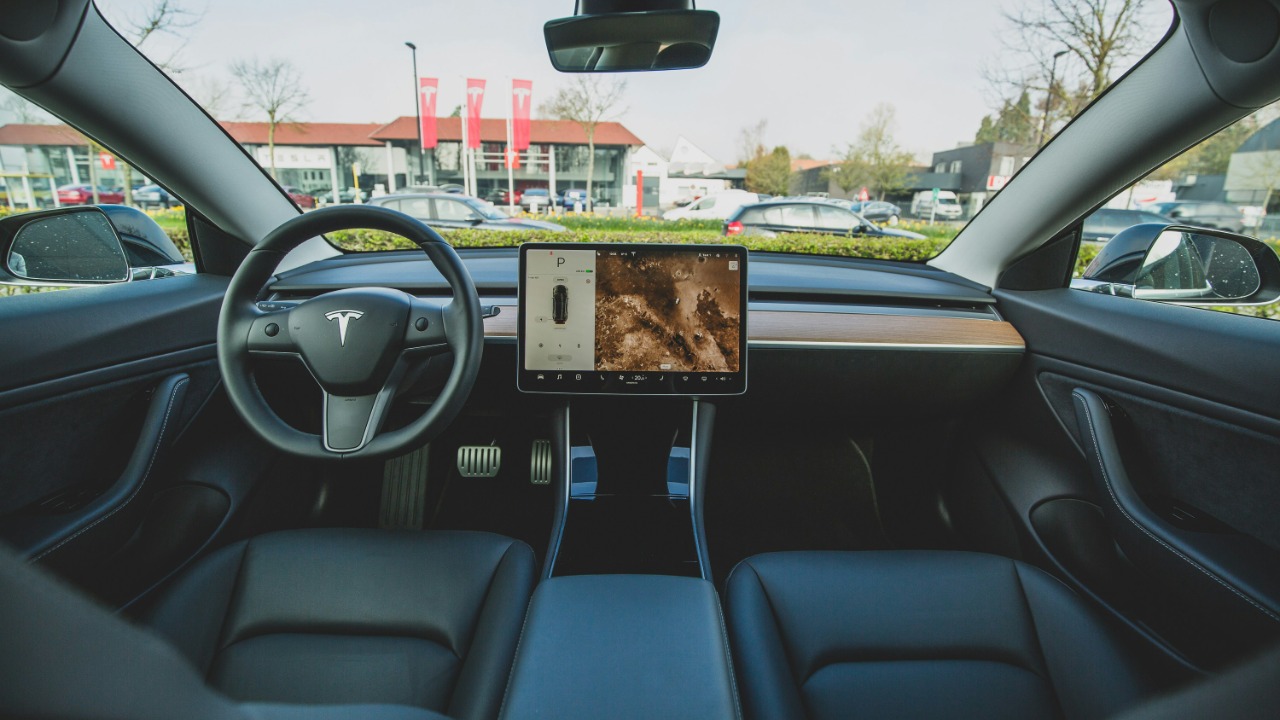

Tesla’s latest wave of technology is not just about quicker cars or flashier touchscreens. It is a coordinated push to turn vehicles, robots, and energy systems into one AI-native platform that can drive itself, work in factories, and eventually operate as a global service. The result is a company that looks less like a traditional automaker and more like an operating system for mobility and labor.
I see three big fronts where this shift is already visible: a new generation of self-driving software, a pivot toward robotaxis and humanoid robots, and a supporting hardware stack that ranges from next-generation batteries to redesigned vehicle platforms. Taken together, these moves suggest Tesla is trying to change how transportation, logistics, and even home life function, not just how people buy cars.
FSD V13 and the car as an AI computer
The clearest sign that Tesla wants its vehicles to behave like autonomous computers on wheels is the next iteration of its driver-assistance software, often referred to as Tesla FSD. In material outlining What is coming in Tesla FSD V13, the company frames the update as part of a broader AI roadmap rather than a routine feature refresh. That framing matters, because it positions the car’s neural networks as the core product, with the vehicle hardware increasingly serving as a deployment shell for software that can be improved over time.
By treating FSD V13 as a major AI milestone, Tesla is also signaling how it wants regulators and investors to see the business. The company is not just selling a one-time option, it is building a recurring software layer that can eventually support robotaxis and other services. The fact that this roadmap is being broken down in detail, including references to Nov and the way Tesla FSD is evolving, shows how central autonomy has become to the company’s identity and to the expectations around future revenue.
From electric vehicles to a robotics and AI platform
Underneath the software story is a strategic shift that recasts Tesla as an AI and robotics company first, and an automaker second. Reporting on Tesla’s 2026 plans describes a Strategic Pivot From Electric Vehicles toward Robotics Dominance, with the company explicitly targeting leadership in sovereign AI. That language underscores how Tesla now talks about fleets of autonomous machines, not just units of Model 3 or Model Y, and it frames AI infrastructure as a competitive moat in its own right.
Financial analysis of Tesla’s leadership structure reinforces this picture of a company gearing up for a different kind of scale. Under Elon Musk, commentary notes that Beneath Musk the leadership team has stabilized, and that CFO Vaibhav Taneja has been credited with maintaining a lean cost structure as Tesla prepares for new products like robotaxis and humanoid robots at Giga Texas. Those details, highlighted in a Jan research feature, show how financial discipline and AI ambition are being woven together into a single narrative about the company’s future.
Optimus, Tesla Bot Gen 3, and the factory of the future
If cars are the first wave of Tesla’s AI deployment, humanoid robots are the second. In a detailed presentation of Tesla Bot Gen 3, Elon Musk and his team describe how the latest Optimus prototypes are being designed to handle repetitive and hazardous tasks without risk to human life. The update, shared in a Dec video that walks through How Tesla is iterating the platform, emphasizes that autonomy in industrial and logistics settings is not merely convenient, it is essential for safety and efficiency.
The scale of Tesla’s ambition becomes clearer when looking at deployment plans for Optimus Gen 3. Footage from Giga Texas shows how advanced AI and full self-driving software are expected to transform Optimus Gen into an intelligent humanoid robot that can operate in factories and human homes alike. One video focused on Optimus Gen describes scenarios where 1,200 Tesla Bot Gen 3 units could run logistics at Giga Texas, hinting at a future in which robots are as central to Tesla’s operations as stamping presses or paint shops.
Outside observers are already quantifying that shift. On X, one analysis notes that Tesla is targeting 50,000 Optimus units in 2026 and that Eventually the company expects millions per year, arguing that They could create an almost insurmountable advantage over time. Those specific figures, cited in a Jan post, show how quickly Tesla intends to move from prototype to mass production, and how central Optimus is to the broader AI and robotics dominance narrative.
Cybercab, robotaxis, and the unboxed car
The same AI stack that powers FSD and Optimus is also being aimed at commercial mobility. Analysts tracking Tesla’s ride-hailing ambitions argue that 2026 will be the year of the Tesla robotaxi, with Key Points highlighting that Tesla plans to begin Cybercab production in 2026 and that a large share of the company’s future value could come from Optimus. That framing, laid out in a Dec breakdown of Tesla’s plans, links the robotaxi business directly to the humanoid robot program and to the company’s broader AI thesis.
On the manufacturing side, Tesla has already confirmed that Cybercab production is scheduled to begin in April 2026 as the dedicated robotaxi service prepares for expansion. One report notes that Tesla has announced on Thursday that production of the upcoming Cybercab model will start in that timeframe, as part of a service known as the Robotaxi. That detail, captured in a Nov update, aligns with separate confirmation that Tesla Cybercab production starts in Q2 2026 and that Elon Musk has highlighted how the vehicle is being designed specifically for unsupervised self-driving. In that context, Tesla CEO Elon Musk’s comments, shared in a NEWS report, underline how central autonomy is to the product’s design.
Behind the scenes, Tesla is also rethinking how cars are built in order to make Cybercab and other models cheaper and faster to produce. The company has described an “Unboxed” process that breaks vehicle assembly into modules, allowing different sections to be built and tested in parallel before final integration. A post on X explains that to accomplish this, Tesla will be building the Cybercab, referred to as Tesla Cybercab, using its Unboxed method, which should make production lines more akin to consumer electronics than traditional auto plants. That description, shared by Tesla watchers, hints at how manufacturing innovation is being treated as a software problem, with modularity and iteration built in from the start.
New models, batteries, and in-car AI assistants
While robotaxis and robots grab headlines, Tesla is also refreshing its core lineup and the hardware that underpins it. A detailed look at Future Tesla cars outlines Launches expected between 2025 and 2028, including a Tesla Model Y Standard variant and a refreshed Model Y Performance with updated styling and a new 17-inch ultra HD center touchscreen. Those specifics, laid out in a Nov overview of Future Tesla products, show that the company is still iterating on its bread-and-butter vehicles even as it chases more speculative AI bets.
One of the most closely watched updates is the Model Y Juniper refresh. Analysis of why Tesla calls the Model Y Juniper a 2026 model, even though it is expected to arrive in 2025, points to branding and product cadence as key factors. The explanation notes that Here the goal is Differentiating the Refresh so that Tesla can clearly distinguish the updated vehicle in the market, and that production and delivery timing justify labeling it as a 2026 model year even though it arrives in 2025. Those nuances are spelled out in a Nov breakdown of Tesla’s naming strategy, which underscores how the company uses model years to manage expectations around major updates.
Under the floor, Tesla is preparing a new generation of battery technology that could reshape charging habits. In a presentation summarized on YouTube, Musk discusses how Next Generation Tesla vehicles are expected to Get 6C Batteries capable of 10 Minute Charging, positioning ultra-fast refueling as a standard feature rather than a luxury perk. That claim, attributed to Musk in a Jan video about Next Generation Tesla plans, suggests that the company sees charging time as a remaining psychological barrier to EV adoption and wants to erase it with brute-force engineering.
Inside the cabin, Tesla is also layering in more advanced software, including conversational AI. A widely discussed software update described how Grok, an AI assistant developed within Elon Musk’s ecosystem, has been integrated into Tesla cars in a way that some commentators say has changed the vehicles forever. One breakdown of the rollout explains that the breaking news came on a Saturday and that Tesla dropped a new software update that brought Grok into the in-car experience, enabling more natural voice interactions and contextual help. Those details are captured in a Dec video titled BREAKING: Grok Just Changed Tesla Cars Forever, which frames the assistant as part of a broader trend of turning the car into a rolling AI device.
All of these threads, from FSD V13 and Cybercab to Optimus Gen 3 and 6C batteries, point in the same direction. Tesla is no longer content to iterate on electric drivetrains or add incremental range. It is trying to build a vertically integrated AI stack that spans vehicles, robots, factories, and user interfaces, with leadership figures like CFO Vaibhav Taneja and Elon Musk aligning financial strategy and product roadmaps around that goal. If the company hits even a fraction of the targets laid out for 2026, the impact will reach far beyond the showroom floor, reshaping how people move, how goods flow through factories, and how software weaves itself into everyday machines.
More from Morning Overview