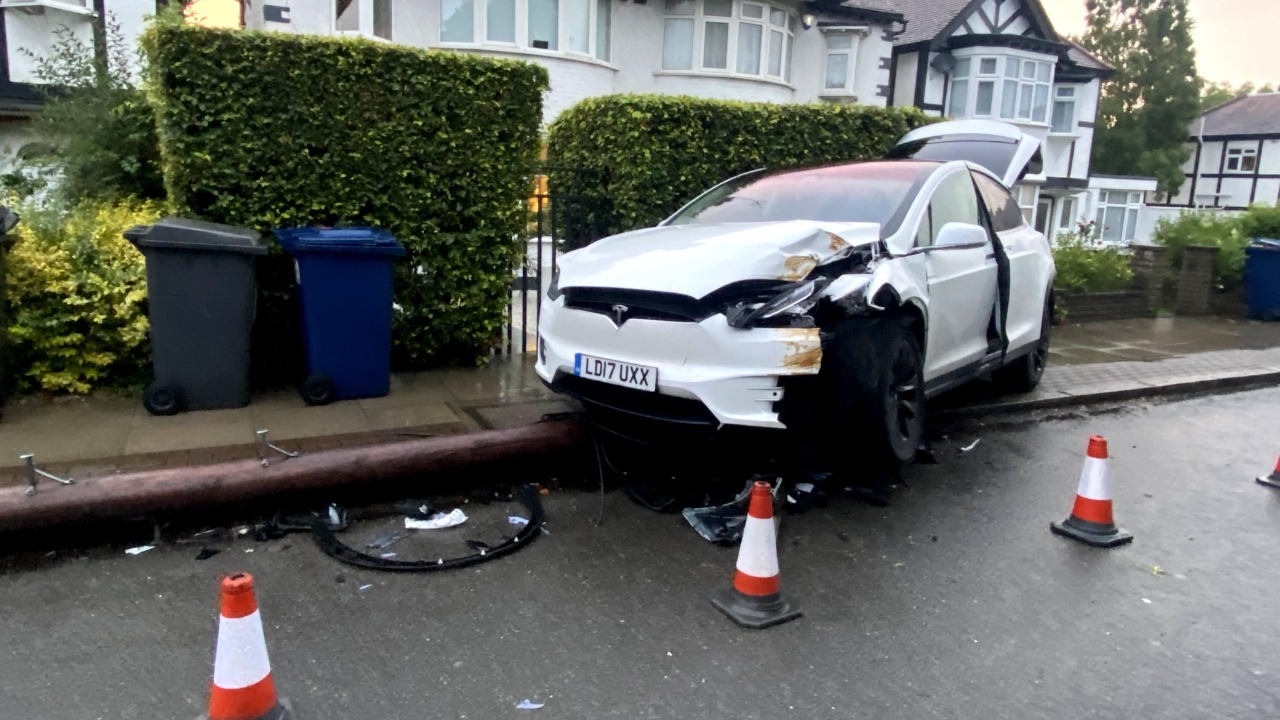

A wrongful death lawsuit filed in Idaho accuses Tesla of turning a family road trip into a fatal head-on collision, killing a mother, two of her children, and the family dog when their Model X allegedly steered into an oncoming semi-truck. The case, which centers on the company’s driver-assistance technology and its marketing, adds fresh urgency to questions about how far Tesla can go in promising autonomy before it becomes legally responsible for what happens on the road.
At the heart of the complaint is a claim that the vehicle’s automated steering took control at highway speed, crossed the center line through a gentle curve, and left a surviving husband and child to argue that the car, not the driver, made the fatal decision. Their suit arrives as Tesla faces a growing stack of similar allegations about Autopilot, Autosteer, and Full Self-Driving, and as regulators and investors watch to see whether the company’s safety record can keep pace with its ambition.
The Idaho crash that sparked the latest lawsuit
According to the lawsuit, the crash unfolded at night on a state highway in Idaho as the Blaine family traveled east with Jennifer Blaine at the wheel of a Tesla Model X and her children and dog in the car. The complaint says the vehicle was using one of Tesla’s driver-assistance systems when it suddenly veered out of its lane and into the path of a semi-truck, turning what should have been a routine drive into a head-on impact that killed half the family and their pet almost instantly. The surviving relatives argue that no reasonable driver would have chosen to cross the center line through a mild bend in the road, and that the only plausible explanation is a malfunction or misbehavior in the automated steering.
Reporting on the case describes how the crash occurred just before 10 p.m. as the family moved through a gentle curve while heading east, with the Model X allegedly leaving its lane and steering directly into the oncoming truck, a sequence that the lawsuit says is consistent with the car following erroneous inputs from its driver-assist software rather than human error alone. One account notes that the collision killed multiple family members and their dog, and that the plaintiffs say the system effectively directed the vehicle into a head-on collision, a claim that is central to their argument that Tesla’s technology, not only the driver, bears responsibility for the deaths, as detailed in a description of how the crash occurred just before 10 p.m..
What the lawsuit claims Tesla’s technology did
The plaintiffs’ core allegation is that Tesla’s driver-assistance system, rather than merely assisting Jennifer Blaine, actively took over steering and guided the Model X into danger. They say the car’s automated features misread the road geometry on the Idaho highway, failed to recognize the oncoming semi-truck, and then executed a steering maneuver that pulled the vehicle across the center line into a direct collision. In their telling, the driver was relying on a system that Tesla had marketed as capable of handling such conditions, only to have that system make a catastrophic decision that no attentive human would have made.
Accounts of the complaint emphasize that the family had paid for advanced driver-assistance capabilities and that the vehicle was running one of the automaker’s driving systems when it suddenly swerved into the truck, with the plaintiffs arguing that Tesla’s software effectively turned the Model X into a hazard rather than a safety feature. One report notes that a man is suing Tesla after half his family was killed when their Model X, which was running one of the automaker’s driving systems, allegedly steered head-on into a semi-truck, and that the Blaines did pay for FSD, a detail that underscores how the case is as much about software behavior as it is about crash dynamics, as described in coverage of how a man is suing Tesla after half his family was killed.
A family’s loss, and a surviving father’s accusations
For the surviving husband and child, the lawsuit is not only a technical dispute about Autopilot behavior but a public accounting of what they say was preventable loss. The complaint describes how the crash killed Jennifer Blaine, two of the couple’s children, and the family dog, leaving one child and the father alive to recount the moments before impact and the aftermath on the roadside. They argue that they trusted Tesla’s technology and branding, believing that the Model X and its driver-assistance features would make their journeys safer, only to see that trust shattered in a matter of seconds.
In online discussions of the case, commenters have focused on the human details, including the fact that Jennifer Blaine was behind the wheel of a Tesla Model X in Idaho when the car suddenly swerved into the oncoming semi, and that the surviving family members now face both grief and a complex legal battle. One summary notes that Jennifer Blaine was behind the wheel of a Tesla Model X on a state highway in Idaho in 2023 when the car suddenly swerved into the truck, a description that aligns with the family’s claim that the automated system, not a reckless maneuver by Jennifer, caused the fatal deviation, as reflected in a post recounting how Jennifer Blaine was behind the wheel of a Tesla Model.
How the complaint fits into a wider “flood” of Tesla cases
The Idaho lawsuit does not arrive in isolation, and the plaintiffs’ lawyers are explicit about situating it within what they describe as a pattern of similar incidents. They argue that Tesla has been warned repeatedly, through prior crashes and litigation, that its driver-assistance systems can misbehave in ways that put occupants and other road users at risk, yet the company has continued to expand and promote features like Autopilot, Autosteer, and Full Self-Driving without adequate safeguards. In their view, the Blaine crash is one more example of a known hazard that Tesla has failed to address, rather than an unforeseeable anomaly.
Recent reporting notes that a new lawsuit has been filed against Tesla following a tragic accident involving a Model X, and that this case is part of what has been described as a “flood” of lawsuits opening against the company over its driver-assistance technology. One analysis points out that the coverage of these cases has drawn significant public attention, with 57 Comments attached to a report that cites 58 as a key figure in discussing the scale of litigation, and that the story identifies Jan and Fred Lambert by name while focusing on how Tesla faces mounting legal scrutiny over Autopilot and Full Self-Driving, as seen in an overview of how Fred Lambert | Jan 6 2026 – 11:58 am PT. 57 Comments framed the growing wave of cases.
Allegations that marketing oversold autonomy
Beyond the crash mechanics, the Idaho suit taps into a broader line of attack that targets how Tesla and its chief executive have described the company’s technology. Plaintiffs in multiple cases argue that the branding of features as Autopilot and Full Self-Driving, combined with public statements about near-term autonomy, created an impression that the cars could handle complex driving tasks with minimal human oversight. In their view, that messaging encouraged drivers to place more trust in the systems than was warranted, setting the stage for tragedies when the software encountered situations it could not safely navigate.
One related complaint, filed by a man who lost relatives in a crash, accuses Tesla and Elon Musk of overselling autonomous driving capabilities in ways that boosted the company’s stock price while understating the limitations of the technology. That lawsuit, described as being brought by a man against Tesla and Elon Musk for allegedly overselling autonomous driving capabilities to investors and customers, argues that the marketing created unrealistic expectations about what the cars could do and that those expectations contributed to fatal outcomes when drivers relied on the systems, as outlined in a report on a case where a man has brought a lawsuit against Tesla and Elon Musk for overselling autonomous driving capabilities.
Other families challenging Tesla over Autosteer and doors
The Blaine family’s claims also intersect with other lawsuits that focus on specific Tesla features, including Autosteer and the design of the company’s distinctive doors. In one case, two families have sued Tesla over door design after crash deaths, arguing that the vehicles’ doors and driver-assistance systems contributed to fatalities by trapping occupants or steering them into harm’s way. These plaintiffs contend that Tesla prioritized futuristic styling and aggressive software rollouts over basic safety considerations, and that the company failed to adequately warn buyers about potential risks.
One complaint, brought by a Utah man whose wife and other relatives died in a crash, blames Tesla’s Autosteer feature for veering the car into the path of an oncoming truck after four relatives were killed, and criticizes the company for allegedly putting innovation ahead of the public’s safety. The filing, which references Family members who say Autosteer played a direct role in the collision, underscores how multiple plaintiffs are now zeroing in on the same core allegation, that Tesla’s automated steering can misinterpret road conditions and guide vehicles into danger, as described in a case where Family members blame Tesla’s Autosteer feature for veering car into path of oncoming truck.
Legal framing: from “driver-assist” to alleged defect
In court, Tesla typically argues that its systems are meant to assist, not replace, human drivers, and that the person behind the wheel remains responsible for monitoring the road and intervening when necessary. The Idaho lawsuit and similar cases attempt to flip that framing by asserting that the software itself is defective, that it can seize control in ways that override reasonable driver inputs, and that Tesla’s own design choices make it difficult for drivers to anticipate or counteract sudden, erroneous maneuvers. By characterizing the technology as an active cause of harm rather than a passive tool, plaintiffs hope to convince juries that Tesla bears direct liability for crashes like the Blaine collision.
Descriptions of the Idaho complaint emphasize that the plaintiffs say the car “directed” itself into the head-on collision, language that is carefully chosen to suggest agency on the part of the vehicle’s systems rather than mere misuse by the driver. One account notes that the lawsuit alleges Tesla directed the car into a head-on collision, killing the family and their dog, and that this phrasing is central to the claim that the software, not just the human at the wheel, made the fatal choice, as reflected in a summary of how the Lawsuit alleges Tesla directed car into head-on collision.
Graphic details and public reaction to the crash
The severity of the Idaho crash and the involvement of children and a family pet have made the case particularly resonant in public discussions about Tesla’s safety record. Accounts describe a horrifying scene in which the Model X, traveling at highway speed, crossed into the path of a semi-truck and was effectively crushed, leaving first responders to find multiple fatalities and a single surviving child amid the wreckage. For critics of Tesla’s technology, the crash has become a vivid example of what can go wrong when advanced driver-assistance systems are deployed on public roads before they are fully reliable.
One report characterizes the incident as “horrifying” and notes that it was Published Jan 6, 2026 9:41 AM EST, with an Illustration by Tag Hartman-Simkins that underscores the violence of a head-on collision between a passenger vehicle and a semi-truck. The same coverage highlights how the case has fueled broader debate about whether Tesla’s systems are truly safer than conventional vehicles, quoting language that questions whether the company’s approach to autonomy has outpaced its ability to guarantee safety, as seen in an account that calls the crash horrifying and notes it was Published Jan 6, 2026 9:41 AM EST. Illustration by Tag Hartman-Simkins.
Earlier Model X litigation and Tesla’s safety narrative
The Idaho case also echoes earlier litigation involving the Model X, a vehicle that has been central to Tesla’s pitch that its cars are among the safest on the road. In a separate wrongful death suit, relatives of a family of four killed in a Model X crash have accused Tesla of failing to prevent or mitigate a fatal collision, arguing that the company’s safety tech did not perform as advertised. That case, like the Blaine lawsuit, challenges Tesla’s narrative that its vehicles’ structural strength and software protections make them inherently safer than rivals, and instead presents the Model X as a platform where software misjudgments can have lethal consequences.
Coverage of that earlier case notes that Tesla is once again facing legal scrutiny over its safety tech after a crash that killed a family of four in a Model X, and that the lawsuit questions whether the company’s systems did enough to protect occupants in a high-speed impact. The report, which refers to the situation under the framing “Tesla Sued After Model X Crash Kills Family of Four,” underscores how the Model X has become a focal point for debates about Tesla’s safety claims and the real-world performance of its driver-assistance features, as described in an article headlined Tesla Sued After Model X Crash Kills Family of Four.
What is at stake for Tesla as cases pile up
As these lawsuits move forward, Tesla faces not only potential financial liability but also a test of its broader promise that software-driven vehicles can dramatically reduce road deaths. Each new complaint that alleges a driver-assistance system steered into danger rather than away from it chips away at that narrative and raises the possibility that regulators or courts could impose new constraints on how the company designs, deploys, and markets its technology. For a business model that depends heavily on the perception that Autopilot and Full Self-Driving are cutting-edge safety features, a series of high-profile wrongful death verdicts could be particularly damaging. Public attention to the Idaho case has been amplified by detailed news coverage that names Jan and Shawn Henry and notes that the lawsuit was filed on a Tue morning, with reports specifying that the crash and its legal fallout were being discussed at 9:54 AM PST in a piece that runs 2 min read. That level of scrutiny, captured in an account that highlights how the Lawsuit targets Tesla over a head-on collision that killed a family and their dog, underscores how closely investors, regulators, and potential buyers are watching the company’s response, as reflected in a report by Shawn Henry, Tue, January 6, 2026 at 9:54 AM PST. 2 min read. Lawsuit alleges Tesla directed car into head-on collision, killing family and their dog. Tesla.
The human cost behind the legal and technical debate
Behind the technical arguments about Autosteer logic and the legal parsing of marketing language is a simple, devastating reality: a family set out on a drive in a Tesla Model X and did not come home. The Idaho lawsuit forces a reckoning with how much risk society is willing to accept as automakers push toward increasingly automated driving, and whether companies like Tesla are doing enough to ensure that their systems fail safely when they encounter the unexpected. For the Blaine family, the question is not abstract; it is measured in the lives of a mother, two children, and a dog lost in a matter of seconds.
Other families who have sued Tesla over crashes involving Autopilot, Autosteer, or door design echo that same sense of betrayal, arguing that they believed they were buying some of the safest vehicles available, only to discover the limits of that promise in the worst possible way. Their cases, from the Utah family that blames Autosteer for veering into a truck to the relatives of a family of four killed in a Model X, collectively challenge Tesla’s assertion that its technology is unequivocally safer than human drivers and demand a more cautious, transparent approach to rolling out advanced driver-assistance features on public roads.
More from Morning Overview