
Tesla spent the past year cutting prices, rolling out cheaper trims, and dangling discounts that would have been unthinkable during its hyper-growth phase. Yet the company is now confronting a sharp slowdown in demand, with sales and production slipping even as rivals gain ground in key markets. The latest delivery figures and market data suggest that the old playbook of undercutting competitors on price is no longer enough to keep Tesla’s growth story intact.
Instead of reigniting demand, the cheaper models and incentives have exposed how crowded and unforgiving the electric vehicle market has become. I see a company that is still moving a huge volume of cars, but no longer dictating the terms of the EV transition, and that shift carries big implications for investors, competitors, and drivers alike.
Q4 numbers show a painful reset
The clearest sign of Tesla’s changing fortunes is in its latest quarterly delivery and production data. The company reported 418,227 vehicle deliveries in the fourth quarter, a figure that would have looked impressive a few years ago but now falls short of expectations in a market that had grown used to relentless expansion. At the same time, Tesla’s factories built 434,358 vehicles, a year-over-year decline of 5.8% that undercuts the narrative of an endlessly scaling manufacturing machine. When production is shrinking and deliveries are missing forecasts, it signals that the demand side of the equation is no longer keeping up with the capacity Tesla has built.
For a company that once defined success by how fast it could ramp output, this reversal matters. Investors had been conditioned to see each quarter as a new record, and the gap between vehicles produced and vehicles delivered hints at inventory building up even after price cuts and promotions. I read these numbers as evidence that Tesla is entering a more mature, cyclical phase of the auto business, where it has to fight for each sale instead of assuming that every car it can build will be snapped up at almost any price.
Cheaper trims, weaker pull
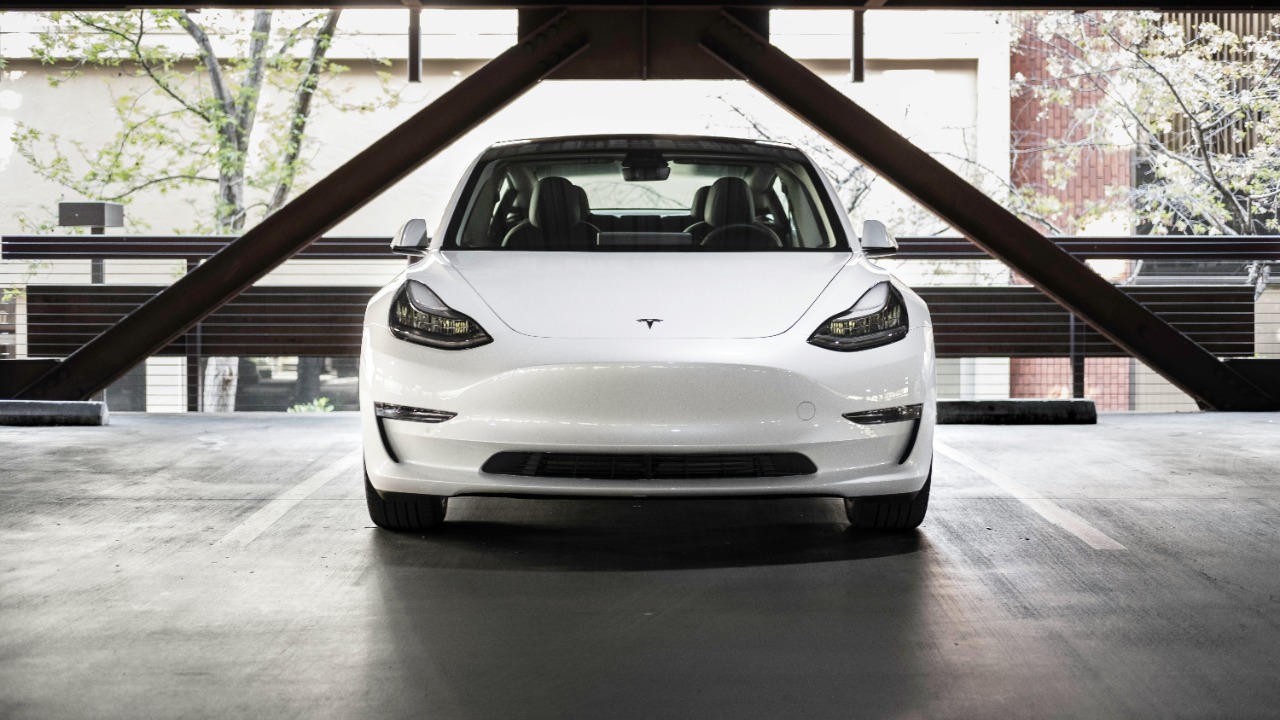
Tesla’s response to softening demand has been to introduce lower-cost versions of its core models, but the early results look underwhelming. The company rolled out stripped-down variants of the Model 3 and Model Y with roughly a $5,000 discount compared with better-equipped trims, aiming to lure budget-conscious buyers without completely sacrificing margins. In theory, that should have opened the door to a new wave of customers who had been priced out of the brand. In practice, the cheaper versions have not meaningfully changed the trajectory of demand, suggesting that price alone is not the barrier Tesla once assumed it was.
From my perspective, these “value” models highlight a strategic tension. Tesla built its reputation on performance, range, and cutting-edge tech, and a bare-bones Model 3 or Model Y risks diluting that image without delivering the volume boost the company needs. If a $5,000 discount is not enough to move the needle, it implies that buyers are weighing other factors, from charging access and interest rates to brand perception and the growing appeal of competitors’ designs.
November slump in the US market
The weakness is especially visible in Tesla’s home market, where the company once enjoyed a near-monopoly on aspirational EVs. In November US, Tesla’s sales fell to a level not seen in nearly four years, even as the company leaned on new “Standard” trims and discounts to entice buyers. Those Standard versions of the Model 3 and Model Y were supposed to act as volume drivers, yet they failed to prevent a slide that took Tesla back to sales levels last seen before its big pandemic-era surge. When a company that once set the pace for the entire EV category is hitting multi-year lows in its core geography, it is a sign that something deeper than seasonal noise is at work.
Industry trackers in SAN FRANCISCO have noted that Tesla’s U.S. sales slump came despite the launch of those cheaper versions, which underscores how much the competitive landscape has shifted. I see this as a warning that Tesla can no longer rely on the simple formula of cutting prices and watching demand snap back. Instead, it is now contending with a market where buyers have plenty of alternatives, from plug-in hybrids to new EVs from legacy brands, and where the novelty of owning a Tesla has faded.
Rivals surge while Tesla stalls
One of the most striking developments is how quickly traditional automakers are catching up in electrified sales, especially in the USA. In the first quarter, Toyota and Lexus sold 565,098 vehicles in the country, a jump of 20.3% year over year. Of those, 206,850 were classified as electrified, with the vast majority being hybrids rather than full battery EVs. That mix matters, because it shows that many buyers are choosing a step toward electrification that avoids the perceived compromises of going fully electric, and they are doing so in large numbers.
From where I sit, this surge in hybrid and electrified sales is one of the most direct threats to Tesla’s growth. Hybrids offer lower fuel costs and some environmental benefits without requiring a home charger or regular stops at fast-charging stations, and they are often priced closer to mainstream gasoline cars than to premium EVs. When a brand like Toyota can move more than half a million vehicles in a quarter in the USA while Tesla’s own deliveries are under pressure, it suggests that the center of gravity in the transition away from pure combustion engines may be shifting toward a more gradual, hybrid-heavy path.
Discounts collide with brand fatigue
Price cuts and incentives used to be rare in Tesla’s world, but they have become a recurring feature as the company tries to keep factories humming. The problem is that repeated discounts can train buyers to wait for the next deal, undermining the urgency to buy now. When I look at the combination of cheaper trims, end-of-quarter promotions, and financing offers, I see a brand that risks eroding the premium aura that once allowed it to command higher prices than rivals. The fact that deliveries still landed at 418,227 in the latest quarter despite these efforts suggests that the elasticity of demand is not as strong as Tesla might have hoped.
There is also a psychological dimension that discounts cannot easily fix. Early adopters were drawn to Tesla not just for the technology, but for the sense of being part of a movement that was reshaping transportation. As EVs become more common and as other brands roll out their own compelling models, that sense of uniqueness fades. I interpret the weak response to the Standard trims and the $5,000 discounts as a sign that Tesla is grappling with brand fatigue, where the product is still competitive but no longer feels like the only game in town.
A “stunning setback” in a maturing EV market
The broader context for Tesla’s slowdown is an EV market that is maturing faster than many expected. New data on the company’s performance in the United States has been described as a stunning setback, with analysts warning that Tesla has “a serious challenge on its hands” as it tries to maintain growth in a more crowded field. That phrase captures the shift from a period when Tesla’s main obstacle was building enough cars, to one where the challenge is persuading a more skeptical, more price-sensitive, and more diverse customer base to choose its vehicles over a growing list of alternatives.
In my view, this is what a transition from early adoption to mass market looks like. Early buyers were willing to tolerate quirks, sparse service networks, and software glitches in exchange for cutting-edge performance and the cachet of being first. Mainstream buyers are less forgiving. They compare monthly payments, warranty coverage, dealer support, and even interior ergonomics across brands. When I see Tesla’s U.S. sales slipping to near four-year lows and its quarterly production falling by 5.8% year over year, I see a company that is being forced to compete on the same terms as everyone else, rather than on the strength of its mystique.
What Tesla must solve next
The immediate task for Tesla is to stabilize demand without sacrificing the profitability that has long set it apart from other automakers. That likely means rethinking its product cadence, refreshing aging models like the Model 3 and Model Y more aggressively, and clarifying where the brand sits on the spectrum from premium tech icon to mass-market EV provider. I do not see endless price cuts as a sustainable strategy, especially when the response to the Standard trims and the $5,000 discounts has been so muted.
Longer term, Tesla has to navigate a world where hybrids, plug-in hybrids, and competing EVs are all vying for the same customers. The surge of electrified sales from Toyota and Lexus in the USA shows that many drivers are opting for incremental change rather than a full leap into battery-only driving. If Tesla wants to regain its momentum, it will need to offer not just lower prices, but a clearer value proposition that resonates with this broader, more cautious audience, while proving that its recent sales slide is a temporary stumble rather than the start of a long plateau.
More from MorningOverview