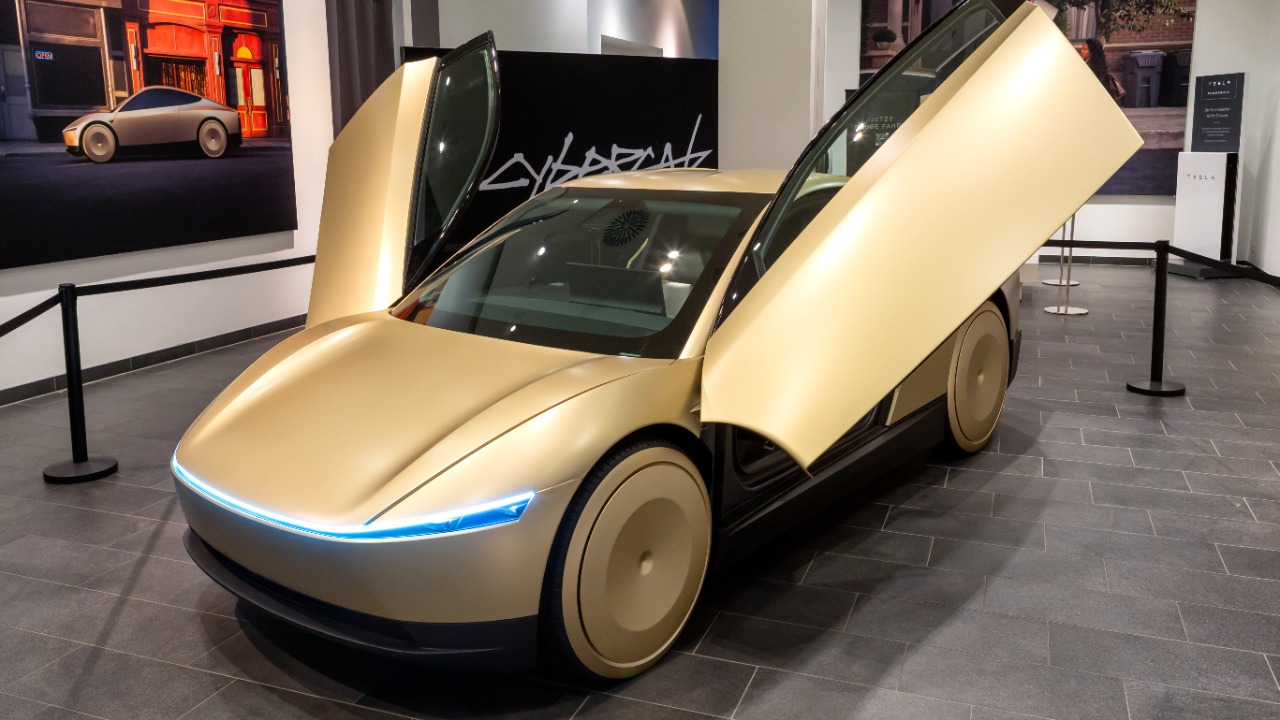

Tesla is finally putting real robotaxis on public roads, but it is entering a market where Waymo already looks like the incumbent. The gap is not just about who has the flashiest demo, it is about scale, safety records, regulatory trust and whether either company can turn autonomous driving into a durable business rather than a perpetual promise.
I see Tesla’s push as a high‑risk, high‑reward attempt to leapfrog a rival that has quietly built a dense web of operations, partnerships and public familiarity. Measured against that, the head start Waymo enjoys is substantial, even if Tesla’s brand power and software‑first strategy give it a different kind of advantage.
Waymo’s operational lead is measured in rides, cities and miles
The most obvious way to see the gap is to look at where a rider can actually summon a driverless car today. Alphabet’s Waymo is widely described as the current commercial gold standard, with fully driverless ride‑hailing operating across multiple U.S. cities and a service that has moved beyond pilot status into daily transport for ordinary commuters and tourists. Analysts tracking the sector frame Waymo Leads the Operational Race as a baseline fact, not a marketing slogan.
That lead shows up in the numbers. As of December, Waymo is reported to operate over 450,000 rides per month and to offer services to select passengers on a waitlist in Silicon Valley, on top of its more mature zones in places like Phoenix and San Francisco. In parallel, industry research notes that Waymo’s ride‑hailing footprint has expanded across key U.S. cities and that the company is already handling up to 250,000 paid rides per week, a volume that gives it invaluable real‑world data and operational experience.
Robotaxis went mainstream in 2025, and Waymo owned the moment
Public awareness of robotaxis exploded this year, and Waymo was at the center of that cultural shift. Social media feeds filled with first‑time riders filming their trips, and the term “robotaxi” itself became a trending shorthand for the broader self‑driving dream. Coverage of the trend notes that robotaxis “went viral” in 2025 and that maps of where people can ride in 2026 are now a staple of consumer tech coverage, with Waymo’s zones dominating the current options for everyday riders who want to try a driverless trip for themselves.
That cultural moment has been amplified by pop culture and advertising. One widely shared example involved Sabrina Carpenter, a Gen Z popstar, singing about a robotaxi ride and “really lov[ing] the conversation,” while Waymo’s Jaguar appeared in a high‑profile GAP ad. Reporting on the viral trend also notes that the word “robotaxi” has surged in online usage, reshaping the conversation around driverless cars and, crucially for Waymo, associating the concept with its vehicles in the public imagination.
Trust, safety and the regulatory moat around Waymo
Waymo’s head start is not only about how many rides it runs, it is also about how regulators and local communities perceive its safety record. In markets like Phoenix and San Francisco, the company has spent years logging supervised and unsupervised miles, working with city officials and state agencies to prove that its vehicles can handle complex urban environments. One analysis of the current landscape notes that the “trust gap” between robotaxis and human drivers is still real, but that Waymo has been able to keep operating even after high‑profile incidents, in part because it has built structured processes for pausing service, investigating and then resuming operations with updated safeguards.
That trust has translated into formal approvals and new markets. In California, regulators have allowed Waymo to run fully driverless commercial services in San Francisco, and the company has highlighted that its electric vehicles, both Jaguar I‑PACE and other models, eliminate gas costs for riders and operators. Analysts also point out that Waymo’s tech stack is heavily dependent on lidar and other costly sensors, but that this has helped it achieve strong safety metrics, including tens of millions of autonomous miles and hundreds of millions of miles with a human driver, which But Yu argues could make 2026 a breakout year for the company.
Waymo’s expansion into new cities deepens the gap
Waymo is not standing still while Tesla ramps up. Over the past year it has pushed into new metropolitan areas, turning what were once pilot programs into broader commercial networks. Industry trackers describe how Waymo ride‑hailing has grown across multiple U.S. markets, with the company layering on partnerships for services like food delivery to make better use of its fleet and to normalize the sight of driverless cars in everyday life.
Miami is the clearest example of this expansion strategy. Local reporting notes that According to Reuters, Waymo’s fleet now exceeds 1,500 vehicles nationwide, and that Miami has become the newest testbed as Waymo deploys a driverless robotaxi fleet there. Local media have already documented fully driverless rides in the city, and the company has said that service will open more broadly to the public in 2026, reinforcing the sense that Waymo is methodically building a national network while Tesla is still proving out its first city.
Tesla’s Austin launch shows ambition, but also how far it has to go
Tesla’s long‑promised robotaxi era is finally materializing in Austin, but the scale difference compared with Waymo is stark. Coverage of the launch describes how Tesla’s 2025 robotaxi service in Austin contrasts sharply with Waymo’s established operations, with Tesla leaning on its cost‑efficient electric platform and vertically integrated software while still relying on safety drivers in many vehicles. One detailed comparison notes that Tesla’s approach faces significant safety risks and regulatory hurdles, and that recent crashes and investigations could challenge its viability as it tries to move from supervised to fully driverless service.
Independent estimates underline that gap. A widely cited tech industry digest reports that Tesla’s robotaxi service in Austin significantly trails Waymo, with roughly 30 cars on the road with safety drivers, versus a much larger fully driverless fleet from Waymo in its core markets. Another analysis of the Austin rollout argues that Tesla’s 2025 robotaxi launch in Austin contrasts with Waymo’s more cautious, data‑driven scaling, and that while Tesla’s cost structure could allow rapid expansion, crashes and regulatory hurdles remain a serious overhang.
Cybercab and the promise of 2026 for Tesla
For Tesla, the Austin pilot is only the opening act. The company has staked its next phase on a dedicated robotaxi vehicle, the Cybercab, which is meant to move beyond repurposed Model 3 and Model Y sedans. Earlier this year, Tesla CEO Elon Musk announced that Cybercab production would begin in April 2025, presenting it as a cornerstone of Tesla’s shift from a carmaker to an AI and robotics platform. That timeline has drawn skepticism from analysts who question whether the company can hit both manufacturing and regulatory milestones on schedule.
More recent investor‑focused analysis frames 2026 as the year when Tesla’s robotaxi ambitions either start to pay off or risk being written off as another delay. One breakdown of the company’s roadmap lists several Key Points: Tesla plans to begin Cybercab production in 2026, it still needs key regulatory approvals for the vehicle, and it is also targeting major advances in its Optimus robot that same year. Another report on the company’s own messaging notes that Tesla CEO Elon Musk has repeatedly promised Cybercab production by April 2025, but that industry observers are divided on whether this timeline is realistic given the complexity of certifying a new autonomous vehicle platform.
Different tech stacks, different bets on the future
Under the hood, Tesla and Waymo are not even playing the same technical game, which helps explain both the gap and how it might close. Waymo has built its system around a rich sensor suite that includes lidar, radar and high‑resolution cameras, combined with detailed maps and heavy cloud processing. Analysts note that this “lidar‑first” approach is expensive, but it has delivered strong safety performance and predictable behavior in complex urban environments, which in turn has reassured regulators and city partners.
Tesla, by contrast, has bet almost everything on computer vision and end‑to‑end neural networks. One detailed comparison notes that, Unlike Waymo, Tesla does not use lidar or radar, instead relying on cameras and its vertically integrated software stack, and that Waymo’s fleet numbers in the thousands compared to Tesla’s roughly 500 vehicles in supervised or semi‑autonomous programs. Enthusiasts and skeptics alike debate this divergence in online forums, with one Oct discussion in r/SelfDrivingCars capturing the split: some users argue Tesla’s approach will scale faster once it works, while others point out that without redundant sensors, the system may struggle to match Waymo’s reliability in the near term.
Marketing, mindshare and the battle for everyday riders
Waymo’s head start is not only technical, it is also about how ordinary people encounter robotaxis in their daily lives. Consumer‑focused explainers now routinely walk readers through where they can ride in 2026, and they emphasize that in many U.S. cities, the only way to experience a fully driverless trip is to use a Waymo app. One such guide notes that if you want to use a Waymo in 2025, you need to join a waitlist in certain zones, and it frames Waymo as the default choice for curious riders, while Tesla’s offerings are still described as limited pilots.
At the same time, Tesla’s brand power and fan base give it a different kind of leverage. The company’s supporters have amplified every new feature and beta release of its driver assistance software, and Tesla itself has leaned into bold claims that it will lead the sector despite skepticism fueled by Waymo’s more cautious approach. One investor‑oriented analysis notes that Tesla claims it will be the leader in the sector and that its robotaxi narrative remains a key reason some shareholders stay bullish, even as critics point to delays and safety investigations.
Service areas, scaling narratives and the Austin spin war
As Tesla’s Austin pilot has rolled out, both companies and their supporters have tried to shape the story of who is really ahead. Tesla‑aligned commentators have highlighted that the company is rapidly expanding its service area in Austin, arguing that its software‑centric approach allows it to scale coverage faster than a lidar‑heavy rival. One promotional write‑up even declares that Introduction In a significant development, Tesla’s Robotaxi service has officially surpassed Waymo in service area expansion in Austin, Texas, a claim that underscores how much of this battle is now being fought in marketing language as well as on the streets.
Independent reporting paints a more nuanced picture. Analysts tracking the sector emphasize that while Tesla may be drawing larger geofences on a map, Waymo’s advantage lies in the density and reliability of its operations, with higher ride volumes and fully driverless service in multiple cities. Consumer explainers on where robotaxis operate in 2026, such as those that urge readers to Follow Lloyd Lee for updates on where you can ride, still treat Waymo as the primary option, while Tesla’s Austin service is described as a promising but early‑stage experiment.
The road ahead: can Tesla close the gap, or does Waymo pull away?
Looking across the data, I see a clear asymmetry. Waymo has a substantial operational and regulatory lead, with hundreds of thousands of weekly rides, more than 1,500 vehicles nationwide and a presence in multiple major cities, while Tesla is only now moving from assisted driving to true robotaxis in a single market. At the same time, Tesla’s software‑first strategy and massive installed base of vehicles give it a potential scaling advantage if it can prove safety and secure approvals, especially once Cybercab production ramps up.
Investors and technologists are split on how this plays out. Some argue that 2026 could be Waymo’s year, as its lidar‑heavy stack and deep regulatory relationships translate into broader commercial rollouts and new partnerships, including with automakers like Toyota. Others see 2026 as Tesla’s make‑or‑break moment, with Cybercab, Optimus and the Austin pilot all serving as proof points for whether the company can turn its bold autonomy promises into a real business. For now, the gap between Tesla and Waymo is real, and it is measured not in hype but in rides, cities and the quiet confidence of regulators who already treat Waymo’s cars as part of the urban fabric.
More from MorningOverview