
The collapse of a marquee Tesla battery contract from multibillion-dollar promise to almost nothing is a stark reminder of how quickly the electric vehicle supply chain can turn. A deal once valued at $2.9 billion has reportedly been revised down by 99%, leaving a South Korean supplier with a rounding error instead of a growth engine and raising fresh questions about Tesla’s battery strategy. I see this as more than a single bad break, it is a stress test of the assumptions that underpinned the latest phase of the EV boom.
Behind the headline figure is a story about overambitious forecasts, cooling demand, and the brutal way contracts get rewritten when reality fails to match the hype. The revision exposes how vulnerable even high profile partners can be when they hitch their fortunes to one automaker’s technology roadmap, and it hints at a broader reset in expectations for Tesla’s 4680 cells and for the Cybertruck that was supposed to showcase them.
The $2.9 billion dream that shrank to $7,386
The core fact is as jarring as it sounds: a Tesla battery supply agreement that had been trumpeted at $2.9 billion has, after a revision, been cut by 99%, leaving a remaining value of just $7,386. In corporate finance terms, that is the difference between a transformative long term anchor contract and a token line item, and it instantly changes how investors and lenders will view the supplier’s growth story. The scale of the reduction underscores how far expectations have fallen since the deal was first signed, and it suggests that the original volume assumptions for Tesla’s next generation batteries were wildly optimistic.
According to disclosures cited in recent coverage, the contract in question involved high nickel cathode materials for Tesla’s advanced cells, with the supplier initially touting a multiyear pipeline of orders that would support new production lines and capital spending. The revision that took the agreement from $2.9 billion to $7,386 effectively wipes out that pipeline, a collapse that has been described as a $2.9 billion deal collapsing to $7,386 and as a $2.9 Billion Tesla Battery Supply Contract Loses 99% Of Value In Revision. For a supplier that had built its narrative around this partnership, the financial and reputational damage is immediate.
How a 99% cut became possible
On paper, a 99% reduction in contract value sounds almost absurd, yet the mechanics are straightforward once demand projections change. Long term supply agreements in the battery sector often include volume ranges and flexibility clauses that allow automakers to scale orders up or down based on their own production realities. When Tesla’s internal forecasts for vehicles using these high nickel cathodes dropped, the company had both the leverage and the contractual room to slash its commitments, turning what had been a headline figure into a theoretical maximum rather than a guarantee.
The supplier, identified in filings as a South Korean producer of cathode materials, disclosed that the Tesla contract had been cut by 99%, a figure that matches the collapse in the dollar value of the deal. Reports describe how this South Korean partner, which had been counting on Tesla’s growth, now faces a dramatically smaller order book and must reassess its capital plans. The scale of the change is captured in coverage that notes a South Korean supplier disclosing a Tesla contract slashed by 99%, a move that effectively nullifies years of planning on the supplier’s side.
The 4680 gamble and its setbacks
At the center of this contract drama is Tesla’s 4680 battery program, which was pitched as a breakthrough that would lower costs, increase range, and support ambitious products like the Cybertruck. Elon Musk has for years promised that these larger format cells would unlock a new era of vertical integration and performance, and suppliers lined up to provide the high nickel cathode materials needed to make them. The $2.9 billion agreement was one of the clearest signs of how much faith both sides placed in the 4680 roadmap, with the supplier effectively betting its expansion on Tesla’s ability to scale the technology.
Reality has been rougher. Reports now describe Tesla’s 4680 battery program as facing severe setbacks, with production slower than projected and the ramp for vehicles like the Cybertruck falling short of earlier expectations. One account notes that a Tesla Supplier Slashes $2.9B 4680 Battery Deal 99% Amid Setbacks, highlighting how the technical and manufacturing challenges around these cells have fed directly into the contract revision. The supplier’s own disclosures, cited in coverage of how Tesla’s 4680 battery program faces severe setbacks, make clear that slower than expected 4680 output is a key reason the original volumes are no longer realistic.
Cybertruck woes and the demand problem
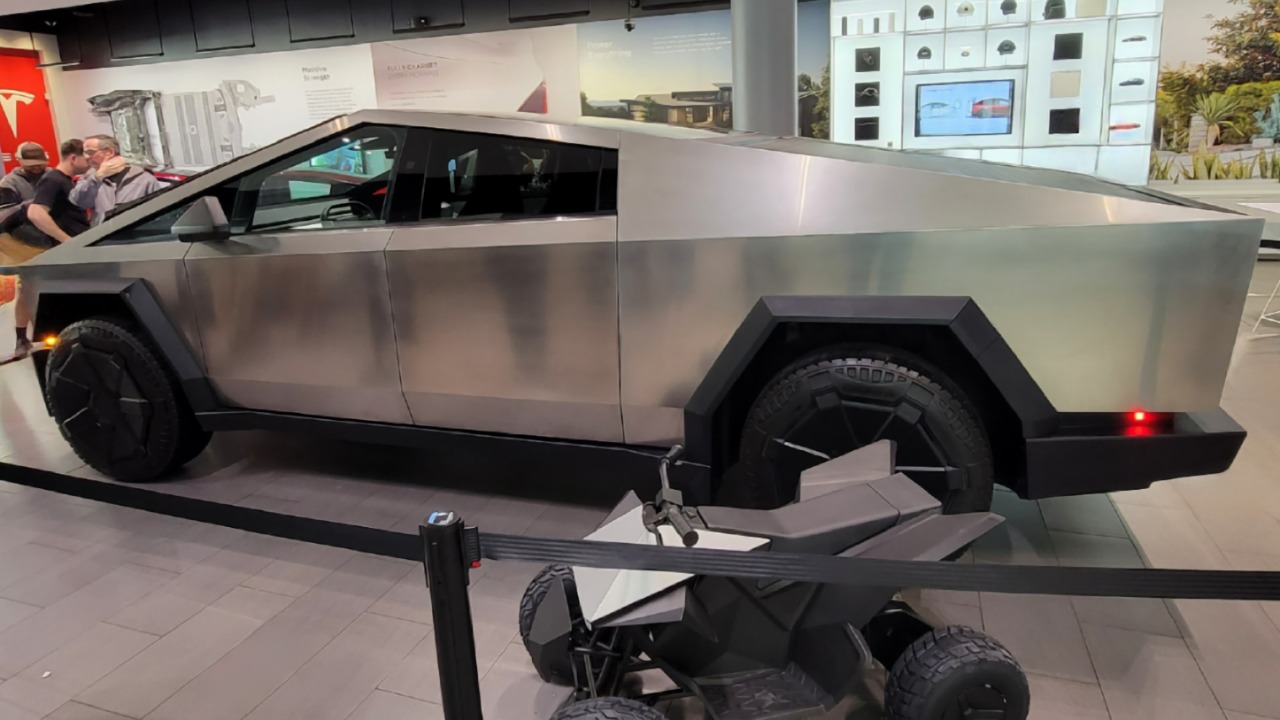
The Cybertruck was supposed to be the halo product that showcased Tesla’s new cells and justified the scale of its battery material contracts. Instead, the pickup has become a symbol of execution risk, with production challenges, shifting specifications, and a more cautious consumer environment all weighing on demand. When the flagship vehicle that was meant to consume a large share of the new high nickel cathodes underperforms, the knock on effects ripple straight into supplier contracts, and that is exactly what appears to have happened here.
Recent reporting explicitly ties the 99% cut in the battery material contract to Cybertruck woes, noting that a Tesla supplier sees a 99% cut in battery material contract amid Cybertruck issues and broader headwinds. One account, citing Investing.com, describes how a South Korean battery maker that had been supplying materials for Tesla’s vehicles is now grappling with reduced orders as the Cybertruck ramp lags and as policy changes affect incentives. The link between the vehicle and the contract is spelled out in coverage that notes a Tesla supplier sees 99% cut in battery material contract amid Cybertruck woes, a phrase that captures how product specific disappointments can cascade into the upstream supply chain.
Cooling EV demand and Tesla’s shifting priorities
Even beyond the Cybertruck, the broader context for this contract collapse is a cooling in electric vehicle demand relative to the most aggressive forecasts of the past few years. Tesla, Inc has been navigating a more competitive market, with price cuts, margin pressure, and a more cautious consumer all forcing the company to rethink how quickly it can grow volumes. When an automaker that once assumed near exponential growth starts to moderate its expectations, the first place that shows up is in long term commitments for components like batteries and cathode materials.
Filings and reports on the supplier side make clear that the 2023 agreement covered Tesla (Tesla, Inc) and its affiliates’ purchases of high nickel cathode materials from January 2024 onward, with the understanding that these would feed into 4680 battery production. Those same disclosures now state that Tesla’s 4680 battery production is slower than projected and that the supplier has cut the deal accordingly, reflecting both the technical challenges and the softer demand backdrop. The shift is captured in analysis of how a Tesla Supplier L&F cuts a battery deal as EV demand cools, a move that aligns with a broader industry trend of scaling back the most aggressive expansion plans.
What the 99% cut means for the South Korean supplier
For the South Korean supplier at the heart of this story, the 99% cut is not just a headline, it is a fundamental shock to its business model. The company had invested in capacity and positioned itself as a key partner to Tesla, banking on the stability and growth implied by a $2.9 billion contract. When that figure is revised down to $7,386, the supplier is left with underutilized assets, a more fragile balance sheet, and a credibility problem with investors who were told that Tesla would be a long term anchor customer.
Disclosures referenced in recent coverage show how the supplier, based in South Korea, has had to publicly acknowledge that the Tesla contract has been slashed by 99%, a move that immediately raised questions about its diversification and risk management. The fact that the company is described as a South Korean L&F Co., a supplier to Tesla, in reports about the contract revision underscores how closely its identity had become tied to this one relationship. The severity of the change is highlighted in accounts that describe a South Korean Tesla supplier seeing a 99% cut in its battery material contract, a figure that will likely force management to revisit everything from capital expenditure plans to potential mergers or partnerships.
Elon Musk’s promises and the reality check
Elon Musk has long framed Tesla as not just a carmaker but a battery and energy company, with repeated promises that breakthroughs in cell design and manufacturing would unlock cheaper, more capable vehicles. The 4680 cells were central to that narrative, and the $2.9 Billion Tesla Battery Supply Contract Loses 99% Of Value In Revision story reads, in part, as a referendum on how those promises have collided with the realities of scaling new technology. When a contract of this size is effectively wiped out, it signals that the internal confidence behind those public commitments has been tempered.
Coverage of the contract revision notes that Elon Musk promised for years that Tesla would revolutionize battery production, and that suppliers like the South Korean cathode maker structured their own strategies around those assurances. The brutal revision of the deal, which took a $2.9 Billion Tesla Battery Supply Contract and saw it lose 99% Of Value In Revision, is a reminder that even the most charismatic vision cannot override the constraints of manufacturing and market demand. The gap between the rhetoric and the revised contract is captured in reporting that describes how Elon Musk promised for years that Tesla would deliver on this battery vision, only for the underlying deal to be gutted.
Strategic lessons for EV supply chains and M&A
From my perspective, the most important takeaway from this saga is not just that one contract imploded, but that it exposes structural vulnerabilities in how EV supply chains have been built. Suppliers that align too closely with a single automaker’s roadmap, especially when that roadmap depends on unproven technology, are effectively taking concentrated bets that can unravel overnight. The 99% cut in this Tesla deal is an extreme example of what happens when those bets go wrong, and it will likely push other battery and materials companies to diversify their customer bases and build more flexible agreements.
There is a parallel here with trends in the refined products sector, where strategic M&A and portfolio adjustments have been driven by evolving consumer preferences, margin and volume pressures, and the need for streamlined supply chains. Analysis of that sector notes that activity has been a byproduct of complex elements, including changing demand patterns and the pursuit of more resilient, efficient operations. The same logic now applies to EV batteries, where suppliers may look to mergers, joint ventures, or new partnerships to reduce their exposure to any single customer and to build the kind of streamlined supply chains that can better withstand sudden contract revisions.
More from MorningOverview