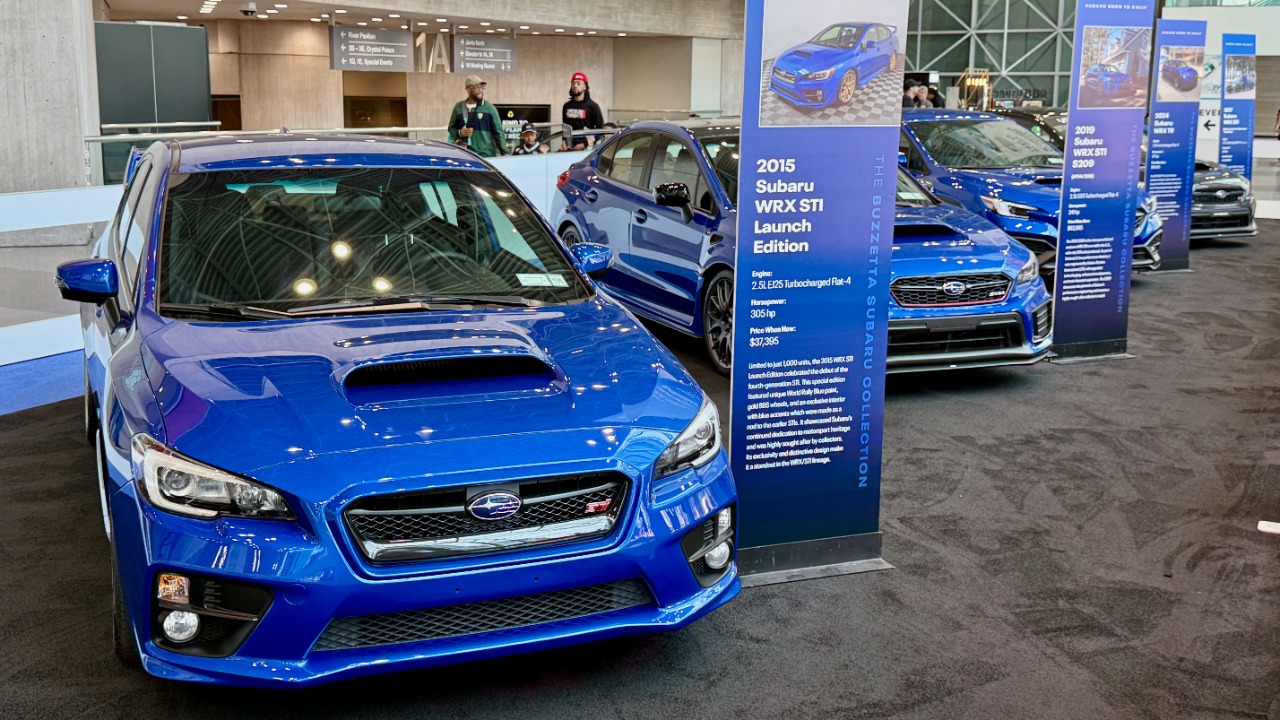

Subaru has spent the past few years dangling the promise of a revived STI in front of its most loyal fans, only to retreat into concepts and special trims. Now the brand is back with fresh WRX teasers and a pair of high-profile STI show cars, raising the stakes on whether the next chapter will finally be a real production performance model. I want to unpack what Subaru has actually shown, how it fits into the company’s new gas-and-electric strategy, and whether this latest round of hints feels different from the false starts that came before.
The new WRX teaser that reignited STI hopes
The latest spark for STI speculation arrived when Subaru used its social channels in Dec to share two short clips of a heavily camouflaged WRX sedan, complete with aggressive aero details and a more purposeful stance. The videos focus on a four-door body, with no hatchback in sight, and the framing is clearly designed to make enthusiasts think “STI” even though the badge itself never appears. The fact that Subaru chose a WRX sedan in Dec, right in the thick of performance-car rumor season, is not an accident, and it immediately raised the question of whether the company is finally ready to move beyond stickers-and-springs specials and commit to a full-fat halo car again, as suggested by the latest WRX teaser.
What makes this particular tease more potent is how carefully Subaru is hiding the details that would confirm or deny STI status. The camo obscures the front fascia and rear diffuser, the camera angles avoid a clear look at the brakes, and the soundtrack is edited so that you hear just enough turbo flat-four burble to know it is not a generic hybrid mule. That deliberate ambiguity, combined with the timing in Dec and the focus on a single WRX sedan configuration, is exactly the kind of setup Subaru has used before when it wanted to test the waters for a hotter variant without promising anything outright, a pattern that is again visible in the follow-up December 30 teaser.
What the latest WRX clips actually reveal
Looking closely at the new WRX footage, I see Subaru walking a fine line between nostalgia and evolution. The car’s silhouette is familiar, but the fenders appear subtly wider and the stance lower than the standard WRX, echoing the visual cues that once separated a base model from an STI. Earlier generations relied on flared arches, unique wheels, and a towering rear wing to signal intent, and the new teaser seems to hint at similar upgrades without fully committing to the iconic hardware. That restraint fits with the idea that Subaru might be preparing a more mature performance flagship, one that leans on chassis tuning and powertrain sophistication rather than just bolt-on theatrics, a direction hinted at in the analysis of how it is still hiding key details.
The interior glimpses are just as calculated. The camera lingers on sport seats, red accents, and a chunky steering wheel, but avoids any close-up of a drive mode selector or STI-specific branding that would give the game away. Even the engine sound is edited so that it is recognizably a WRX, yet not obviously more aggressive than the current car. That suggests Subaru wants fans to project their own hopes onto the footage, whether that means a traditional turbocharged STI, a mild hybrid assist system, or something in between. By keeping the mechanical story vague while dialing up the visual drama, Subaru is effectively crowdsourcing the narrative around what a modern STI should be, a strategy that aligns with the idea that it could still build an STI on it without having to commit publicly just yet.
Performance-B STI: the gas-powered fantasy
While the WRX teasers keep things coy, Subaru has been far more explicit on the auto show circuit, starting with the Performance-B STI concept that appeared in Oct. This car is exactly what long-time fans have been asking for: a muscular sedan with a turbocharged boxer engine, all-wheel drive, and the kind of aggressive aero package that recalls the glory days of rally homologation specials. The bodywork is low and wide, the vents and splitters are unapologetically functional, and the overall stance makes it clear that this is not just a styling exercise. Subaru effectively built the dream WRX STI that enthusiasts have been sketching in their heads for years, then labeled it a concept to keep expectations in check, a move captured in the clip where Subaru just gave WRX STI fans exactly what they have been begging for.
The Performance-B STI is more than a nostalgia play, though. By pairing a traditional turbo boxer with modern aero and chassis tech, Subaru is signaling that it still sees a future for combustion performance, even as regulations tighten. The concept’s proportions and detailing look production feasible, from the door cuts to the glasshouse, which suggests it could form the basis of a real car if the business case lines up. Yet the “concept” label is doing a lot of work here, giving Subaru room to gauge reaction and adjust the formula without promising that this exact package will reach showrooms. That tension between fan service and corporate caution is at the heart of the STI story right now, and it is why the Performance-B STI feels both thrilling and slightly cruel for those who want a VIN plate, not a show stand, as seen in the way the WRX STI concept is framed.
Performance-E STI: electrifying the badge
Alongside the gas-focused Performance-B, Subaru has been just as keen to talk about an electric future for its performance arm. The Performance-E STI concept is pitched as the first electric STI, a battery-powered machine that uses motors and software to deliver the kind of traction and adjustability that used to come from mechanical differentials and clever center clutches. The styling leans into that mission, with a low, wide stance, dramatic lighting, and a massive roof spoiler that leaves no doubt about its intent. By presenting this car as a full-fledged STI, Subaru is making a clear statement that the badge will not be limited to internal combustion, a point underscored in the coverage of how Subaru Is Bringing Back the STI Spirit, With Gas and Electric.
What stands out to me is how Subaru is positioning the Performance-E STI not as a compromise, but as an evolution of what made the original cars special. The company is emphasizing instant torque, precise torque vectoring, and the ability to tune the driving experience through software, all wrapped in a package that still uses a boxer-inspired design language and all-wheel drive. That duality, where gas “still is not dead” but electric power is treated as an equal partner, is central to Subaru’s messaging. It allows the brand to reassure traditionalists that the STI they remember is not being erased, while also courting a new generation that expects performance to coexist with efficiency and technology, a balance that is explicit in the description of The Performance-E STI concept.
Japan Mobility Show: where the dual strategy went public
The clearest expression of Subaru’s two-track performance plan came at the Japan Mobility Show in Oct, where the company confirmed it would unveil two new STI concept vehicles on October 29. One was the Performance-B STI, rooted in the brand’s turbo boxer heritage, and the other was the Performance-E STI, aimed squarely at an electric future. By presenting both side by side, Subaru made it obvious that it is not choosing between combustion and battery power, but instead trying to keep both alive under the same performance umbrella. The announcement framed these cars as a preview of where STI could go next, tying them directly to the Japan Mobility Show and to Subaru’s long-running love affair with the boxer engine and all-wheel drive, as laid out in the teaser that began, “At the upcoming 2025 Japan Mobility Show.”
That dual reveal was not just a show-floor stunt, it was a strategic message to regulators, investors, and fans. By giving equal billing to a gas-powered Performance-B STI and an electric Performance-E STI, Subaru could argue that it is serious about emissions targets without abandoning the enthusiast base that built the STI legend. The company described these builds as a glimpse into a “dual approach to performance,” one steeped in its Subaru turbo heritage and the other focused on electrified innovation, a framing that is echoed in the analysis of how these STI builds offer a glimpse of the brand’s future.
How Subaru itself talks about STI’s future
Beyond the sheetmetal, the most telling clues about whether an STI revival is real come from how Subaru’s own representatives describe these projects. At the Tokyo Mobility Show, company figures were careful to stress that the Performance-B STI and Performance-E STI are concepts, but they also framed them as testbeds for technologies and design directions that could filter into production. In one clip, a Subaru voice acknowledges that the big question is whether either of these concepts will actually make it to showrooms, then hints that the answer depends on how the market responds and how regulations evolve. That kind of hedged optimism is captured in the segment where the big question is whether either of these concepts will actually make it to production.
At the same time, Subaru has been explicit that these cars are not mere styling exercises. The company has described the Performance-E STI as a serious exploration of electric performance, and the Performance-B STI as a way to keep its turbo boxer expertise relevant in a changing landscape. The official language around “Debut Two New STI Performance Concepts” at the Tokyo Mobility Show reinforces that these are part of a broader program, not one-off showpieces. By tying them to the Subaru Performance brand and labeling them STI concepts, the company is effectively promising that some version of this technology and design language will reach customers, even if the exact configurations change, a point that comes through in the announcement that Subaru will Debut Two New STI Performance Concepts at the Tokyo Mobility Show.
Reading the tea leaves: production car or permanent tease?
When I put all of this together, the pattern that emerges is one of deliberate, incremental commitment. The WRX teasers in Dec show a car that looks very close to production, with just enough camouflage to keep the final details secret, while the Performance-B STI and Performance-E STI concepts in Oct demonstrate that Subaru has fully fleshed-out visions for both gas and electric performance. The company’s own messaging acknowledges that fans are desperate for a real STI and that the concepts are designed to test the waters. That combination suggests Subaru is actively preparing the ground for a production model, even if it is not ready to say exactly what badge will be on the trunk lid.
At the same time, there is a risk that STI becomes a kind of perpetual mirage, always visible in teasers and show cars but never quite solidifying into a showroom product. The careful language about concepts, the emphasis on regulatory uncertainty, and the focus on “spirit” rather than specific models all give Subaru an escape hatch if the numbers do not add up. The coverage of how Subaru is “revving up” with all-new STI concepts ahead of the Japan Mobility Show, and how the Performance-E STI is framed as electrifying the legend, underscores that the brand is as interested in keeping the story alive as it is in locking down a final spec sheet, a dynamic that is clear in the analysis of the All New Subaru STI Concepts Teased Ahead Of the Japan Mobility Show.
What it means for WRX and STI fans right now
For enthusiasts trying to decide whether to wait or buy, the current situation is both exciting and frustrating. On one hand, the WRX sedan teasers in Dec, the Performance-B STI concept with its turbo boxer and all-wheel drive, and the Performance-E STI with its electric torque vectoring all point to a company that still cares deeply about performance. Subaru is not quietly letting the STI name fade away, it is putting it front and center in its gas and electric plans. On the other hand, every concrete example so far carries the word “concept” or hides its key details under camouflage, which means there is still no VIN-confirmed STI for buyers to put deposits on, a reality that is hard to ignore when the Performance-B STI and Performance-E STI are explicitly described as previews.
In practical terms, I see Subaru’s current strategy as a way to buy time while keeping the fanbase engaged. The company can continue to refine its electric platforms, test market appetite for a high-priced halo car, and adjust to regulatory shifts, all while feeding the conversation with teasers and show cars. For WRX and STI loyalists, that means the safest bet is to treat the current WRX as the known quantity and view any future STI, gas or electric, as a potential bonus rather than a guaranteed next step. The latest WRX clips, the Japan Mobility Show concepts, and the careful corporate language about bringing back the STI spirit all suggest that something is coming, but until Subaru drops the word “concept” and shows a production interior with a real badge, the STI revival remains a promise rather than a product.
More from MorningOverview