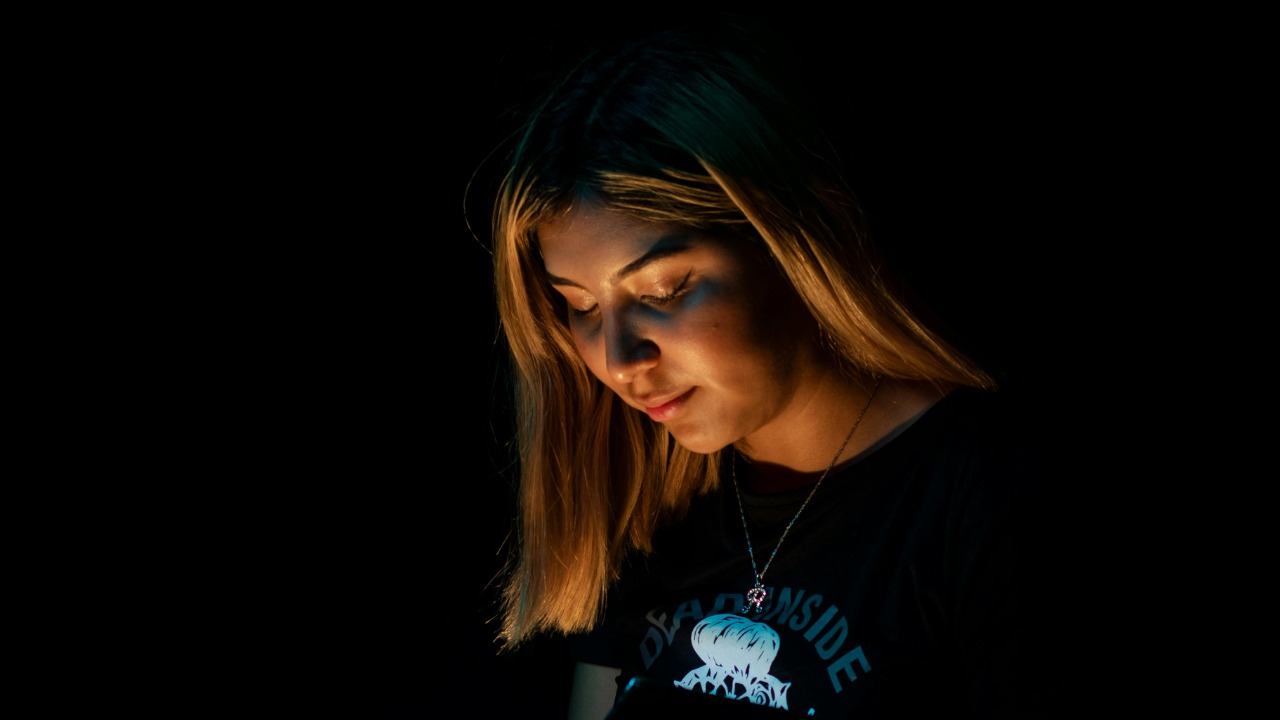

Human bodies are not entirely dark. A growing body of research suggests that every living person emits an ultra‑faint glow, a stream of tiny photons that persists through life and appears to vanish at the moment of death. The light is far too weak for human eyes to see, but it is measurable with sensitive instruments and is now at the center of an emerging field that links physics, metabolism and mortality.
Scientists describe this as a subtle, visible light tied to the chemistry of living cells rather than anything mystical. As researchers refine their cameras and models, they are beginning to map how this glow tracks the body’s stress, energy use and final shutdown, raising the prospect that the last flicker of light could mark the boundary between life and death.
From strange idea to laboratory fact
The notion that humans shine in the dark once sounded like folklore, yet modern detectors have turned it into a measurable phenomenon. In one landmark experiment, Researchers Daisuke Kikuchi used an extremely sensitive CCD camera to photograph the upper bodies of volunteers sitting in complete darkness, revealing a pattern of ultraweak light that changed over time. Earlier work with five healthy male volunteers in their 20s, also imaged bare‑chested in a dark room, showed that the glow peaks around late afternoon and then gradually declines, a daily rhythm that matched fluctuations in metabolism and was captured in detail when Five volunteers were tracked across the day.
Physicists now group this phenomenon under ultraweak photon emission, often shortened to UPE or biophoton emission, and they treat it as a normal byproduct of life. A detailed Abstract on human photon imaging describes how the body “literally glimmers,” with light levels about 1,000 times dimmer than what the naked eye can detect, and notes that the emission pattern tracks changes in energy metabolism. Later analyses of spontaneous emission from the upper body reinforced that humans continuously release visible radiation from their skin, with one Abstract emphasizing that this UPE rises when people experience oxidative stress, effectively turning the body into a living, if extremely faint, light source.
The chemistry behind the glow
At the heart of this radiance is a set of reactive molecules that every cell produces. Researchers point to reactive oxygen species, or ROS, as the main drivers of the glow, since these molecules form when cells process oxygen and handle metabolic pressure. When ROS interact with lipids, proteins and DNA, they can leave some molecules in excited states that relax by emitting photons, a chain of events that one group of Researchers traced directly to reactive oxygen species in stressed cells. In practical terms, the more oxidative stress the body experiences, the more ROS it produces and the more light it emits, a relationship that one study summed up with the line, “Hence, when a body is under pressure, its photon output rises,” a point echoed in coverage of ROS and ultraweak emission.
Scientists have begun to frame this glow as a window into metabolism rather than a curiosity. A detailed explainer on biophoton science notes that the body’s light is tightly linked to the chemistry of metabolism and cellular respiration, describing how photon counts rise and fall with shifts in energy production and oxidative balance, a relationship summarized in a discussion of What Is Biophoton. In earlier imaging work, Masaki Kobayashi argued that free radicals, the reactive atoms and molecules produced in these reactions, are central to the glow, a view laid out when he explained that, Instead of mystical energy, the light comes from chemical reactions that generate free radicals in living tissue.
What the new “vanishing light” study actually shows
The latest wave of attention comes from experiments that track this glow not just through daily cycles but across the boundary of death. In a series of tests on animals and plant leaves, scientists recorded a steady, ultraweak light while the tissue was alive, followed by a rapid collapse of the signal once circulation and metabolism stopped, a pattern that one report described as a visible light that disappears upon death in both mammals and leaves. Coverage of this work highlighted that human bodies emit a faint visible light that fades when we die, describing a Sep report in which the glow was treated as a direct marker of living processes that vanish at death.
Researchers involved in the work have framed it as the first systematic attempt to show that all living things, including humans, emit a measurable glow that goes out when they die, a claim that circulated widely after a summary credited to Harold Canoy described A new study as revealing this pattern across species. A more technical discussion connected the findings to work in Journal of Physical, where researchers are mapping how photon emission changes as cells lose energy and structure. Together, these reports argue that the light is not a soul escaping but a final readout of collapsing metabolism, a view that aligns with the idea that biophoton emission is simply another vital sign that drops to zero when life ends.
How bright is this light, and could we ever see it?
Despite the dramatic language that sometimes surrounds it, the human glow is extraordinarily dim. The imaging work that first captured it required long exposures in pitch‑black rooms and cameras tuned to detect just a handful of photons per second from each square centimeter of skin, conditions that underline why no one can see their own glow in a mirror. One detailed imaging study stressed that the intensity is roughly a thousand times weaker than the threshold of human vision, a point reinforced in the Abstract that described the body as “literally glimmering” only when viewed through specialized optics. Even then, the images show soft patches of brightness around the face and upper body rather than anything like the halos of religious art.
Scientists who work in this field are careful to separate the physics from the metaphors. But Dr Daniel Oblak, physicist at the University of Calgary last author of one recent study, told the BBC that the photons are simply byproducts of the body’s metabolism, not evidence of paranormal forces. Other commentators have leaned into more poetic language, with one analysis declaring that life is literally radiant and describing how the light emitted by living organisms interacts with and discharges into surrounding tissue, a flourish that appeared in a feature titled We Emit a visible light that vanishes when we die. For now, the consensus is that no unaided human eye will ever see this glow, but cameras and photon counters can, and they are getting better every year.
Why the “last light” matters for medicine and meaning
Beyond the headline‑friendly idea of a final flicker, researchers see practical uses for tracking this light. Because UPE rises with oxidative stress, some teams are exploring whether photon counts could serve as a noninvasive indicator of disease, inflammation or even mental strain, effectively turning the skin into a live display of cellular health. A detailed discussion of how Humans show increased emission from the upper body under stress suggests that future clinics might one day pair photon imaging with blood tests to monitor chronic conditions. Other commentators have speculated that the sharp drop in light at death could help refine how hospitals define the exact moment when life ends, especially in intensive care units where every second matters.
The findings have also spilled into philosophy and faith. Some religious commentators have suggested that being made in the image of God could include this subtle radiance, interpreting the extinguishing of the glow at death as a physical echo of spiritual departure, a perspective that appeared in a piece titled Humans Give Off. Others have taken a more secular view, arguing that the discovery simply underscores how deeply life is rooted in physics and chemistry, a theme echoed in a commentary that described how Humans Emit a visible light that disappears at death as a discovery at the intersection of biology and physics. Popular explainers have even linked the work to quirky experiments in which Scientists Shaved Roadkill to find out how mammals glow in the dark, and to broader claims that All humans emit subtle light until they die. However people interpret it, the science now points to a simple, striking fact: as long as we are alive, our bodies quietly shine, and when that light finally stops, so do we.
More from Morning Overview