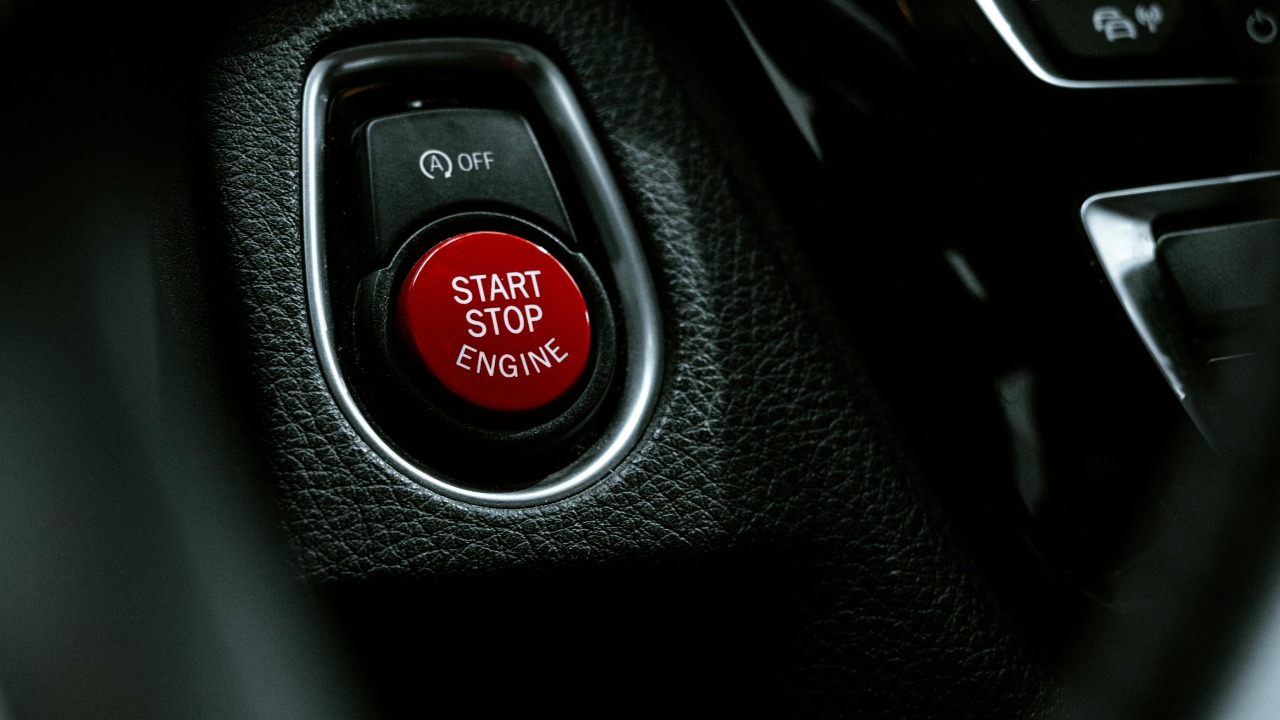

For more than a decade, automatic engine start/stop systems were sold as painless climate tech, a clever way to trim fuel use by cutting the engine at every red light. Now the feature is rapidly losing its political backing, its regulatory value, and its appeal to automakers that see better options in hybrids and full electrics. Start/stop is not disappearing because drivers grumbled, but because the incentives that once made it worthwhile are being dismantled and the technology no longer fits where the car market is headed.
What finally killed start/stop is a convergence of forces: an aggressive shift in federal policy led by the Environmental Protection Agency, a growing backlash from drivers and lawmakers, and a new generation of powertrains that deliver bigger efficiency gains without the daily annoyance. Put together, those pressures are turning a once ubiquitous feature into a short-lived experiment in how far regulators and engineers can push the internal combustion engine.
How start/stop became the default in new cars
Automatic start/stop was never about driver joy, it was about squeezing a few percentage points of fuel savings out of conventional engines to satisfy tightening efficiency and emissions rules. The basic idea is simple: when a vehicle comes to a halt, the engine shuts off, then restarts as the driver lifts off the brake, a pattern that became common as Car manufacturers were pushed to meet stricter pollution and fuel economy targets. To make that work, engineers upgraded starters, batteries and engine controls so they could endure thousands of extra stop/start cycles without failing prematurely.
Regulators reinforced that push by letting automakers claim extra compliance credit when they installed start/stop, effectively turning the feature into a low cost way to hit fleet targets. One civil engineering professor told The New York Times the start/stop credit was worth about $30 per vehicle for automakers, a small number per car that adds up quickly across millions of units. With that kind of regulatory payoff, the feature spread from luxury sedans to mainstream crossovers, even as many buyers immediately went hunting for the dashboard button that would turn it off.
The EPA turns on its own creation
The political ground under start/stop shifted when the Environmental Protection Agency began to question whether the modest fuel savings justified the irritation it caused drivers. Earlier this year the EPA, under Administrator Lee Zeldin, publicly framed start/stop as a marginal climate tool, with Administrator Lee Zeldin using social media to mock the experience of a car that “dies at every red light” while announcing plans to phase out the technology in new models, a stance reflected in coverage of the EPA to phase out controversial start-stop car technology. In that telling, the feature had become a symbol of regulatory overreach, a “climate participation trophy” that made life worse for drivers without delivering transformative emissions cuts.
The agency’s formal proposal went after the incentives that had made start/stop attractive in the first place, not the hardware itself. The EPA signaled that it would end the extra fuel economy credits for start/stop systems, describing the feature as annoying and unnecessary and proposing to remove the special treatment that rewarded fuel start-stop technology in cars. Once those credits disappear, the EPA itself acknowledges that automakers can still install start/stop if they wish, but they will no longer get extra compliance points for doing so, a change that quietly drains the feature of its original purpose.
Regulators and lawmakers pull the financial plug
Behind the rhetoric, the real death blow is financial. In a statement cited in industry coverage, the EPA described stop/start as a feature that frustrates many drivers and confirmed that it was moving to strip away the special treatment that had made the technology attractive, a shift that coincides with reports that the government has stopped incentives to manufacturers effective with the 2026 model year, as reflected in analysis of how the EPA could cancel start-stop. On the consumer side, owners are already noticing that some 2025 models, such as the Mitsubishi Outlander mentioned by drivers, do not include the feature, and one Nissan Rogue owner summarized the shift bluntly by noting that “the government stopped their incentives to manufacturers effective 2026,” in a discussion about auto start off.
Congressional critics have moved in parallel, turning driver frustration into legislative language. Representative Doug LaMalfa introduced the ESSENTIAL Act, formally titled the “ESSENTIAL Act to End Automatic Engine Start-Stop,” arguing that “One of the most annoying features in many new cars is the engine automatically turning off at stoplights and stop signs,” and seeking to scrap federal rules that push the systems in vehicles, a goal laid out in coverage of how LaMalfa’s ESSENTIAL Act aims to scrap federal rules. In his own press materials, LaMalfa’s office went further, asserting that Automatic engine start-stop technology has been widely criticized for causing wear on vehicle components, including starters and batteries, and positioning the bill as relief for drivers in California’s Siskiyou, Shasta, Tehama, Butte, Glenn, Colusa, Sutter, Tehama and Yuba Counties who are tired of the feature, as described in the statement that Automatic engine start-stop technology has been widely criticized.
Drivers never really liked it
Even before regulators turned on start/stop, drivers were already voting with their fingers by switching it off at the beginning of every trip. Consumer surveys and owner anecdotes describe the same pattern: people complain that some cars do not start up quickly when the light turns green, that the vibration of constant restarting is jarring, and that the whole experience feels like the car is stalling, a set of frustrations captured in reporting that notes, “On the annoyance side of things, some cars don’t start up quickly,” in a broader discussion of why the EPA chief says auto start/stop technology is done. That lag, even if it is only a fraction of a second, breaks the illusion that the system is seamless and instead reminds drivers at every intersection that a computer is deciding when their engine runs.
Online, the backlash has been even sharper, with owners trading tips on how to code the feature out of their vehicles or install hardware that remembers their preference to keep it off. A widely viewed video titled “Start/Stop Car Technology is under threat. Here’s why drivers hate it” opens by asking viewers if they recognize the now infamous dashboard symbol and notes that many people loathe the icon, then walks through the reasons drivers are looking for ways to disable the feature, a sentiment that mirrors the broader trend of Jun start/stop car technology under threat. In enthusiast forums, some owners go further, arguing that the constant cycling is “killing” engines, with one Reddit thread about Civic Si models claiming that, “For GM it’s that the oil was too thin for the tolerances in the motor. They manufactured the engines to the wrong spec,” in a discussion framed as the EPA finally admits start/stop is killing engines, even as official data on widespread mechanical failures remains limited.
Did start/stop actually save fuel or protect engines?
At the heart of the policy reversal is a simple question: was start/stop worth it. Technically, shutting an engine off at idle does save fuel, especially in city traffic, but the gains are modest compared with what hybrids or full electrics can deliver. Some environmental advocates have argued that if you want to spend a dollar on cleaning up an environmental issue, you should spend that dollar on the most effective solution, a point echoed in a video bluntly titled “Auto Start Stop Is Dead and Good Riddance,” which criticizes the feature as a distraction from more impactful measures and argues that the money and engineering effort would be better spent elsewhere, a view that frames Auto Start Stop Is Dead and Good Riddance as a kind of manifesto for moving on.
On the mechanical side, the picture is nuanced. Independent repair shops acknowledge that frequent stopping and starting could, in theory, lead to premature engine failure, but they also note that modern engines, starters and batteries are designed to endure frequent start-stop cycles, and that there is no automatic guarantee of damage just because the feature is present, a balance captured in a technical explainer that states, “The concern is that frequent stopping and starting could lead to premature engine failure. However, this isn’t necessarily the case,” in a discussion of whether the auto stop-start feature is bad for my engine. That tension between theoretical risk and engineered mitigation left room for rumor and frustration to grow, especially when combined with the perception that the real beneficiary of start/stop was the automaker’s compliance ledger, not the owner’s fuel bill.
The EPA’s new strategy: skip the “participation trophy” tech
What has changed most dramatically is not the physics of idling but the regulatory strategy around climate and transportation. The EPA now describes start/stop as a “climate participation trophy,” signaling that it wants automakers to focus on deeper cuts in emissions rather than incremental tweaks that mostly exist to game test cycles, a stance spelled out in coverage of how the EPA takes aim at start-stop systems. In that framework, the agency is less interested in whether start/stop works in a narrow sense and more concerned with whether it distracts from the larger shift to electrification and more efficient powertrains.
Industry analysts have long warned that a rigid, long term commitment to the internal combustion engine could have a huge impact on carbon emissions levels, arguing that clinging to incremental fixes delays the transition to cleaner technologies, a concern that mirrors broader critiques in other sectors where incrementalism has slowed structural change, as described in a reflection on how a “rigid, long-term commitment to the internal combustion engine” can have a huge impact on carbon emissions levels. By stripping away the extra credits for start/stop, the EPA is effectively telling automakers that the era of small, easily gamed add ons is over, and that future compliance will depend on more substantive changes like hybrids, plug in hybrids and battery electric vehicles.
Automakers pivot to hybrids and EVs instead
Automakers are already rebalancing their product plans around that new reality, and the market is giving them permission to do it. Recent data shows that hybrid demand is accelerating, with one analysis noting that roughly one third of hybrid drivers transition to a fully electric vehicle and that hybrids are increasingly seen as a bridge technology by shoppers, according to a JD Power study cited in a newsletter urging readers to OUTSMART THE CAR MARKET IN 5 MINUTES A WEEK, a snapshot of how automakers rebalance portfolios as hybrid vehicle demand accelerates. Hybrids inherently incorporate stop/start behavior as part of their operation, but they do it with electric motors and larger batteries that make the transitions smoother and the fuel savings far more significant than a conventional start/stop system can manage.
Regulators have noticed that distinction. Analysts point out that hybrids essentially incorporate stop-start as part of their operation, but their more powerful electric motors and batteries make them a different category from the simple systems that only cut the engine at idle, a difference highlighted in coverage of how we should also point out that hybrids essentially incorporate stop-start. As the EPA and the National Highway Traffic Safety Administration update their rules, they are increasingly steering automakers toward these more comprehensive solutions, even as NHTSA’s own proposed fuel economy rules project continued use of stop-start engine technology in some scenarios, a tension captured in a summary of how Key Takeaways from NHTSA CAFE stop-start show the agency still modeling the feature. For automakers, the message is clear: if they are going to invest in efficiency tech, it makes more sense to put that money into hybrids and EVs that buyers actually want than into a feature that regulators no longer reward.
Consumer frustration, quality scores and the safety backdrop
Start/stop has also become a case study in how even small tech features can drag down perceived quality if they are foisted on drivers without enough refinement. Industry quality surveys show that new auto tech does not have to hurt scores, but that poorly executed features and confusing interfaces continue to plague automakers of all stripes, a pattern that includes complaints about start/stop systems that are too abrupt or too hard to disable, as noted in an editorial arguing that new auto tech doesn’t have to hurt quality scores. When a feature is both mandatory and disliked, it becomes a lightning rod in those surveys, and start/stop has worn that target for years.
Safety regulators have not singled out start/stop as a major hazard, but they sit in the background of the debate as the ultimate arbiters of what is acceptable in a modern car. The National Highway Traffic Safety Administration oversees crash standards, recalls and many of the rules that shape how vehicles behave, and its public database of investigations and complaints has become a reference point for owners who believe start/stop contributes to hesitation or unexpected behavior at intersections, even if formal defect findings are rare, a role reflected in the broad mandate of NHTSA. As the feature fades, it will leave behind a lesson for both regulators and automakers about the importance of aligning technical solutions with real world driver expectations, not just laboratory test cycles.
From “Hallelujah” headlines to the road ahead
The cultural shift around start/stop is visible even in enthusiast media, where some commentators greeted the EPA’s move with open relief. One analysis framed the change with the exclamation “Hallelujah,” arguing that Start/Stop May Be Going Away and describing the feature as annoying to a lot of drivers, while also noting that it had been justified for Environmental reasons when the technology was used, a perspective that captures how Hallelujah, Start, Stop May Be Going Away for both political and practical reasons. A related discussion emphasized that it is a feature that is annoying to a lot of drivers but one that may soon be a thing of the past, even though it was originally promoted as an Environmental tool to cut emissions when the technology is used, reinforcing the sense that the tradeoff no longer makes sense now that better options exist, as described in the argument that Environmental benefits once justified start/stop.
Looking ahead, the EPA’s own proposal makes clear that what happens next is not a ban but a quiet phase out, in which automakers are free to keep start/stop if they want but will no longer receive extra credits for doing so, a future laid out in the explanation that The EPA’s proposal would eliminate the incentives that reward the systems without banning them outright, as summarized in the section on What happens next. In practice, that means the feature is likely to linger in some legacy platforms and lower cost models for a few more years, even as most new designs skip it in favor of more advanced electrified powertrains. For drivers who have spent years stabbing the off button at every start up, the end of start/stop will feel like a small but satisfying victory, and for regulators it will mark the close of a chapter in which incremental tweaks to combustion engines briefly stood in for the deeper transformation that is now finally underway.
The broader lesson: incrementalism has limits
Start/stop’s rise and fall also fits into a longer story about how the engine business has tried to adapt to regulatory and market pressure. A decade ago, industry insiders were already warning that regulations, fuel prices and consumer expectations were converging in ways that would force a rethink of traditional engine design, with some arguing that the future was happening today and that clinging to old architectures would be risky, a view captured in a forecast that noted, “When we asked various industry insiders this month to look into their crystal spheres, past issues such as regulations and fuel prices made it clear that the future is happening today,” in a discussion of the future of engine building. Start/stop was one answer to that pressure, but it was always a half step, a way to stretch the life of internal combustion without fundamentally changing it.
Now, as the EPA, NHTSA, Congress and the market all push in the direction of hybrids and EVs, the limits of that incrementalism are clear. Stop-start technology, which turns off an engine when a vehicle stops for traffic or a red light, is under fire from some consumers and the EPA, facing a multipronged attack that includes regulators, lawmakers and drivers looking for ways to disable it, as described in a report that frames Stop-start car engine tech under fire. Another analysis notes that stop-start technology, which turns off an engine when a vehicle stops for traffic or a red light, faces a multipronged attack from regulators and consumers looking for ways to disable it, underscoring how the feature has become a casualty of its own compromises, as detailed in the description that Stop-start technology turns off an engine when a vehicle stops. For all the engineering effort that went into making engines survive thousands of extra restarts, the real verdict on start/stop is being delivered by policy makers and buyers who have decided that if they are going to change how their cars behave, they want the payoff to be big enough to notice.
Public opinion and the final push
Public sentiment has played a supporting role in that verdict, giving regulators political cover to unwind a feature that was never popular. In one widely shared story, the EPA told Automotive News that stop/start technology is a feature in automobiles that frustrates many drivers, a blunt acknowledgment that the agency’s own policy had helped spread a technology that people disliked, even as it now seems unlikely to be enforced going forward, as summarized in the statement that the EPA says stop/start frustrates many drivers. Another report, citing internal sources, noted that Green Car Reports had pushed back on claims that start/stop was killing batteries, while also pointing to EPA data from Battery Council International that complicates the narrative, illustrating how the debate over the feature has mixed hard data with strong feelings, as described in coverage that begins by Citing internal sources, Green Car Reports and Citing EPA data from Battery Council Internation.
At the same time, local and national outlets have amplified the sense that the feature is on its way out, with one story summarizing the EPA’s move as pulling the plug on hated start/stop tech and ending drivers’ red light frustrations, while listing topics such as EPA, Start-stop technology, Vehicles, Fuel economy, Carbon credits, Lee Zeldin and Deregulation to frame the stakes, as seen in the overview of how the EPA pulls the plug on hated start/stop tech. Another segment focused on how stop-start technology is under fire from some consumers and the EPA, with reporter Molly Boigon noting that the feature faces a multipronged attack and that one civil engineering professor estimated the credit was worth about $30 per vehicle for automakers, a detail that underscores how small the benefit was compared with the political and consumer cost, as described in the piece titled Jul Stop-start car engine tech: Under fire from some consumers and the EPA. Molly Boigon. Thu. Together, those narratives have helped cement the idea that start/stop is not just fading quietly but being actively retired, a rare case where drivers, regulators and many automakers all seem ready to move on at the same time.
Supporting sources: New auto tech doesn’t have to hurt quality scores.
More from MorningOverview