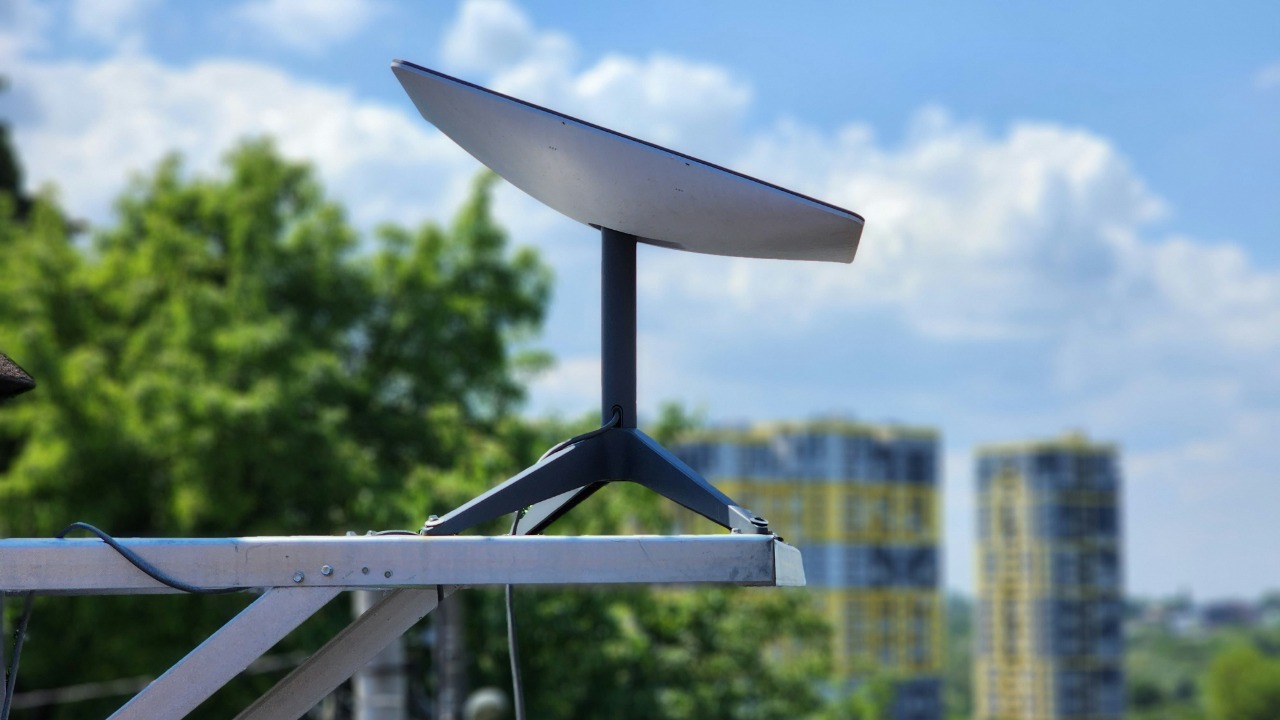

Starlink’s decision to open its network for free across Venezuela in the immediate aftermath of Nicolás Maduro’s capture has turned a satellite broadband project into a frontline political actor. As U.S. airstrikes and a raid targeting the Venezuelan leader disrupted power and communications, the company’s move reframed internet access as both a humanitarian tool and a geopolitical instrument. I see this episode as a test case for how private infrastructure, orbiting far above any border, can tilt the balance of information in a crisis.
The arrest that shattered Venezuela’s status quo
The chain of events began with a U.S. operation that seized Nicolás Maduro and placed him in American custody, a dramatic escalation in a long running confrontation between Washington and Caracas. The raid followed U.S. airstrikes that hit Venezuelan targets and left parts of the country’s infrastructure strained, deepening an already severe political and economic crisis. In the hours after Maduro’s arrest, reports described explosions in and around Caracas and a leadership vacuum that left Venezuelans scrambling for reliable information about who was in charge and what might come next.
Maduro’s transfer to the United States on drug trafficking and firearm charges, confirmed by official briefings, instantly removed the longtime Venezuelan leader from the domestic scene and shifted the center of gravity to Washington. President Donald Trump addressed the nation about the capture, framing it as the culmination of a years long effort to hold Maduro accountable and signaling that the United States would now shape the terms of Venezuela’s transition. In that context, the battle over narratives, and over who could reach Venezuelan citizens directly, became as important as the military operation itself.
Trump’s message and the new U.S. leverage
President Donald Trump used his national address after the U.S. arrest of Maduro to claim a strategic and moral victory, presenting the operation as a blow against what he called a brutal regime. By speaking directly to both Americans and Venezuelans, Trump sought to define the moment as a liberation rather than an intervention, emphasizing that Maduro was now facing U.S. justice. That framing matters because it sets expectations for how Washington will use its new leverage, from sanctions policy to support for opposition figures who may try to fill the power vacuum.
Trump’s remarks also underscored how tightly the Venezuelan crisis is now intertwined with U.S. domestic politics and personal relationships with high profile business leaders. In public comments, Elon Musk congratulated Trump and described Venezuela as “freed from a brutal tyrant,” aligning his own stance with the White House narrative. When a technology executive with global reach echoes the president’s language, it blurs the line between private initiative and statecraft, especially once that executive’s company begins shaping the information environment inside Venezuela.
Starlink’s free access offer and the February 3 deadline
Into this volatile landscape stepped Starlink, the satellite internet service operated by Elon Musk’s SpaceX, with a pledge to provide free broadband across Venezuela. The company announced that it would waive subscription fees for users in the country until February 3, effectively turning its constellation of low Earth orbit satellites into an emergency communications backbone. I see that decision as more than a marketing gesture, because it directly addressed the connectivity gaps created by damaged infrastructure and long standing neglect of Venezuela’s state run networks.
According to the company’s own statements, Starlink said it is providing free broadband in Venezuela through early February, positioning the move as support for a population emerging from authoritarian rule. The offer applies nationwide, not just in the capital, and is structured so that existing terminals can connect without payment while new users can sign up under simplified terms. By setting a clear end date of February 3, Starlink framed the initiative as a temporary relief measure rather than an open ended subsidy, but it also created a countdown that could pressure any interim authorities to decide whether and how to integrate the service into longer term plans.
How Starlink sidestepped Venezuela’s broken networks
What makes Starlink’s intervention so potent is its technical ability to bypass local infrastructure that has been degraded by years of underinvestment and, in some cases, deliberate throttling. Elon Musk’s satellite internet service beams connectivity directly to user terminals, which means it can keep people online even when terrestrial fiber, cell towers, or government controlled exchanges are disrupted. In the wake of U.S. airstrikes and explosions around the Venezuelan capital and nearby states, that architecture allowed Starlink to restore connectivity where traditional providers struggled or failed.
Reports from the ground describe how the service, once activated, offered relatively stable broadband in neighborhoods that had grown used to daily blackouts and patchy mobile data. Because Starlink’s traffic does not have to pass through Venezuelan state telecom infrastructure, it also reduces the government’s ability to filter or block content, at least for those who can access the terminals. That capacity to sidestep local networks is precisely what makes satellite broadband attractive in disaster zones and conflict areas, but in Venezuela it also carries political weight, since it weakens the information monopoly that Maduro’s security apparatus had tried to maintain.
From U.S. raid to satellite lifeline: the rapid rollout
The timing of Starlink’s move was striking. Within days of the U.S. raid that captured Maduro, the company offered free internet access in Venezuela, explicitly linking the decision to the turmoil unleashed by the operation. The service was pitched as a way to keep families connected and businesses functioning while the country reeled from the shock of losing its leader and absorbing the impact of U.S. strikes. In practical terms, that meant opening up the network to Venezuelan users who already had Starlink hardware and simplifying the process for new customers to come online.
Accounts of the rollout emphasize that Starlink’s offer came as local networks were struggling with outages and congestion, and that the satellite service helped stabilize communications in key urban centers. The company’s ability to act quickly, without waiting for lengthy regulatory approvals from a government whose leader had just been arrested abroad, highlighted the autonomy that comes with operating from orbit. It also raised questions about how much coordination, if any, occurred between Starlink and U.S. authorities as the raid unfolded, although available reporting does not confirm any formal arrangement and that remains unverified based on available sources.
Elon Musk’s political signaling and corporate power
Elon Musk did not present Starlink’s free access in purely technical or humanitarian terms. In public comments tied to the announcement, he congratulated Trump and framed the move as support for Venezuelans who had been “freed from a brutal tyrant,” language that echoed the White House’s own justification for the raid. By explicitly aligning himself with President Donald Trump and the U.S. narrative about Maduro, Musk turned what could have been a neutral connectivity initiative into a clear political statement.
That signaling matters because Musk controls not only Starlink but also other high profile ventures, and his decisions can shape conditions on the ground in ways that rival state power. The company owned by Elon Musk said it would supply free internet in Venezuela through February, tying the duration of the offer to the immediate post arrest period when control of the country’s institutions is in flux. When a single executive can decide, on short notice, to light up or darken a nation’s access to high speed internet, it raises difficult questions about accountability, especially when that executive is openly cheering on one side of a geopolitical confrontation.
Connectivity amid disruption: what Venezuelans gain and risk
For ordinary Venezuelans, the most immediate effect of Starlink’s decision is practical. Free broadband means students can resume online classes, families can reach relatives abroad, and small businesses can process digital payments even as the country’s traditional infrastructure strains under the combined weight of sanctions, airstrikes, and political upheaval. Reports describe Starlink’s service as a crucial source of connectivity amid disruption, particularly in the Venezuelan capital and nearby states where explosions and security operations have been most intense.
Yet the benefits come with trade offs. Access to Starlink still depends on having the right hardware and a clear view of the sky, which can exclude poorer households and those in dense urban housing. There is also the question of data sovereignty, since traffic routed through Starlink’s satellites and foreign ground stations may be more accessible to U.S. authorities than to any interim Venezuelan government. As the nation spirals after Maduro’s arrest, the reliance on an external, privately controlled network could leave future leaders with limited leverage over a critical piece of digital infrastructure that now shapes how citizens receive news and organize politically.
Poli optics: soft power, sanctions, and the information war
Starlink’s free access offer has clear political, or “Poli,” implications that go beyond the immediate humanitarian framing. By providing connectivity at no cost while the United States holds Maduro in custody, the company reinforces the perception that Washington and its allies are delivering tangible benefits to Venezuelans, not just military strikes and legal indictments. That soft power effect complements traditional tools like sanctions and diplomatic pressure, giving the U.S. camp a way to argue that it is on the side of ordinary citizens rather than punishing them for their leaders’ actions.
At the same time, the move intensifies the information war that has long surrounded Venezuela’s crisis. With Starlink offering free internet in Venezuela after U.S. airstrikes and Maduro’s arrest, opposition figures, exiled journalists, and foreign media gain a more reliable channel to reach audiences that were previously constrained by state controlled networks. That could accelerate the erosion of support for remnants of the old regime, but it could also fuel polarization if competing factions flood the newly opened channels with propaganda. In that sense, Starlink’s satellites are not just relaying data, they are reshaping the battlefield on which narratives about Venezuela’s future will be contested.
Costs, logistics, and the question of who pays
Behind the dramatic headlines, there is a practical question about how Starlink can afford to keep an entire country online for free, even for a limited period. Operating a constellation of satellites, ground stations, and customer support infrastructure is expensive, and waiving subscription fees in a market the size of Venezuela represents a significant opportunity cost. Following the airstrikes and the U.S. raid, reports indicated that Starlink would absorb the cost of providing the service, at least through the early February deadline, rather than seeking immediate reimbursement from any government.
Logistically, the company has to manage bandwidth allocation so that Venezuelan traffic does not degrade service in neighboring countries, while also handling a surge of new sign ups from users attracted by the free offer. That requires careful network planning and, potentially, the deployment of additional ground infrastructure in the region. The fact that Starlink Switches On Free Internet In Venezuela As the Nation Spirals After Maduro Arrest suggests that the company was willing to prioritize this crisis over other commercial considerations, at least temporarily. Whether that approach is sustainable, or whether it will prompt calls for formal agreements with governments that benefit from such interventions, remains an open question.
What this precedent means for future crises
Looking ahead, I see Starlink’s move in Venezuela as a template that other governments and private actors will study closely. The combination of U.S. military power, presidential messaging, and a privately controlled satellite network created a layered response that went far beyond traditional diplomacy. Starlink announces free broadband service in Venezuela till February 3, and Elon Musk’s explicit political commentary, show how quickly a technology platform can become part of a coordinated pressure campaign, even if there is no formal treaty or contract spelling out its role.
For countries wary of U.S. influence, this episode may accelerate efforts to develop their own satellite constellations or to regulate foreign services more tightly in peacetime, to avoid being caught off guard in a crisis. For activists and citizens living under repressive regimes, it will reinforce the idea that off planet infrastructure can offer a lifeline when local networks are compromised. As Starlink announces it will provide free internet service in Venezuela through February and Maduro remains in U.S. custody on drug trafficking and firearm charges, the world is watching to see whether this blend of hard and soft power stabilizes the country or deepens its fractures. Either way, the precedent is set: in the next geopolitical shock, the decision of a single company to flip a virtual switch could matter as much as any speech from a presidential podium.
More from MorningOverview