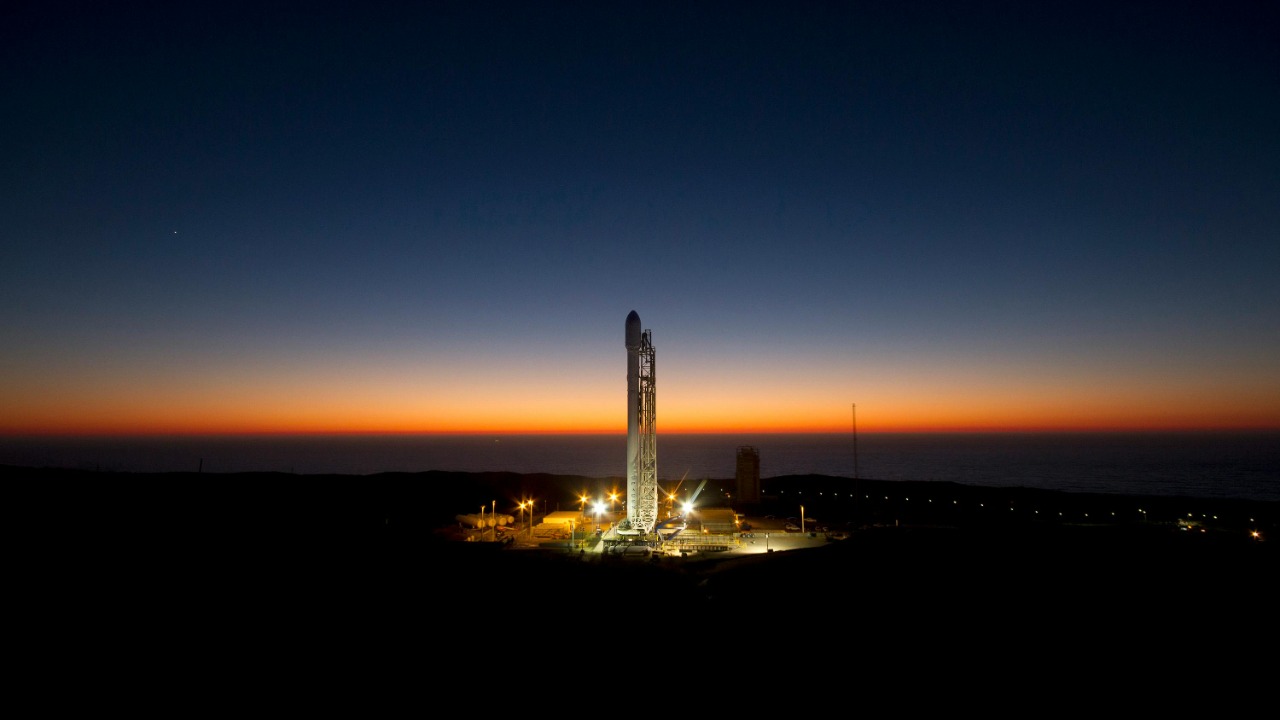

SpaceX did not just have a good year in 2025, it fundamentally reshaped the launch market. Out of a global field crowded with national agencies and private competitors, the company ended up handling more than half of all orbital missions, turning what once looked like an ambitious startup into the central infrastructure provider for getting hardware off Earth. That dominance is now the baseline for how governments, militaries, and commercial operators plan their space strategies.
The scale of that shift is easiest to see in the raw numbers. Worldwide, launch providers attempted to send 320 rockets into orbit in 2025, a figure that would have sounded implausible only a decade ago. With SpaceX responsible for the majority of those attempts and an even larger share of successful flights, the company has become the default ride to orbit for much of the planet.
From record year to structural dominance
The headline story of 2025 is not simply that there were more launches, but that one company anchored the surge. Spaceflight in 2025 continued the 2020s pattern of breaking records, with Spaceflight statistics pointing to 317 successful orbital missions and a broader ecosystem of new rockets coming online. Against that backdrop, SpaceX’s share of activity was so large that its cadence alone could swing global totals up or down.
What makes 2025 different from earlier growth spurts is that SpaceX’s volume is no longer a curiosity, it is the backbone of the launch economy. Analysts tracking global activity note that the human race attempted 320 orbital rockets in total, and that SpaceX alone accounted for more than half of those attempts. In practical terms, that means the company’s scheduling decisions, pricing, and technical priorities now shape how satellite operators and governments think about access to orbit.
How SpaceX pulled ahead of the rest of the world
SpaceX’s lead is not just a matter of flying often, it is a matter of flying so often that the rest of the world combined struggles to match its output. Industry tallies of orbital activity in 2025 show that SpaceX and China together drove the new record for launches, with one Falcon 9 mission in mid December marked as the 165th flight of that vehicle in a single year. That kind of cadence, captured in reporting on a Falcon 9 launch, illustrates how far ahead the company’s workhorse rocket now sits compared with any rival system.
When I look at the global breakdown, the gap is even starker. One detailed summary of orbital activity notes that, taken together, successful launches from a small group of leading nations accounted for about 90% of the world’s missions, and that separately there were 192 launches from those countries alone. Within that club, SpaceX’s share of flights from United States soil was so large that it effectively set the pace for the entire Western launch sector, leaving other providers to compete for the remaining slice of demand.
Launch attempts, successes, and the reliability story
Volume only matters if rockets work, and 2025’s statistics show that orbital launch has become a mature, if still risky, business. A technical review of Orbital Launch Attempts in 2025 tracks not just how many rockets lifted off, but how many reached orbit, how many failed, and how those outcomes were distributed among providers. SpaceX’s record sits near the top of that reliability table, with a high success rate across its Falcon 9 and Falcon Heavy missions that helps explain why customers are willing to entrust it with critical payloads.
That reliability is not an accident, it is the product of flying often enough to turn each mission into a data point for the next. The same technical survey that catalogs Satellite Launch Statistics and Military Space Activities also highlights how repeatable operations and standardized hardware have reduced the risk profile of many launches. SpaceX’s ability to reuse boosters, refine procedures, and keep a tight feedback loop between engineering and operations has translated into a track record that, for many customers, outweighs the theoretical appeal of newer but less proven vehicles.
Reusability and the economics behind the numbers
Behind SpaceX’s dominance sits a simple economic engine: fly the same hardware again and again, and the cost per launch drops. In 2025, that model moved from theory to routine practice, with Falcon 9 first stages returning to service multiple times and landings becoming a familiar sight. One analysis of global launch activity notes that of the 192 launches from a core group of nations, a significant fraction involved reusable hardware, and that Separately SpaceX’s approach has reshaped expectations for what a first stage should do after main engine cutoff.
That shift has direct consequences for competitors that have not yet embraced reusability. The same summary points out that some launch providers have explicitly decided not to pursue reusable systems, a choice that leaves them with higher per flight costs and less flexibility on pricing. When I compare that with the cadence of Falcon 9, which hit its 165th mission in a single year according to Jeff Foust January reporting, it is clear that the economic gap is widening, not narrowing.
Payload capacity and the surge in upmass
Launch counts tell only part of the story, because what really matters is how much hardware reaches orbit. Between 2020 and 2025, the total mass delivered to space climbed sharply, with one financial analysis noting that total upmass more than quintupled over that period, reaching 3,020.5 tons. That figure, flagged under the heading Total upmass, reflects not just more launches, but heavier and more capable satellites, many of them riding on SpaceX rockets.
SpaceX’s own constellation ambitions are a major driver of that mass. Each batch of Starlink satellites adds dozens of spacecraft to orbit, and the company’s rideshare missions pack clusters of small satellites from multiple customers onto a single Falcon 9. When I map those missions against the broader statistics on Satellite Launch Statistics, it is clear that SpaceX is not only the leading launch provider, it is also one of the largest satellite operators, blurring the line between infrastructure provider and end user in a way few traditional launch companies ever attempted.
Commercial, military, and national security demand
SpaceX’s dominance is also a story about who is buying launches. Commercial operators flock to Falcon 9 because its price and reliability make business cases easier to close, but governments and militaries have become equally important customers. The same technical review that breaks out Military Space Activities in 2025 shows a steady stream of defense and intelligence payloads heading to orbit, many of them on rockets provided by the same company that also flies broadband satellites and science missions. That convergence of commercial and national security demand on a single provider is a notable shift from the more diversified manifest of earlier decades.
For the United States, relying heavily on a single launch company has strategic upsides and risks. On one hand, a robust cadence of Falcon 9 and Falcon Heavy missions gives national security planners confidence that critical payloads can reach orbit on schedule. On the other, it concentrates a vital capability in the hands of one firm, a dynamic that becomes more striking when I compare it with the global picture in which Together a handful of nations account for most launches, but within the United States, one company dominates the manifest.
China, emerging rockets, and the shrinking competitive field
SpaceX is not alone in driving launch numbers upward, and China’s state backed sector remains the other major pillar of global activity. Reporting on the 2025 launch record notes that SpaceX and China together were responsible for a majority of orbital missions, with Chinese Long March variants and a growing stable of commercial rockets filling out the manifest. Yet even in that context, the detail that a single Dec Falcon 9 launch could be described as the 165th of the year underscores how much of the non Chinese market SpaceX has captured.
New entrants are trying to change that balance, with several rockets reaching orbit for the first time in 2025 according to the Spaceflight overview. Yet the combination of high fixed costs, tight regulatory regimes, and customers who increasingly default to proven providers makes it difficult for smaller firms to win significant market share. When I look at the distribution of launches, the field is not just competitive, it is consolidating around a few heavyweights, with SpaceX at the center.
What 2025 sets up for 2026 and beyond
If 2025 was the year SpaceX became more than half of the global launch market, 2026 is shaping up as the test of whether that dominance is sustainable. Industry previews of the coming year describe SpaceX as still dominating the global launch sector and note that the company broke its own annual record for missions while preparing to expand its offerings. One forward looking analysis frames this as an Out of this world trajectory, with more capacity, more destinations, and potentially new vehicle types entering regular service.
For customers and competitors, the implications are profound. If SpaceX maintains or even increases its share of global launches, its pricing power and influence over standards, from satellite interfaces to mission timelines, will only grow. At the same time, the sheer scale of its operations, from launch pads to recovery ships, raises questions about resilience and redundancy that regulators and national security planners will have to confront. As I look back at the Jan tallies that put SpaceX at the center of a year with 320 orbital attempts and 317 successes, it is clear that 2025 was not an anomaly. It was the moment when one company’s launch cadence became the rhythm of the space economy itself.
More from Morning Overview