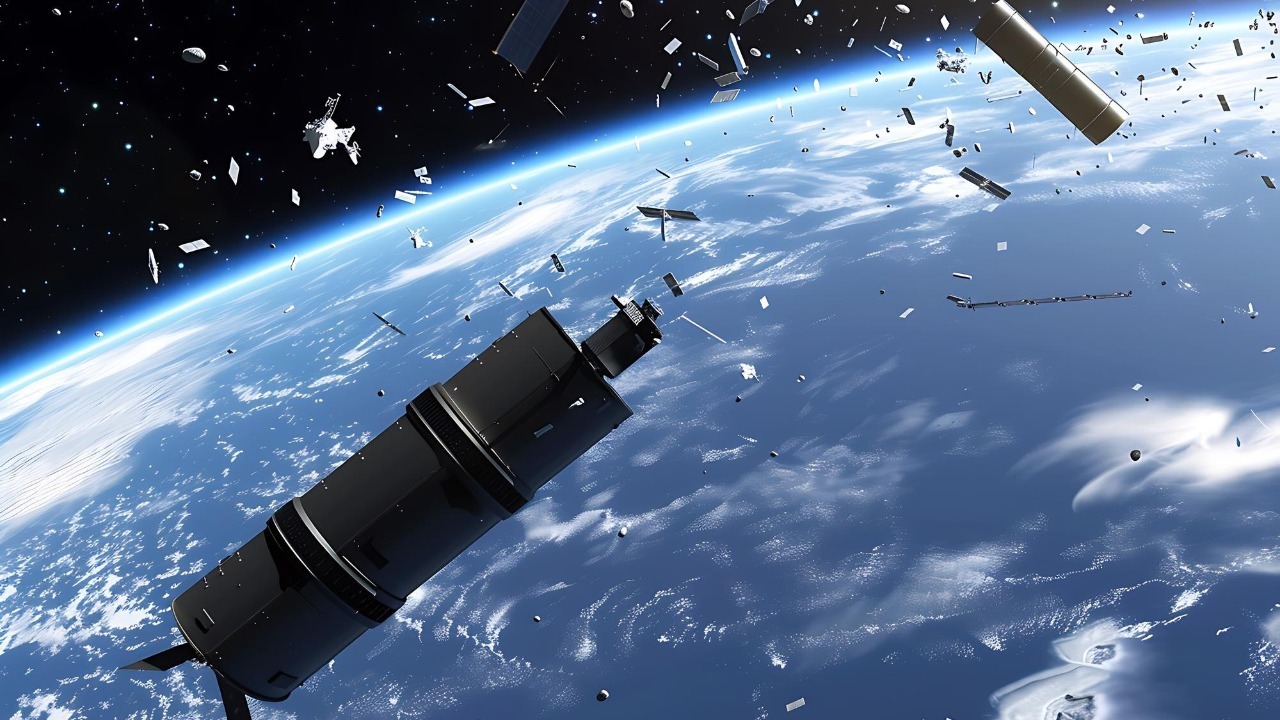

Airlines have long treated thunderstorms, snow and volcanic ash as the main reasons to slow or stop flights. Now a new hazard is rising from above, as fragments of rockets and satellites begin to intrude on the same altitudes that commercial jets use. As orbital traffic grows, the prospect that space junk could trigger delays and diversions on the scale of severe weather is shifting from science fiction to a planning assumption for aviation.
The risk to any individual passenger remains low, but the system-wide exposure is climbing as more hardware is launched and more of it eventually falls back through the atmosphere. I see a future in which dispatchers and pilots routinely factor reentering debris into their flight plans, regulators carve out temporary no‑fly zones, and travelers discover that “space conditions” can disrupt their trips as reliably as a winter storm.
From distant orbit problem to everyday aviation headache
For years, space junk was framed as a concern for satellites and crewed spacecraft, not for the jets crossing the Atlantic or shuttling between Chicago and Los Angeles. That mental model is now outdated. As the number of satellites in orbit climbs into the tens of thousands, the volume of material that eventually reenters the atmosphere is rising, and some of it survives the plunge to altitudes where airliners cruise. Researchers have warned that as the number of satellites grows, the risk of their remnants falling back to Earth and intersecting flight paths is no longer a theoretical edge case but a planning factor for civil aviation.
What makes this shift so significant is that the danger is not limited to a single launch provider or country. As space traffic increases, experts argue that the cumulative risk of debris colliding with aircraft is no longer negligible, especially when you consider the global spread of flight routes and the sheer number of daily departures. Analyses that look at how fragments spread along an orbital track suggest that a single uncontrolled reentry can scatter potential hazards across wide swaths of the planet, including busy corridors above the North Atlantic and the continental United States, which is why some specialists now warn that space traffic increases are directly translating into new aviation risks.
How much junk is actually falling toward planes
To understand why airlines are paying attention, it helps to look at the numbers. Large reentries occur almost weekly, according to study authors who track the descent of old rocket bodies and defunct satellites. These are not tiny flecks of paint but substantial pieces of hardware, some of which can remain intact long enough to reach the altitudes where jets fly. The same research notes that “Over 2,300 rocket bodies are already in orbit and will continue to undergo uncontrolled reentries for decades to come,” a figure that underscores how much mass is slowly making its way back toward the atmosphere and the 2,300 rocket bodies that remain overhead.
Researchers who model the intersection of these reentry paths with commercial air routes have concluded that the probability of any single aircraft being struck is still low, but it is rising as more objects are launched and left to decay. One analysis framed the odds for passengers bluntly: when asked what the chances are of being hit by space debris on a future trip, the answer was “Small but growing.” That assessment reflects the reality that as more and more satellites go into orbit, concerns are growing about the odds of aircraft being hit by falling fragments, even if the absolute risk on a given flight remains modest, a point underscored in a detailed look at what the odds really look like.
Why the risk is rising faster than regulators expected
The core driver of this new hazard is simple: there is more hardware in orbit than ever before, and much of it was not designed with controlled reentry in mind. The increasing presence of space junk in Earth’s orbit is posing an escalating threat to air travel, with new research warning that the debris environment is thickening faster than earlier models anticipated. As operators race to deploy large constellations for broadband and Earth observation, they are adding to a crowded shell of objects that will eventually decay, and every uncontrolled reentry is another roll of the dice for the aviation system below.
That same research highlights how this trend could translate into very terrestrial pain points. Analysts warn that the growing threat could lead to more frequent airspace closures, diversions and delays, which in turn would impose additional burdens on airlines and travellers who are already grappling with tight schedules and thin margins. The picture that emerges is one in which the space industry’s rapid expansion is beginning to have second‑order effects on global mobility, with the increasing presence of debris in Earth’s orbit forcing aviation planners to treat reentries as a recurring operational constraint rather than a rare anomaly.
From abstract hazard to real flight delays
The shift from theoretical risk to operational disruption is already visible in recent incidents. Debris from Space X rockets returning to Earth has forced airlines to delay some flights in recent weeks, as controllers carved out temporary danger zones and rerouted traffic to avoid potential impact areas. These were not minor schedule tweaks but meaningful disruptions that rippled through airline networks, illustrating how a single launch can affect dozens of flights when the trajectory of falling hardware intersects busy corridors.
One high profile example involved SpaceX’s Starship test vehicle, which broke up during flight and scattered debris along its path. After The FAA warned pilots about a “danger area” associated with the breakup, Dozens of flights diverted or were delayed as controllers worked to keep aircraft clear of the projected debris footprint. That episode showed how quickly a spaceflight anomaly can cascade into an aviation event, with Dozens of diversions and delays tied directly to Starship and the safety buffer The FAA deemed necessary.
How air traffic controllers manage a new kind of storm
For the people managing the skies, space junk has become one more variable to juggle alongside thunderstorms and congestion. Air traffic controllers now have something new to worry about, as reports warn that the risk of parts left over from rockets and satellites falling into airplane flight paths is no longer purely hypothetical. When a significant reentry is forecast, controllers may be asked to keep aircraft out of certain altitudes or geographic boxes for a defined window, effectively treating the debris corridor like a moving storm cell that must be avoided.
Studies that simulate these scenarios show that even when the chance of impact in each case is low, the cumulative effect on routing and capacity can be substantial if controllers must repeatedly vector aircraft around predicted debris tracks. The operational challenge is compounded by the fact that reentries are inherently uncertain, with wide error bars on where fragments will actually come down. That uncertainty is why some experts argue that Air traffic controllers need better predictive tools and clearer protocols so they can balance safety with the need to keep traffic flowing.
What The FAA is already doing, and where it falls short
Regulators are not starting from scratch. The FAA already has authority to manage U.S. airspace in response to launch and reentry activities, and it has shown a willingness to use that power aggressively when safety is at stake. During a recent government funding standoff, The FAA’s decision to restrict the number of airline flights to ensure the safety of air travel as some air traffic control facilities were closed also had knock‑on effects for space launches, which had to be squeezed into narrower windows. That episode highlighted how tightly coupled the launch industry and commercial aviation have become, and how decisions in one domain can constrain the other, as described in an analysis of how The FAA balanced shutdown restrictions.
In another case, an emergency order grounded all rocket launches in the United States while officials reviewed safety procedures, a move that was widely discussed in a video where the host noted that the FAA had just dropped an emergency order restricting U.S. airspace and grounding all rocket launches. That clip, presented by Zach, captured the growing public awareness that the same agency that keeps jets separated is now also refereeing the timing and safety of launches and reentries. The fact that a YouTube explainer titled “FAA Just Grounded Every Rocket in America; WHY?” could gain traction shows how central the regulator has become to this emerging issue, and why debates over how FAA decisions affect both rockets and airliners are likely to intensify.
Why researchers say “Falling” debris is a growing aviation threat
Scientists who study the problem are increasingly blunt about the stakes. Falling space debris is increasingly threatening airplanes, researchers say, in part because rocket bodies tend to be massive and heat resistant, which allows larger chunks to survive the fiery plunge through the atmosphere. These fragments can retain enough structural integrity to pose a serious hazard if they intersect with an aircraft, especially at cruising speeds where even a small impact can be catastrophic. The concern is not just about one‑off incidents but about the statistical accumulation of risk as more objects are left to decay.
Detailed studies of past reentries and debris fields show that space junk originates from everything from rocket stages to defunct satellites and even smaller components that break off in orbit. Researchers warn that the growing threat and consequences of this debris might impact future space missions and aviation operations alike, since every uncontrolled reentry adds to the background risk that must be managed. Their work, published in peer‑reviewed venues, underpins the warning that Falling debris is not just a curiosity but a factor that airlines and regulators will have to fold into their long term planning.
How often could flights really be affected
One of the most pressing questions for travelers is how often this new hazard might actually disrupt their plans. Researchers who model the intersection of reentry tracks with global flight paths have concluded that the risk will only grow as space debris remains in orbit, and they note that large reentries already occur almost weekly. That cadence means that, even if only a fraction of events intersect busy air corridors, there could be a steady drumbeat of airspace restrictions and reroutes in the years ahead, especially over regions that sit under popular orbital inclinations.
Analysts who focus on aviation impacts warn that the cumulative effect of these events could be significant, even if each individual reentry only affects a small number of flights. They argue that as more satellites and rocket bodies are launched, the probability that at least one reentry in a given week will require some form of airspace management will rise, leading to more frequent delays and diversions. This perspective is reflected in research that frames Space debris and risks to airplanes as a growing operational concern rather than a remote possibility.
Economic fallout: when “Falling Space Junk Threatens Flights”
Beyond safety, the economic implications of this trend are substantial. Falling Space Junk Threatens Flights not only because of the direct hazard but also because of the cascading delays and cancellations that can follow an airspace closure. When controllers block off a corridor to protect against potential debris, airlines may have to reroute aircraft along longer paths, burn more fuel, and juggle crews and connections, all of which carry real costs. In a tightly scheduled system, even a short disruption can ripple outward, affecting passengers far from the original hazard zone.
Industry observers note that the number of launches, and therefore the amount of debris, has been climbing rapidly, with some analyses pointing out that launch activity has increased by more than seven percent in a single year. That growth translates directly into more reentries over time, which in turn raises the likelihood of aviation impacts. As falling space junk produced by rocket launches poses a risk to the aviation sector, the financial stakes for airlines and airports become harder to ignore, a point underscored in reporting that bluntly states that Falling Space Junk Threatens Flights in ways that go beyond rare, headline‑grabbing incidents.
Why passengers will hear more about “space conditions”
For travelers, the most visible change may be in the language they hear from airlines and airports. Just as “air traffic control” or “weather in the New York area” has become a familiar catch‑all explanation for delays, I expect “space conditions” to enter the script when reentries force route changes or temporary holds. The risk to any individual passenger will still be low, but the operational need to keep aircraft clear of predicted debris paths will occasionally trump schedule convenience, especially on long haul routes that cross under common orbital tracks.
As this happens, public understanding of the issue will likely deepen, and pressure will grow on launch providers and regulators to adopt stricter debris mitigation practices. That could mean more controlled reentries, better tracking of fragments, and tighter coordination between space operators and aviation authorities. The trend lines in the research are clear: as Jan and Feb studies on space junk and aviation risk accumulate, and as incidents involving Debris from rockets returning to Earth continue to make news, the idea that space junk could soon delay flights like severe weather does will move from a provocative headline to an accepted feature of modern air travel, rooted in the same physics that governs every object falling back toward Earth.
More from Morning Overview