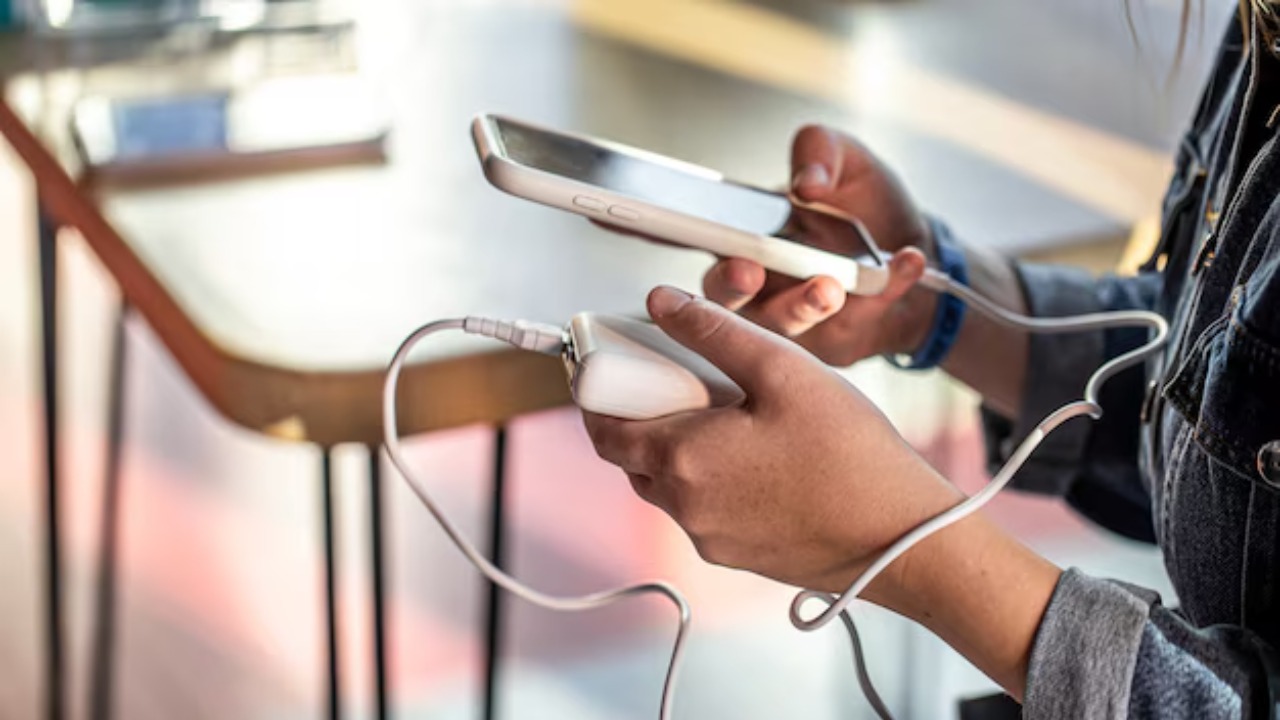

Southwest passengers who toss a power bank into their bag as casually as a phone charger are running into a new reality: the airline is treating those little bricks as a serious safety risk. What used to be a background rule about lithium batteries has hardened into a set of restrictions that can get your charger pulled from a bag, your wheelchair repacked, or your mid‑flight Netflix session cut short. The policy shift is colliding with a broader crackdown on portable batteries across aviation, and it is catching travelers off guard.
At the heart of the change is a simple idea that has big consequences: if a lithium battery overheats, crews need to see it, reach it, and cool it down fast. That logic is driving Southwest to pull power banks out of checked luggage, limit how and where they can be used in the cabin, and tighten rules on mobility devices that rely on the same chemistry. For anyone flying with Southwest, a power bank is no longer a throw‑in accessory, it is a potential problem item that demands planning.
Southwest’s power bank rules, in plain language
Southwest has long followed the standard aviation playbook that treats lithium batteries as a fire risk, but it is now going further than many rivals in how it handles portable chargers. On its main customer site, Southwest.com, the airline directs travelers to detailed safety pages that spell out what can and cannot go in checked and carry‑on bags, and power banks are squarely in the spotlight. The core rule is that lithium batteries, including portable chargers and power banks, are not allowed in checked luggage at all, and must instead travel in the cabin where crew can respond if something goes wrong.
The airline’s own guidance on Traveling with lithium batteries makes that point explicit, listing portable chargers and power banks alongside e‑cigarettes and lighters as items that are “Not allowed in checked luggage.” Instead, Southwest caps travelers at up to 20 spare batteries, including power banks, in carry‑on bags, and expects those devices to be protected from short circuits and accidental activation. That baseline rule is now being reinforced at check‑in counters and gates, where agents are increasingly asking passengers to remove power banks from any bag that will be tagged and sent to the hold.
How Southwest’s policy became “first in industry”
What sets Southwest apart is not the basic ban on lithium batteries in checked bags, which is widely shared, but the way it has framed and enforced its charger rules as a kind of first‑mover safety stance. Travel industry coverage has described how the airline has leaned into a “first‑in‑industry” approach to portable chargers, highlighting that its list of items “Not allowed in checked luggage” explicitly calls out lithium batteries, portable chargers or power banks, e‑cigarettes, and lighters as a single high‑risk group. That grouping, detailed in analyses of Southwest’s charger ban, underscores how aggressively the airline is treating the devices compared with some competitors.
Other carriers, including United Airlines, have their own specific rules for lithium batteries, but Southwest’s decision to spotlight portable chargers as a distinct category has made its policy more visible and, for some travelers, more jarring. By explicitly naming portable chargers and power banks in the same breath as e‑cigarettes and lighters, the airline is signaling that these are not benign accessories but potential ignition sources. That framing helps explain why Southwest is comfortable being out front on restrictions that some other airlines still handle more quietly through general battery rules.
Why lithium batteries keep regulators up at night
Behind the airline’s posture is a simple physics problem: lithium‑ion cells pack a lot of energy into a small space, and when they fail, they fail hot. Aviation regulators have long warned that a damaged or defective battery can enter thermal runaway, a chain reaction that causes temperatures to spike and can ignite nearby materials. Guidance on rules for power banks on flights notes two core principles that flow from that risk: passengers must keep power banks in the cabin, not in checked bags, and they cannot bring banks that exceed 160 watt‑hours without special approval.
Those watt‑hour limits are not arbitrary. They are designed to keep the energy content of any single device within a range that cabin crews can realistically manage with fire containment bags, water, and diversion options. That is why even consumer‑facing brands now explain that a typical 20,000 mAh charger, which converts to roughly 74 watt‑hours, is within the usual airline limit. Anker, for example, tells customers that a 20,000 mAh unit is generally allowed on board and that “Yes, they are generally allowed” because a standard Power Bank of that size usually falls under the 100 to 160 watt‑hour cap. Southwest’s rules sit on top of that regulatory floor, tightening how and where those batteries can be carried and used.
From checked bags to cabin seats: what actually changed
The most visible shift for Southwest customers is the clampdown on where portable batteries can physically sit during a flight. Earlier guidance allowed some ambiguity about whether a small charger buried in a checked suitcase might slip through, but the airline has now drawn a hard line. Coverage of the new policy explains that Southwest will no longer allow portable batteries to be stored in passenger bags that are checked, period. Instead, any such device must be removed and kept in the cabin, where crew can respond if it overheats or catches fire during travel.
Once in the cabin, the rules keep tightening. Reporting on Now Southwest Airlines tightening rules around portable chargers describes how the airline wants any power bank in active use to remain visible and accessible, not wedged deep in a seat pocket or buried under blankets. The logic is straightforward: if a device starts to swell, smoke, or hiss, crew need to see it and grab it quickly. That is why some flight attendants are now asking passengers to keep power banks on the tray table or in a hand, and why they may intervene if a cable snakes into a bag that looks like it is hiding a charging brick.
Mid‑flight charging is no longer a free‑for‑all
For many travelers, the most surprising part of Southwest’s shift is not what happens at the check‑in counter but what happens at 35,000 feet. A widely shared clip titled New Southwest Airlines Rule for Power Banks captures a flight attendant explaining that mid‑flight you are not allowed to charge your phone with a portable power bank if the device cannot be kept in sight. The key phrase is “Mid flight,” because the airline is drawing a distinction between simply carrying a power bank and actively using it in a way that might mask early signs of failure.
That nuance has been echoed in more formal coverage, which notes that Southwest is not banning power banks outright in the cabin but is restricting how they can be used. The airline wants cords and devices arranged so that both crew and passengers can spot trouble quickly, and it is prepared to tell customers to unplug if a setup looks unsafe. For frequent fliers used to tucking a charger into a backpack under the seat and running a cable up to a phone, that is a meaningful change in habit, and it is one reason some passengers now feel that their power bank is being treated as a problem rather than a convenience.
Wheelchairs, scooters, and the lithium squeeze
The same safety logic is reshaping how Southwest handles mobility devices, which often rely on large lithium batteries that dwarf the cells inside a phone charger. Earlier in the policy rollout, the airline began requiring passengers to remove lithium batteries from checked wheelchairs and scooters and bring them into the cabin instead. Coverage of the new mobility rules notes that Southwest started that practice in Septem as part of a broader “battery” security rule that will affect all passengers beginning January 11, 2026.
More detailed reporting on the wheelchair policy explains that Travelers who use powered wheelchairs or scooters must now ensure that any removable Lithium battery is detached and carried into the cabin before the device is checked. To ease the transition, Southwest has allowed some exceptions, but it has also warned that certain older mobility devices that cannot meet the new requirements will no longer be accepted for transport. A separate summary of what is changing notes that, What is changing in a nutshell is that, As of September, Southwest is aligning its wheelchair rules with an FAA safety alert that treats large lithium batteries as a special hazard.
Ahead of the curve, or out on a limb?
Southwest’s stance on power banks is not happening in a vacuum. Federal security officials have been tightening their own rules on portable batteries, and that backdrop helps explain why the airline feels comfortable moving aggressively. A rundown of recent security changes notes that Portable batteries and power banks were banned by TSA before the summer travel season, at the same time TSA began mandating Real ID for security checks. That federal move, which targeted certain types of portable rechargers, signaled that regulators see these devices as a category worth singling out.
Within that context, Southwest’s decision to go further on its own flights looks less like an outlier and more like an airline trying to get ahead of the next incident. A detailed explainer on why the carrier is restricting power banks puts it bluntly: Answer: Because they could catch fire. The piece compares the risk to the Galaxy Note phone recalls, warning that a defective power bank can overheat and start a fire in a confined space. When framed that way, the airline’s choice to treat power banks as a problem to be tightly managed, rather than a neutral accessory, starts to look less like overreach and more like risk containment.
How Southwest explains the risk to passengers
Southwest has not been shy about telling customers why it is doing this. In a detailed advisory, the airline framed its new stance as an urgent safety message, with language like Southwest Airlines Issues Urgent Warning Over Using Portable Power Banks and a blunt question: Here is Why are power banks so dangerous? The answer, again, is that a faulty unit can overheat, vent, and ignite nearby materials, especially if it is wedged into a tight space with poor airflow.
Technical experts consulted in coverage of the policy have echoed that concern, pointing to a pattern of recalls and safety incidents involving rechargeable batteries. One analysis of Southwest Has a Strict New Safety Rule About Chargers, What Travelers Should Know, notes that Southwest Airlines has enacted a policy that looks more like those used by some airlines based in Asia, where regulators have already grappled with a wave of battery‑related incidents. By tying its explanation to that global pattern, Southwest is effectively telling passengers that the risk is not hypothetical, it is a documented problem that other carriers have already had to confront.
Why some travelers feel singled out
Even with that safety rationale, the way the rules land on passengers can feel uneven. Mobility advocates have raised concerns that the wheelchair and scooter rules, in particular, put extra burdens on disabled travelers who rely on heavy batteries to move through airports and aircraft cabins. Coverage of the new mobility device policy notes that Additional restrictions coming in 2026 will limit certain batteries to 160 watt‑hours each, a cap that could force some users to change equipment or face new documentation hurdles.
On the charger front, some passengers are simply confused. Local coverage of Why make this change? quotes safety experts who say that at least a couple of airlines UL is working with are reevaluating the risks associated with rechargeable batteries, suggesting that Southwest is not alone in rethinking its approach. Yet from a traveler’s perspective, the result can feel like a moving target: a power bank that was fine last year is suddenly treated like a suspect item, and the rules about where it can sit, how it can be used, and whether it can stay plugged in seem to vary from crew to crew.
Southwest versus other airlines: a growing gap
One reason the policy feels so jarring is that Southwest is now banning items that other airlines still allow, at least in some contexts. A detailed comparison of carrier rules notes that Southwest Airlines bans item other airlines allow, specifically the packing of spare lithium batteries and power banks in checked luggage. While the ban on packing spare lithium batteries and power banks continues to be standard in many places, Southwest is layering on additional scrutiny inside the cabin, including tighter controls on chargers inside the cabin that go beyond what some competitors currently enforce.
Industry observers have pointed out that United Airlines also has specific rules for lithium batteries, but Southwest’s decision to spotlight portable chargers as a distinct risk category has widened the perception gap. Some carriers still treat power banks as just another battery, subject to general watt‑hour limits, while Southwest is actively messaging them as a unique hazard. That divergence raises a practical problem for travelers who hop between airlines: a setup that passes without comment on one carrier might trigger a bag search or a mid‑flight warning on Southwest, even though the underlying hardware has not changed.
What to do if you are flying with a power bank
For passengers trying to navigate this landscape, the first step is to treat a power bank as a regulated item, not an afterthought. That means checking the capacity label to confirm it is under the 100 to 160 watt‑hour limit, keeping it out of checked bags, and packing it in a way that keeps terminals covered and prevents accidental activation. It also means being ready to show the device to crew, keep it in sight while charging, and unplug if a flight attendant says a particular setup is not allowed. In practical terms, that might mean using shorter cables, avoiding daisy‑chained devices, and keeping the charger on the tray table rather than buried in a backpack.
It is also worth remembering that Southwest’s rules sit on top of federal security requirements, not instead of them. TSA’s decision to target certain portable rechargers, the FAA’s watt‑hour caps, and the airline’s own internal risk assessments all point in the same direction: lithium batteries are here to stay, but they are going to be treated with increasing caution. For now, that means your power bank may be flagged as a problem if it is in the wrong place at the wrong time. Over the longer term, it is likely to mean more standardized labeling, smarter battery designs, and clearer communication from airlines about what is allowed. Until then, the safest assumption on Southwest is that if a device contains a Lithium cell, it deserves your full attention from check‑in to landing.
More from MorningOverview