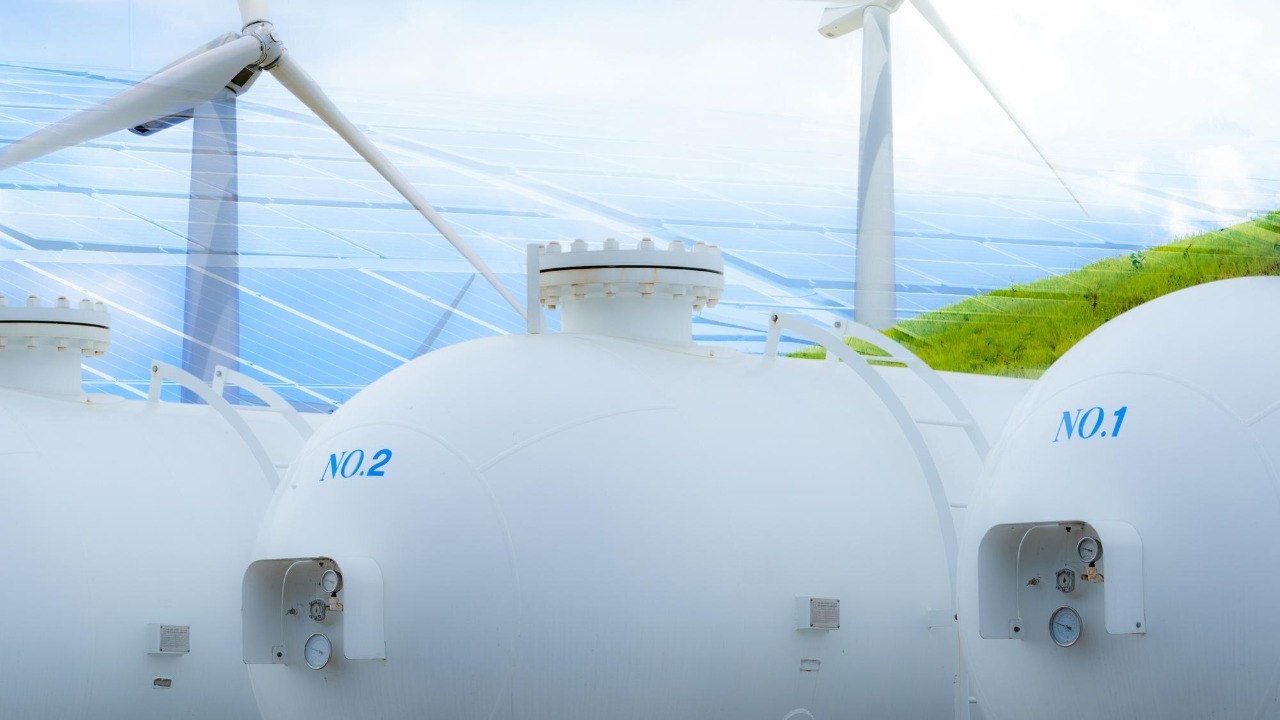

Green hydrogen has long been billed as a clean fuel for heavy industry, shipping, and long-duration storage, but its price has stubbornly stayed above what most markets will tolerate. A new solar-driven system that replaces oxygen production with sugar chemistry points to a way around that cost barrier, turning agricultural waste into both cheaper hydrogen and useful byproducts. By rethinking what happens at the anode, researchers are effectively swapping an energy-hungry side reaction for a revenue stream.
Instead of splitting pure water into hydrogen and oxygen, the approach couples sunlight with biomass-derived sugars so that the “other half” of electrolysis generates valuable chemicals rather than low-value oxygen. That shift, combined with careful catalyst design, is what allows the process to cut the electricity bill that dominates green hydrogen costs while also tapping into the economics of the circular bioeconomy.
Why green hydrogen is still too expensive
For all the hype around hydrogen, the green variety produced from renewable electricity still struggles to compete with fossil-based alternatives. The core problem is that conventional electrolysis demands large amounts of power to split water into hydrogen and oxygen, and that power is not free even when it comes from solar or wind. Capital costs for electrolyzers and the need to overbuild renewable capacity to run them at high utilization only add to the bill, which is why the production of green hydrogen remains significantly more expensive than hydrogen made from natural gas with no carbon capture.
In that context, any technology that can lower the voltage required for electrolysis or extract extra value from the process has an outsized impact on the final cost per kilogram. The solar-powered system developed by Jan and Solar does both by redesigning the anodic reaction so that it no longer wastes energy producing oxygen that is often vented or sold at low prices. Instead, the setup uses agricultural residues as a feedstock, which are typically cheap or even negative-cost materials, and turns them into hydrogen plus higher-value chemicals, directly addressing the cost gap that has held back large scale deployment of green hydrogen.
Rearranging electrolysis chemistry with waste
The key innovation in the new work is a deliberate decision to abandon oxygen evolution as the default partner reaction in water splitting. Rather than forcing the anode to generate O2, the researchers feed in biomass-derived sugars so that the cell oxidizes those molecules while the cathode still produces hydrogen. This rearranged electrolysis chemistry lowers the energy barrier for the anodic reaction, which means the system can run at lower voltages and therefore lower electricity consumption for each unit of hydrogen produced.
Jan and Solar describe a solar-powered system that uses agricultural waste as the source of these sugars, effectively turning farm residues into a reagent that makes hydrogen cheaper to produce. In parallel reporting, Aman Tripathi notes that the researchers have successfully produced green hydrogen at a price that undercuts conventional routes by leveraging this waste-fed anode, with the process framed explicitly as “rearranging electrolysis chemistry with waste” to cut costs while still relying on sunlight as the primary energy input. By treating biomass not as a fuel to burn but as a partner in electrolysis, the team opens a new pathway for integrating agriculture and clean energy.
Inside the solar co-electrolysis setup
At the heart of the system is a solar co-electrolysis configuration that couples photovoltaic power with a specially designed electrolyzer. Instead of a standard water-splitting stack, the device is built to accept a solution of biomass sugars at the anode while water feeds the cathode, allowing both sides of the cell to participate in useful chemistry. The solar component provides the electrical energy, while the co-electrolysis architecture ensures that every electron contributes to both hydrogen generation and the transformation of organic molecules into value-added products.
Researchers in China and Singapore have demonstrated that this solar-powered co-electrolysis route can produce hydrogen at prices that are significantly lower than conventional green pathways by converting biomass sugars into chemicals such as formate, a step that has been difficult to achieve efficiently in earlier systems. One of the study’s senior researchers emphasized that the catalyst design reshapes both the electrochemical environment and the selectivity of the reactions, which is crucial for maintaining high hydrogen output while steering the sugar oxidation toward commercially relevant products. That combination of tailored catalysts and integrated solar input is what turns a lab concept into a potentially scalable platform.
How swapping oxygen for sugar cuts the power bill
Conventional water electrolysis spends a large share of its energy budget on the oxygen evolution reaction, which is kinetically sluggish and demands a high overpotential. By replacing that reaction with the oxidation of biomass sugars, the new system effectively lowers the voltage needed to drive the cell, because the sugar oxidation pathway is thermodynamically and kinetically more favorable. In practical terms, that means fewer kilowatt-hours per kilogram of hydrogen, which directly reduces operating costs in any market where electricity is not free.
The solar co-electrolysis route described in the recent study presents a highly efficient approach to solar hydrogen production by pairing water electrolysis at the cathode with the selective conversion of biomass-derived molecules at the anode to create value-added chemical products. Because the anodic process now yields something that can be sold, such as formate or other intermediates, the economics of the plant are no longer tied solely to the price of hydrogen. Instead, revenue from these co-products can offset the cost of electricity and equipment, making it easier for project developers to finance installations that rely on intermittent solar power.
From agricultural waste to circular bioeconomy
One of the most striking aspects of the technology is its reliance on agricultural waste as a feedstock, rather than on food-grade sugars or purpose-grown energy crops. Farm residues, processing byproducts, and other biomass streams are often underused or even treated as disposal problems, yet they contain complex carbohydrates that can be broken down into the sugars needed for the anodic reaction. By tapping into these streams, the solar system not only avoids competing with food production but also creates a new revenue channel for rural economies that already handle large volumes of organic waste.
Researchers in China and Singapore frame this approach as a bridge between green hydrogen production and circular bioeconomy applications, since the same catalyst and reactor design that lowers hydrogen costs also enables the conversion of biomass into chemicals that can reenter industrial value chains. One of the study’s senior researchers highlighted that the catalyst architecture is central to this vision, because it allows the system to maintain high selectivity for both hydrogen at the cathode and targeted oxidation products at the anode, turning what would otherwise be waste into a portfolio of marketable outputs. In that sense, the technology is as much about reimagining agricultural residues as it is about decarbonizing energy.
Efficiency lessons from other infrastructure
The logic behind this solar co-electrolysis system echoes a broader trend in infrastructure, where efficiency gains and smarter process integration deliver both environmental and economic benefits. In wastewater treatment, for example, operators have learned that optimizing energy use can generate direct savings, lower fuel costs, and reduce the need for new investment in capacity. A case study from Ireland shows that the economic benefits via energy efficiency to a WWTP can be substantial and can be achieved through technological, behavioral, or economic changes, underscoring how process redesign often pays for itself.
I see the hydrogen work as part of the same playbook, but applied to electrochemical plants instead of treatment facilities. By redesigning the anode reaction and integrating solar power with biomass conversion, the researchers are effectively applying an energy-efficiency mindset to the core chemistry of hydrogen production, not just to the surrounding equipment. The lesson from the WWTP example is that when operators treat energy as a controllable variable rather than a fixed cost, they unlock new business models, and the solar co-electrolysis route appears to be doing exactly that for green hydrogen.
Industrial and regional implications
If the cost reductions reported for this solar co-electrolysis route hold up at scale, the implications for heavy industry and regional development are significant. Sectors such as steelmaking, ammonia production, and long-haul transport have been waiting for a credible path to affordable green hydrogen that does not depend solely on subsidies or carbon prices. A process that can deliver lower-cost hydrogen while also producing chemicals like formate from agricultural waste could give industrial clusters a reason to co-locate with farming regions, creating new patterns of investment and employment.
The fact that the proof-of-concept work comes from teams that include Researchers in China and Singapore suggests that the technology may first find traction in regions with both strong solar resources and abundant biomass residues. At the same time, the reporting by Aman Tripathi on the role of Jan and Solar in demonstrating a solar-powered system that swaps oxygen for sugar indicates that the idea is not confined to a single geography or research culture. As more groups test variations of the concept, I expect to see regional adaptations that reflect local crops, waste streams, and industrial demand, turning a single chemistry insight into a family of deployment strategies.
What comes next for sugar-fed hydrogen
For now, the solar co-electrolysis approach remains at the research and early demonstration stage, with key questions still to be answered about durability, scaling, and integration with existing infrastructure. Catalyst stability in the presence of real-world biomass feedstocks, which can contain impurities and variable compositions, will be a critical factor in determining whether the process can run continuously at industrial plants. There is also the challenge of building supply chains that can reliably deliver preprocessed sugars from agricultural waste to electrolyzer sites without eroding the cost advantages that the chemistry provides.
Even with those caveats, the direction of travel is clear. By showing that a solar-powered system can use agricultural waste to produce hydrogen at lower cost while generating valuable co-products, Jan, Solar, and their collaborators have expanded the design space for green hydrogen technologies. The study that presents a highly efficient approach to solar hydrogen production by pairing water electrolysis with selective biomass conversion gives policymakers and investors a concrete example of how to align climate goals with rural development and industrial competitiveness. As with the best innovations in energy and infrastructure, the power of this idea lies in its ability to solve several problems at once, using chemistry to connect fields, factories, and the sun.
More from MorningOverview