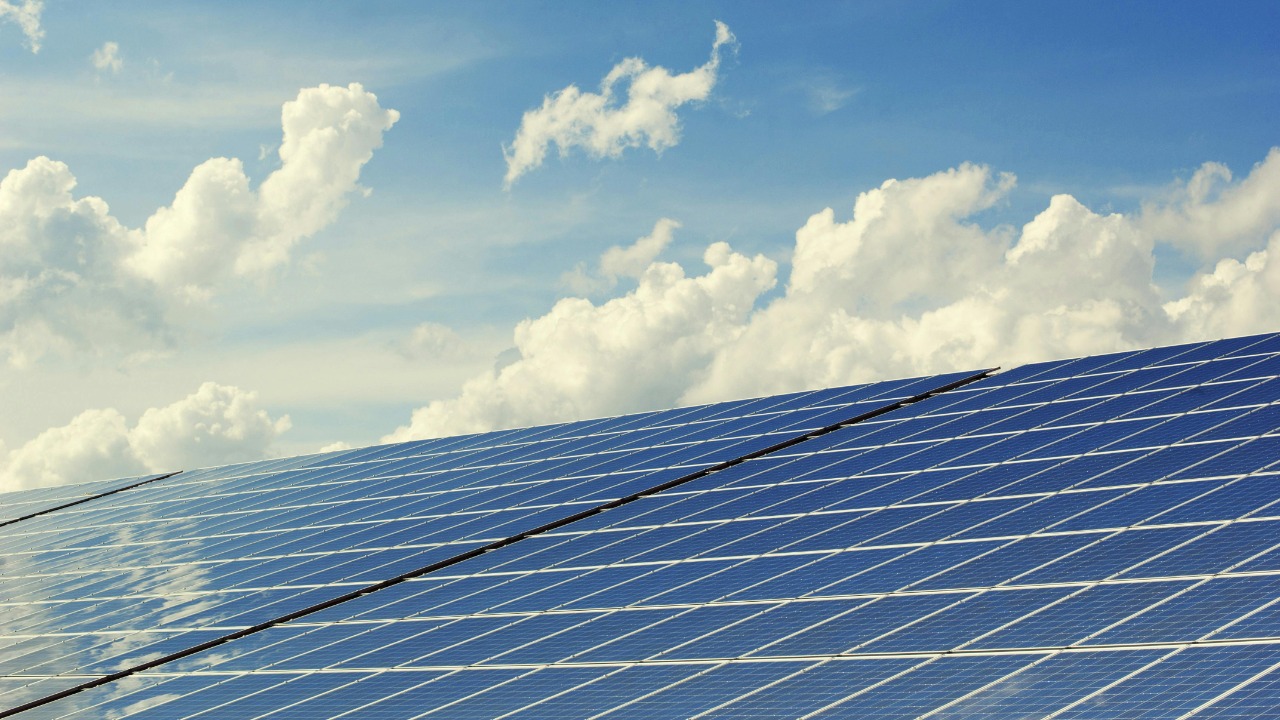

Solar power has quietly pulled ahead of coal and gas in Germany’s electricity mix, even though the country is better known for grey skies than blazing sunshine. In 2025, solar’s share of German electricity jumped to 18 percent, overtaking fossil fuel generation and turning a supposed climatic disadvantage into a test case for how far renewables can go in a temperate, industrial economy. I see this shift as less a surprise than a signal that policy, prices and public buy‑in can matter more than latitude.
From cloudy reputation to solar frontrunner
Germany is not a country known for its exposure to the Sun, and for years that simple fact was used as an argument against betting heavily on photovoltaics. Yet the scale of installed capacity has grown so large that, at times, the country is overwhelmed with sunny electricity and wholesale prices plunge. That contrast between reputation and reality is now central to understanding how a place with modest irradiation has managed to let solar outcompete coal and gas on its grid.
The latest figures show how far this has gone. Solar rose to be 18 percent of German electricity supply in 2025, up from 14 percent in 2024, a leap that pushed it ahead of both coal and gas in the power mix. According to the German Solar Industry, that surge is helping the country move toward legally binding climate and energy targets, even as critics still point to cloudy winters. The fact that Jan reports this milestone for Solar in Germany underscores how quickly a technology once dismissed as marginal has become a backbone of the system.
How solar overtook coal and gas
The crossover point where solar generation beats coal and gas is the product of two converging trends: relentless growth in photovoltaic capacity and a rapid retreat of fossil fuel plants. On the one hand, Germany has been installing heaps of solar power on rooftops, fields and industrial sites, so that midday output now routinely crowds out conventional generators. On the other, coal and gas units are running fewer hours, squeezed by carbon prices, higher fuel costs and competition from renewables, which lowers their share of annual electricity production even before plants are formally shut.
Jan reports that Solar rose to 18 percent of supply in 2025, while coal and gas each fell below that mark, confirming that solar power now overtakes coal and gas in Germany, a country with little sun. All of this underlined the need to get off of fossil fuels even more, as volatile gas markets and climate impacts made the old system look increasingly risky. In that context, the fact that Germany has managed to let Solar outstrip fossil generation without abundant sunshine is less an anomaly than a preview of what other temperate countries could do if they matched its build‑out pace.
Record installations and the “Photovoltaic Boom”
Behind the changing generation mix sits a construction boom that has turned solar into a mass‑market technology. Over the past year, Germany has added roughly one million new systems, from small residential arrays to large commercial roofs and ground‑mounted parks. That wave of projects has pushed installed capacity to a new record and made solar a visible feature of everyday life, from village barns to city logistics hubs.
The scale of this expansion is captured in the description of a Photovoltaic Boom in which Germany Continues to add One Million New Solar Installations And New Record Capacity Solar each year. That boom is not just about utility‑scale plants feeding the wholesale market, it is also about households and small businesses cutting their bills and selling surplus power back to the grid. When I look at those numbers, it is clear that the energy transition has reached the people, and that broad social participation is one reason solar has been able to overtake coal and gas so quickly.
Why low sunlight is not a deal‑breaker
Far from being a sun‑drenched country, Germany boasts on average fewer peak sun hours than southern Europe or much of the United States, yet it has still managed to build one of the world’s largest solar fleets. The key is that modern panels are efficient enough to make use of diffuse light, and the economics depend more on annual output and system cost than on postcard‑perfect skies. In practice, a slightly lower yield per panel can be offset by installing more capacity, especially when land use rules and grid connections are designed with that in mind.
Technical and economic factors both help explain why low sunlight has not blocked progress. Module efficiencies have climbed steadily, while installation and financing costs have fallen, so that even in a temperate climate the levelized cost of solar electricity can undercut fossil alternatives. As one detailed overview of Solar power in Germany notes, Far from being a sun paradise, the country has still seen strong growth thanks to ambitious renewable targets and dwindling panel prices. In my view, that combination shows that policy and technology can overcome geography in the energy transition.
Policy swings, Asian competition and a second wind
Germany’s solar story has not been a straight line upward. In the early years of its feed‑in tariff, the country became a manufacturing hub, but before long, cheaper Asian competitors and subsidy cuts forced most of those domestic producers out of business. Installation rates slowed as policymakers trimmed support and investors digested the new economics, prompting some to argue that the solar experiment had peaked.
Recently, however, solar installations have surged again, driven by higher carbon prices, energy security concerns and another round of supportive rules. An analysis of Solar power in Germany notes that But before long, Asian competitors and subsidy cuts reshaped the industry, and Recently, solar installations have picked up again on the back of ambitious renewable targets and dwindling panel prices. I read that history as a reminder that industrial policy missteps can hurt, but they do not have to derail the broader shift to renewables if long term climate and energy goals remain in place.
Fossil plants under pressure
As solar and other renewables expand, fossil fuel power plants are closing at a record rate in Germany, a rate that we have never seen before. Coal units in particular are being retired or mothballed as they lose running hours and face stricter emissions rules, while gas plants are increasingly relegated to balancing roles rather than baseload. That structural change is as important as the growth of solar itself, because it locks in lower fossil generation even when fuel prices temporarily fall.
One widely shared video report on Germany describes how fossil fuel power plants are being DESTROYED in economic terms by the rise of renewable energy, with operators struggling to justify investments in assets that may be stranded within a decade. When I compare that narrative with the official generation statistics, the pattern is clear: as solar eats into daytime demand, coal and gas plants run fewer hours, earn less revenue and eventually exit the market. That is the backdrop against which solar has been able to surpass them in annual electricity production.
Cost collapse and the economics of solar
The financial case for solar in Germany has been transformed by a dramatic fall in technology costs. Prices for solar, wind, battery storage continue to fall, and in the last ten years the cost of solar panels has dropped by more than 80 percent, according to energy economists. That decline has turned what was once a heavily subsidized niche into one of the cheapest sources of new electricity, even in countries without exceptional sunlight.
In interviews about the global energy transition, experts stress that these cost trends are not a temporary blip but the result of learning curves and scale effects that will keep pushing prices down. One assessment notes that Prices for solar, wind and batteries have fallen so far that clean energy could save the world trillions compared with sticking with fossil fuels, a conclusion that applies directly to Germany’s choice to keep building photovoltaics despite modest sunshine. From my perspective, once solar became the cheapest marginal source of power, its eventual overtaking of coal and gas was a matter of timing rather than possibility.
Grid challenges and moments of “sunny electricity” overload
Success has brought its own headaches. On bright days, the combination of rooftop and utility‑scale solar can flood the grid with power, pushing wholesale prices toward zero or even negative territory. Germany is not a country known for its exposure to the Sun, However, the scale of installed solar capacity means that on some summer weekends the country is overwhelmed with sunny electricity and must export surplus power or curtail generation. Managing those peaks without destabilizing the system has become a central task for grid operators.
These episodes highlight both the promise and the complexity of a solar‑heavy system. On the one hand, they show that clean electricity can be abundant enough to challenge old assumptions about scarcity and price. On the other, they expose the need for more flexible demand, storage and cross‑border interconnections to soak up excess output. A detailed look at how Germany can afford its energy shift notes that the country is sometimes overwhelmed with sunny electricity, forcing it to rethink market rules and infrastructure. I see those growing pains as evidence that the transition is real enough to stress the old system, not a reason to slow down.
From early experiments to central pillar
Germany’s current position, where solar outcompetes coal and gas, rests on decades of experimentation and political debate. Early support schemes were criticized for being expensive, and the collapse of domestic manufacturing raised questions about industrial strategy. Despite challenges, solar energy is now more efficient, widespread and economically attractive than ever, and the coming years are expected to see it become a central pillar of Germany’s energy transition.
A historical overview of how Despite those setbacks, policymakers and citizens kept backing renewables, shows that persistence has paid off. What began as a niche technology supported by generous tariffs has matured into a mainstream power source that can stand on its own economics and compete directly with fossil fuels. From my vantage point, the fact that solar has beaten coal and gas in a country with relatively low sunlight is less a quirk of German policy than a proof of concept for the next phase of the global energy transition.
What Germany’s solar lead means for other countries
Germany’s experience carries implications far beyond its borders. If a temperate, industrialized country with limited exposure to the Sun can build enough solar capacity to overtake coal and gas, then arguments that northern climates are unsuitable for large scale photovoltaics look increasingly weak. The combination of falling technology costs, supportive policy and public engagement has shown that geography is not destiny when it comes to clean power.
For governments weighing their own energy choices, the German case suggests that the main constraints are political and institutional rather than physical. Clear targets, stable rules and investment in grids and storage can unlock similar growth elsewhere, even without desert‑level sunshine. When I look at how Jan, Solar and the German Solar Industry describe the current 18 percent share of solar in Germany’s electricity mix, I see a benchmark that other countries can aim to surpass, not an outlier that cannot be replicated. The real question now is how quickly others will choose to follow.
More from Morning Overview