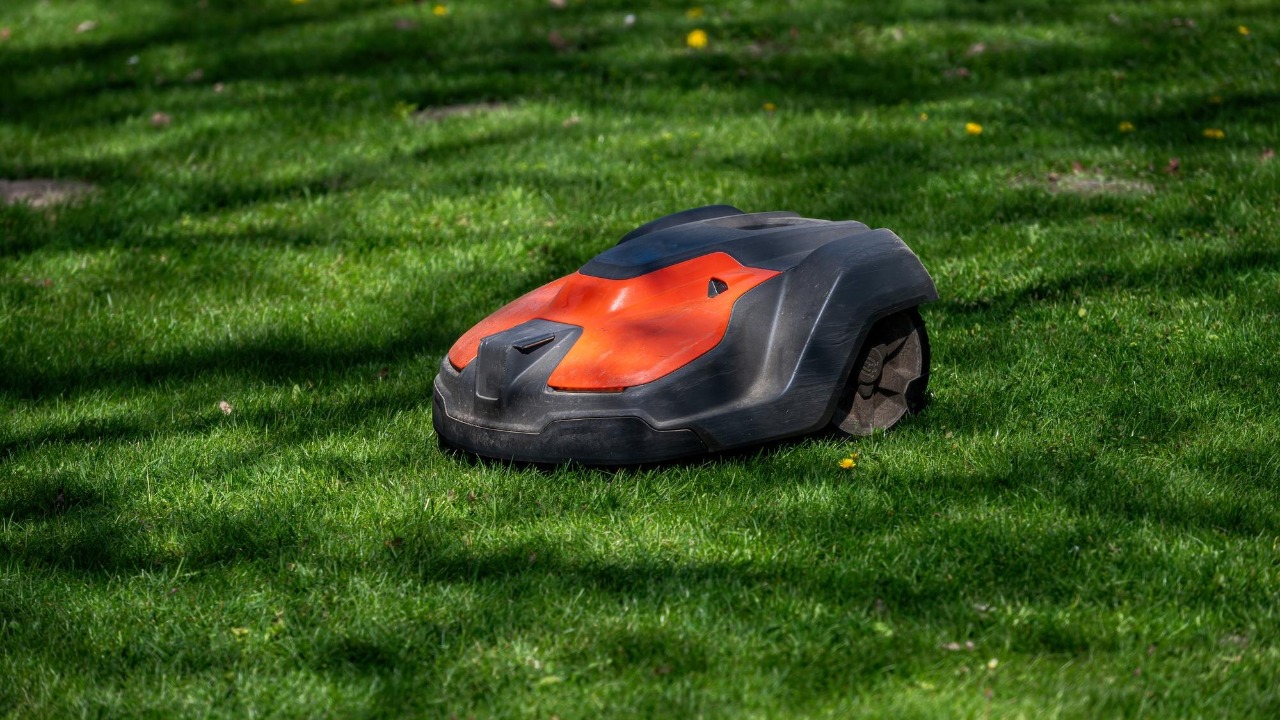

Segway’s latest robot mower is turning a chore that once swallowed entire weekends into a slow, steady background process. Instead of racing across turf like a gas-powered beast, the Navimow family quietly chips away at the job, finishing roughly an acre of grass in about 11 hours of actual cutting spread across the day. That pace sounds glacial until you factor in that the machine does the work while you are doing anything else.
What I see in Segway’s approach is not a drag race with zero-turn tractors but a redefinition of what “fast” means in lawn care. By combining wire-free navigation, wide cutting decks and careful battery management, the company is betting that homeowners will trade raw speed for consistency, precision and the freedom to ignore their lawns for weeks at a time.
How Segway’s robot stacks up on raw mowing speed
To understand why an 11‑hour acre is notable, it helps to look at the broader robot market. A widely cited mowing calculator pegs typical robot lawn mowers at around 12 hours of autonomous work to cover one acre, while a commercial zero‑turn mower can rip through the same area in roughly 20 minutes if the operator is efficient. That gap illustrates the tradeoff: robots move slowly, but they do not demand your time, fuel runs or ear protection.
Segway leans into that tradeoff with the Navimow X‑series, which is tuned for continuous, unattended operation rather than headline-grabbing top speeds. The company’s own promotional material for How Fast Can highlights that The Segway Navimow X3 moves at a top speed of “300 meters per hour,” a figure that sounds modest until you remember it is cutting, navigating and avoiding obstacles the entire time. In practice, that slow, methodical pace is what allows the mower to nibble away at a full acre over roughly 11 hours of runtime without tearing up turf or missing patches.
Inside the Navimow X4: coverage, cutting width and “One Day” claims
The workhorse behind Segway’s one‑acre promise is the Navimow X4, a Robotic Lawn Mower built for larger properties. On its product page, Segway pitches the X4 as a “Large-Yard Master with Turf-Safe Xero-Turn™ AWD,” positioning it as the step up from smaller models in the X4 Series that homeowners can View All alongside the compact Navimow i110. The X4’s all‑wheel drive and tight turning radius are designed to keep speed consistent even on slopes and around landscaping, which is crucial if you are trying to hit a predictable acreage target in a single day.
Segway’s own marketing for the X4 leans heavily on coverage metrics, promising that it can Cover up to 1 Acre in just One Day. The company credits its MowMentum™ system and a 17‑inch cutting deck that “Covers 1.8× more area per pass,” which effectively reduces the number of laps the robot needs to make. That wider swath, combined with smart routing, is how Segway gets from the generic 12‑hour benchmark for robots down to an 11‑hour, one‑day cycle without asking the mower to sprint across the yard.
Wire-free navigation and the evolution of Segway Navimow
Speed is only useful if the mower knows where it is going, and here Segway Navimow has tried to differentiate itself by ditching the traditional perimeter wire. In its official documentation, the company describes how Segway Navimow pioneered residential robotic lawnmowers without boundary wires and launched Navimow the H Serie as part of that push. By relying on satellite positioning and virtual boundaries instead of buried cable, the system can maintain a consistent pattern and avoid the random wandering that slows many early robot mowers.
The same philosophy carries into the newer i‑series and X‑series hardware, which are presented as part of a broader Navimow ecosystem rather than one‑off gadgets. The Navimow X4 sits at the top of that stack for larger lawns, while the Navimow i110 Robotic Lawn Mower is pitched for smaller yards and slopes, with the site explicitly labeling it as part of the X4 Series and calling it a Navimow Robotic Lawn Mower for Slopes & Small spaces. In both cases, the wire‑free navigation is what lets Segway promise repeatable coverage times, because the mower is not wasting energy re‑finding a physical boundary every time it leaves the charging dock.
Battery, charging and the “two times faster” efficiency claim
Covering an acre in roughly 11 hours is not just about how quickly the blades spin, it is about how often the mower has to stop and recharge. Segway’s X‑series marketing leans on battery performance, with one retailer describing how the Segway Navimow X3 Series is Boasting ultra‑fast charging capabilities and claiming an efficiency level two times faster than unspecified rivals. That kind of turnaround matters because every hour spent on the dock is an hour not spent cutting, and it is the ratio of mowing time to charging time that ultimately determines how much lawn you can finish in a day.
Segway’s own X4 materials echo that focus on uptime, emphasizing “Maximum Coverage in Every Pass” and the ability to handle large‑yard coverage in a single One Day cycle. When I map those claims against the broader robot market, the picture that emerges is a mower that spends most of its day in motion, with short, frequent top‑ups instead of long, infrequent charges. That pattern is consistent with the 11‑hour acre figure: the mower may be awake for longer than that, but the cumulative cutting time, spread across multiple sessions, adds up to a full acre of finished turf by the time the sun goes down.
Shopping data, real-world pricing and what “Product” actually means
For homeowners trying to decide whether an 11‑hour robot is worth the investment, the next question is usually price. Here, Google’s Shopping Graph plays a quiet but important role, aggregating Product information from brands, stores and other content providers so that a search for “Segway Navimow X4” surfaces multiple listings, specs and reviews in one place. Those listings, which appear in shopping carousels, give a snapshot of how the X‑series is positioned against other robot mowers on cost and features.
Digging into those listings, I see multiple entries for Segway’s robotic lineup, including variants surfaced through aggregated product feeds and another cluster of offers tied to retail catalogs. While the exact prices vary by seller and region, the pattern is clear: Segway is not chasing the bargain-basement segment. Instead, it is positioning the Navimow X‑series as a premium option for owners who value wire‑free setup, wide cutting decks and the promise that their acre will be quietly handled in roughly 11 hours without their direct involvement.
More from Morning Overview