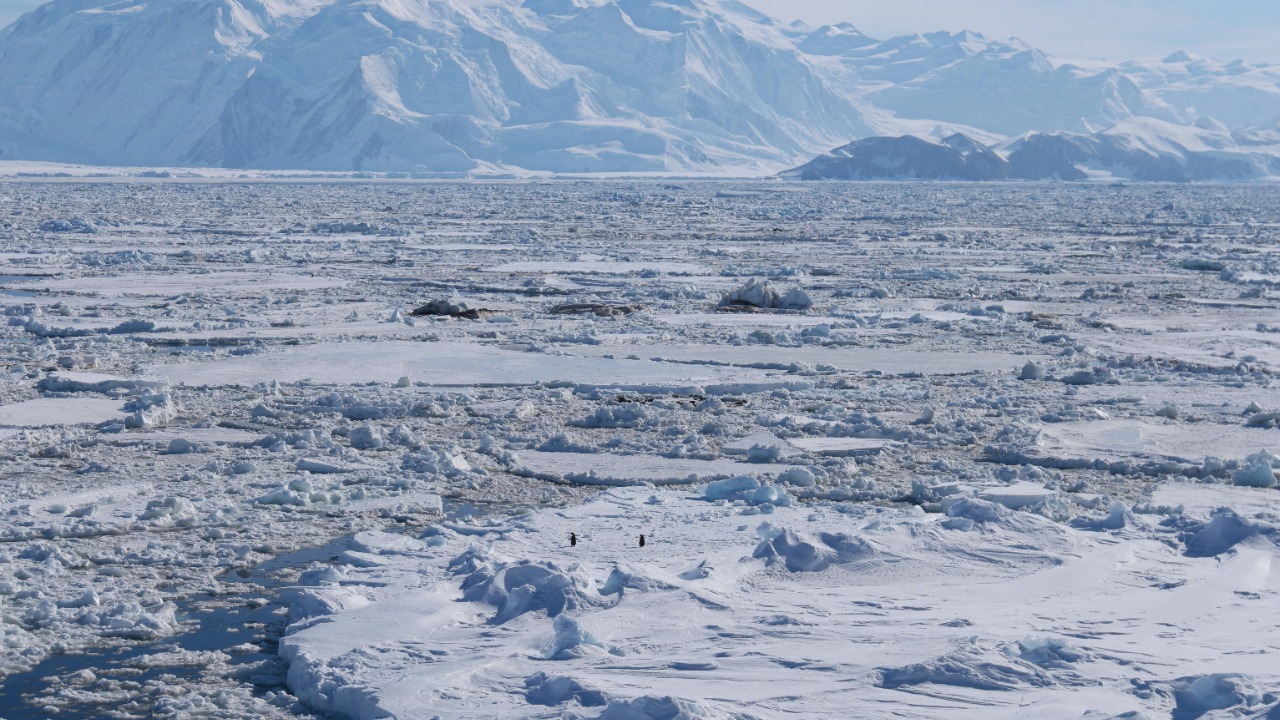

The Arctic is no longer a distant barometer of future risk, it has become the frontline of a climate system that is rapidly slipping into unfamiliar territory. Scientists now describe the region as having crossed into a qualitatively different state, marked by record heat, vanishing ice, and violent swings in weather that are already reverberating far beyond the polar circle. The warning is stark: what happens in this new Arctic will shape coastlines, food systems, and economies across the planet.
The Arctic’s climate has flipped into a new state
Researchers have been tracking Arctic warming for decades, but the latest assessments argue that the region has effectively shifted from a mostly frozen world into a different climate regime. The fast-warming Arctic is now so altered that conditions no longer resemble those of the mid twentieth century, with thinner sea ice, warmer oceans, and disrupted seasons becoming the norm rather than the exception. Scientists determined that the Arctic has entered a “new regime” driven by human emissions, with temperatures, ice loss, and ocean conditions now tracking far outside historical bounds.
That shift is not just academic. The Arctic is transforming faster and with more far reaching consequences than scientists expected when the first comprehensive assessments were compiled two decades ago, a change that now affects the Earth as a whole. The latest Arctic report card finds that The Arctic is warming at roughly four times the global average, reshaping sea ice, snow cover, and permafrost in ways that feed back into global weather and sea level. As the Arctic reacts to the planet warming gases that humans have pumped into the atmosphere, the region is swiftly transforming from a carbon sink into a growing source of emissions, with As the Arctic now releasing more carbon than it absorbs for the first time in the observational record.
Record heat and vanishing ice are rewriting the Arctic calendar
One of the clearest signs of this new era is the relentless rise in Arctic temperatures. Earlier this year, researchers reported that the Arctic experienced its hottest year on record, a finding that Druckenmiller highlighted as one of the most significant results in a global assessment of polar change. That heat is not just a number on a chart, it is eroding the seasonal rhythm that Arctic communities and ecosystems depend on, shortening winters, destabilizing permafrost, and pushing species like polar bears and walrus into ever smaller refuges.
The ice that once defined the region is retreating in lockstep. Scientists issue dire warning after making concerning discovery in the Arctic, finding that the winter sea ice maximum was the smallest in nearly 50 years, a change they described as “Certainly alarming.” That shrinking ice cover is part of a broader countdown to an ice free Arctic summer, with new research warning that the first season that melts practically all sea ice could arrive far sooner than many policymakers still assume. Scientists behind the Countdown study found that most models now point to a high likelihood of nearly ice free conditions within the next couple of decades, even if emissions are curbed.
Extreme weather is spreading across the polar world
As the ice thins and the air warms, the Arctic’s weather is becoming more violent and less predictable. Scientists warn that the region has entered a new phase of dangerous extreme weather, with Scientists documenting surges in winter storms, sudden thaws, and heavy rainfall that batter fragile coastlines and sea ice. The Arctic is going through a period of extreme weather that is already having cascading effects on its delicate ecosystems, from ice dependent seals to seabirds that rely on predictable spring blooms.
New analyses show that these extremes are not isolated flukes but part of a broader pattern. Researchers who examined conditions across the polar region found that the entire Arctic has seen an intense rise in extreme climate change over the past three decades, with heatwaves, drought stress, and winter warming now affecting a large share of the Arctic’s land area. A separate study concludes that Extreme events are spreading, with more rain falling onto snow and ice, and rising vulnerability for communities and wildlife under such pressure. Together, these findings support the view that the Arctic’s weather has crossed a threshold into a new era of volatility that will be difficult to reverse.
Rain on snow, shifting seasons, and life on the front line
For people living in the far north, the new Arctic is not an abstraction, it is reshaping daily life. In Alaska, climate specialist Even Thoman has described how winters are starting with more snow on the ground, only for it to melt faster as warm spells and rain intrude into what used to be reliably cold months. He notes that rain on snow, once a rarity, is becoming a regular occurrence in Alaska’s capital city, turning roads to ice, collapsing roofs, and sealing off the tundra from grazing animals that depend on access to vegetation. These shifts in precipitation and temperature are altering everything from subsistence hunting routes to the stability of runways and pipelines built on once frozen ground.
Across the wider polar system, scientists are seeing similar signs of strain. In a synthesis that spans both poles, researchers at ANTARCTICA (WKRC) report that Scientists have determined that the Arctic’s new regime is likely to bring even lower sea ice levels in coming decades, with some models pointing to ice free winters by 2050 if emissions remain high. That prospect would fundamentally alter marine ecosystems, shipping routes, and coastal erosion patterns, compounding the challenges already faced by Indigenous communities whose cultures and economies are tightly bound to sea ice and seasonal cycles.
A narrowing window to avoid an ice-free summer
Behind the headlines about record heat and extreme storms lies a quieter but equally consequential race against time. Climate modelers are revisiting their projections as new data pours in, and many now warn that the Arctic Ocean could see its first nearly ice free summer within a handful of years. Analyses of Ipcc and CLIMATE models in the latest CMIP6 ensemble suggest rapid thinning of summer ice, with some scenarios predicting complete melt between the early and late 2030s depending on warming levels. The New research on accelerated timelines underscores that even aggressive emissions cuts may not prevent that first ice free season, although they can still limit how often it occurs.
For policymakers, the message from scientists is that the Arctic’s terrifying new era is not a distant scenario but a present reality that will intensify without rapid action to curb fossil fuel use. The latest assessments emphasize that climate change driven by coal, oil, and gas is the primary force behind the rapid transformation of the high north, and that every fraction of a degree of avoided warming reduces the risk of crossing further tipping points. As I weigh the evidence from these studies, the conclusion is unavoidable: the Arctic has already stepped into a new climate age, and the rest of the world is following close behind.
More from Morning Overview