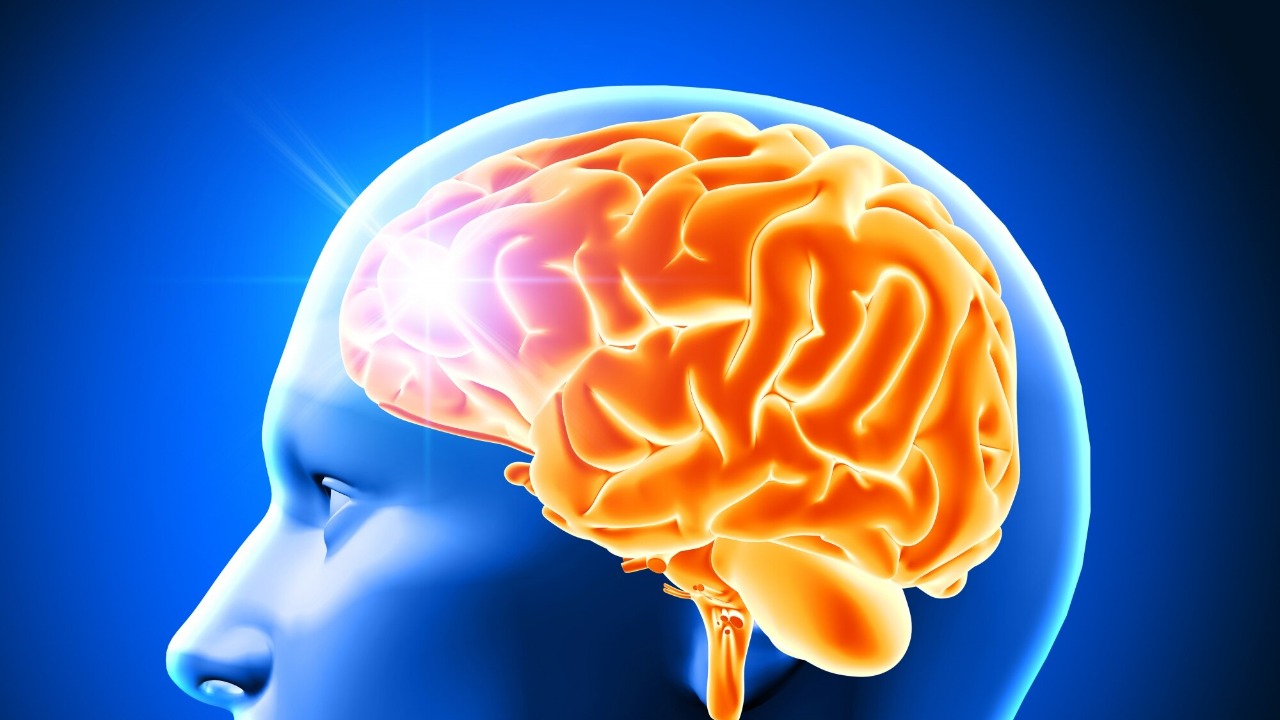

For generations, schoolchildren have been taught that humans navigate the world with just five senses: sight, hearing, smell, taste, and touch. Modern neuroscience is now challenging that tidy list, arguing that our bodies rely on a far richer internal toolkit to track balance, temperature, pain, hunger, and even the position of our limbs in space. A growing group of researchers now say that when you count these “hidden” abilities, humans may have as many as 33 distinct senses.
That claim is not a piece of trivia, it is a fundamental reframing of how perception works. If our brains are constantly blending dozens of channels at once, then everything from medical care to smartphone design is built on an incomplete picture of human experience. I want to unpack what scientists mean by “33 senses,” why the number is contested, and how this quiet revolution in sensory science could change daily life.
From five senses to a crowded control room
The classic list of five senses traces back to Aristotle, who grouped human perception into sight, sound, smell, taste, and touch. That framework survived into modern classrooms because it is simple and intuitive, but it leaves out many ways the nervous system monitors the body and the environment. When I look at current research, the picture that emerges is less like a handful of switches and more like a crowded control room, with specialized channels tracking everything from blood pressure to body temperature.
Several teams now argue that the traditional list ignores a long roster of additional senses, including balance, pain, itch, and the perception of movement. One overview notes that Humans rely on “significantly more senses than previously thought,” with Modern research showing that the nervous system parses many different kinds of internal and external signals. That shift in thinking sets the stage for the more provocative claim that the real tally might reach 33.
Why some scientists land on the number 33
The figure that keeps surfacing in recent coverage is striking: some neuroscientists now argue that humans may have up to 33 senses, far beyond the traditional five. The logic is straightforward but radical. Instead of bundling everything under “touch” or “feeling,” researchers count each distinct type of receptor and neural pathway as its own sense, from pressure and vibration to stretch and temperature. When you separate those channels, the number climbs quickly.
One widely cited neuroscientist, Charles Spence, has been at the center of this debate, arguing that if you list out all the different ways the body tracks its internal state, the total can reach 33. In that breakdown, senses include not only the familiar five but also awareness of heart rate, hunger, fullness, and other subtle signals that rarely make it into school diagrams. The argument is not that the body suddenly grew new abilities, but that science is finally choosing to count what was always there.
Hidden senses: balance, body position, and the inner map
Some of the most compelling “extra” senses are the ones you notice only when they fail. Balance, for example, depends on specialized organs in the inner ear that detect acceleration and head position, helping you stand upright or ride a bike without thinking about it. That sense of equilibrium is distinct from vision or touch, and when it is disrupted by illness or injury, people can feel as if the world is spinning even when they are standing still.
Closely related is proprioception, the brain’s ability to know where your limbs are without looking at them. When I close my eyes and touch my nose, I am relying on stretch receptors in muscles and joints that constantly report angles and tension back to the brain. One detailed explainer describes how interoception “turns proprioception inside out,” highlighting how both systems give the brain a map of the body, with interoception focusing on internal organs and proprioception on movement and posture, a distinction explored in depth in Health reporting on stroke patients who lose that inner map.
Interoception: the quiet chorus inside the body
Interoception, the sense of the body’s internal state, is one of the main reasons the sensory count balloons. Instead of a single vague feeling, interoception is made up of many specific channels that track heart rate, breathing, temperature, thirst, hunger, and the fullness of the stomach. When I feel my pulse race before a presentation or notice the subtle shift from peckish to uncomfortably full, I am drawing on this network of internal sensors.
Researchers who argue for a higher tally of senses point out that each of these internal signals has its own receptors and neural pathways, which is why they count them separately when they reach figures like 33. One summary of this work notes that You are “not running on five senses,” because the brain is constantly integrating dozens of internal cues that rarely reach conscious awareness. That perspective helps explain why emotional states and physical sensations are so tightly linked, and why disruptions in interoception can play a role in anxiety or eating disorders.
Rethinking touch: pain, temperature, itch, and more
Touch is often treated as a single sense, but modern physiology slices it into several distinct systems. The skin contains receptors for pressure, vibration, stretch, temperature, and pain, each tuned to different kinds of stimuli. When I feel the tingle of toothpaste, the warmth of shower water, or the sting of a paper cut, different fibers are firing, even if my brain bundles them into one seamless experience.
One detailed analysis of daily life notes that in the morning, we may feel the tingle of toothpaste, hear and feel the running water in the shower, and smell the shampoo, before going on to argue that humans could have between 22 and 33 senses. That breakdown treats pain, temperature, and other tactile channels as separate senses rather than subcategories. It also highlights how quickly the count rises once you stop compressing everything that happens in the skin into a single label.
Everyday life is multisensory, not five-channel
One of the strongest themes in the new research is that real-world experiences are almost never driven by a single sense. When I drink a cup of coffee, I am not just tasting bitterness, I am also smelling the aroma, feeling the warmth on my hands, hearing the clink of the mug, and seeing the dark liquid. Studies of eating, driving, and even smartphone use show that the brain constantly blends inputs from multiple channels into a unified scene.
Several reports emphasize that sensory experiences are multisensory, with touch, taste, smell, sight, and sound working together as a network of senses rather than isolated lines. One summary notes that Sensory experiences are multisensory, and that stuck in front of our screens, we often ignore the quieter channels. That insight undercuts the idea that we can rank or isolate senses neatly, and it supports the argument that counting them requires looking at the full network.
Why scientists disagree on the exact number
Even among researchers who reject the five-sense model, there is no consensus on the precise tally. Some argue for nine or ten, others for 21, and a growing camp lands on figures like 22 to 33. The disagreement is less about data and more about definitions. Do we count each type of receptor as a separate sense, or only those that produce a distinct conscious experience? Should balance and acceleration be grouped together, or treated as separate?
One accessible breakdown of common myths notes that The Reality is that “we have got way more than” five senses, pointing out that some scientists argue for 9, 21, or even 33 different senses, including pain and time. That spread reflects different philosophical choices about what counts as a sense, not a lack of evidence that the body tracks many more variables than the schoolbook five.
How researchers are mapping the full sensory list
To move beyond speculation, scientists are cataloging receptors and neural pathways in detail, then grouping them into candidate senses. In practice, that means tracing how specific cells in the skin, muscles, joints, and organs respond to stimuli, and how those signals travel to the brain. When a particular pathway can be linked to a distinct kind of perception, such as itch or thirst, it becomes a candidate for inclusion on the expanded list.
One overview of this work explains that Research suggests humans may possess up to 33 senses, and that Humans can be studied using Sensor based methods that track how different stimuli activate different parts of the nervous system. By combining behavioral experiments with brain imaging and physiological monitoring, teams are gradually turning the abstract idea of “extra senses” into a concrete map of the body’s detection systems.
The Oxford lab pushing the 33-sense argument
One of the most vocal proponents of the expanded list is Charles Spence, who directs the Crossmodal Laboratory at Oxford University. His work focuses on how senses interact, especially in contexts like eating and product design, where subtle changes in sound or color can alter how something tastes or feels. That cross-sensory focus naturally leads to a broader view of what counts as a sense in the first place.
Recent coverage of his work notes that Scientists Think We Might Have 33 Senses, and that Our human senses apparently do not stop at five, as experiments show we rely on a much richer set of inputs. By treating each distinct channel that shapes perception as a separate sense, his lab and others are helping to normalize the idea that the human sensory system is far more granular than most people realize.
From academic debate to popular fascination
What began as a technical argument in neuroscience has started to spill into popular culture. Articles, podcasts, and social media posts now trade on the surprise factor of telling people they might have 33 or even more senses. That attention can oversimplify the science, but it also reflects a genuine curiosity about how perception works and why our everyday language for it feels so limited.
One sensory design blog, for instance, runs under the headline “Wait… There Are 33 Senses?” and tells readers, You read that right, Researchers have concluded that there could be 33 or even more, describing this as a radical interpretation of the senses. That kind of framing captures the shock of moving beyond the five-sense story, even if the underlying research is more nuanced.
Medical and mental health stakes of extra senses
For clinicians, the expanded sensory map is not just a curiosity, it has practical implications. Disorders of balance, proprioception, and interoception can profoundly affect quality of life, from chronic dizziness to difficulty recognizing hunger or fullness. When doctors and therapists think in terms of only five senses, they may miss opportunities to diagnose and treat problems that sit in these less familiar channels.
Several reports highlight how modern researchers argue that You are not running on “five senses,” and that understanding up to 33 senses could reshape approaches to conditions like anxiety, eating disorders, and stroke recovery. By naming and studying these additional senses, medicine can better target therapies, whether that means balance training for vestibular issues or exercises that help patients tune into internal cues like heartbeat and breathing.
Designing for a 33-sense world
Beyond medicine, the idea of dozens of senses is starting to influence how designers think about products, buildings, and digital experiences. If people are “walking sensory supercomputers,” as one explainer puts it, then a smartphone app or a car interior that only considers sight and sound is leaving much of human perception untapped. Texture, temperature, vibration, and even subtle shifts in pressure can all be used to convey information or create comfort.
One analysis of common misconceptions notes that The Reality is that we are basically walking sensory supercomputers, with up to 33 senses including pain and time. For architects and user experience designers, that means thinking about how lighting, acoustics, airflow, and materials interact with this full sensory palette. A hospital room that reduces harsh noise, uses warm textures, and provides gentle motion cues, for example, may feel safer and more soothing because it respects more of the body’s channels.
When the count climbs even higher
While 33 has become a popular benchmark, some experts argue that the real number could be higher still, depending on how finely you slice the data. One neurologist, Tara Swart, has suggested that humans might have 34 senses, adding yet another layer to the debate. Her point is less about the exact figure and more about breaking the mental lock that keeps people tied to the number five.
In a widely shared clip, she asks, Did you know humans have 34 senses, and notes that Humans as far as we know have always had more than the five. Comment prompts like “Comment Yes” and “Share” help push that message into mainstream feeds, turning a technical debate into a viral talking point. For scientists, that popularity is a mixed blessing, but it does underscore how ready people are to rethink what it means to sense the world.
Why the five-sense myth persists
Given the weight of modern research, it is fair to ask why the five-sense model still dominates classrooms and casual conversation. Part of the answer is simplicity. It is easier to teach children about five familiar senses than to introduce them to a sprawling list that includes proprioception, interoception, and nociception. Textbooks and curricula are slow to change, and the five-sense story is deeply embedded in culture, from advertising slogans to idioms.
Educational explainers are starting to push back, noting that if we think of our senses as limited to only five, we might be missing out on a richer understanding of perception. One university guide titled How Many Senses Do We Have points out that While the traditional list is useful, it leaves out abilities like balance and the so-called “sixth sense” of body awareness, urging readers to expand their mental list beyond the basics, a shift reflected in resources like How Many Senses Do We Have.
Living with dozens of senses, whether we name them or not
At a practical level, nothing about your body changes when you learn that scientists think you might have 33 senses. What shifts is the story you tell yourself about how you experience the world. Instead of imagining perception as five separate channels, you can picture a dense web of signals, some loud and obvious, others quiet and internal, all feeding into the brain’s ongoing construction of reality.
One overview aimed at general readers puts it bluntly: Five senses? Try Dec, arguing that But it is time to rewrite the science textbooks, at least if one scientist has anything to do with it, and asking Should You Leav the old model behind. Whether the final agreed number is 22, 33, or 34, the core message is the same: humans are equipped with dozens of ways to sense both the outer world and the inner landscape, and recognizing that complexity may be the first step toward using it more fully.
Supporting sources: Beyond the Five: Humans May Have as Many as 33 Senses.
More from Morning Overview