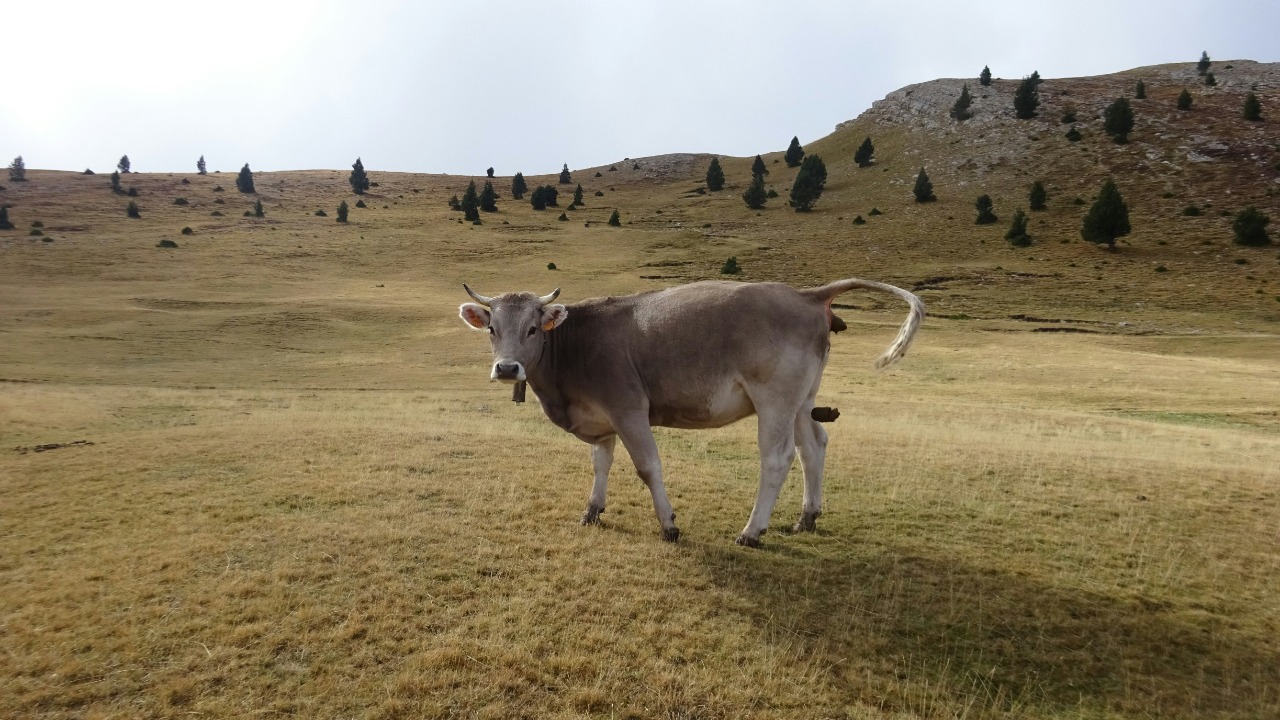

On a remote speck of land in the southern Indian Ocean, a handful of cattle left behind by sailors did something no one expected: they built a thriving wild herd in brutal conditions, then reshaped an entire ecosystem. The saga of these abandoned cows has become one of the most striking natural experiments in survival and feralization that scientists have ever been able to study. I want to unpack how this happened, why researchers are still astonished by it, and what it reveals about both the resilience and the vulnerability of life in extreme places.
The story stretches from a forgotten 19th century stopover to modern debates about conservation, climate risk and even deep-sea food webs. Along the way, it connects a lonely volcanic island, a controversial eradication campaign, and some very unexpected “visitors” drawn to cow carcasses in the open ocean. Taken together, these episodes show how a single domesticated species can become a powerful test case for evolution, extinction and human responsibility.
How a few cows ended up on a subantarctic rock
The starting point is geography. Far from any continent, Amsterdam Island sits in the southern Indian Ocean, a windswept volcanic outpost that is small, isolated and battered by harsh weather. In the late 19th century, sailors and settlers used such islands as waystations, and cattle were sometimes brought ashore as living food stores. According to historical reconstructions, a small group of cows was landed here, then effectively forgotten when the human presence faded and regular resupply stopped.
What makes this abandonment so striking is that the animals were left with no fences, no barns and no veterinary care, only the steep slopes and sparse vegetation of a subantarctic island. Later environmental reporting notes that In the late 19th century, a small founding herd was indeed left on this remote landmass, where it had to cope with cold, wind and poor soils. From a scientific perspective, that accidental release created a rare, almost laboratory-like scenario: a domesticated species suddenly cut off from human management, forced to sink or swim in a place that looked nothing like the temperate pastures it had been bred for.
From forgotten livestock to a 130‑year survival experiment
Once the ships stopped coming, the cows were on their own. Over time, they turned into a fully feral population, living and breeding without human help for an astonishing 130 years. Researchers who later reconstructed the herd’s history describe it as a “surprising survival story” in which the animals endured storms, limited forage and isolation while gradually adapting to their new home. For biologists, that timescale matters: it is long enough for natural selection to act on traits like body size, coat, behavior and fertility, yet short enough that the original domesticated ancestry is still traceable.
What stunned visiting scientists was not just that the cows survived, but that they flourished. Accounts of the population’s trajectory report that the herd eventually swelled to nearly 2,000 animals, a remarkable boom given the island’s limited area and poor grazing. To everyone’s surprise, these cattle not only persisted but became a dominant force in the local ecosystem, turning a human oversight into a long-running natural experiment in how quickly domestic animals can go wild again in an inhospitable environment.
Why scientists “can’t quite believe” the feral cow phenomenon
When biologists finally turned their full attention to the herd, many of them struggled to reconcile what they saw with expectations about domesticated cattle. There are not many truly feral cow populations left on Earth, and those that do exist are usually heavily influenced by nearby farms or periodic culling. On this island, by contrast, the animals had been left alone for generations, which is why later coverage framed the case as something Scientists Can’t Quite Believe. The herd had to cope with disease risk, inbreeding and food scarcity without any of the usual human interventions like vaccination or supplemental feed.
From my perspective, what really unsettled researchers was how quickly the cows seemed to shed their barnyard habits and behave more like a wild ungulate. Reports describe them forming free-ranging groups, navigating steep volcanic terrain and responding to predators or harsh weather with strategies that looked more like those of deer or wild cattle than of docile dairy breeds. Although the island’s isolation helped shield them against a potential disease outbreak, it also meant that every winter storm and every lean year was a direct test of their resilience. The fact that the population not only persisted but expanded suggested that the genetic toolkit of domestic cattle still contains a deep reservoir of adaptability that modern agriculture rarely sees.
Amsterdam Island as a living laboratory of feralization
Ecologists often dream of “natural experiments” where a single variable changes and everything else stays relatively constant. On this remote volcanic outcrop, the introduction of cattle created exactly that kind of scenario. Over decades, the herd’s grazing, trampling and nutrient cycling reshaped vegetation patterns, soil structure and even bird nesting sites, turning the island’s ecosystem into a kind of before‑and‑after case study. For scientists interested in feralization, this was a rare chance to watch how a domesticated genome responds when it is suddenly exposed to raw environmental pressures.
To understand why this matters, it helps to compare Amsterdam Island with other feral cattle sites. On The Enderby Island, for example, a separate population of cattle was left without human selection for nearly 100 years. The herd there, known as The Enderby Island cattle, adapted without medication, food additives or other management, providing another window into how quickly domestic traits can shift under wild conditions. Taken together, these islands show that when cows are cut loose from barns and feedlots, they do not simply fade away. They evolve, sometimes rapidly, and in doing so they become powerful indicators of how human‑bred animals might respond to a world of changing climates and disrupted habitats.
When conservation collides with feral success
The success of the Amsterdam Island herd created a dilemma that still divides conservationists. On one hand, the cows represented a unique feral lineage, shaped by more than a century of isolation and natural selection. On the other, their sheer numbers and heavy grazing were damaging native plants and threatening seabird colonies that had evolved without large herbivores. Environmental accounts note that the cattle became so numerous that they dominated Amsterdam Island’s fragile ecosystems, forcing managers to weigh the value of a remarkable feral experiment against the need to restore native biodiversity.
Ultimately, authorities moved to eradicate the herd, a decision that mirrored what happened to The Enderby Island cattle after their own long period without human selection. In both cases, the animals were removed in the name of ecological restoration, even as scientists scrambled to document their genetics and behavior before they vanished. I see this tension as emblematic of a broader shift in conservation thinking: we are increasingly confronted with hybrid landscapes where human history, invasive species and climate change are all entangled. The Amsterdam cows were both victims and agents of that entanglement, a living reminder that “wild” and “domestic” are not fixed categories but points on a continuum that policy has to grapple with.
From lost herds to lost cattle: the modern risks of abandonment
The story of the abandoned island cows also resonates with more recent episodes in which cattle have been lost or stranded in extreme conditions. In northern Australia, for instance, the LARGE northern pastoral player the Australian Agricultural Co reported losing cattle in two separate January events, with one incident covering about 230 head in total. Those losses were tied to floods and extreme weather rather than deliberate abandonment, but they highlight how quickly modern herds can be cut off from human support when climate‑driven disasters strike.
Unlike the Amsterdam Island herd, which had generations to adapt, these contemporary cattle are usually bred for high productivity in controlled environments. When storms, fires or floods suddenly remove fences and feed, the animals face a brutal test of their ability to survive on their own. From my vantage point, that contrast underscores why the feral island cows fascinate scientists: they show what cattle can become when they are forced to rely entirely on their own instincts and physiology, something that is increasingly relevant as extreme events disrupt agricultural systems around the world.
Dropping a cow into the deep: a different kind of “abandoned” experiment
The fascination with what happens to cows outside their usual context has even extended to the deep sea. In a striking experiment in the South China Sea, Scientists dropped the carcass of a cow 1.629 meters deep into the South China Sea and watched as eight unexpected visitors appeared. The goal was to investigate how large pulses of organic matter, known as “food falls,” are processed by deep‑sea scavengers. Instead of being ignored in the darkness, the cow quickly became the center of a feeding event that revealed just how efficiently the deep ocean recycles rare windfalls of energy.
Another account of the same project describes how Scientists dropped a cow into the ocean in the South China Sea and were stunned when elusive scavengers, including the sleeper shark, arrived to feed. From my perspective, this is a very different kind of “abandoned cow” story, yet it taps into the same scientific curiosity: what happens when a familiar terrestrial animal is placed in an utterly unfamiliar environment. In this case, the cow was not expected to survive, of course, but its remains became a probe of deep‑sea ecology, showing how energy from land can occasionally cascade into the ocean’s most remote ecosystems.
“Smiling” visitors at 1,629 Meters Into the Sea
A related deep‑sea deployment captured public attention for its almost cinematic imagery. When researchers lowered a cow carcass 1,629 Meters Into the Sea, cameras recorded a procession of unexpected scavengers converging on the new resource. Coverage of the project noted that Researchers Spot Unexpected “Smiling” Visitors When They Dropped Cow Meters Into the Sea, a reference to the toothy grins of the scavengers that appeared on camera. The depth, recorded as 1,629 Meters, placed the carcass well within the dark, high‑pressure zone where food is scarce and any large organic fall is quickly exploited.
From a scientific standpoint, these experiments are the mirror image of the Amsterdam Island saga. Instead of watching cows adapt to a new terrestrial environment over generations, researchers are watching marine animals adapt in real time to a sudden, foreign food source. Yet the underlying question is similar: how flexible are ecosystems when confronted with something unexpected. In the deep sea, the answer seems to be “very.” Scavengers from fish to invertebrates rapidly located and consumed the cow, turning an artificial experiment into a vivid demonstration of how tightly tuned the ocean’s recycling systems are to any hint of available energy.
What abandoned cows reveal about extinction and resilience
The abandoned island herd has also fed into broader debates about extinction and resilience. When scientists analyze how quickly a small, isolated population can adapt or collapse, they are probing the same dynamics that shape the fate of endangered species. One eyebrow‑raising study on extinction risk, for example, was described as “astounding” even by researchers who criticized how the news first emerged. Reporting on that work noted that Even scientists who criticized the rollout acknowledged that the underlying discovery, published in the National Academy of Sciences, was astounding in its implications for how quickly species can disappear.
When I look at the Amsterdam cows through that lens, I see a kind of counterpoint to the extinction narrative. Here was a tiny founding group that, instead of blinking out, exploded into a population of nearly 2,000 animals. Yet their eventual eradication shows that resilience at the level of a herd does not guarantee long‑term survival if human policy shifts. The same forces that accidentally created a feral success story also had the power to end it. That duality is what makes the “abandoned cow phenomenon” so compelling to scientists: it is both a testament to the adaptability of life and a reminder of how contingent that life is on human choices.
Lessons from a century of unintended experiments
Stepping back, the scattered episodes involving abandoned or repurposed cows, from Amsterdam Island to The Enderby Island and the South China Sea, form a kind of unplanned research program. They show that when domesticated animals are pushed outside their usual boundaries, they can become powerful tools for understanding evolution, ecosystem dynamics and even climate risk. The Amsterdam herd’s 130‑year run, the 100‑year history of The Enderby Island cattle and the deep‑sea carcass experiments all underscore how much information can be gleaned from situations that began as logistical accidents or bold one‑off tests rather than carefully designed lab studies.
For me, the enduring lesson is that scientists are “stunned” not because cows are inherently mysterious, but because these cases expose how little we usually see of their full biological potential. In barns and feedlots, cattle are tightly constrained by human needs. On a remote volcanic island or at 1.629 meters beneath the waves, they become something else: either evolving into rugged feral survivors or dissolving into a pulse of energy that reveals the hidden workings of the deep. The abandoned cow phenomenon, in all its variations, is a reminder that even the most familiar domestic animals can still surprise us when they slip, or are pushed, beyond the edges of the world we built for them.
More from MorningOverview