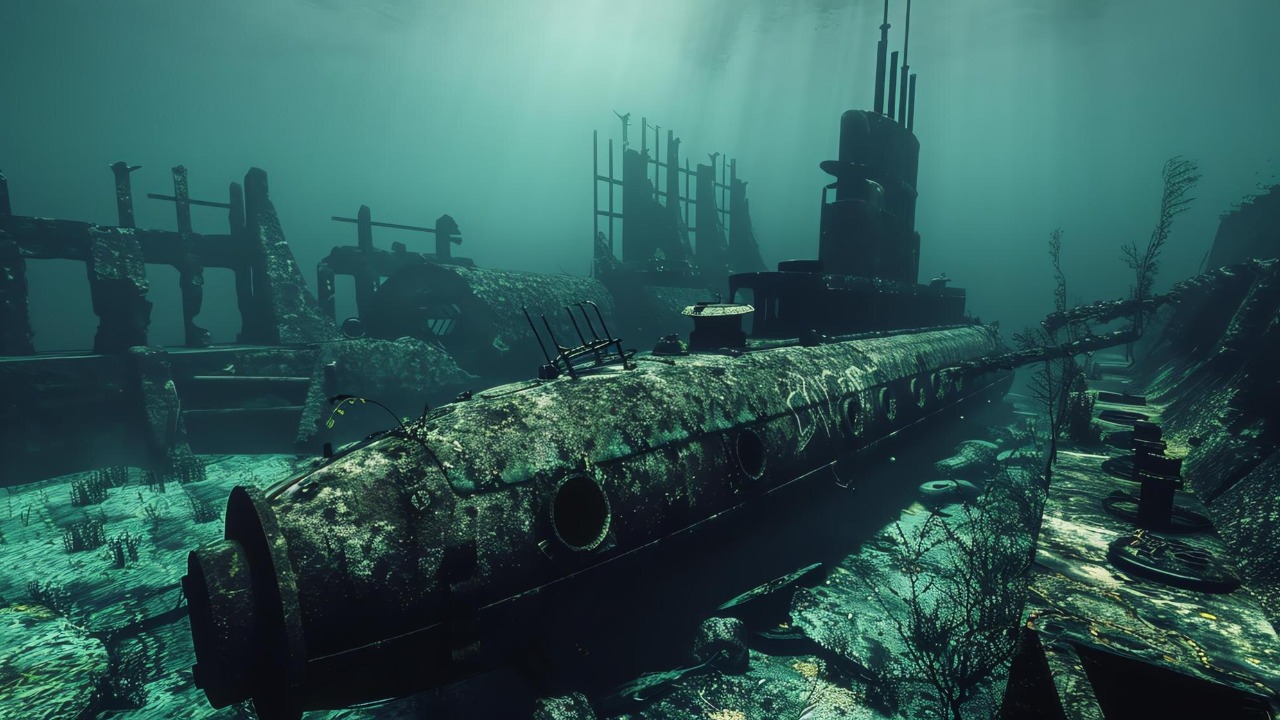

As Arctic ice thins and shipping lanes open, Russia has stumbled on a chilling legacy of the Cold War: a long-lost Soviet nuclear dumping ground on the seabed. The discovery, made by modern submersibles in a remote sector of the Arctic Ocean, confirms that decades of military secrecy left entire underwater graveyards of reactors, fuel and contaminated scrap scattered across the polar seas. I see this find not as an isolated curiosity, but as a warning that the nuclear past is colliding with a rapidly changing climate in one of the most fragile regions on Earth.
How a hidden nuclear graveyard resurfaced
The newly identified site emerged from a targeted Russian expedition that set out to verify old charts and rumors of lost nuclear waste in the high north. Working from the research vessel Akademik Ioffe, The Russian team deployed deep-diving submersibles and sonar to scan a suspected dumping zone in the Arctic, eventually locating a cluster of corroding containers and reactor components that had slipped off the radar since the late Soviet period. According to detailed accounts of the mission, the operation relied on narrow weather windows and short periods of workable light, a reminder that even in a warming climate the Arctic Ocean remains a harsh and unforgiving place for any search effort.
What the submersibles found was not a single wreck, but a concentrated “nuclear graveyard” of discarded hardware that had been scuttled and then effectively forgotten. Russian specialists described the site as a mix of reactor parts, shielding assemblies and other radioactive debris that had been dumped in deep water and left to rust in the dark. The broader expedition, framed as a way to understand “old risks” emerging from receding ice, fits into a pattern of recent missions that have begun to map these underwater hazards in more detail, as highlighted in new reporting on Jan.
Inside the mission: submersibles, sonar and Soviet ghosts
The technical backbone of the discovery was a fleet of modern Russian submersibles equipped with high-resolution sonar and radiation sensors. Operating from The Russian research vessel Akademik Ioffe, these units methodically swept the seabed in the Arctic, homing in on anomalies that matched the size and shape of reactor compartments and large containers. Once the first objects were confirmed visually, the team expanded its grid, revealing a wider field of debris that had likely been deposited during intensive dumping operations in the 1980s, according to mission descriptions of the Russian search.
Another detailed account of the same campaign describes how the expedition’s focus narrowed to a specific sector of the Arctic Ocean after earlier surveys flagged unexplained radiation spikes. The operation, framed as a methodical effort at “Locating the Nuclear Graveyard,” concentrated on a remote Bay of the polar coastline where Soviet-era records hinted at large-scale dumping but offered few coordinates. By combining archival hints with modern mapping, the crew of the Akademik Ioffe and its submersibles were able to turn a vague Cold War rumor into a charted hazard, as outlined in the narrative of the Russian Expedition Uncovers search.
A long history of dumping into Arctic seas
To understand why such a graveyard exists at all, I have to look back at the Soviet approach to nuclear waste in the Arctic. For decades, Soviet naval planners treated the surrounding seas as a convenient sink for obsolete reactors, spent fuel and contaminated scrap from the Northern Fleet. Historical investigations have documented how, as in other nuclear-armed states, early safety standards were lax, but in the Soviet case the combination of secrecy and military urgency led to entire submarines and reactor compartments being scuttled offshore, a pattern that later studies of Soviet wrecks have described as a slow-motion environmental risk.
Russian authorities themselves have acknowledged the scale of what was sunk. Earlier surveys in the Arctic reported “enormous finds” of radioactive waste and entire nuclear reactors on the seabed, including in the Kara Sea, where Cold War dumping was particularly intense. Environmental groups that tracked those operations over years highlighted how Russia’s own inspections kept turning up new objects, from reactor compartments to containers of unknown contents, in waters that were never meant to host such cargo. That history is reflected in official accounts of Russia announcing large caches of waste and reactors in Arctic seas.
How big is the problem beneath the ice
The newly rediscovered graveyard is only one piece of a much larger underwater puzzle. Earlier mapping efforts along the Northern Sea Route suggested that, in total, as many as 17,000 containers of nuclear waste may have been dumped into the Barents and Kara Seas in Russia’s Arcti waters, along with other large objects such as reactor compartments and entire submarine hulls. Those figures, drawn from Russian inventories and later surveys, underscore that the Arctic seabed is not dotted with isolated wrecks but pocked with entire industrial-scale disposal zones, as summarized in assessments of the Barents and Kara.
Scholars who study the region’s militarisation have described nuclear waste as the most long-lived pollution in Arctic environments, noting that Soviet Russian Arctic radioactive waste includes 17,000 containers, reactor compartments and other large units, some of which still hold spent fuel. Their work, grounded in archival research and field data, often draws on poll and technical surveys to reconstruct where and how this material was dumped. That body of research on Nuclear waste in the Soviet Russian Arctic helps explain why each new discovery tends to reveal not a single anomaly but another node in a sprawling network of submerged hazards.
From “slow-motion Chernobyl” to salvage plans
Scientists and safety experts have long warned that these underwater dumpsites amount to a “Chernobyl in slow motion” beneath Arctic seas. According to the Nuclear Safety Institute of the Russian Academy of Sciences, scuttled items in the region include 14 nuclear reactors, spent fuel assemblies and three nuclear submarines complete with reactors, all resting on the seabed with varying degrees of containment. That inventory, compiled from Russian records and later inspections, underpins the argument that corrosion, shifting sediments and climate-driven changes in ocean conditions could gradually release more contamination, as detailed in analyses that begin with the phrase According to the Nuclear Safety Institute of the Russian Academy of Sciences.
Some of the most worrying examples involve specific submarines and reactor units that were deliberately sunk in shallow Arctic waters. At least 14 reactors from bygone vessels of the Northern Fleet were discarded into the Kara Sea, often with only rudimentary sealing. Sometimes, Soviets skipped even basic precautions, sending heavily contaminated compartments to the bottom with minimal shielding or documentation. Later cost estimates for recovering just a fraction of this material have run into the hundreds of millions of dollars, a reminder that the bill for Cold War shortcuts is only now coming due, as chronicled in historical accounts of the Northern Fleet dumping grounds.
Russia’s new push to raise what it once sank
Faced with mounting evidence of risk, Russia has begun to sketch out plans to recover some of the most dangerous wrecks. Officials have signaled that preparations are under way to raise Cold War nuclear submarines from the Kara Sea, including a vessel scuttled there in 1981 that now lies at a depth of about 75 meters. Another notorious wreck, K-159, entered service the same year and later sank with spent fuel on board, making it a prime candidate for future salvage. These plans, which envisage complex lifting operations and new infrastructure, are outlined in recent briefings on the Kara Sea and the submarine designated 75 meters and 159.
Parallel reporting describes a broader multi-billion-dollar project in which Russia aims to recover remains of Soviet nuclear submarines from the Arctic seabed, prioritising hulls and reactor compartments that still contain significant radioactive inventory. That initiative, framed as both an environmental and strategic move, reflects a recognition in Moscow that leaving these hulks to decay in place is no longer tenable as Arctic shipping and resource extraction expand. The effort to raise and secure these relics of the Soviet era is detailed in analyses of how Russia plans to tackle nuclear submarine recovery in the Arctic.
Why the 1988 graveyard matters now
The newly located graveyard also ties into a specific incident from the late Soviet period. Russian submarines involved in the latest expedition have identified an undocumented nuclear waste site in the Arctic that sank in 1988, a find that surprised even veterans of earlier surveys. The mission narrative describes how the team went in expecting to confirm known objects and instead “cracked open an egg and found something unexpected,” revealing a cluster of containers and components that had never been properly logged. That episode, recounted in coverage of the Russian expedition in the Arctic, underscores how incomplete the historical record remains.
Other reports on the same set of dives emphasise that Russian submersibles were able to pinpoint this 1988 site using a combination of sonar, radiation mapping and visual confirmation, all launched from The Russian research vessel Akademik Ioffe. These units were equipped with cameras and detectors capable of identifying even small objects in the world’s oceans, allowing operators to distinguish between ordinary scrap and reactor-linked debris. The fact that such a significant cache could remain undocumented for decades suggests that more uncharted graveyards may still be hidden beneath the ice, a concern echoed in technical summaries of the Akademik Ioffe mission.
The Arctic’s nuclear future is being decided now
For me, the rediscovery of this Soviet nuclear graveyard crystallises a broader tension in the Arctic. On one hand, Russia is investing heavily in new infrastructure, shipping routes and military assets across the region, betting that melting ice will unlock trade and resources. On the other, the same warming trend is exposing and destabilising the nuclear waste that earlier generations hid beneath the waves, turning forgotten dumpsites into active policy problems. The contrast between sleek new icebreakers and corroding reactor shells on the seabed captures a region where the future and the past are colliding in real time.
Whether the Arctic becomes a corridor of safe commerce or a patchwork of radioactive exclusion zones will depend on decisions being made in Moscow and other capitals over the next few years. Systematic mapping, transparent risk assessments and costly salvage operations are all needed if the legacy of Soviet dumping is to be contained before corrosion and climate change do the work instead. The lost graveyard that Russian submersibles have just brought back into view is a reminder that the nuclear age does not end when a reactor is switched off or a submarine is scuttled. It lingers, quietly, on the ocean floor, waiting for someone to decide whether it will remain a hidden threat or finally be brought under control.
More from Morning Overview