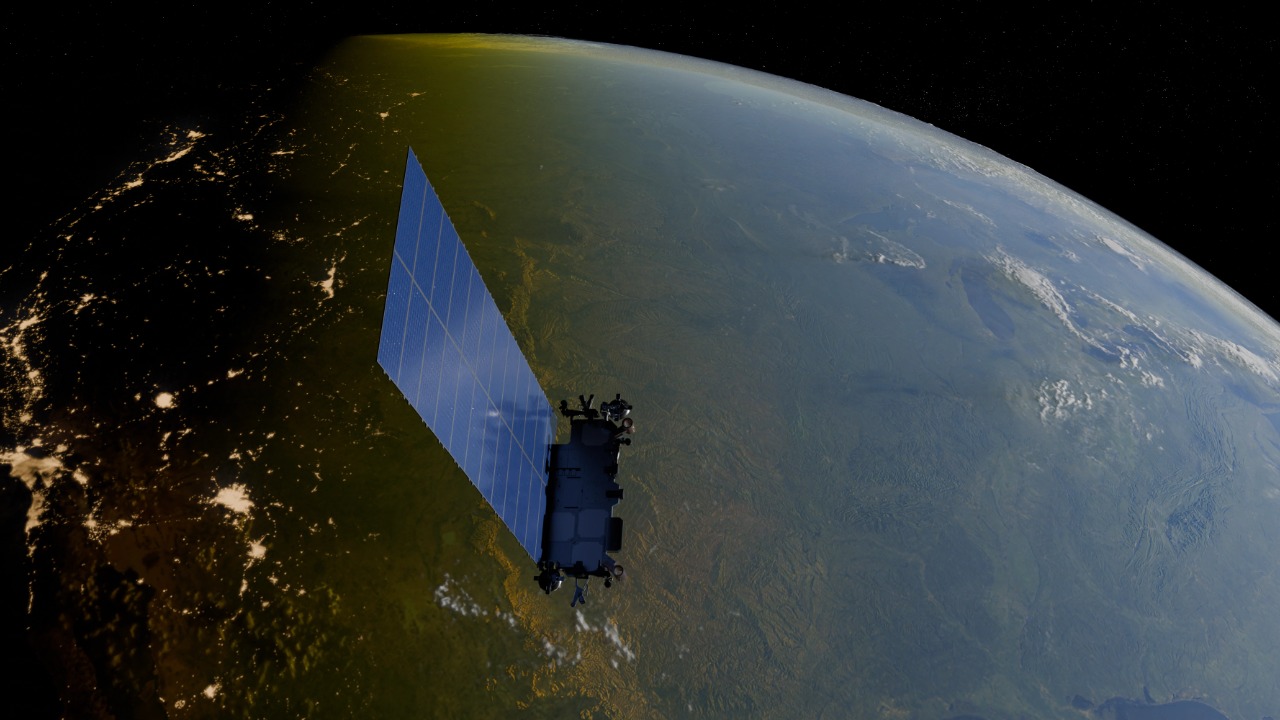

Western intelligence services are quietly warning that Russia is working on a new kind of anti-satellite system designed to cripple Elon Musk’s Starlink network, and with it a large slice of the modern internet in low orbit. The concept, often described by officials as a “Weapon of fear,” is alarming experts because it targets not a single spacecraft but the dense constellations that now underpin military and civilian life.
At stake is far more than one billionaire’s business model. Of the more than 14,000 active satellites in low-Earth orbit today, roughly two-thirds belong to Elon Musk’s Starlink, which has become a backbone for Ukraine’s battlefield communications and a growing share of global broadband. If Russia can reliably threaten that infrastructure, the balance of power in space, and on the ground, shifts overnight.
What NATO thinks Russia is building
According to New intelligence assessments from two NATO countries, Russia may be developing a controversial anti-satellite system that does not rely on a single missile strike but on saturating orbits with destructive material. Intelligence agencies suspect Russia is working on orbiting clouds of shrapnel or tiny pellets that could drift through the same altitudes as Starlink and other constellations, shredding any spacecraft that crosses their path. Officials describe this as a Weapon of area effect rather than a sniper shot, designed to threaten multiple targets at once instead of one high-value satellite.
Those assessments suggest the project is tailored to the way Starlink operates. Western analysts say Russia views Starlink in particular as a grave threat because the network has kept Ukraine’s forces online even when fiber lines and cell towers were destroyed, and because its thousands of nodes are hard to disable with traditional anti-satellite missiles. One report notes that a weapon would have multiple targets and that Russia sees the constellation as a direct challenge to its ability to control information in wartime. NATO intelligence warns Russia may be developing an anti-starlink space weapon that could be deployed covertly, with pellets too small to track until they have already begun to damage satellites.
How an “orbiting shrapnel” system would work
The most alarming aspect of the suspected design is its simplicity. Instead of a complex interceptor, Western intelligence describes a device that releases a cloud of metal fragments or pellets into a specific orbital band. Tiny pellets could remain undetected by most tracking systems, yet still carry enough kinetic energy at orbital speeds to puncture solar panels, antennas, or fuel lines. Analysts warn that After such an attack, pellets and debris would over time fall back toward Earth, but not before they had passed through the paths of dozens or even hundreds of spacecraft, potentially bringing each one offline in turn.
Officials have labeled this a Weapon of fear because its primary effect is psychological as much as physical. Once operators know that a particular shell of low orbit is seeded with invisible hazards, they must either risk losing satellites or abandon that altitude entirely. Reports note that After the initial release, the fragments would slowly spread, creating a diffuse but persistent hazard that could linger for months before reentering Earth’s atmosphere. Intelligence agencies suspect Russia is developing exactly this kind of anti-satellite weapon to target Starlink service, a prospect that has already prompted detailed analysis of how such debris would affect defense and other vital needs.
Why Starlink is such a high-value target
Starlink has become central to Ukraine’s military and civilian communications during the war, providing encrypted links for drones, artillery units, hospitals, and emergency responders when terrestrial networks fail. NATO officials have highlighted in televised briefings how Starlink terminals allowed Ukrainian units to coordinate counteroffensives and share real-time targeting data even under heavy Russian bombardment. That battlefield role has turned what began as a commercial broadband project into a strategic asset, one that Moscow now treats as part of the Western war effort.
Russia’s focus on Elon Musk’s constellation is also about scale. Of the more than 14,000 active satellites in low-Earth orbit, roughly two-thirds belong to Elon Musk’s Starlink, which means any weapon that can reliably disrupt those orbits automatically threatens a large share of global connectivity. Western intelligence findings say Starlink is singled out as a grave threat precisely because its redundancy makes it resilient against single-point attacks. A cloud weapon, by contrast, is designed to turn that density into a vulnerability.
Evidence, denials, and the S-500 backdrop
Public hints of the project surfaced after Rep Michael Turner, an Ohio Republican and chairman of the House Intelligence Committee, disclosed that two NATO-nation intelligence services had raised urgent concerns. The information initially came to light Wednesday, when he warned colleagues that Russia might be preparing a new kind of anti-satellite capability aimed at the systems helping Ukraine to fight the Russian invasion. That disclosure was later echoed in European capitals, where officials privately linked the warnings to intelligence about Russian testing activity in orbit.
In December, Russia also announced the deployment of its S-500 ground-based missile system, which it claims is capable of intercepting targets in space as well as in the atmosphere. Analysts note that the S-500 gives Moscow a more traditional anti-satellite option, but recent intelligence points to a parallel effort to develop an area-effect weapon that would not be as visible as a missile launch. One report from Ukraine’s supporters describes how earlier Russian tests created a dangerous debris cloud, and contrasts that with a new concept that relies on concealment rather than confrontation. According to that account, the suspected system would release fragments weighing up to 500 g, small enough to be hard to track but large enough to shred a satellite on impact.
Why experts call it “incredibly troubling”
Space policy specialists and military planners are unusually blunt about the stakes. Experts sound alarm over suspicion of Russian attack targeted at Elon Musk’s Starlink satellites, calling the prospect “Incredibly” troubling because it threatens to normalize the deliberate creation of long-lived debris fields. One analysis aimed at general readers explains why satellites are important, noting that navigation, banking, weather forecasting, and even basic phone calls depend on constellations that have little protection in place all around. If a hostile actor proves that it can quietly contaminate an orbital shell, the entire logic of space as a shared infrastructure begins to unravel, a point several Experts now stress in public forums.
Environmental advocates and technologists have also begun to weigh in, warning that a deliberate debris strategy would accelerate the risk of cascading collisions that some researchers have long feared. Commentators on green-tech platforms argue that the potential space weapon should force a rethink of how space entrepreneurs spend their time, urging companies like Starlink to invest more in debris mitigation and resilience. One widely shared piece on Russian space weapons notes that the same pellets that threaten satellites would eventually fall back toward Earth, raising questions about uncontrolled reentry and the long-term sustainability of low orbit.
The broader geopolitical and legal fallout
For NATO, the suspected weapon is not just a technical problem but a strategic one. Alliance officials have used social media and broadcast segments to underline that NATO intelligence warns Russia may be developing an anti-starlink space weapon, framing it as part of the next frontier of warfare. In one #Spotlight segment, presenters explain that the project would target Elon Musk’s Starlink Satellites NATO sees as critical to Ukraine’s defense, and that any successful test would send a chilling message to other satellite operators. The same clip stresses that space is now woven into every aspect of modern militaries, from early warning to logistics, making any attack on orbital infrastructure a potential trigger for wider conflict, a point amplified in Spotlight coverage.
Russia, for its part, insists it has no intention of deploying nuclear space weapons and has previously called for United Nations efforts to stop the orbital deployment of weapons. Russian officials point to those diplomatic initiatives as proof that Moscow supports keeping space demilitarized, even as Western intelligence paints a different picture of its current research. One detailed account notes that Russia has repeatedly used its veto power to shape space security resolutions while simultaneously testing systems that worry its neighbors. That tension between public diplomacy and covert capability development is at the heart of why so many experts now see the anti-Starlink project as a turning point.
Can Starlink and others defend themselves?
Technologists are quick to point out that satellite operators are not helpless. Now, they have ways to track objects in real time, so any satellite that moves out of its trajectory will trigger an alarm and allow controllers to plan avoidance maneuvers. Commercial firms and space agencies already dodge cataloged debris thousands of times a year, and Starlink satellites are designed with propulsion systems that can shift orbits quickly. Enthusiasts on space forums argue that by design, large constellations can route around damaged nodes, maintaining service even if some spacecraft are lost, a point frequently raised in Now popular discussions.
The challenge is that a pellet cloud weapon is built to exploit the limits of that tracking. Tiny fragments may be too small to detect individually, and if they are spread across a wide orbital band, constant dodging becomes impractical. Western intelligence suspects Russia is developing a new weapon to target Musk’s Starlink satellites that would leave operators guessing which paths are safe, a scenario some analysts describe as chaos in slow motion. One detailed report warns that Tiny pellets could remain undetected yet still hit a satellite and probably bring it offline, and that After such an attack, pellets and debris would over time fall back toward Earth, but not before they had forced operators to rethink how they use low orbit, a concern echoed in Weapon of briefings.
A warning shot for the space age
For all the focus on Ukraine, the implications reach far beyond a single war. Intelligence agencies suspect Russia is developing anti-satellite weapon concepts that, once proven, could be adapted to threaten other constellations, from weather fleets to navigation systems. New assessments from NATO partners stress that the same techniques used against Starlink could be turned on any cluster of satellites that a future adversary deems threatening. In that sense, the current alarm is less about one company and more about whether the world is prepared to defend the orbital infrastructure it now takes for granted, a theme that runs through multiple NATO warnings.
Experts sound alarm over suspicion of Russian attack targeted at Elon Musk’s Starlink satellites not only because of the immediate risk but because it signals a shift in how major powers think about space warfare. Analysts describe the suspected project as a Weapon of fear that could threaten chaos, a tool meant to intimidate as much as to destroy. As one detailed summary of the debate on Experts notes, the real test will be whether existing treaties and norms can adapt quickly enough to deter such weapons before they move from intelligence dossiers into operational reality. If they cannot, the age of quiet, predictable orbits may be ending far sooner than most people realize.
More from Morning Overview