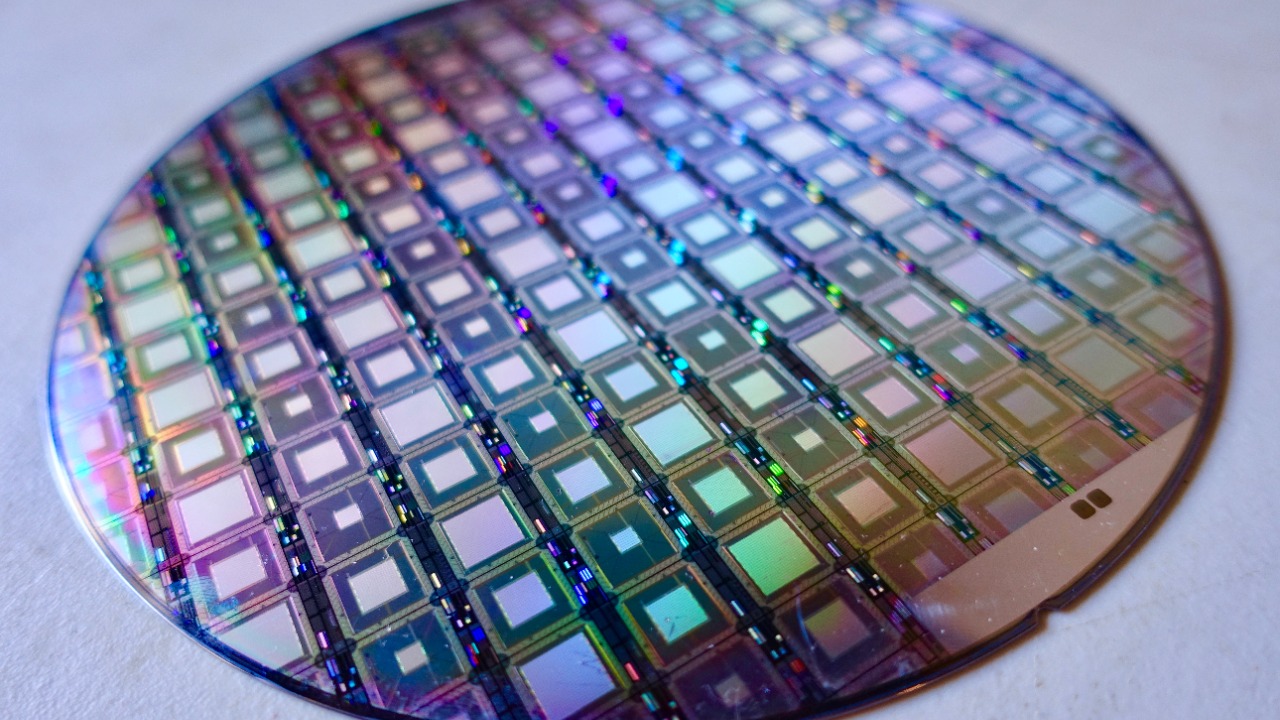

Quantum physics has quietly been rewriting the rulebook on matter, and the latest breakthroughs suggest that the so‑called fifth state is no longer a niche laboratory curiosity. From orbiting laboratories to industrial quantum chips, researchers are now manipulating exotic phases of matter in ways that could transform both fundamental science and real‑world computing. I see a clear pattern emerging: the fifth state of matter has become the staging ground where abstract theory collides with practical technology.
What began as a quest to cool atoms to near absolute zero has expanded into a race to engineer entirely new quantum phases that behave less like familiar solids or gases and more like programmable materials. That race now stretches from NASA’s experiments in microgravity to Microsoft’s push for a topological quantum processor, and it is reshaping how physicists, engineers, and even chip designers think about what “matter” can do.
The original fifth state of matter, from lab curiosity to quantum workhorse
Long before tech companies started talking about exotic qubits, physicists were chasing a more basic question: what happens when atoms are cooled so far that they effectively merge into a single quantum wave? In 1995, researchers answered that by creating the first Bose‑Einstein condensate, a phase in which a cloud of atoms behaves as one coherent quantum object rather than as individual particles. That achievement, described by NASA as the fifth state of matter, turned an abstract prediction by Satyendra Nath Bose and Albert Einstein into a tangible substance that could be probed, tuned, and eventually engineered.
Once that condensate was in hand, it quickly became more than a physics trophy. The same NASA account notes that the 1995 breakthrough opened a path to ultra‑precise sensors, new tests of fundamental physics, and even potential advances in quantum materials. By forcing atoms into a shared quantum state, scientists gained a controllable platform for exploring superfluidity, interference, and entanglement in ways that ordinary solids, liquids, gases, or plasmas could not support. In other words, the fifth state of matter evolved from a theoretical endpoint of cold into a practical starting point for quantum engineering.
Why space became the ultimate Bose‑Einstein condensate laboratory
As researchers pushed Bose‑Einstein condensates further, gravity on Earth turned into a design constraint, limiting how long the delicate quantum clouds could be held and studied. That is why NASA invested in taking the fifth state of matter off the planet. In July, NASA’s Cold Atom Lab became the first facility to create a Bose‑Einstein condensate in Earth orbit, turning the International Space Station into a microgravity quantum lab. In that environment, condensates can float freely instead of sagging under their own weight, which lets scientists trap and manipulate them for much longer times.
The payoff is not just prettier physics. Operated remotely by a team with NASA’s Jet Propulsion Laboratory in California, the Cold Atom Lab has already generated a quantum gas containing two species of atoms, a configuration that is difficult to sustain on the ground. With NASA’s Cold Atom Laboratory aboard the International Space Station, scientists can now study quantum chemistry in space and test how ultra‑cold matter behaves when freed from terrestrial constraints, a step that could eventually feed into navigation systems, gravitational sensors, and new space‑based technologies.
Microsoft’s topological quantum processor and a “new state of matter”
While NASA has been stretching Bose‑Einstein condensates in orbit, Microsoft has been trying to bend matter into a form that can store quantum information robustly. Earlier in Feb, the company revealed that its researchers had created what they describe as a new state of matter inside a topological quantum processor, a device built to host exotic quasiparticles that are less vulnerable to noise. In a detailed account of the work, a Microsoft scientist remarked, “We’ve got a bunch of stuff that we’ve been keeping under wraps that we’re dropping all at once now,” framing the result as a decisive step toward a fully functional topological quantum computer based on a new state of matter.
The company’s pitch is that by encoding qubits in topological properties of matter, rather than in fragile individual particles, it can dramatically reduce error rates and scale to useful machines. Satya Nadella has framed this as a practical inflection point, with Microsoft’s latest breakthrough described as a quantum chip that could make large‑scale quantum computers a reality within years, not decades. In that narrative, the new state of matter is not just a physics curiosity but the substrate for a future quantum stack, and Nadella’s comments about Microsoft’s latest breakthrough underline how aggressively the company is trying to turn exotic condensed‑matter physics into a commercial platform.
From peer‑reviewed physics to quantum supremacy ambitions
Microsoft’s claim did not emerge in a vacuum. Building on exotic physics research that the tech giant began 17 years ago, the company outlined this new state of matter in a peer‑reviewed paper in Nature, positioning it as the culmination of a long bet on topological phases. That history matters, because it shows how a corporate lab can sustain a multi‑decade push on a concept that, for years, looked speculative even to many physicists. The Nature publication, highlighted in coverage that described how Building on exotic physics research has finally paid off, gives the announcement scientific weight beyond a product demo.
On the technical side, Microsoft scientists have argued that their processor harnesses an entirely new state of matter to stabilize qubits, and that this architecture could set the field on the path to quantum supremacy. One account notes that the breakthrough quantum chip could support a million qubits within years, not decades, if the underlying physics scales as expected. That same report describes a Breakthrough quantum chip that uses an entirely new state of matter, underscoring how the language of phases and condensates has migrated from academic journals into the marketing of next‑generation processors.
Quantum liquid crystals and a reimagined “fifth state”
At the same time that Microsoft has been engineering topological phases, academic teams have been discovering new quantum states that blur the boundaries of the traditional five‑state taxonomy. In Aug, researchers reported a quantum liquid crystal at the interface between two materials, a phase that combines features of both liquids and crystals at the quantum level. This state, which was described as a new fifth state of matter, behaves in ways that challenge the neat categories of solid, liquid, gas, plasma, and Bose‑Einstein condensate, and it emerged in a carefully tuned interface rather than in a bulk material. The work on this quantum liquid crystal shows how much room there still is to discover unexpected phases even in well‑studied systems.
What makes quantum liquid crystals especially intriguing is their potential link to high‑temperature superconductivity and other collective phenomena that could be harnessed in devices. Because the electrons in these phases organize themselves in patterns that break certain symmetries while preserving others, they can support directional transport or unusual responses to fields that ordinary materials cannot match. If those properties can be controlled, the same interface physics that produced this new fifth state of matter could feed into low‑loss electronics, novel sensors, or even new kinds of qubits that exploit directional order rather than simple charge or spin.
“Its Own New Thing”: UC Irvine’s strange quantum matter
Another sign that the landscape of quantum phases is expanding came from Irvine, where scientists identified a novel state of quantum matter that did not fit neatly into existing categories. In Aug, a team at UC Irvine described a phase that they characterized as “It’s Its Own New Thing,” emphasizing that it was not simply a variant of known superconductors or insulators. Their experiments showed that this state responds in unusual ways to high‑frequency light, suggesting that its internal degrees of freedom can be driven and probed in regimes that conventional materials cannot tolerate. The discovery, framed under the phrase Its Own New Thing, underscores how experimentalists are still stumbling across phases that theory did not fully anticipate.
For quantum technology, that kind of surprise is both a challenge and an opportunity. On one hand, it complicates the tidy roadmaps that assume a small set of well‑understood materials will underpin future devices. On the other, it expands the design space for quantum hardware, hinting that there may be states of matter that couple more cleanly to light, resist decoherence more effectively, or support new modes of information storage. The Irvine result, presented under the banner Scientists Discover New State of Quantum Matter, reinforces the idea that the fifth state is not a single destination but a gateway into a broader zoo of quantum phases.
Rutgers and the rise of “strange” quantum phases
The proliferation of new labels for quantum phases is not limited to one campus. In Jul, Rutgers physicists announced that they had discovered a strange new state of matter, adding yet another entry to the growing catalog of exotic phases. While the details of the Rutgers work focus on specific interactions and symmetries, the broader takeaway is that condensed‑matter systems continue to surprise even in regimes that have been studied for decades. The description of Rutgers physicists uncovering a strange new state of matter fits a pattern in which each experimental advance reveals more complexity in how electrons and atoms can organize.
From my perspective, these “strange” phases matter because they often sit at the boundary between competing orders, where small tweaks in temperature, pressure, or composition can trigger large changes in behavior. That sensitivity can be a liability for stable devices, but it can also be a feature if harnessed for sensors or switches that need to respond sharply to external signals. As more groups like Rutgers map out these boundary regions, they are effectively charting a phase diagram that engineers can later mine for materials with tailored responses, whether for quantum memory, neuromorphic circuits, or ultra‑sensitive detectors.
Rewriting the story of the fifth state of matter
All of these developments force a rethinking of what the “fifth state of matter” actually means. NASA’s own narrative traces a line from the first laboratory condensates in 1995 to the Cold Atom Lab in orbit, describing how, in 1995, researchers made the first Bose‑Einstein condensate and how that work is now considered the official discovery of the fifth state of matter. Today, scientists with NASA are using that condensate to probe gravity, test quantum theory, and explore new materials, among many other uses, which shows how a once‑esoteric phase has become a standard tool in the physics toolkit.
At the same time, other teams are using the language of a “new fifth state” to describe quantum liquid crystals, topological phases, and interface‑driven states that do not look anything like a traditional Bose‑Einstein condensate. That semantic sprawl reflects both scientific progress and a communications challenge. From a strict physics standpoint, these are distinct phases with different symmetries and excitations. From a public perspective, they all signal that matter can behave in ways that defy everyday intuition. I see the current moment as one where the original fifth state has matured into a platform, while a new generation of quantum phases competes for the title of the next big leap.
From orbit to industry: what the quantum phase race means next
Looking across the landscape, the throughline is that quantum phases of matter are moving from isolated experiments into interconnected ecosystems that span space stations, university labs, and corporate fabs. Operated remotely from Earth, the Cold Atom Lab is already enabling totally new space‑based experiments in quantum chemistry, as highlighted in coverage of how it is Operated remotely by NASA’s Jet Propulsion Laboratory. On the ground, Microsoft is betting that its topological state of matter will anchor scalable quantum chips, while groups at Irvine, Rutgers, and elsewhere continue to uncover phases that may become tomorrow’s materials of choice.
For now, the practical impact is still emerging, but the direction of travel is clear. As Bose‑Einstein condensates, quantum liquid crystals, and topological phases become more controllable, they are likely to underpin everything from precision navigation in autonomous vehicles to secure communication networks and specialized accelerators for AI. I expect the boundary between “fundamental” and “applied” quantum matter to keep blurring, with each new state of matter not just shaking up textbooks but also quietly seeding the hardware that will power the next wave of computation and sensing.
More from MorningOverview