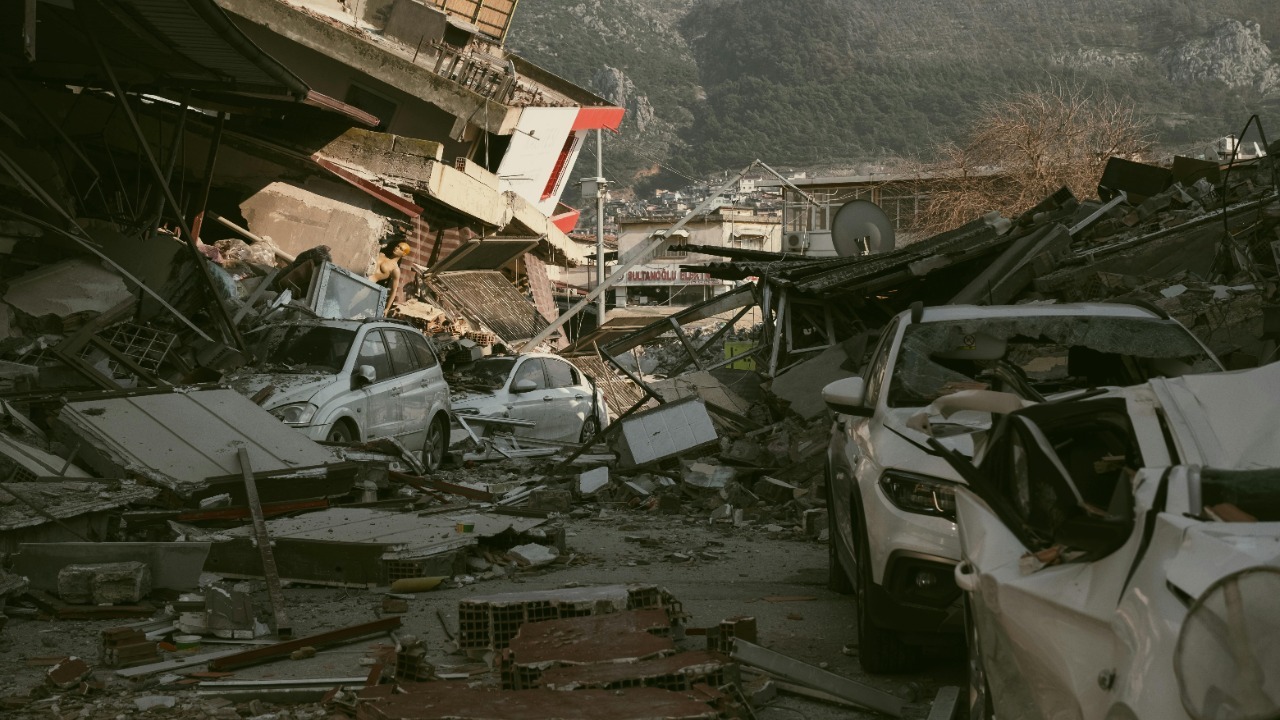

A powerful tremor has rattled northern Italy, jolting residents from their routines and reviving long standing fears about the country’s seismic vulnerability. The quake, centered near Fornace Zarattini, has been strong enough to be widely felt across the region and to prompt fresh scrutiny of how prepared communities really are for the next big
I want to unpack what happened, how it fits into Italy’s broader earthquake pattern, and what practical steps people in the affected areas should be taking now, from checking buildings to understanding the risks that extend from the Po Valley to volcanic zones further south.
What happened near Fornace Zarattini
The latest jolt in northern Italy struck near Fornace Zarattini, a built up area in the Emilia Romagna region where even a moderate event can feel intense because of dense population and vulnerable older structures. Instrument readings classify it as a 4.6-magnitude earthquake, a level that typically does not cause widespread structural collapse but can crack masonry, dislodge plaster and send unsecured objects crashing to the floor. The shaking has been strong enough to alarm residents and trigger a wave of calls to emergency services, even if early indications suggest the damage footprint is limited compared with Italy’s most devastating quakes.
Seismologists place the epicenter close to a known fault system that runs beneath the northern Apennines and the Po Valley, a zone that has produced damaging events in the past and is monitored closely for changes in activity. Technical bulletins describe the shock as part of a cluster of regional events, with one catalog listing it as an Earthquake near Fornace Zarattini in Italy, and noting related figures such as 4.7 and 43 in the context of recent seismic readings. Those numbers underscore that what residents felt is part of a broader pattern of moderate shocks in and around the region, not an isolated anomaly.
How this fits into Italy’s recent seismic activity
To understand the stakes, I look at this event alongside other recent tremors that have shaken Italian territory and nearby seas. Earlier this year, a significant offshore shock in the Ionian Sea, described as a 5.1 MAG earthquake, struck near Reggio Calabria in the early hours of a Saturday January morning. That event, detailed in a report Written by Earthquakelist, was felt across a wide area, with accounts of shaking extending up to a 300 km distance from its epicenter. When I compare that offshore shock with the Fornace Zarattini quake, I see a country experiencing a sequence of moderate events on both its northern and southern flanks, each reminding residents that Italy’s seismic story is national, not just local.
In the north, the latest tremor has been widely reported as a strong jolt with tremors felt in Emilia Romagna and neighboring provinces, with one account noting that a Media Error interrupted live coverage as the story broke. In the south, the Ionian Sea event near Reggio Calabria has kept attention on the seismic corridor that runs along the Calabrian arc. Taken together, these quakes show that the Italian peninsula is experiencing a period of noticeable activity across multiple segments of its complex fault network, even if none of the recent shocks has approached the catastrophic magnitudes of the country’s worst historical disasters.
Why Italy is so vulnerable to earthquakes
Italy’s geography makes it one of Europe’s most seismically exposed countries, and the Fornace Zarattini event is a reminder of that structural reality. The peninsula sits at the collision zone between the African and Eurasian plates, a tectonic squeeze that has built the Apennines and fractured the crust into a patchwork of active faults. A comprehensive scientific catalog, introduced under the heading Introduction The Italian, describes the peninsula as a seismically active region that, in the last four decades alone, has been struck by six major earthquakes. That record is not an abstraction for residents of Emilia Romagna, Abruzzo, Umbria or Sicily, who have seen entire town centers rebuilt after destructive shocks.
What makes the current situation particularly sensitive is the combination of this tectonic setting with Italy’s dense urban fabric and large stock of older buildings. Many homes, schools and hospitals were constructed long before modern seismic codes and have only been partially retrofitted, if at all. When a moderate event like the Fornace Zarattini quake hits, the risk is less about skyscrapers collapsing and more about brittle masonry, unreinforced walls and heavy roof tiles failing in ways that can still be deadly. The same structural vulnerabilities apply in the south, where the 5.1 offshore event near Reggio Calabria highlighted how even distant shaking can threaten communities that have not fully adapted their building practices to the realities of recurring seismic stress.
Volcanic and regional risks beyond the epicenter
Although the latest shock was tectonic rather than volcanic, it lands in a country where seismic and volcanic hazards are tightly intertwined. In Sicily, for example, Mount Etna is Europe’s most active volcano, and its behavior shapes safety rules, tourism and local livelihoods. Recent guidance aimed at visitors has urged people in Local Areas to Exercise caution in areas near Mount Etna and to follow instructions from local authorities as Mount Etna and its surroundings experience renewed eruptive phases. That advice, while focused on volcanic risk, resonates with the broader message from the Fornace Zarattini quake: in a country where the ground and even the mountains themselves are in motion, complacency is not an option.
From a risk management perspective, I see the northern quake and the southern volcanic unrest as part of a single national hazard landscape. The same emergency services that respond to shaking in Emilia Romagna must also be ready for ash fall, lava flows or seismic swarms around Etna and other volcanic centers. Residents who felt the Fornace Zarattini tremor would be wise to think beyond this single event and consider how prepared they are for a range of hazards, from aftershocks to disruptions in transport or utilities that could be triggered by activity hundreds of kilometers away. The fact that Italy’s recent seismic record includes both the 4.6-magnitude shock near Fornace Zarattini and the 5.1 offshore event near Reggio Calabria underlines how widely distributed these risks really are.
What residents and authorities should do now
In the immediate aftermath of a quake like the one near Fornace Zarattini, the priority for residents is straightforward: check for injuries, inspect buildings for visible damage and be ready for possible aftershocks. I recommend that people look for cracks in load bearing walls, misaligned doors or windows and any signs of shifted foundations, and that they avoid reentering visibly damaged structures until they have been cleared by qualified engineers. Simple steps, such as securing bookcases and water heaters, anchoring televisions and moving heavy objects away from beds, can significantly reduce the risk of injury if another jolt hits. The fact that the recent event has been cataloged alongside figures like 4.7 and 43 in regional seismic listings should be read as a reminder that sequences of shocks, not just single events, are common in this part of Italy.
For authorities, the Fornace Zarattini quake is an opportunity and a test. Local governments in Emilia Romagna and beyond need to use the heightened public awareness to accelerate structural assessments, update emergency plans and run realistic drills that reflect the kind of shaking produced by a 4.6-magnitude event and by stronger scenarios. I would expect civil protection agencies to cross reference the latest ground motion data with the long term catalogs that describe how the Italian peninsula has been struck by multiple major earthquakes in recent decades, then prioritize retrofits for schools, hospitals and critical infrastructure. At the same time, national and regional leaders should coordinate messaging so that people in both the north and the south, from Fornace Zarattini to communities affected by the 5.1 offshore shock near Reggio Calabria, understand that preparedness is a shared responsibility in a country where the earth’s restlessness is a permanent fact of life.
More from Morning Overview