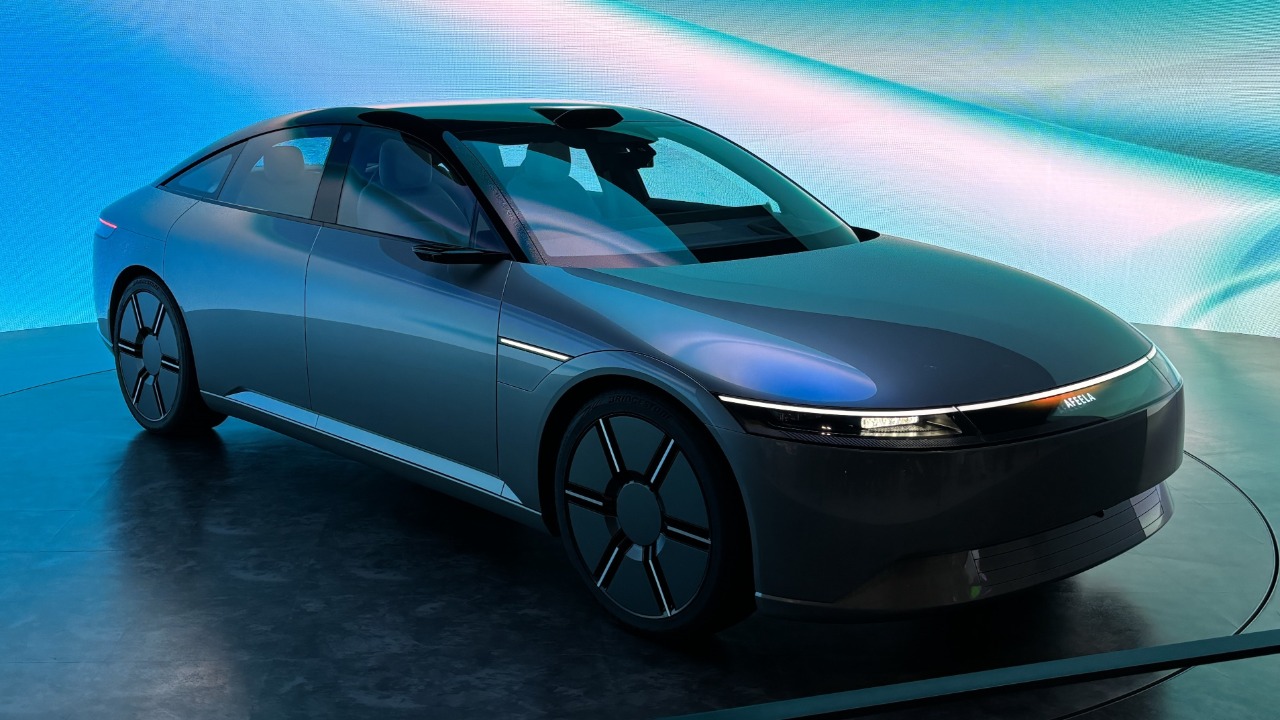

Artificial intelligence is no longer confined to screens and smart speakers. It is starting to steer, brake, and even redesign the vehicles people drive every day. The industry’s new buzzword for this shift is “physical AI,” a label for systems that do not just analyze data but act in the real world, and the car is quickly becoming its most visible test bed.
From concept studios to factory floors and highway traffic, automakers and chip designers are racing to embed this kind of intelligence into every layer of the vehicle. The result is a coming decade in which the car behaves less like a static machine and more like a constantly learning robot that happens to have seats and a steering wheel.
What “physical AI” really means when it is on four wheels
At its core, physical AI is about giving machines the ability to perceive their surroundings, decide what to do, and then move something in the physical world. In a car, that means software that can interpret sensor data, predict what other road users will do, and then control steering, acceleration, braking, and even cabin systems without waiting for a human to react. One major cloud provider describes physical AI as a branch of artificial intelligence that uses reinforcement learning and continuous feedback to improve performance in real environments, which is exactly the kind of loop that modern driver assistance relies on.
Unlike traditional robotics, which often follows preprogrammed paths in tightly controlled spaces, these systems must cope with messy, unpredictable roads. One industrial computing specialist draws a clear line in its explanation of Difference Between Physical, noting that physical AI blends perception, decision making, and actuation in a way that lets machines operate as a bridge between the digital and physical. In a vehicle, that bridge connects cloud-trained models, on‑board chips, and mechanical components into a single nervous system that can respond in milliseconds.
From CES buzzword to automotive strategy
The term itself may sound like marketing, and in some ways it is, but it reflects a real convergence of hardware and software in the car. At CES, chip designer Jan used the Las Vegas stage to unveil an open source line of AI models aimed squarely at autonomous systems, while automotive supplier Physi showed off a new platform for in‑vehicle intelligence, both framed as part of a coming wave of Physical AI. By positioning their technology this way, Jan and Physi are signaling that the next competitive frontier is not just faster chips or better sensors, but integrated stacks that can sense, think, and act inside moving machines.
Walking the show floor, it was hard to miss how thoroughly this idea had taken over the automotive halls. One major processor company noted that Physical AI took center stage at CES, with concept cars, delivery robots, and industrial vehicles all running on similar compute platforms. Jan’s open source models and Physi’s demonstrations fit into that pattern, presenting a vision in which every vehicle, from compact hatchbacks to long‑haul trucks, taps into a common foundation of AI capabilities that can be updated and shared across brands.
How physical AI is already reshaping car design and development
Long before a new model reaches the road, physical AI is changing how it is conceived and engineered. Automotive design teams are using generative models and simulation tools to explore thousands of body shapes, interior layouts, and aerodynamic tweaks, then testing them virtually against crash scenarios and efficiency targets. One engineering analysis of How Physical AI describes how these tools enhance design teams by automating routine iterations and surfacing options that human stylists might never have considered, while still leaving final aesthetic and ergonomic decisions to people.
Once the design is locked, similar techniques carry into manufacturing and testing. Cloud providers that specialize in spatial computing say that at AWS, they define Physical AI as a system of hardware and software that can perceive, reason, and act in the real world, from robots that move pallets to autonomous vehicles that deliver coffee in real world conditions. Automakers are tapping that same foundation to run digital twins of factories, optimize robot paths on assembly lines, and validate how new driver assistance features will behave long before a prototype hits a test track.
Training cars in simulation, then proving them on real roads
One of the biggest challenges with putting AI in charge of a two‑ton vehicle is that mistakes have life‑and‑death consequences. That is why so much of the training happens in virtual environments before any code touches a production car. Defense and engineering specialists describe how In the physical world, one mistake can wreck infrastructure and put lives at risk, so they advocate “sim‑to‑field” pipelines that expose AI systems to millions of edge cases in simulation before carefully controlled real‑world trials. Many federal missions must strive to achieve reliable performance under extreme conditions, and the same logic now applies to highway pilots and automated parking systems.
For carmakers, that means building high‑fidelity digital replicas of cities, highways, and even specific intersections, then letting virtual vehicles drive them endlessly while algorithms learn to handle rare events. The gap between simulation and reality remains a challenge, but the more that physical AI systems can be stressed in software, the safer their eventual deployment on public roads should be. This approach is becoming a quiet standard behind the glossy marketing of “self‑driving” features, even when the showroom pitch focuses on convenience rather than the years of virtual testing that underpin it.
From driver assistance to fully integrated intelligent vehicles
On the road, the most visible impact of physical AI is in advanced driver assistance and semi‑autonomous features. Industry analysts point out that Impact of AI is already clear in systems that keep cars in their lanes, maintain safe following distances, and automatically brake to avoid collisions, grouped under the banner of Autonomous Driving and Safety Enhancement. One of the most significant ways AI is changing the sector is by combining camera, radar, and lidar feeds into a single perception stack that can react faster than a human, especially in complex traffic or low‑visibility conditions.
At the same time, AI is quietly transforming how dealerships, fleets, and service centers operate. Customer‑facing platforms note that AI is enabling to more personalized marketing, predictive maintenance scheduling, and dynamic pricing in automotive operations, using data from connected vehicles to anticipate needs before drivers notice a problem. For owners, that can look like an app notification that a battery is degrading or a tire is likely to fail, paired with a suggested service slot at a nearby dealer, all orchestrated by algorithms that learn from thousands of similar vehicles.
The next generation of “AI‑native” cars
As these capabilities mature, some manufacturers are starting to design vehicles around physical AI from the outset rather than bolting it on as an option package. One semiconductor company, Cadence, has described how Cadence sees physical AI powering next‑generation cars with tightly integrated sensor suites, high‑performance computing, and software‑defined control systems. In that vision, the car becomes a rolling data center, with over‑the‑air updates that can add new driving modes, energy‑saving strategies, or cabin experiences long after the initial sale.
Broader industry surveys echo that trajectory, arguing that it is no longer just about futuristic self‑driving prototypes. Analysts tracking the sector say that Enhanced Vehicle Design and connected services are making everyday cars more efficient and safer than ever, even if full autonomy remains limited to specific routes or conditions. Another glossary of Physical AI applications highlights more autonomous mobility solutions as a key outcome, suggesting that the same techniques now guiding warehouse robots will soon coordinate traffic flows, charging infrastructure, and shared fleets.
For now, the takeover of physical AI in cars will feel incremental: a smoother lane change here, a smarter maintenance alert there, a factory that builds the next model a little faster and with fewer defects. Yet when Jan announces a whole new open source line of AI models for autonomous systems and Physi debuts a platform dedicated to intelligent vehicles, both framed as Jan and Physi’s bet on physical AI, it signals that the industry sees this not as a side project but as the foundation of its future. The steering wheel may not disappear overnight, but the intelligence behind it is already starting to take over.
More from Morning Overview