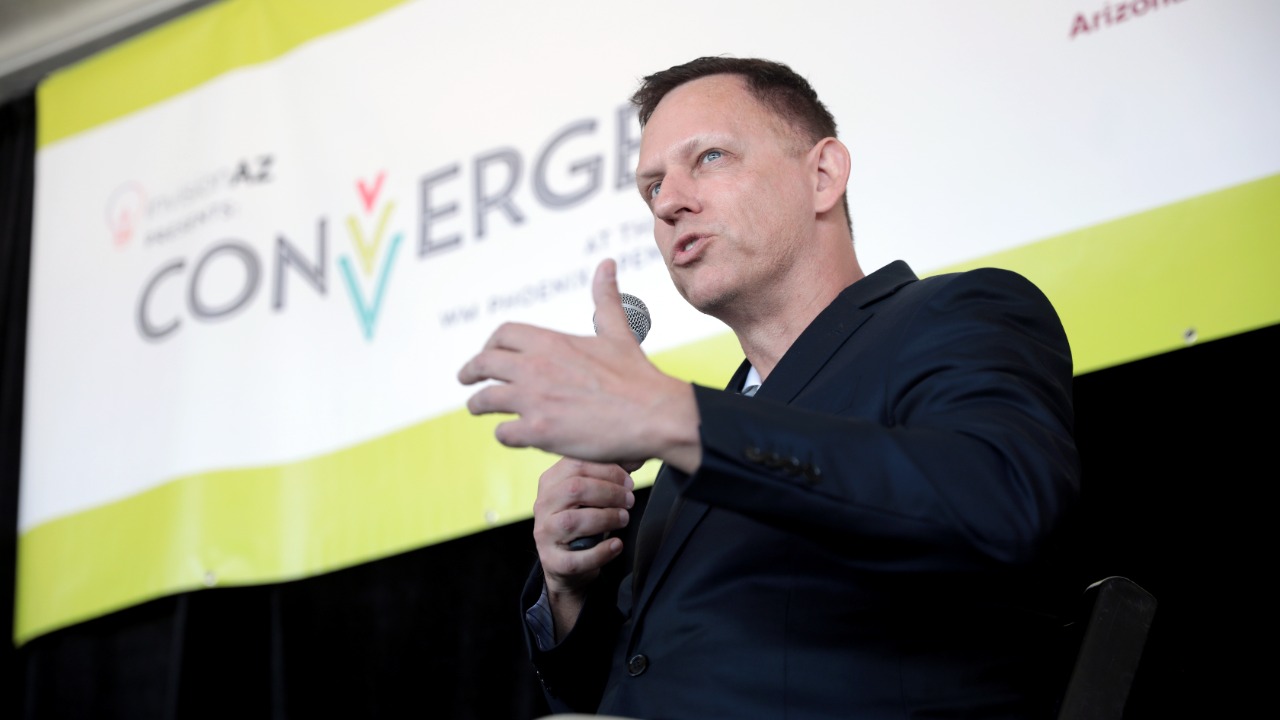

A nuclear startup backed by Peter Thiel has secured a $900 million award from the United States government, signaling how aggressively Washington is now betting on advanced reactors as a pillar of its energy and industrial strategy. The size of the commitment instantly puts the company in the first rank of next‑generation nuclear developers and raises fresh questions about how public money should be steered into high‑risk, high‑reward technologies.
The award lands at a moment when federal agencies are trying to turn headline‑grabbing breakthroughs in nuclear engineering into commercial projects that can compete with gas, wind, and solar. It also arrives as regulators, state officials, and local communities wrestle with the practical implications of a nuclear build‑out, from fuel supply to long‑term waste management.
What a $900 million award really signals
The headline figure of $900 million matters less as a budget line than as a political and technological signal. When the federal government commits that much to a single nuclear startup, it is effectively declaring that advanced reactors are no longer a fringe experiment but a central plank of its energy strategy. In a sector where first‑of‑a‑kind plants can cost several billion dollars, a grant or cost‑share of this scale can cover a meaningful slice of design, licensing, and early construction, while also crowding in private capital that might otherwise stay on the sidelines.
For a Peter Thiel‑backed company, the award also validates a particular Silicon Valley‑style thesis about nuclear power: that smaller, more modular, and more software‑driven reactors can be developed on startup timelines rather than traditional utility cycles. Federal money does not guarantee that vision will work, but it does tilt the playing field toward firms that can pair deep venture backing with the patience and compliance culture needed to navigate nuclear regulation. The result is a hybrid model in which public funds de‑risk the most capital‑intensive stages, while private investors absorb the technology and execution risk in hopes of outsized returns.
How the Thiel connection shapes expectations
Peter Thiel’s involvement changes how both Wall Street and Washington read this award. Thiel has built his reputation on backing contrarian bets in sectors like defense, data analytics, and fintech, and his presence on a nuclear cap table signals that the company is expected to move fast, challenge incumbents, and frame nuclear as a software‑inflected product rather than a one‑off infrastructure project. That narrative can be powerful when the startup is pitching utilities, industrial customers, or export partners who want to see that the technology is not just technically sound but also financially and politically durable.
At the same time, Thiel’s brand of aggressive disruption sits uneasily with the nuclear industry’s culture of extreme caution. A $900 million federal award comes with layers of oversight, safety reviews, and public scrutiny that do not always mesh with a move‑fast ethos. The company will have to prove that it can translate venture‑style ambition into the kind of disciplined engineering and transparent risk management that regulators and local communities demand, especially as it moves from paper designs to steel and concrete.
A breakthrough moment for US nuclear startups
The award lands against a backdrop of rapid progress among American nuclear startups that are trying to prove advanced reactors can move from lab to grid. State‑level nuclear offices have highlighted what they describe as a historic breakthrough by a United States startup that achieved a first‑of‑its‑kind nuclear feat, characterizing it as “the dawn of a new” phase for the industry. That kind of language reflects a belief among some officials that the country is finally turning decades of research into tangible, potentially commercial systems rather than endless prototypes.
In Nevada, for example, the Nevada Agency for Nuclear Projects has pointed to a United States startup’s achievement as a landmark development, describing it as a first‑of‑its‑kind nuclear accomplishment that could reshape how policymakers think about both power generation and long‑term waste strategy, a milestone it framed as “the dawn of a new” era in its own news updates. The Thiel‑backed company’s $900 million award does not appear in that reporting and is not tied to that specific breakthrough, but it arrives in the same policy climate, where officials are increasingly willing to treat advanced nuclear as a practical tool rather than a distant aspiration.
Fuel supply: HALEU and the DOE’s parallel push
Money for reactors is only one piece of the puzzle. Many advanced designs, including those likely pursued by a Thiel‑backed startup, depend on high‑assay low‑enriched uranium, or HALEU, which is enriched beyond the levels used in today’s large light‑water reactors. Without a reliable domestic HALEU supply, even the best‑funded projects can stall at the fuel stage, leaving expensive hardware idle while developers scramble for material that is currently produced in limited quantities worldwide.
Recognizing that bottleneck, the Department of Energy has started to make its first formal HALEU commitments to a group of nuclear developers, a move it describes as a way to bring innovative American reactor designs closer to market. According to the DOE, this first round of HALEU allocations is intended to support multiple companies and expand the use of nuclear energy by ensuring that fuel does not become a hard cap on deployment, a strategy detailed in its explanation of how HALEU commitments will support five nuclear developers. The Thiel‑backed startup’s $900 million award is separate from that program, but its long‑term viability will depend on the same fuel ecosystem.
Why the government is betting big on advanced reactors
From the federal government’s perspective, a $900 million award is not just an energy policy decision, it is an industrial and geopolitical one. Advanced reactors promise firm, low‑carbon power that can backstop intermittent renewables, support data centers, and anchor new manufacturing clusters. They also offer the prospect of exporting American technology and standards at a time when countries from Eastern Europe to Southeast Asia are shopping for alternatives to Russian and Chinese nuclear offerings.
There is also a domestic jobs and supply chain angle. Large awards help justify investments in specialized steel, control systems, and fuel fabrication facilities that would struggle to pencil out on the basis of a single plant. By concentrating funds in a handful of high‑profile projects, Washington is effectively trying to create anchor customers for a broader ecosystem of suppliers, engineers, and construction firms. The Thiel‑backed startup becomes both a technology bet and a vehicle for building out that industrial base.
Risk, accountability, and the politics of picking winners
Publicly backing a venture‑funded startup with $900 million inevitably raises questions about how the government chooses its winners. Critics will argue that such a large award concentrates risk in a single company and could crowd out smaller, potentially more innovative players that lack marquee investors. Supporters counter that nuclear projects are so capital intensive that only firms with deep pockets and strong governance can realistically carry them through licensing and construction, and that spreading money too thinly would doom everyone.
Accountability will hinge on how the award is structured. Milestone‑based funding, transparent reporting, and clear safety and performance metrics can help ensure that taxpayers are not simply underwriting private equity returns. For the Thiel‑backed company, that means accepting a level of public scrutiny that most startups never face, including detailed oversight of how it manages safety culture, community engagement, and long‑term waste obligations. The politics of nuclear are unforgiving, and any misstep could quickly turn a flagship award into a cautionary tale.
Waste, siting, and the Nevada question
Even as Washington pours money into new reactors, the unresolved question of nuclear waste looms over every project. Communities that might host advanced reactors want to know not just how safe the plant will be during operation, but what happens to spent fuel and other high‑level waste over the decades that follow. That concern is particularly acute in states like Nevada, which have long been at the center of national debates over storage and disposal and where any new nuclear initiative is scrutinized through the lens of past conflicts.
The Nevada Agency for Nuclear Projects has used its public communications to track national developments in nuclear technology and waste policy, including the recent description of a United States startup’s first‑of‑its‑kind nuclear achievement as a “historic breakthrough” and “the dawn of a new” era in its official news. Those updates underscore how closely state‑level watchdogs are watching the federal push for advanced reactors. The $900 million award to the Thiel‑backed company is not identified in that reporting and is not linked to Nevada’s specific waste concerns, but any large new project will inevitably be judged against the backdrop of those long‑running disputes.
What success would look like for the Thiel‑backed startup
For the company at the center of this award, success will be measured in steel, electrons, and contracts, not just in fundraising headlines. Delivering a first‑of‑a‑kind plant on something close to budget and schedule would go a long way toward proving that advanced reactors can be built more predictably than their gigawatt‑scale predecessors. Securing long‑term power purchase agreements with utilities, data center operators, or industrial customers would show that there is real demand for the product at prices that can justify replication.
Over the longer term, the company will be judged on whether it can turn a one‑off demonstration into a repeatable business. That means standardizing designs, streamlining licensing for follow‑on units, and building a supply chain that can support multiple projects in parallel. The $900 million federal award gives the Thiel‑backed startup a powerful head start, but it also sets a high bar: if a company with this level of political backing, venture capital support, and public funding cannot make advanced nuclear work at scale, it will be harder for policymakers to justify similar bets in the future.
More from Morning Overview