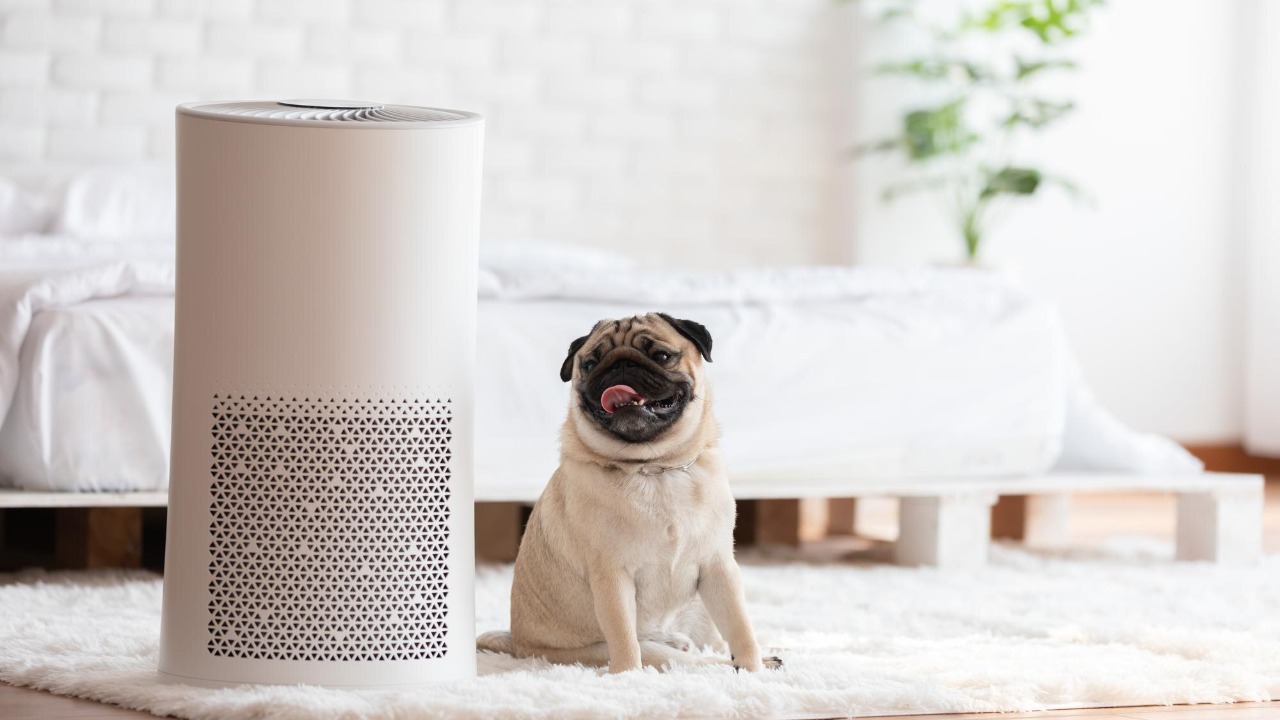

Pet hair, dander and lingering odors have quietly become a design brief for the smart-home industry, not just a housekeeping headache. As connected devices spread from thermostats to litter boxes, air purifiers built specifically for animal households are turning into a default fixture, promising cleaner air, calmer allergies and less time chasing tumbleweeds of fur. I see that shift most clearly in the way filtration, sensors and apps are now being tuned around pets first and everything else second.
Why pet homes are driving the next air-purifier boom
Living with animals means living with what they shed into the air, from microscopic dander to heavier fur that drifts onto floors and furniture. Manufacturers now frame that reality as an indoor air quality problem, arguing that pet households face a constant load of allergens and fine particles that can aggravate breathing issues and make rooms feel stuffy. One guide on Why Pet Owners Need an Air Purifier spells this out in clinical terms, linking pet dander and hair to respiratory discomfort and positioning filtration as a way to strip those particles from the air before they reach lungs or settle on surfaces.
For anyone who has tried to mask a wet-dog smell with candles, the odor argument is just as compelling. Advanced systems are now pitched as tools that do more than trap fur, they also target the volatile compounds that make litter boxes, cages and bedding smell stale. One analysis notes that They assist in the elimination of smells from cooking, pets and other sources, promising a “refreshingly good” indoor environment when paired with a proper plan for air purification. That combination of allergen control and odor management is what is pulling air purifiers out of the niche allergy aisle and into the center of smart-home planning for pet owners.
From generic filters to pet-specific engineering
What makes this moment different is that brands are no longer just slapping a paw print on a standard HEPA tower. Some devices now use pet-specific filtration technology that is explicitly designed to capture dander and hair more effectively than a general-purpose mesh. One in-depth guide notes that Finally, certain models add dedicated pet layers to their filter stacks, tuned to the size and behavior of animal-borne particles so they can provide optimal air purification for pet owners rather than a one-size-fits-all approach.
Hardware design is evolving in parallel. Philips, for instance, has a 3000 series Pet Air Purifier AC3360/10 that is explicitly Designed specifically for pet households, with a Pet Buddy Fur Removal system that targets floating fur and hair on the ground and an “Interactive” mode that pairs precise air monitoring with instant visual alerts. That kind of purpose-built engineering, from airflow paths that pull fur off floors to filter media that resists clogging, is what turns a generic purifier into a pet appliance.
Smart-home brains meet pet hair and dander
The other big shift is that these machines now behave like full citizens of the connected home. Many of the most talked-about models ship with Wi-Fi, Bluetooth or both, so I can monitor air quality and tweak settings from my phone or through voice assistants. The Rabbit Air A3, for example, is described as WiFi and Bluetooth enabled, working with the Rabbit Air app while still offering full control from the top of the unit for people who do not want to use the app at all. That flexibility matters in busy pet homes where hands are often full and routines change quickly.
Other brands lean heavily into app ecosystems and automation. One review notes that Only the Levoit Vital 200S is Wi-Fi enabled in its comparison set, which allows pairing with a smartphone for full remote operation while its H13 HEPA filter focuses on trapping mold, dust and minimizing odors. Broader roundups of connected purifiers highlight Pros like Multiple design and filter options, Quiet operation, Alexa voice control and a Useful companion app, all of which dovetail neatly with the needs of pet owners who want devices that can run quietly in the background and respond to voice or app commands without disturbing animals.
Pet-focused launches signal a maturing category
New product announcements now read like a roll call of pet households rather than generic living rooms. PetSnowy, a company that explicitly positions itself around animal comfort, recently framed its purifier as a lifestyle upgrade for people and pets alike. In a release titled Breathe Easy, the company describes how it Unveils the Ultimate Air Purifier for Pet Households, promising continuous, long-lasting freshness tailored to homes with animals rather than retrofitting a standard purifier to that role.
Smart-home heavyweight Dreame is making a similar bet. In a detailed product announcement, the company describes how Dreame Launches the AP10 Pet Air Purifier Engineered for Pet Households, positioning Dreame as a global leader in smart home technology that can run day and night while targeting fur, dander and odors. When companies with that kind of smart-home pedigree are building pet-specific SKUs, it is a clear sign that this is no longer a fringe niche but a mainstream category.
Flagship examples: Rabbit Air, Levoit and beyond
Among enthusiasts, the Rabbit Air A3 has become a shorthand for what a premium pet-friendly purifier looks like. One hands-on review describes how The Rabbit Air A3 Ultra Quiet Air Purifier pairs next-generation HEPA filtration with smart connectivity and wireless internet capabilities so owners can control purification remotely. Another deep dive notes that the A3 uses six stages of filtration to scrub harmful toxins and odors and comes with a companion app that lets users adjust fan speed, set schedules and even turn the Mood lighting on and off, a level of control captured in the description that It uses six stages of filtration for a highly customizable experience.
Independent testing has reinforced that reputation. One set of lab results from Oct found that the Rabbit Air A3 was the best at eliminating odors in a pet context, with a five-stage filtration system that cut smoke particles sized 0.3 to 0.5 microns by about 98 percent, a performance level highlighted in coverage of Oct testing of Rabbit Air. At the same time, the Levoit Vital 200S Smart Air Purifier has carved out its own space by promising to filter at least 99.97 percent of airborne particles down to 0.3 microns while explicitly calling out pets in its marketing, a positioning reflected in product listings for the Levoit Vital 200S Smart Air Purifier.
How automation and modes adapt to real pet life
What makes these devices feel like part of a smart home rather than just appliances is the way they respond to changing conditions. Many now ship with automatic modes that adjust fan speed based on real-time particle readings, so the purifier ramps up when a dog tears through the living room or a litter box is freshly used. One large-room pet purifier listing explains that In Auto Mode, the unit automatically adjusts fan speed based on real-time PM2.5 levels, with a clearly visible status display that lets owners see at a glance how hard the machine is working.
Scheduling and remote control deepen that sense of integration. A detailed product review of the Rabbit Air A3 notes that Not only does Rabbit Air have an app you can download to your phone to control the A3 via a 2.4 GHz wireless connection, it also lets you set schedules for when the unit should run, which is ideal for timing higher fan speeds around known triggers like vacuuming or grooming sessions. That kind of automation turns air purification into a background process that quietly follows the rhythms of pet life instead of demanding constant manual tweaks.
Designing for fur, noise and real-world living rooms
Pet-focused purifiers are also being shaped by the realities of where they sit and how they sound. Many owners want something that can live in a bedroom or beside a dog bed without becoming a noisy eyesore. The Rabbit Air A3 is often praised as an Introducing the Rabbit Air A3 Ultra Quiet Console Air Purifier in Black Cherry Blossom, an aesthetic that turns the unit into a design object while keeping sound levels low enough for bedrooms and nurseries. Broader smart-purifier roundups similarly highlight Quiet operation as a core selling point, reinforcing that low noise is now table stakes for devices that run near pets and people around the clock.
Other models lean into form factors and features that speak directly to pet mess. The HoMedics TotalClean PetPlus 5-in-1 Tower Air Purifier is marketed with the line Love your pets, but not the allergens and odors they leave behind, promising to remove pet dander, litter box smell and other contaminants in a single tower footprint. A Chuboor model sold as a smart purifier for home goes even further, describing how The Pet Air Purifier is specially designed for pet-friendly homes and uses a mesh that captures hair more efficiently than traditional round-hole designs, a small but telling example of how even filter geometry is being rethought for fur.
Energy efficiency and 24/7 runtimes
Because pet allergens and odors are constant, the most effective purifiers are the ones that can run almost continuously without punishing energy bills. That has pushed efficiency from a nice-to-have into a core design goal. One forward-looking analysis of purifier technology explicitly calls out a section titled Focus on Energy Efficiency, arguing that Running an air purifier 24/7 should not mean a spike in your energy bill and that smart controls and efficient motors are key to delivering clean air responsibly.
Manufacturers are responding with motors and modes that sip power at low speeds and only ramp up when sensors detect a problem. Dreame’s AP10, for instance, is described as capable of running day and night while still fitting into a smart-home ecosystem, a claim embedded in the description of Dreame as a global leader in smart home technology in the Dreame AP10 launch. For pet owners, that combination of always-on filtration and restrained energy use is what makes it realistic to treat these devices as permanent fixtures rather than occasional tools.
Shopping in a crowded, data-rich marketplace
As more brands chase pet households, the buying process is being shaped by recommendation engines and product graphs as much as by in-store displays. Google, for instance, describes how its Shopping Graph ingests information from brands, stores and other providers so that each Product listing can surface rich details, reviews and related items. That back-end infrastructure is what makes it possible for a search for a pet purifier to instantly surface dozens of models, from basic towers to fully connected consoles, each with granular specs on coverage area, CADR and filter composition.
Within that ecosystem, specific pet-focused devices stand out. Listings for the Levoit Vital 200S Smart Air Purifier emphasize its role in protecting both air quality and pets, while a SwitchBot model is pitched as a Perfect for allergy sufferers and air quality control. The HoMedics TotalClean PetPlus appears in similar feeds with its HoMedics TotalClean PetPlus 5-in-1 positioning, while the Black Cherry Blossom finish of the Rabbit Air A3 helps it surface not just as a purifier but as a decor choice.
Feature creep: aromatherapy, fur removal and more
As competition intensifies, some brands are layering on extras that go beyond filtration and connectivity. One large-room pet purifier marketed for spaces up to 2,500 square feet advertises a bundle that reads like a lifestyle pitch: its listing starts with About this Item and highlights a “Purify, Then Personalize, Included Free” offer where Purchase of the Samrado P285WH includes two complimentary essential oil bottles and double-sided aromatherapy pads. The idea is that once the air is clean, owners can add a gentle scent that masks any residual pet odor without relying on heavy sprays.
Other models focus on mechanical solutions to fur. The Philips Pet Buddy system mentioned earlier is one example, but there are also devices like the Chuboor smart purifier that emphasize mesh designs tuned for hair capture, and tower units that combine pre-filters, HEPA layers and carbon blocks in 5-in-1 stacks. Even smaller bedroom purifiers marketed for smoke, pet hair, dust, allergies, pollen and odor, such as the PJ07 model described as a Smart Air Purifier for home with CADR 250 m³/h and Alexa control, show how even compact units are being framed as pet-ready through a mix of connectivity and targeted filtration.
What pet owners should actually look for
With so many options, the risk is that pet owners get lost in marketing language instead of focusing on the fundamentals that matter in daily life. In my view, the non-negotiables are a true HEPA or H13-grade filter, a substantial carbon layer for odors, quiet operation at night and some form of automation so the device can respond to spikes in dander or smell without constant supervision. Guides aimed at animal households stress that advanced purifiers For pet owners work best when integrated into a proper plan for air purification, which includes choosing the right coverage area and placing units where pets actually spend time.
Smart features can then be treated as force multipliers rather than ends in themselves. Devices like the Levoit Vital 200S, which appears in multiple listings as a Smart Air Purifier tuned for pet households, or the SwitchBot model highlighted as SwitchBot Air Purifier that is Perfect for allergy sufferers, show how app control, Alexa integration and real-time monitoring can make it easier to keep air quality high without constant fiddling. The key is to treat those capabilities as tools to support consistent filtration rather than as flashy extras, and to remember that no purifier can replace basic cleaning, grooming and ventilation in a truly pet-friendly home.
More from MorningOverview